Beer in Germany
Germany ranks among top beer exporters and consumers globally.

User:Nino Barbieri · CC BY-SA 2.5
Beer (German: *Bier*, pronounced [biːɐ̯]) is deeply woven into German life. Production follows the *Reinheitsgebot*, or purity law, which limits ingredients to water, hops, yeast, and malt. Any beer not made solely from barley malt—wheat beers, for example—must be top-fermented. By 2023, Germany was the world’s third-largest beer exporter, and in 2020 it ranked second in Europe for per-capita consumption, behind only the Czech Republic.
**Pale Lagers** Pilsener, a pale lager with a light body and pronounced hop character, dominates roughly two-thirds of the market. It runs 4.5–5% ABV and 11–12° Plato. Märzen, a medium-bodied, malty lager available in pale, amber, and dark versions (13–14° Plato, 5.2–6% ABV), is traditionally served at Munich’s Oktoberfest. Export, a fuller, maltier, less hoppy pale lager from Dortmund (12–12.5° Plato, 5–5.5% ABV), was Germany’s most popular style in the 1950s and 1960s but is now increasingly rare. Helles is a malty pale lager from Bavaria (11–12° Plato, 4.5–5% ABV). Maibock is a pale, strong spring lager (16–17° Plato, 6.5–7% ABV). Spezial is a pale, full, bitter-sweet lager with delicate hopping (13–13.5° Plato, 5.5–5.7% ABV).
**Dark Lagers** Bock is a heavy-bodied, bitter-sweet lager made with dark malts (16–17° Plato, 6.5–7% ABV). Doppelbock is very strong and full-bodied, also using dark malts (18–28° Plato, 8–12% ABV). Dunkel comes in two main varieties: a sweetish, malty Munich style and a drier, hoppy Franconian style. Schwarzbier is a bottom-fermented black lager (11–12° Plato, 4.5–5% ABV).
**Wheat Beers** *Weizenbier* and *Weißbier* are the standard names for wheat beer—*Weizen* means “wheat” and *weiß* means “white.” Dunkelweizen is a dark wheat beer. Hefeweizen is unfiltered (*Hefe* means “yeast”), giving it a cloudy look. Kristallweizen is filtered and clear. Weizenbock is a strong wheat-based bock (16–17° Plato, 6.5–8% ABV).
**Regional and Local Styles** Altbier, a top-fermented, lagered beer, is brewed only in Düsseldorf and the Lower Rhine region, with origins in Westphalia. Its bitterness ranges from mild to exceptional, and about ten breweries in the Düsseldorf area produce it at 5–6.5% ABV. Berliner Weisse is a pale, very sour wheat beer from Berlin (9° Plato, 2.5–5% ABV), often served with raspberry- or woodruff-flavored syrup. Gose is a sour wheat beer brewed with salt and coriand
- field
- Brewing and beer culture
- nationality
- German
- known_for
- Reinheitsgebot purity law, diverse beer styles, high per-capita consumption
- top_beer_style
- Pilsener (pale lager, ~two-thirds of market)
- oldest_brewery
- Weihenstephan Abbey (abbey founded in 725, brewery operating since 1040)
- highest_brewery_density
- Aufseß, Franconia (4 breweries for 1,352 citizens)
Lore & Background
German beer is governed by the Reinheitsgebot, a purity law that restricts ingredients to water, hops, yeast, and malt. This law influences the production of numerous styles, including pale lagers like Pilsener, Helles, and Maibock; dark lagers such as Bock, Doppelbock, and Schwarzbier; and wheat beers like Hefeweizen and Weizenbock. Regional specialties include Altbier from Düsseldorf, Kölsch from Cologne, and Rauchbier from Bamberg. The Benedictine abbey Weihenstephan, whose abbey was founded in 725, has a brewery that has been operating since 1040, making it reputedly the oldest existing brewery in the world. Almost half of all German breweries are in Bavaria, where the seven main breweries produce 158 million US gal
Reader's Guide
German beer culture is defined by its adherence to the Reinheitsgebot, which has shaped a wide array of traditional styles. Pilsener dominates the market, but regional varieties like Altbier, Kölsch, and Berliner Weisse offer distinct tastes. The country's brewing heritage is exemplified by the world's oldest brewery, Weihenstephan, and the high concentration of breweries in Bavaria. Germany's global standing is reflected in its fourth-place ranking in beer exports in 2023 and third in European per-capita consumption in 2020. The diversity of drinkware—from Weizen glasses and beer steins to Maßkrugs and Pilstulpen—underscores the ritualistic and cultural importance of beer. Beer tax applies to production and import, with exceptions for home brewers up to 200 liters per year. Alcohol content varies widely, from typical 4.7–5.4% ABV to Doppelbock reaching up to 16% ABV. Legal drinking ages are set at 14 with supervision for low-alcohol beverages, 16 for unsupervised purchase, and 18 for all alcoholic drinks.
Did You Know?
- The Reinheitsgebot permits only water, hops, yeast, and malt in beer production.
- Weihenstephan Abbey has been brewing since 1040, making it the oldest existing brewery in the world.
- Aufseß in Franconia has the highest density of breweries globally, with four breweries for 1,352 citizens.
- Doppelbock can have an alcohol content of up to 16% ABV, stronger than many wines.
A Federal Tapestry of Flavors
Because Germany grew out of a patchwork of duchies, kingdoms, and free cities rather than a single unified state, its food culture resists any single national recipe. Each region carries its own pantry and cooking logic, and the borders that once separated them now function more as gradients than walls. To the east, German kitchens overlap heavily with Polish and Czech (and Slovakian) traditions, while to the north the legacy runs the other direction: Danish cooking absorbed German influences centuries ago, leaving shared staples like potato salad on both sides of the border. The Low Countries—Netherlands, Belgium, and especially Luxembourg—mirror many of the same hearty, butter-rich preparations found in western German provinces. In the south, Bavarian and Swabian tables blur seamlessly into Austrian and Swiss ones. The reach extends further still: Hungary and Romania inherited German culinary habits through centuries of ethnic German settlement, preserving distinct traditions such as Transylvanian Saxon and Danube Swabian cooking that persist alongside their host nations' own cuisines.
The Sausage Republic
No single food item defines German culinary identity more completely than the sausage. Over fifteen hundred distinct varieties of Wurst are produced across the country, most encased in the natural intestines of pork, sheep, or lamb. The lineup ranges from the spiced ground-pork Bratwurst to the fully cooked, water-bath-smoked Wiener, and to the darker Blutwurst or Schwarzwurst built around pig or goose blood. Regional pride sharpens the distinctions: Bavaria guards its Weißwurst, while the metropolitan corridors of Berlin, Hamburg, and the Ruhr Area claim the Currywurst, a sliced pork sausage drenched in curry ketchup. What makes the tradition remarkable is not merely its breadth but its age of regulation. A 1236 market ordinance in Landshut already mandated that only the finest cuts of meat could be ground into sausage, a principle that has governed the craft for nearly eight centuries. Beyond fresh sausages, thousands of cold-cut preparations also carry the Wurst label, and the named roster—Nürnberger Rostbratwurst, Regensburger Wurst, Jagdwurst, Saumagen, and dozens more—reads like a catalog of local identity.
Braising, Marinating, and the Art of Slow Cooking
The average German consumes roughly sixty kilograms of meat each year, with pork, poultry, and beef forming the core of the diet. The dominant technique is braising: long, moist-heat cooking that transforms inexpensive, tough cuts into tender, deeply flavored dishes. This is not a modern invention but a centuries-old strategy for making the less desirable parts of the animal palatable, and it has produced genuine national specialties. The most celebrated example is Sauerbraten, in which beef, horse meat, or venison is submerged in a vinegar or wine-vinegar marinade for several days before being roasted, yielding a dish whose tangy depth is unmatched by quick-cooking methods. Fried preparations do exist on German tables, but their recipes largely trace back to French and Austrian kitchens rather than to a native tradition. The result is a meat culture that values patience, acidity, and transformation over speed, turning what other cuisines might discard into the centerpiece of the family table.
Seasonal Rhythms and the Daily Table
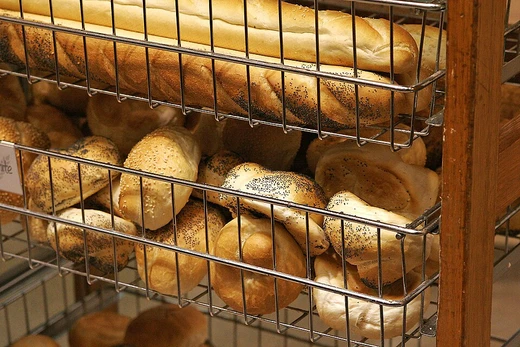
German eating is deeply attuned to calendar and geography. White asparagus commands a fixed annual window that opens in mid-April and closes on St. John's Day, June twenty-four; during those weeks, restaurants in southern and central regions will build an entire menu around the single vegetable, and per-capita consumption reaches about one and a half kilograms each year. Fish availability has shifted dramatically: before industrial pollution choked the Rhine, Elbe, and Oder, salmon ran freely in those rivers, and their slow return is tied to modern sewage treatment and reduced agricultural runoff. In the north, pickled herring in a Fischbrötchen, rolled as a Rollmops, or fried as Brathering, remains a coastal staple, while freshwater trout, pike, carp, and perch anchor inland menus. Even breakfast reflects this layering of tradition: bread rolls spread with Leberwurst, Teewurst, or Mettwurst, topped with Gouda or Harzer Roller, accompanied by boiled eggs and a strong coffee, form a hearty morning ritual that bakeries serve as belegte Brötchen to anyone too pressed for time to sit down.
Gallery

Frequently Asked Questions
Who is Beer in Germany?
German beer culture is a centuries-old brewing tradition governed by the Reinheitsgebot, a purity law that restricts ingredients to water, hops, yeast, and malt. It spans a wide range of styles, from pale Pilsener lagers to top-fermented wheat beers, and remains a central part of everyday life across the country.
What are Beer in Germany's powers/role?
The Reinheitsgebot purity law is its defining rule, limiting all brewing to just four core ingredients. Pilsener, a pale lager around 4.5–5% ABV with a strong hop presence, accounts for roughly two-thirds of what is sold in the market.
How does Beer in Germany's story end?
As of 2023, Germany holds the position of the world's third-largest beer exporter. In 2020 it also ranked as Europe's second-highest per-capita consumer, trailing only the Czech Republic.
Why is Beer in Germany important?
It is deeply embedded in German social and cultural identity, with brewing traditions stretching back to the 8th century. The oldest continuously operating brewery, Weihenstephan Abbey in Bavaria, has been producing beer since 1040, making it a living link to medieval monastic life.
Where does Beer in Germany have the strongest local presence?
The town of Aufseß in Franconia holds the record for the highest brewery density in Germany, with four breweries serving a population of just 1,352 residents. This small Franconian community essentially has more breweries per person than any other place in the country.
More in German cuisine 1-24
Spotted an error? Know more?
This is a living reference — every entry is fact-audited, and reader corrections feed straight into our audit queue. Suggest an edit · See this site's audit record