Apfelwein
German cider made from sour apples, regionally known as Viez or Most.

Sir James · CC BY-SA 3.0
Apfelwein, also known as Viez or Most, is the German term for cider, produced primarily from sour apples and distinguished by an alcohol content of 4.8–7.0% and a tart, sour taste. It is the state beverage of Hesse, especially in the Frankfurt, Wetterau, and Odenwald areas, and is also found in Moselfranken, Merzig, the Trier area, the lower Saar region, and near Luxembourg.
- type
- Alcoholic beverage
- alcohol_content
- 4.8–7.0% ABV
- main_ingredient
- Pressed apples (often sour varieties such as Bohnapfel)
- region
- Hesse (state beverage), Moselfranken, Saarland, Trier, lower Saar area, Luxembourg border
- serving_glass
- Geripptes (lozenge-cut glass) or Viezporz (white porcelain/stoneware)
- alternative_names
- Ebbelwoi, Stöffsche, Apfelmost, Viez, saurer Most, Schoppen
Lore & Background
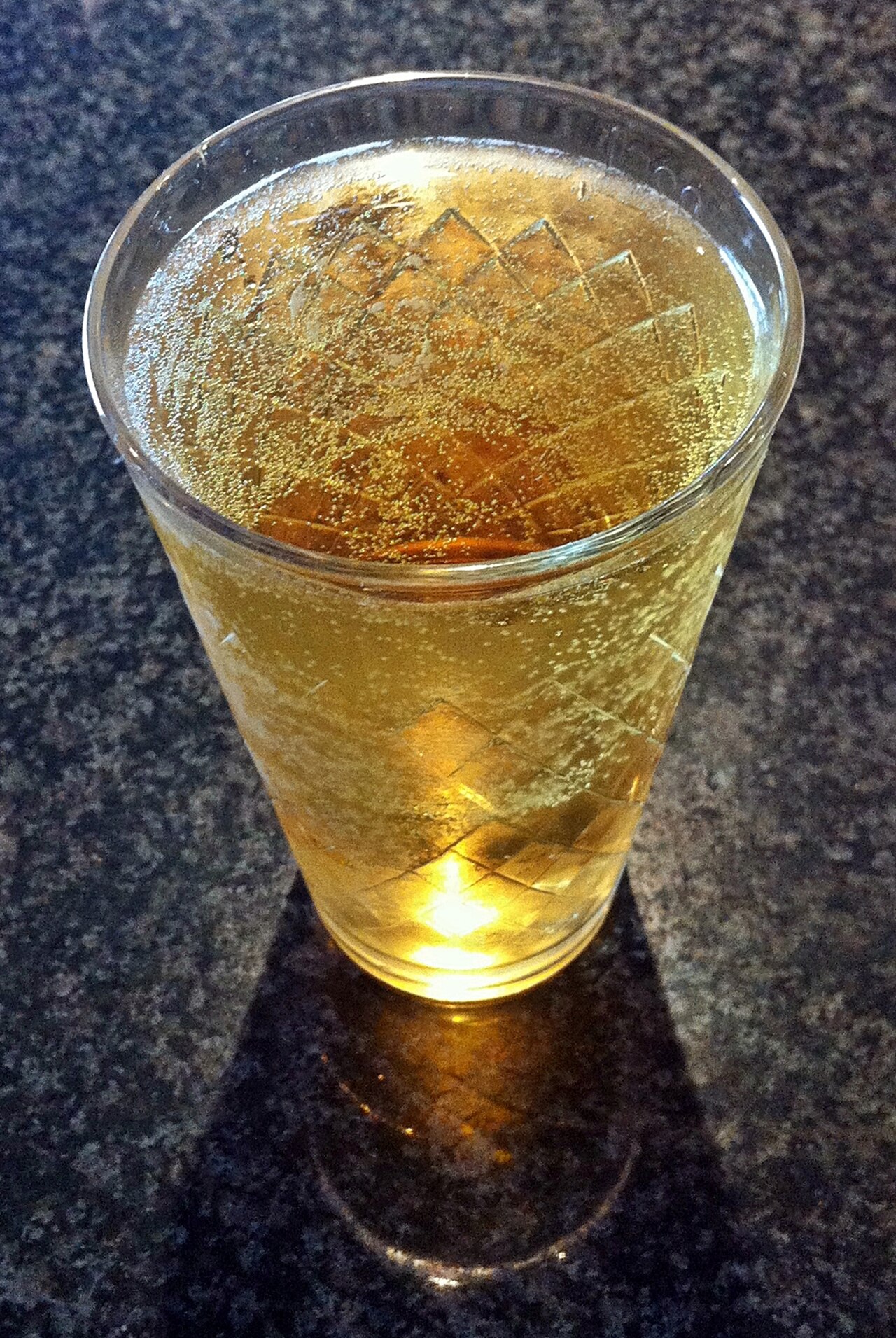
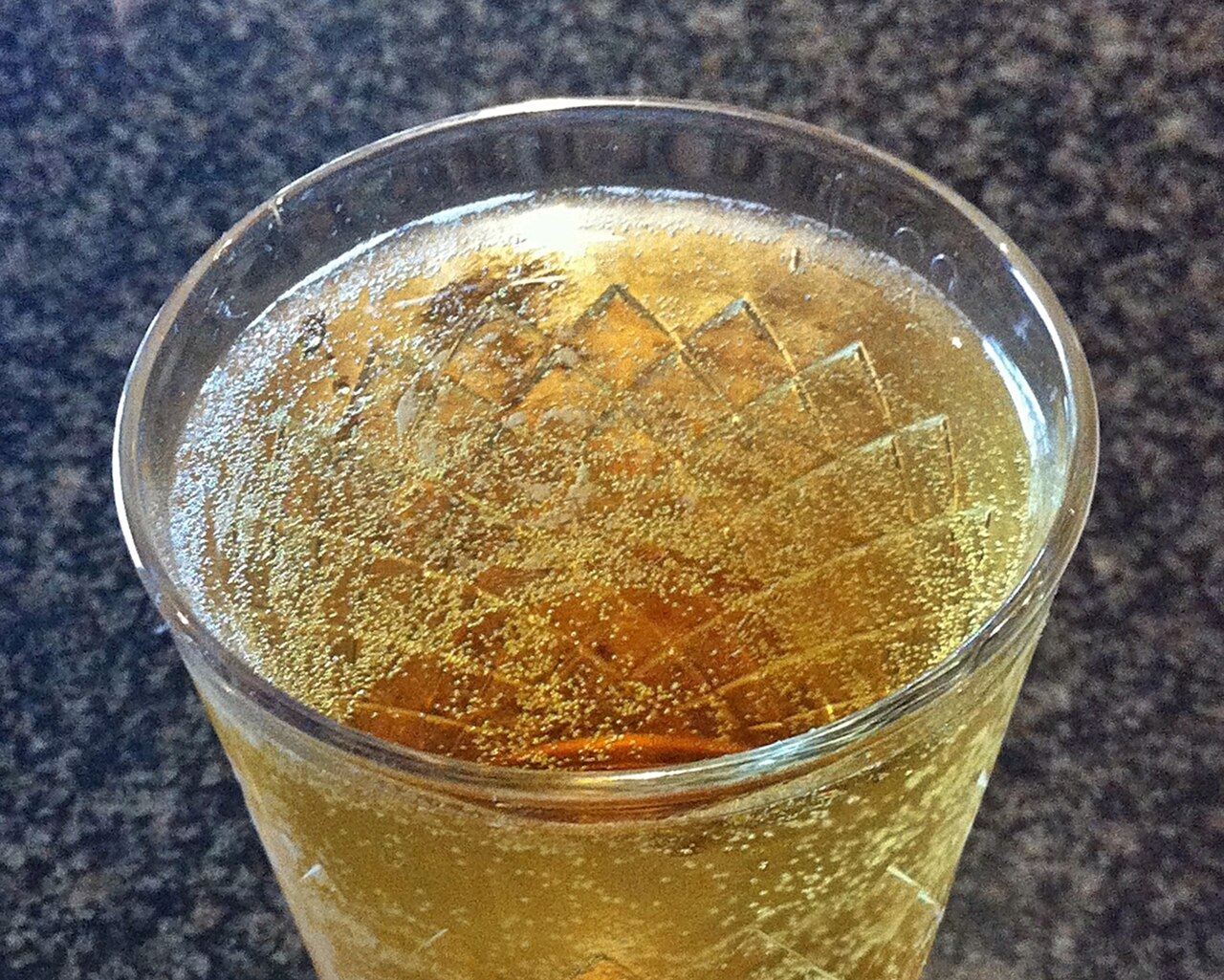
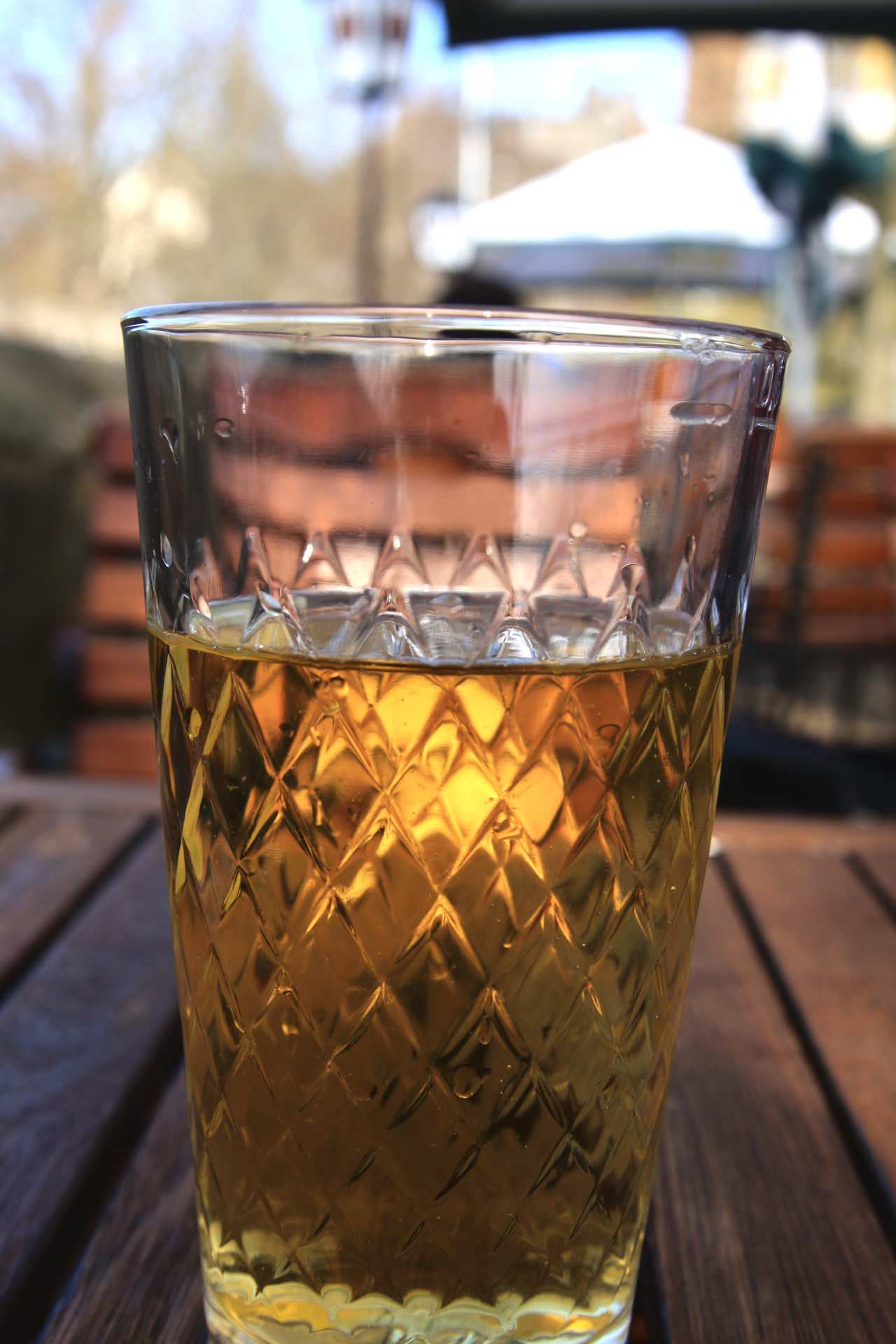
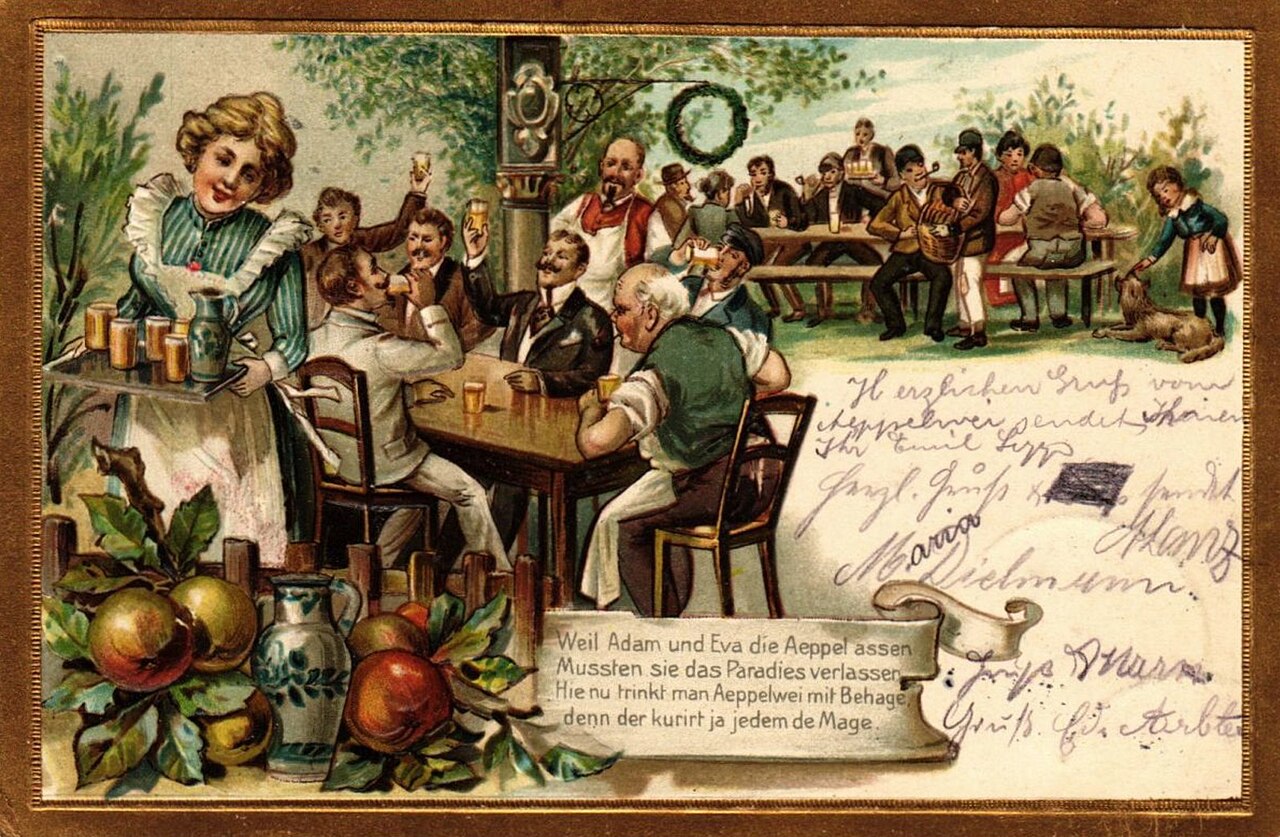
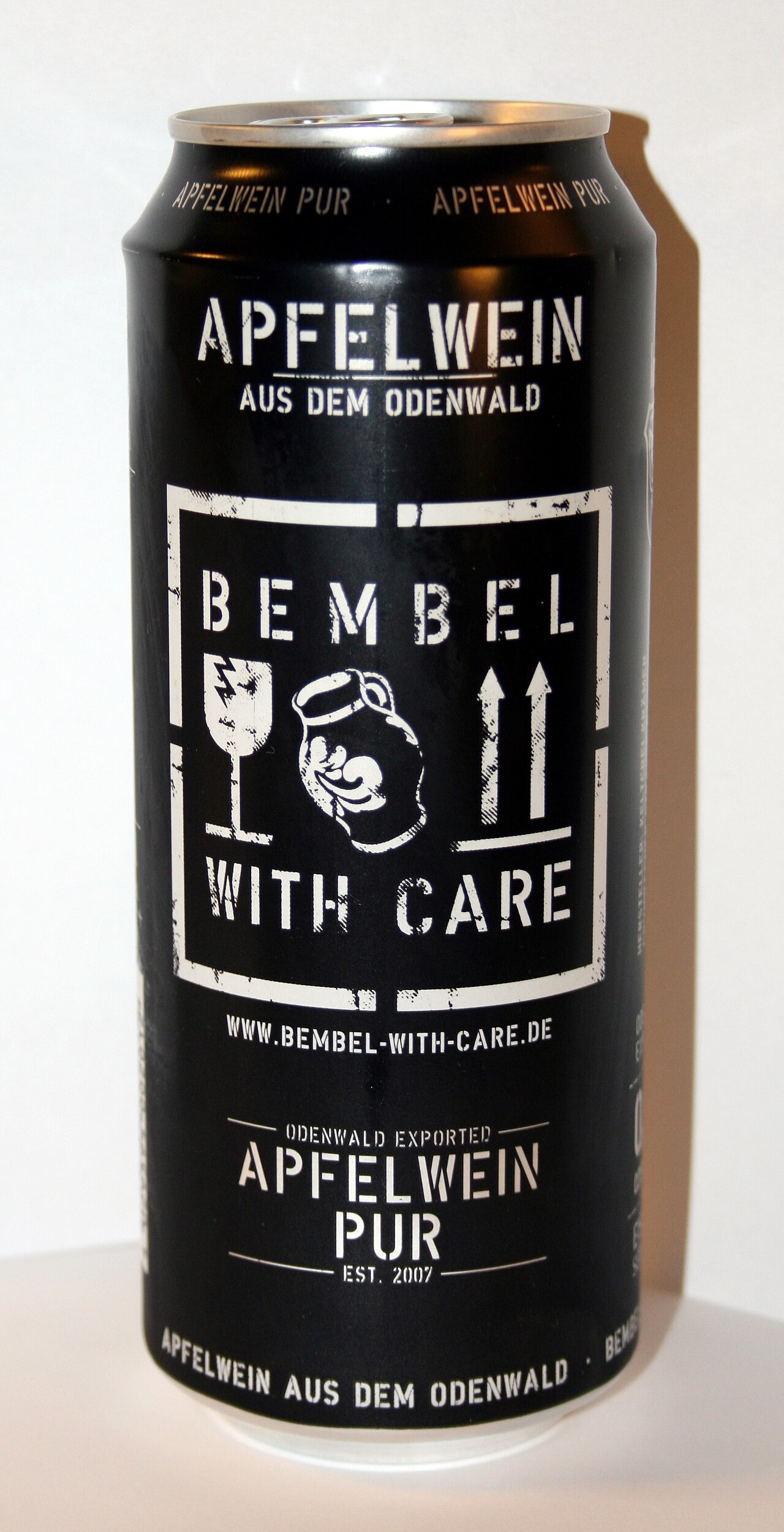
Apfelwein is produced by fermenting pressed apple juice with yeast, typically reaching around 6% ABV. In the Frankfurt area, berries from the service tree (Sorbus domestica) may be added to increase astringency, creating a variety called Speierling; in modern times, Speierling may also refer to any more sour Apfelwein even without service tree juice. The beverage is served in a Geripptes, a glass with a lozenge cut that improves grip, traditionally holding 0.30 liters, though 0.25 L and 0.50 L versions exist. A filled Geripptes is called a Schoppen in Frankfurt and surrounding areas. Establishments also serve Apfelwein by the Bembel, a paunchy salt-glazed stoneware jug with blue detailing, while in the Eifel, Hunsrück, Moseltal, lower Saar, and Trier, the container is called Viezporz, made of white porcelain or stoneware.
Reader's Guide
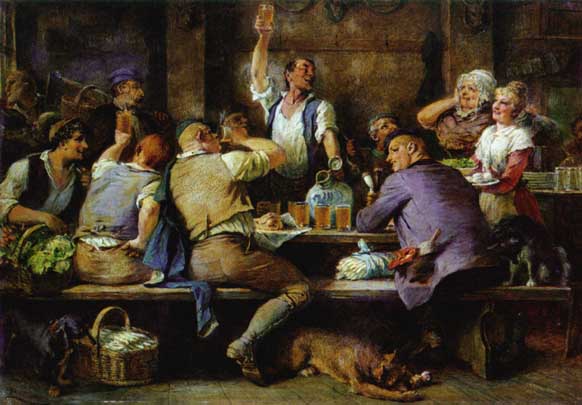
Apfelwein holds cultural significance as the state beverage of Hesse, with strong traditions in Frankfurt, Wetterau, and Odenwald, as well as in Moselfranken, Merzig, and the Trier area. It is produced by both large manufacturers and numerous small private producers using traditional recipes. Famous restaurants serving Apfelwein are located in Sachsenhausen (Frankfurt am Main). The beverage is celebrated through regular cider competitions and fairs, where small private producers participate and cider songs are composed and sung. The Merzig region crowns a Viez Queen, and the lower Saar area a Viez King. An official Viez route connects Saarburg with the Luxembourg border, and an annual Viez Fest is held in Merzig on the second Saturday in October. Hot Apfelwein, served with cinnamon and possibly cloves and orange slices, is used as a household remedy against colds or as a warming drink in cold weather.
Did You Know?
- Apfelwein is also regionally called Ebbelwoi, Stöffsche, Apfelmost, Viez, and saurer Most.
- The term Speierling originally refers to Apfelwein with added service tree berries, but now often denotes any more sour variety.
- In the Eifel region, the drinking container for Apfelwein is called Viezporz, made of white porcelain or stoneware.
- An annual Viez Fest is celebrated in Merzig, usually on the second Saturday in October.
A Tapestry of Names
Apfelwein is far from a single, monolithic identity. Across the German-speaking world, this tart, low-alcohol cider (typically 4.8 to 7.0 percent ABV) goes by a remarkable constellation of names that map onto regional pride and linguistic heritage. In Hesse and the Frankfurt basin, locals call it Ebbelwoi or Stöffsche, while in Moselfranken, Saarland, and around Trier the word Viez takes hold—a term borrowed from Latin "vice," evoking the idea of a second or substitute wine. Austria, Switzerland, and southern Germany prefer Most, literally "must," though Süßmost (sweet must) is essentially just apple juice. In restaurant settings and among smaller producers, the drink is often simply called Schoppen or Schoppe, a name that technically refers to the glass measure rather than the liquid itself. Even within a single bottle, sub-varieties carry their own labels: a particularly sour batch might be dubbed Speierling, a term that originally denoted the addition of service-tree berries but has broadened in modern usage to describe any extra-tart style. The sheer multiplicity of names reveals a beverage deeply woven into local dialect and identity.
From Orchard to Glass: The Craft of Production
The making of Apfelwein begins with pressed sour apples—varieties like the Bohnapfel that lend the finished drink its characteristic sharp, tart bite. The extracted juice, or must, is left to ferment with yeast, yielding an alcoholic beverage that typically settles around six percent ABV. In the Frankfurt area, producers sometimes introduce a small quantity of unprocessed juice from the service tree (Sorbus domestica), an endangered indigenous species that is easily mistaken for the wild apple. This addition increases astringency and earns the batch the specific name Speierling. Geographically, the drink is anchored in Hesse, where it holds the distinction of being the official state beverage, with the Frankfurt, Wetterau, and Odenwald areas forming its core. Its reach extends into Moselfranken, the Merzig district of Saarland, the Trier region, the lower Saar valley, and areas bordering Luxembourg. The production landscape blends several large-scale operations with numerous small, private makers who cling to traditional recipes, ensuring that the craft remains as much a family and community practice as a commercial one.
The Vessels That Define the Sip
No discussion of Apfelwein culture is complete without its distinctive drinking vessels. The standard glass is the Geripptes, a tumbler featuring a lozenge-shaped cut pattern that both refracts light beautifully and provides a firmer grip on the glass. This design is a practical holdover from an era when many meals were traditionally consumed without cutlery, making a secure handle essential. A "proper" serving in a traditional Apfelwein restaurant is the 0.30-litre (roughly 10-ounce) glass, though some establishments also offer 0.25-litre or 0.50-litre versions. In Frankfurt and its surroundings, a full Geripptes is colloquially called a Schoppen. For larger, shared pours, the Bembel takes the stage: a paunchy jug crafted from salt-glazed stoneware, typically finished in a plain grey tone with hand-painted blue detailing. Further east, in the Eifel, Hunsrück, Moseltal, lower Saar, and Trier regions, the equivalent container is known as the Viezporz, fashioned from white porcelain or stoneware. Each vessel carries its own regional signature, turning the simple act of pouring a drink into a small ritual of place and belonging.
Festivals, Routes & the Living Calendar
Apfelwein's cultural footprint extends well beyond the restaurant table into a rich calendar of public celebration. In regions where the drink is a point of local pride, regular cider competitions and fairs draw small, private producers to showcase their traditional recipes, and the events are accompanied by specially composed cider songs sung by attendees. The Merzig district crowns a "Viez Queen" each year, while the lower Saar area selects a "Viez King," adding a ceremonial, almost carnival dimension to what is fundamentally a craft beverage. An official Viez route, also known as the Route du Cidre, links Saarburg to the Luxembourg border, inviting travelers to experience the cider landscape along the way. In Merzig itself, the annual Viez Fest—usually held on the second Saturday in October—draws crowds to celebrate the season. Even in the domestic sphere, Apfelwein retains a practical role: heated with a cinnamon stick, a few cloves, and a slice of orange in the manner of mulled wine, it serves as a long-standing household remedy against colds and a warming companion through the winter months.
Gallery
Frequently Asked Questions
What is Apfelwein, and what makes it taste the way it does?
Apfelwein is the German term for a cider pressed primarily from sour apple varieties such as Bohnapfel, which gives it a sharply tart, acidic bite rather than a sweet finish. It typically lands between 4.8 and 7.0 percent ABV, sitting drier and lighter than many commercial ciders.
Where is Apfelwein actually from?
It holds the title of official state beverage in Hesse, and its core drinking culture radiates out through Frankfurt, the Wetterau, and the Odenwald. You'll also encounter it in Moselfranken, around Merzig and Trier, along the lower Saar, and right up against the Luxembourg border.
What glass do you use for Apfelwein, and why does it matter?
Traditionalists pour it into a Geripptes, a lozenge-cut tumbler, or a Viezporz, a small white porcelain or stoneware cup. The narrower rim funnels the sharp apple aromas toward your nose and keeps the drink cooler longer than a wide mug would.
How is Apfelwein different from a standard orchard cider?
The key split is the fruit: Apfelwein relies on deliberately sour apple cultivars, so the finished liquid is markedly more acidic and less sugary than a sweet-pressed cider. Its ceiling of roughly seven percent alcohol also keeps it in a lighter, more sessionable range.
What are all the other names people use for Apfelwein?
Across the German-speaking world you'll hear Ebbelwoi, Stöffsche, Apfelmost, Viez, saurer Most, or simply Schoppen, each rooted in a different local dialect or region. All of them point to the same tart, low-alcohol pressed-apple drink that Hesse claims as its signature sip.
More in German cuisine 1-24
Spotted an error? Know more?
This is a living reference — every entry is fact-audited, and reader corrections feed straight into our audit queue. Suggest an edit · See this site's audit record