Alb-Leisa
Revived traditional Swabian lentils from the Swabian Jura.

Kereul · CC BY-SA 3.0
Alb-Leisa refers to an eco-producer association, a trade name, and traditional lentil varieties from the Swabian Jura in Germany. The term 'Leisa' means lentils in Swabian. The association was founded after 2001 to revive lentil cultivation in the region, and the varieties were included in the Ark of Taste at Slow Food Deutschland in 2012.
- field
- Agriculture, lentil cultivation
- nationality
- German (Swabian Jura)
- known_for
- Revival of traditional Swabian lentil varieties under the name Alb-Leisa
- founded
- After 2001
- ark_of_taste_inclusion
- 2012
- current_member_farms
- 70
Lore & Background
The lentil, originally from the Near East, is one of the oldest cultivated plants. In 1908, the Tübinger Chronik reported increased cultivation on the Alb. Until the 1950s, the Swabian Jura was Germany's lentil cultivation center, after which it became uneconomical and ceased. In 1985, Biohof Mammel in Lauterach restarted lentil cultivation with a different lentil variety, as the traditional Swabian varieties were no longer available. Demand slowly rose, and from 2001, other organic farms joined, leading to the founding of the Öko-Erzeugergemeinschaft Alb-Leisa.
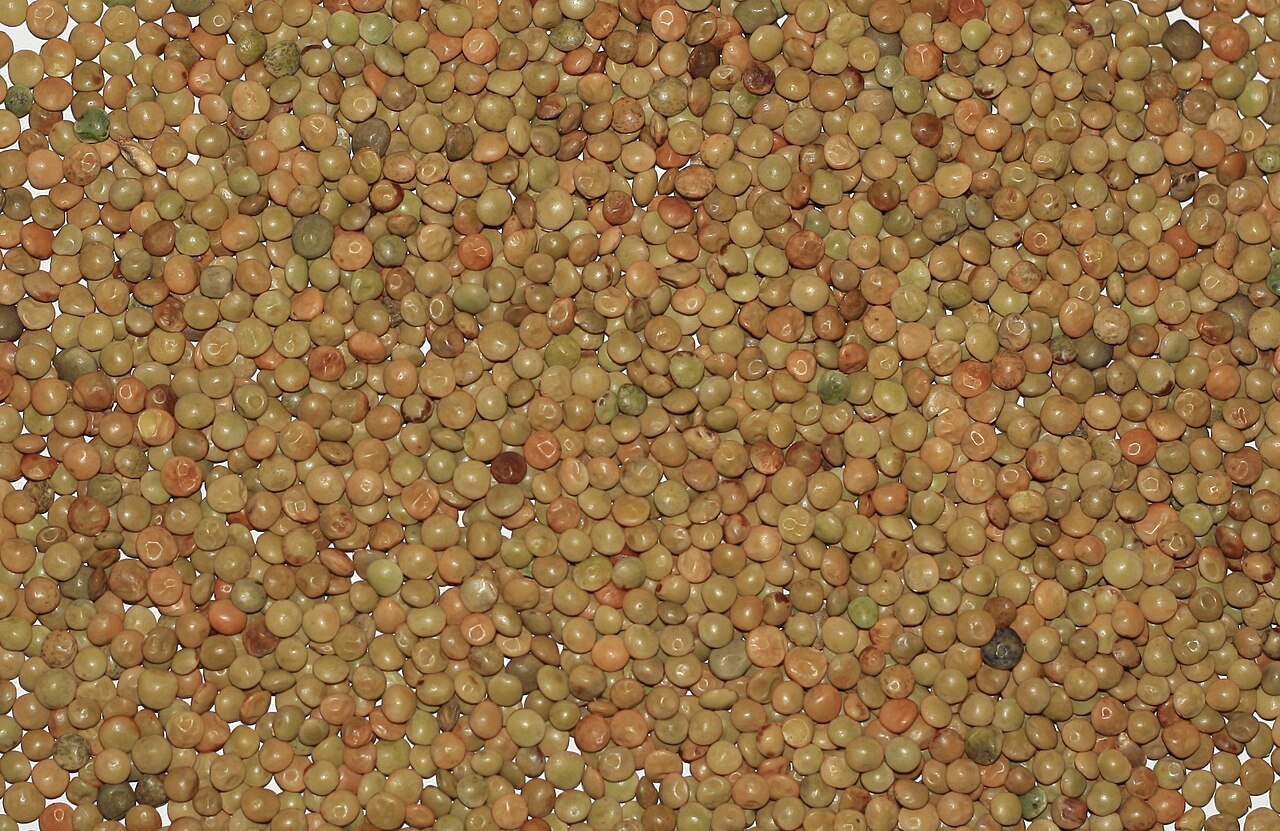
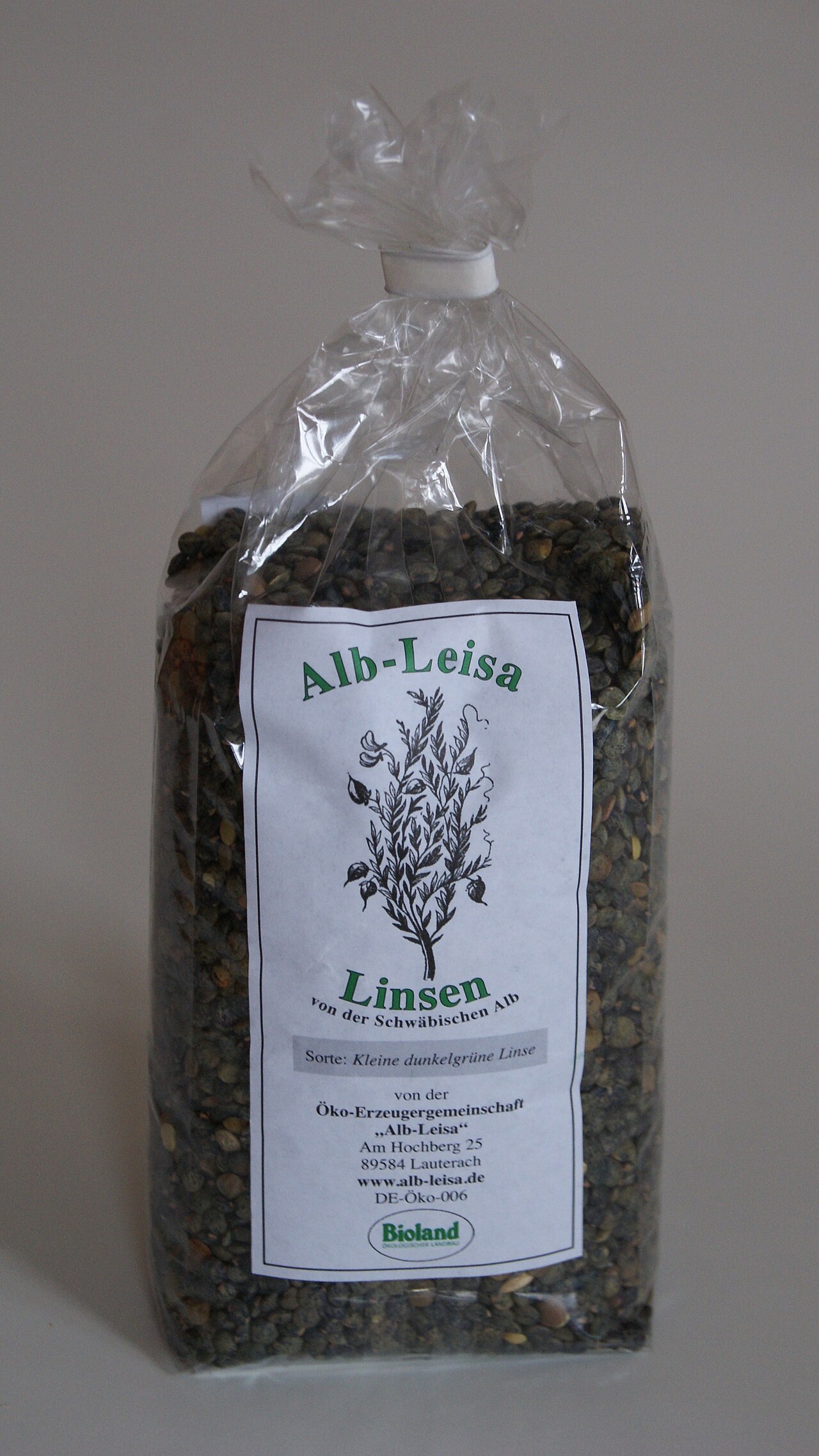
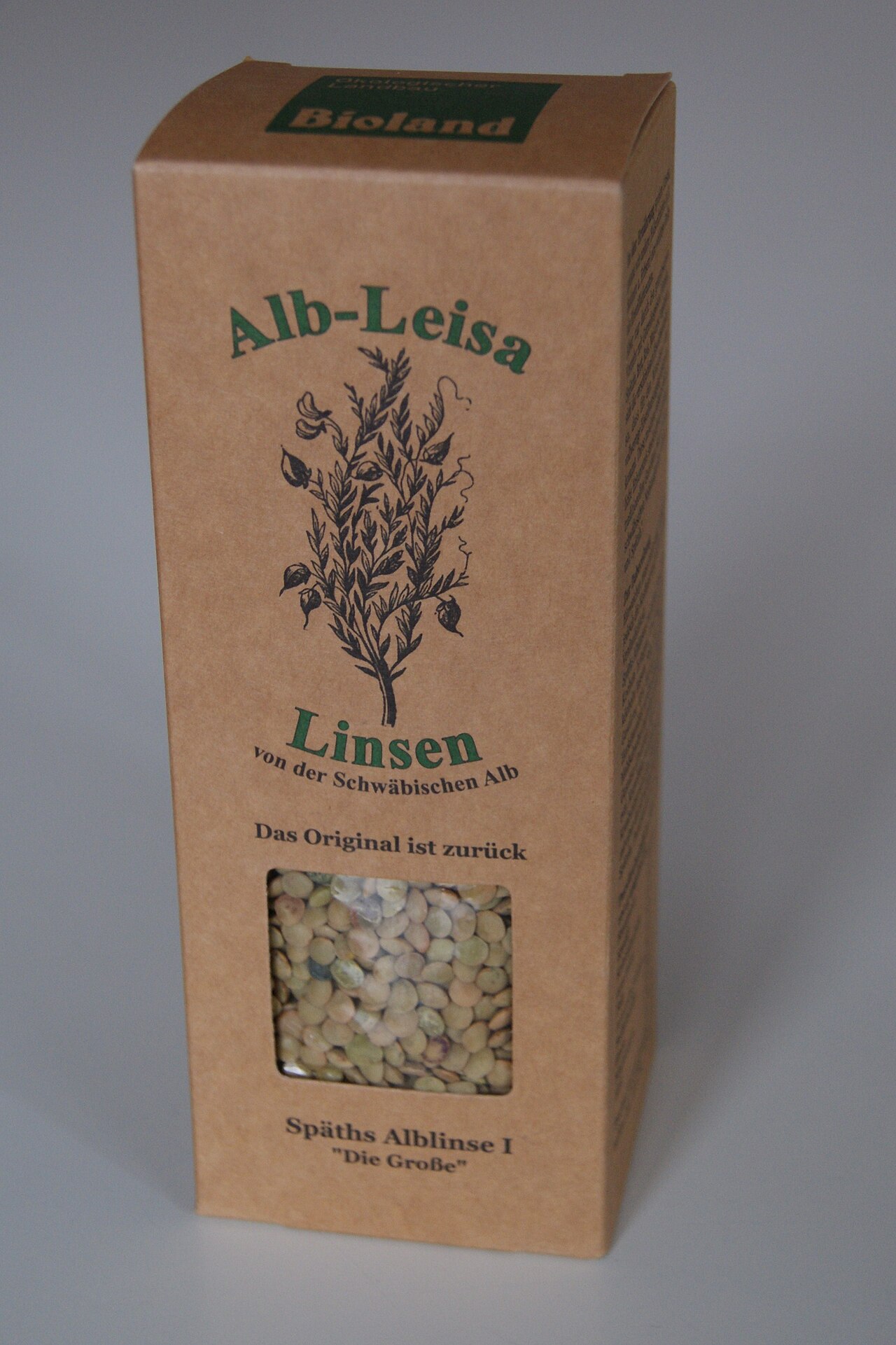
The traditional Swabian lentil varieties were later rediscovered in the gene bank of the Leibniz Institute of Plant Genetics and Crop Plant Research (IPK) in Gatersleben, Germany, and brought back to cultivation. Since then, three genotypes have been grown, protected under the name Alb-Leisa: 'Späths Alb-Leisa small', 'Späths Alb-Leisa large', and 'Späths Heller-Leisa'. The small-seeded variety is dark brown to black marbled and was first marketed in autumn 2011.
Reader's Guide
Alb-Leisa represents a successful revival of regional agricultural heritage in Germany. After lentil cultivation vanished from the Swabian Jura in the 1950s, the efforts of Biohof Mammel and later the producer association reestablished it, initially using French Puy lentils due to the loss of native seed. The accidental rediscovery of traditional Swabian varieties in a Russian gene bank in 2006 allowed for the cultivation of authentic local genotypes. The association now includes 70 small farms, marketing lentils regionally in Baden-Württemberg and Bavaria and via webshops. The inclusion in Slow Food's Ark of Taste in 2012 highlights its cultural and culinary significance. The varieties are protected by the producer group, which also handles variety care and seed production, ensuring the preservation of these unique lentils. This initiative demonstrates how collaboration between farmers, gene banks, and food movements can revive lost crops and support sustainable agriculture.
Did You Know?
- The term 'Leisa' means lentils in Swabian.
- The traditional Swabian lentil varieties were rediscovered in the gene bank of the Leibniz Institute of Plant Genetics and Crop Plant Research (IPK) in Gatersleben, Germany.
- Alb-Leisa was included in the Ark of Taste at Slow Food Deutschland in 2012.
- The small-seeded variety 'Späths Alb-Leisa small' is dark brown to black marbled and was first marketed in autumn 2011.
Naming, Roots, and Regional Identity
The name Alb-Leisa carries layered meanings that reflect both language and landscape. In the Swabian dialect, "Leisa" is simply the local word for lentils, while "Alb" anchors the term to the Swabian Jura, a limestone plateau in southwestern Germany. The phrase therefore functions simultaneously as the name of an eco-producer association (Öko-Erzeugergemeinschaft Alb-Leisa), as a registered trade name, and as a designation for traditional lentil varieties tied to that specific terroir. The lentil itself is a crop of Near Eastern origin and ranks among the oldest plants ever cultivated by humans, giving the Alb-Leisa a deep agricultural heritage that stretches back millennia. Within the Swabian Jura, however, the variety developed its own distinct character over generations of local farming, eventually producing seed lines that were unique to the region and inseparable from the identity of the plateau's smallholdings.
A Century of Cultivation and Collapse
By the early twentieth century, the Swabian Jura had firmly established itself as Germany's heartland for lentil farming. In 1908, the Tübinger Chronik, a daily newspaper based in Tübingen, noted a noticeable uptick in the area's lentil acreage, signalling that the crop was gaining ground on the Alb plateau. For several decades the region remained the national centre of production, and local farmers built entire livelihoods around the legume. Then, after the 1950s, the economic calculus shifted. Industrial-scale agriculture and cheaper imports rendered small-scale lentil farming on the Jura unprofitable, and cultivation in the area ground to a complete halt. For roughly three decades the plateau went without a single row of lentils. The silence was broken in 1985, when the organic farm known as Biohof Mammel in Lauterach decided to plant lentils again. Demand grew only gradually, but by 2001 a critical mass of neighbouring organic farms had expressed interest, setting the stage for a collective effort.
The St. Petersburg Recovery and the Späth Varieties
When Biohof Mammel resumed growing lentils in 1985, a troubling reality had already set in: every traditional Swabian variety had vanished from the region, and no seed stock existed anywhere in Germany. As a stopgap, the farm turned to the French Le Puy green lentil, a cultivar well suited to the Jura's soil and climate, which it marketed as "dark green marbled lentils." That substitute dominated production as late as 2011. The breakthrough came in 2006, when researchers at the Vavilov Institute's gene bank in St. Petersburg stumbled upon the long-lost classic Swabian lines. The seeds were shipped back to Germany and replanted on the plateau. The recovered genotypes trace to the breeder Fritz Späth of Haigerloch and include "Späths Alb-Leisa small," "Späths Alb-Leisa large," and "Späths Heller-Leisa." The small-seeded variety, dark brown to black with a marbled pattern, returned to the market in autumn 2011. Two of the lines carry official accession numbers, K-2076 and K-2106, and all three are protected under the Alb-Leisa name by the producer group.
The Collective, Its Market, and Its Guardianship
Today the Alb-Leisa name unites roughly seventy small farms across the Swabian Jura in a shared eco-producer association. The group's collective marketing is handled by Lauteracher Alb-Feld-Früchte, the trading arm that grew out of the original Biohof Mammel operation. Products reach consumers primarily in the German states of Baden-Württemberg and Bavaria, with additional distribution through online shops. In 2012 the Slow Food Deutschland chapter recognised the Alb-Leisa by adding it to its Ark of Taste, a registry dedicated to preserving at-risk food traditions. Beyond selling finished legumes, the association takes on a role that few others in the region fill: the farmers themselves manage variety care and seed production, since virtually no professional seed propagators work with these lines. This hands-on stewardship ensures that the three protected Späth genotypes remain genetically stable and that the name Alb-Leisa continues to signify a living, regionally rooted food heritage rather than a mere label.
Gallery
Frequently Asked Questions
What is Alb-Leisa?
Alb-Leisa is a trade name and eco-producer association centered on traditional lentil varieties grown in the Swabian Jura region of Germany. The name pairs 'Alb,' shorthand for the Swabian Jura, with 'Leisa,' the local Swabian dialect word for lentils.
What does the word 'Leisa' actually mean?
'Leisa' is the Swabian dialect term for lentils, setting the regional crop apart from the standard German word 'Linsen.' Using the local name underscores the deep cultural ties between the Swabian Jura and its lentil-growing heritage.
When and why was the Alb-Leisa association founded?
The group was established after 2001 to bring back traditional lentil cultivation that had largely vanished from the Swabian Jura. Its members collaborate to preserve heirloom varieties and keep the crop alive in local agriculture.
What is Alb-Leisa's connection to Slow Food?
In 2012, the Alb-Leisa lentil varieties were added to the Ark of Taste by Slow Food Deutschland, flagging them as heritage foods in need of protection. That recognition helped draw broader attention to the region's unique lentil tradition.
How many farms are part of the Alb-Leisa community today?
The association currently includes roughly 70 member farms across the Swabian Jura who grow and market the traditional varieties together. Operating as an eco-producer group, they coordinate to sustain the crop's presence in the region.
More in German cuisine 1-24
Spotted an error? Know more?
This is a living reference — every entry is fact-audited, and reader corrections feed straight into our audit queue. Suggest an edit · See this site's audit record