Bauernfrühstück
A warm German dish of potatoes, eggs, and bacon.

Dr. Bernd Gross · CC BY-SA 4.0
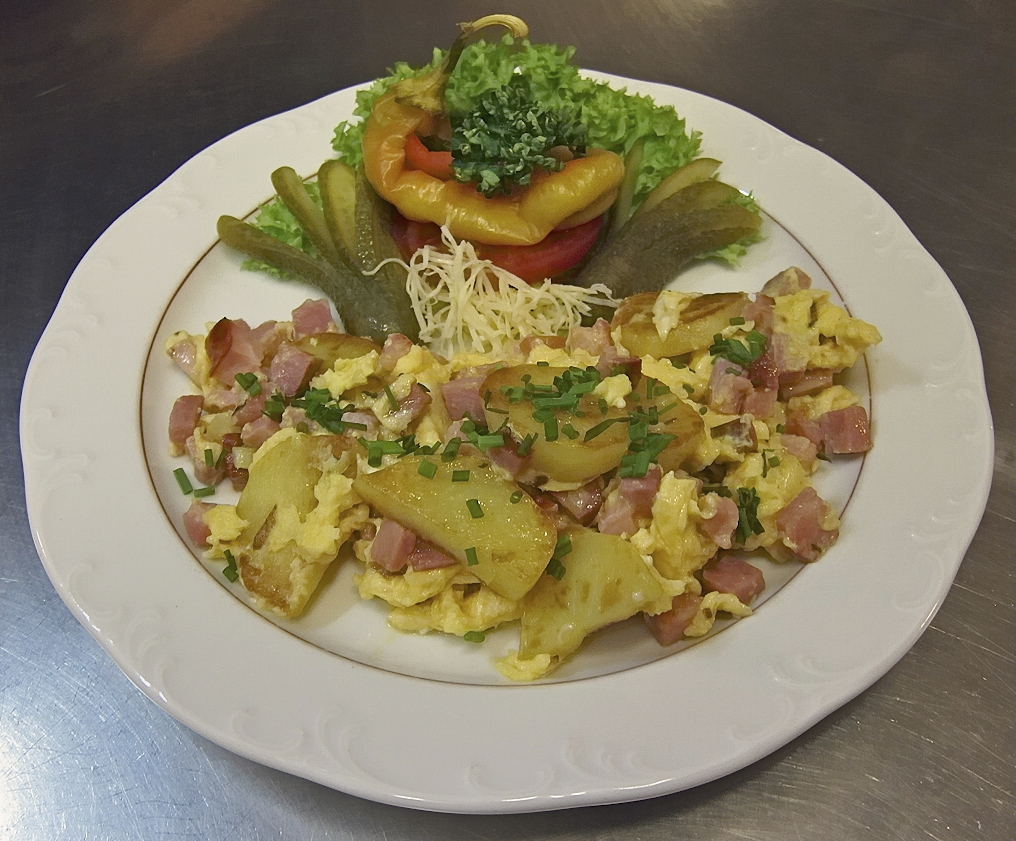
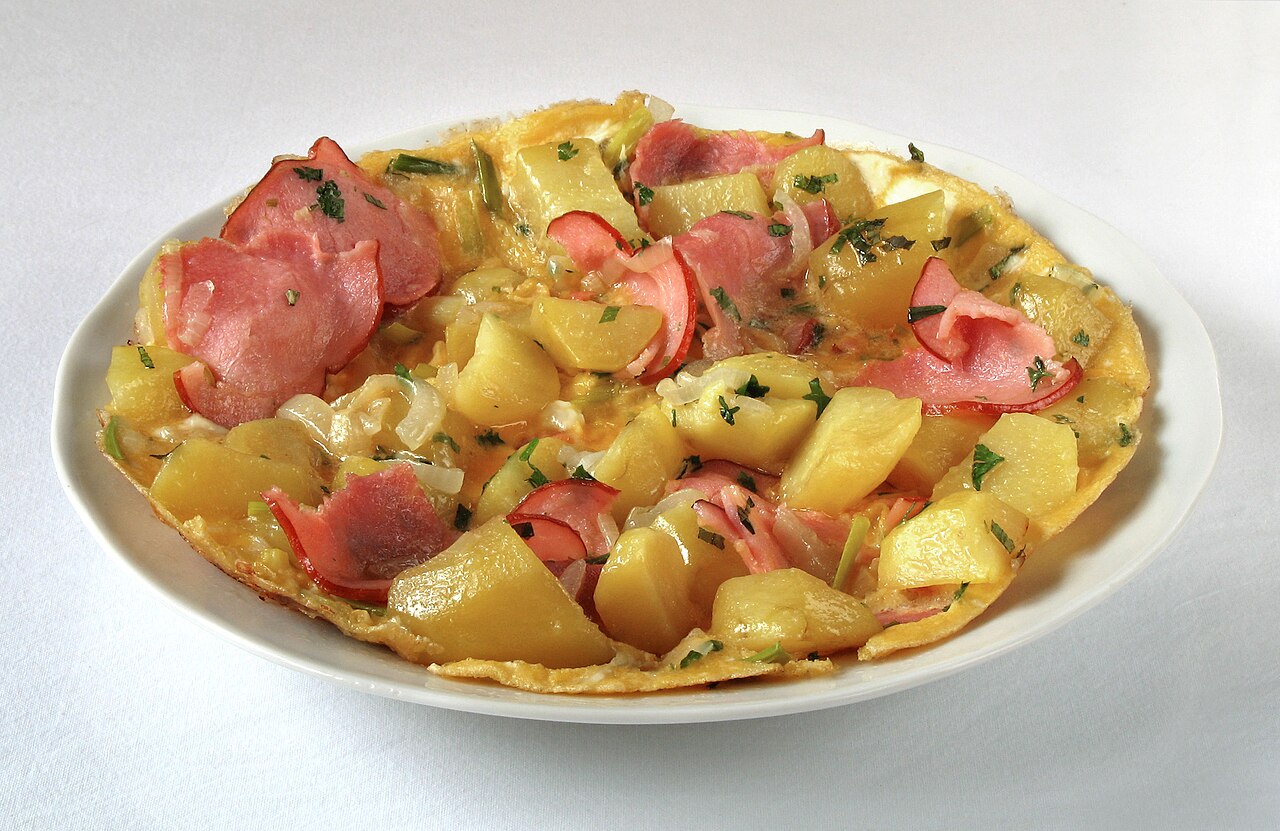
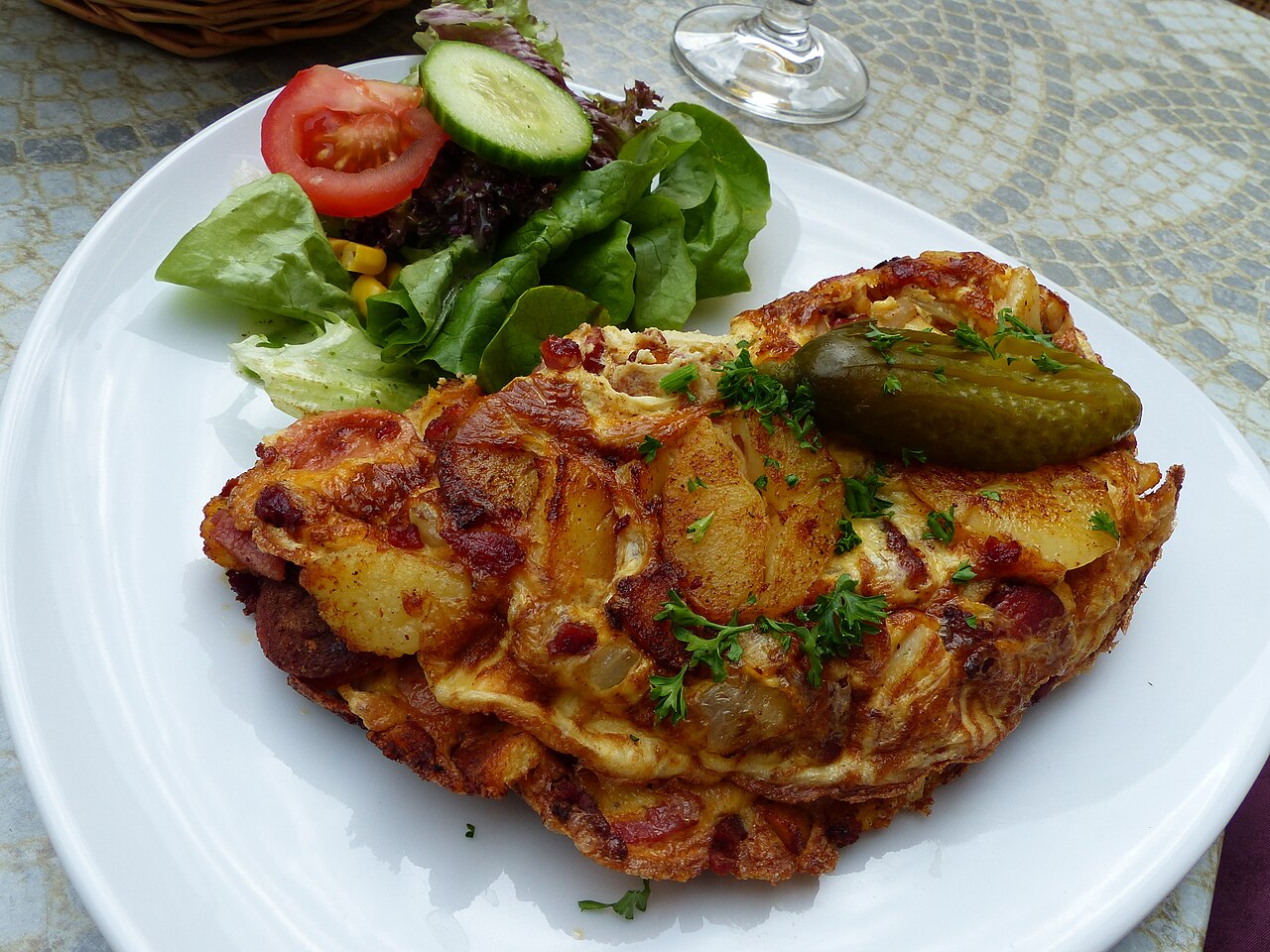
Bauernfrühstück, pronounced [ˈbaʊ̯ɐnˌfʁyːʃtʏk] and meaning "farmer's breakfast" in German, is a warm dish that combines fried potatoes, eggs, green onions, parsley, and either bacon or ham. Though its name suggests a morning meal, it is commonly served at lunch or dinner as well.
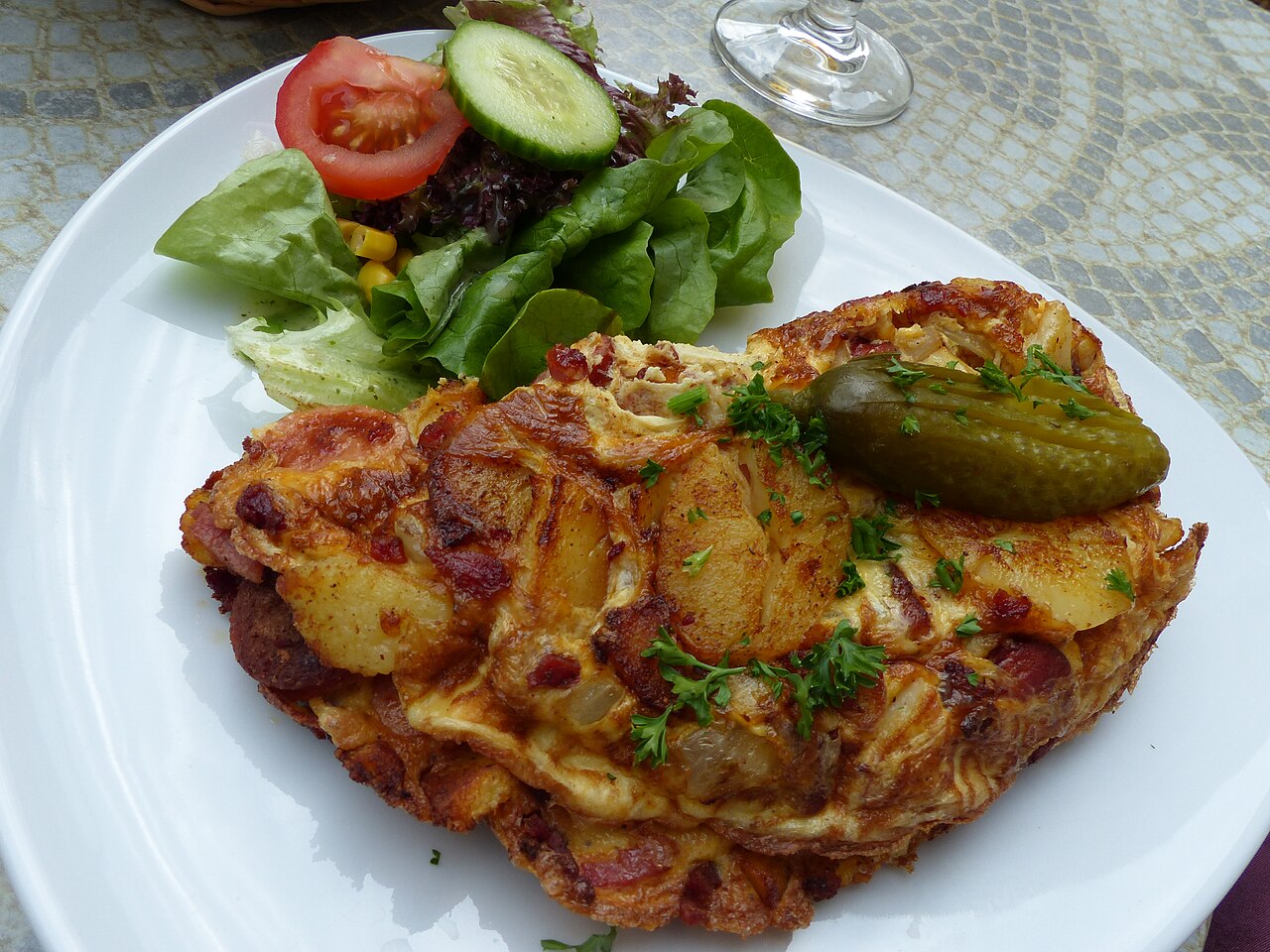
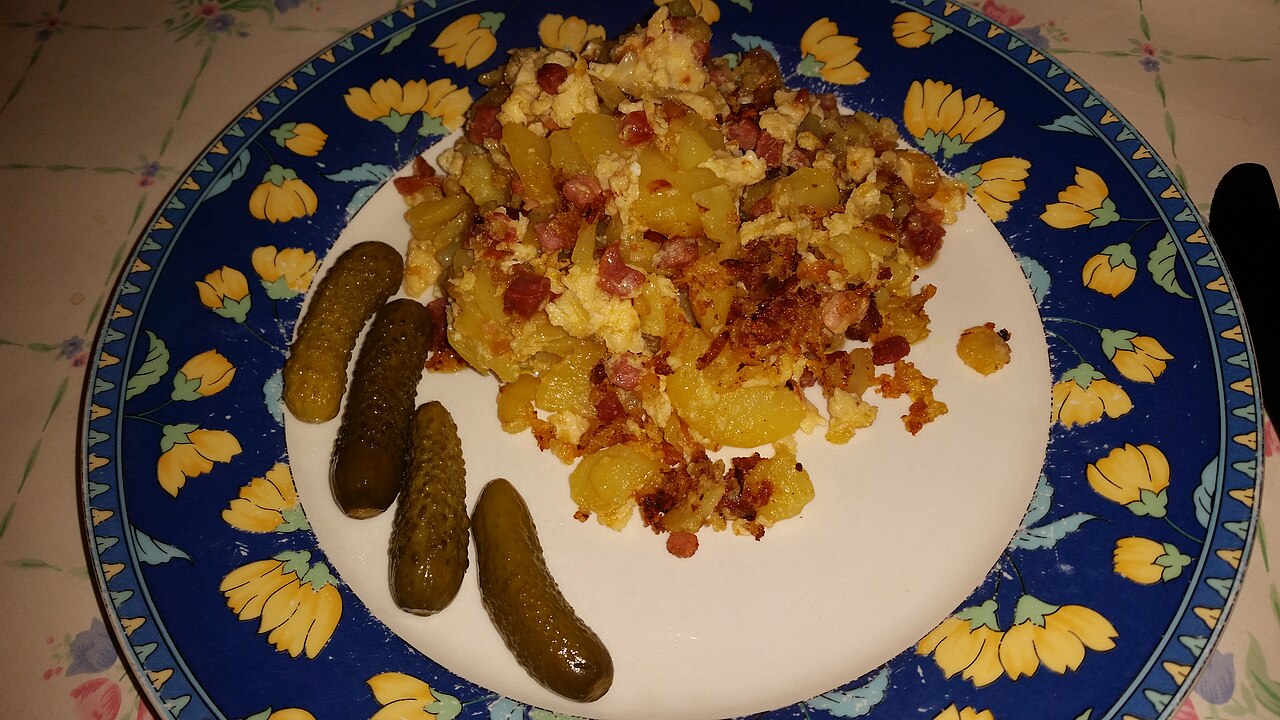
To prepare it, the ingredients are mixed together in a pan and fried into an omelette-like shape. The dish resembles the simpler English bubble and squeak. It is typically served with a green or tomato salad, gherkins, and rye bread.
Many other countries have similar dishes. France offers omelette à la paysanne (made with sorrel), Spain has tortilla de patatas, and Sweden serves pyttipanna. In the Midwestern United States, Minnesota is known for hoppel poppel. Scotland contributes rumbledethumps, stovies, and clapshot. England has bubble and squeak. The Nordic countries—Sweden, Norway, and Finland—each have versions of pyttipanna, pyttipanne, and pyttipannu, all meaning "small pieces in pan." Denmark offers biksemad. From Catalonia in northeast Spain and Andorra comes trinxat. Argentina has revuelto Gramajo. Portugal’s roupa velha ("old clothes") often uses leftovers from cozido à portuguesa, while Spain’s ropa vieja comes from the remains of cocido. Germany also has stemmelkort, the Netherlands has stamppot, Belgium has stoemp, the United States has hash, and Colombia has calentado. Related entries include hash browns and potato cake.
- type
- dish
- origin
- Germany
- main_ingredients
- fried potatoes, eggs, green onions, parsley, bacon or ham
- also_eaten_for
- lunch and dinner
- similar_dish
- English bubble and squeak
Lore & Background
Bauernfrühstück is prepared by mixing the ingredients in a pan and frying them as an omelette. It is usually accompanied by a green or tomato salad or gherkins, and rye bread. The dish is similar to the somewhat simpler English bubble and squeak.
Reader's Guide
Bauernfrühstück, meaning 'farmer's breakfast', is a versatile German dish that transcends its name, being consumed at any meal. Its core ingredients—fried potatoes, eggs, green onions, parsley, and bacon or ham—are combined into an omelette-like preparation. The dish is typically served with a salad or pickles and rye bread. It belongs to a broader family of potato-and-egg dishes found across Europe and the Americas, including the French omelette à la paysanne, Spanish tortilla de patatas, Swedish pyttipanna, and American hash. Its simplicity and use of common ingredients make it a staple of home cooking, reflecting a tradition of hearty, economical meals.
Did You Know?
- Bauernfrühstück is eaten not only for breakfast but also for lunch and dinner.
- It is similar to the English dish bubble and squeak.
- The dish is usually accompanied by a green or tomato salad or gherkins, and rye bread.
- Similar dishes include the French omelette à la paysanne and the Spanish tortilla de patatas.
The Name and Identity of Bauernfrühstück
Bauernfrühstück, pronounced roughly "BOW-ern FRY-sh-tik" in German, translates literally to "farmer's breakfast." Yet the name is somewhat misleading, as this warm dish is not confined to the morning meal. In practice, it appears on tables at lunch and dinner just as readily as it does at breakfast, making the "Farmer's" prefix more of a nod to its humble, hearty origins than a strict meal-time designation. The dish is a staple of German cooking, built around a core set of ingredients: fried potatoes, eggs, green onions, fresh parsley, and a savory protein in the form of bacon or ham. It is a straightforward, satisfying plate that speaks to the practical, no-frills cooking tradition associated with rural German households. Despite its simplicity, the combination of warm, starchy, and savory elements gives it a comforting, filling quality that has kept it firmly embedded in the German culinary landscape.
How It Comes Together in the Pan
The preparation of Bauernfrühstück is notably hands-on and relatively quick. Rather than being assembled as separate components on a plate, the ingredients are combined directly in a pan and cooked together in a manner akin to an omelette. The fried potatoes, eggs, green onions, parsley, and bacon or ham are mixed and fried as a unified dish, allowing the flavors to meld during the cooking process. This method gives the dish a cohesive, pan-fried character that distinguishes it from simply plating pre-cooked elements. It is often compared to the English bubble and squeak, though Bauernfrühstück is considered somewhat more complex in its ingredient mix. On the side, it is traditionally served alongside a green or tomato salad, pickled gherkins, and a slice of dense rye bread, rounding out the meal with fresh, tangy, and hearty counterpoints to the warm, savory pan dish.
A Global Family of Pan Dishes
Bauernfrühstück is far from unique in the world of cooking. A remarkable number of cuisines around the globe feature dishes built on the same basic principle: combining potatoes, eggs, and savory elements in a pan. In France, omelette à la paysanne carries a similar spirit, often incorporating sorrel. Spain offers the well-known tortilla de patatas, while the Empordà region of Catalonia and Andorra prepare trinxat. Sweden, Norway, and Finland all have their versions of pyttipanna, literally "small pieces in pan." Denmark contributes biksemad, and the Netherlands and Belgium offer stamppot and stoemp, respectively. Across the Atlantic, the United States has hash, Colombia has calentado, and Argentina serves revuelto Gramajo. Portugal's roupa velha, meaning "old clothes," and Spain's ropa vieja are both built from leftover stews. Scotland's rumbledethumps, stovies, and clapshot, England's bubble and squeak, and even Minnesota's hoppel poppel all belong to this broad family of one-pan, potato-and-egg preparations.
Its Place in German Culinary Documentation
Bauernfrühstück occupies a clear and recognized position within the broader landscape of German home cooking. It sits alongside other German pan dishes such as Stemmelkort, forming a small cluster of similar preparations within the national cuisine. The dish has been documented in several respected German culinary reference works, underscoring its status as a well-established everyday preparation rather than a regional curiosity. Erhard Gorys's "The New Kitchen Lexicon," in its eleventh updated edition published by dtv in Munich, includes an entry for the dish, placing it within a comprehensive A-to-Z of German food terminology. Similarly, the "Herring Encyclopedia of Kitchen," edited by Richard Herring and Jürgen F. Herrmann and published in its expanded edition by Fachbuchverlag Pfannenberg, devotes attention to Bauernfrühstück as part of a broader survey of German kitchen traditions. These references, dating from the early 2000s, confirm that the dish remains a fixture of German culinary identity, worthy of inclusion in the country's most authoritative food lexicons.
Gallery
Frequently Asked Questions
What is Bauernfrühstück?
It's a warm German pan dish that brings together fried potatoes, eggs, green onions, parsley, and a cut of bacon or ham. The name literally translates to "farmer's breakfast," though it's enjoyed well beyond morning meals.
What are the main ingredients in Bauernfrühstück?
The core components are fried potatoes, eggs, green onions, parsley, and either bacon or ham. All of these are combined and cooked together in a single pan.
Is Bauernfrühstück really only a breakfast dish?
Despite its name literally meaning "farmer's breakfast," most people in Germany serve it at lunch or dinner just as readily. It's a versatile warm plate that fits any meal of the day.
How do you cook Bauernfrühstück?
You toss all the ingredients into a pan and fry them together until they set into a cohesive, omelette-like shape. The result is a savory patty rather than a loose scramble.
What do Germans typically serve alongside Bauernfrühstück?
A green or tomato salad, a few gherkins, and a slice of rye bread are the classic accompaniments. The dish is often compared to the English bubble and squeak for its rustic, one-pan simplicity.
More in German cuisine 1-24
Spotted an error? Know more?
This is a living reference — every entry is fact-audited, and reader corrections feed straight into our audit queue. Suggest an edit · See this site's audit record