Murri (condiment)
A fermented barley-based condiment from medieval Arab cuisine.
Last updated

Unknown author · Public domain
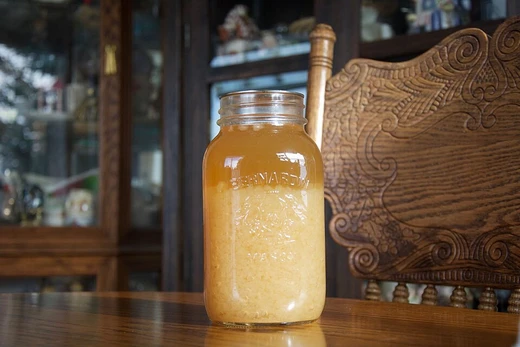
Murrī (or almorí in Andalusia) was a liquid condiment made using a fermented solid-state starter called budhaj, which was prepared with barley flour or wheat flour. Known from Maghrebi and Arab cuisines, it was used in small quantities in almost every substantial dish of medieval Arab cuisine and could substitute for salt or sumac. It has been compared to soy sauce by scholars such as Rudolf Grewe and Charles Perry due to its high glutamate content and resultant umami flavor.
Quick Facts
- Types
- Iraqi-style and Maghrebi-style
- Primary ingredients
- Barley flour or wheat flour
- Starter name
- Budhaj (or budhaq)
- Comparison
- Compared to soy sauce by Rudolf Grewe and Charles Perry
- Substitute for
- Salt or sumac
Facts from the source article.
Background
Historical recipes describe two types of murrī. The Iraqi-style, from the 10th-century Kitab al-Tabikh and the 13th-century Kitab Wasf al-Atima al-Mutada, was made by wetting ground flatbread, barley flour (budhaj flour), and salt, then allowing it to ferment. The Maghrebi style, detailed in Kitab Wasf, used only barley flour and was flavored with carob, fennel stems, citron, pine nuts, mixed spices, and bitter orange wood, with a consistency similar to treacle. Kitab Wasf also mentions a 'Byzantine murri' made with toasted bread and caramelized honey.
Some Arabic lexicographical texts suggested murrī might be of foreign origin, leading modern scholars to speculate it could derive from the Greek halmyris ('a salty thing') and relate to the Roman condiment garum. Charles Perry notes that while both are fermented, salty liquid seasonings, it is unknown whether the technique or culinary use originated with the Greeks. David Waines clarifies that the most common form of murrī was made from cereal grain, not fish, despite confusion linking it to garum. A 13th-century Latin text, Liber de Ferculis et Condimenti, mistranscribed the recipe by omitting the fermentation stage.
More in Fermented Foods
Sources
Compiled from Wikipedia and the sources listed below. Text from Wikipedia is available under CC BY-SA 4.0; this entry is adapted from it.
- Wikipedia: Murri (condiment) (CC BY-SA 4.0).
Spotted an error? Know more?
Reader corrections go straight into our review queue. Suggest an edit · How this site is sourced