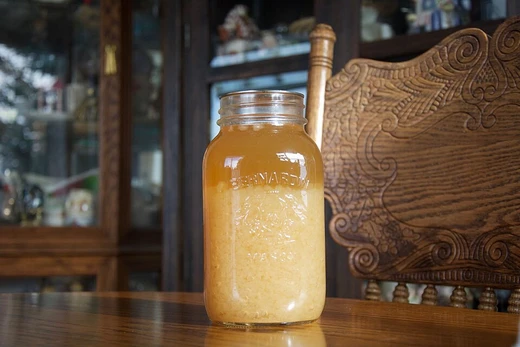
Red yeast rice
Fermented rice with culinary and medicinal uses, source of natural statin.
Last updated

DataBase Center for Life Science (DBCLS) · CC BY 4.0
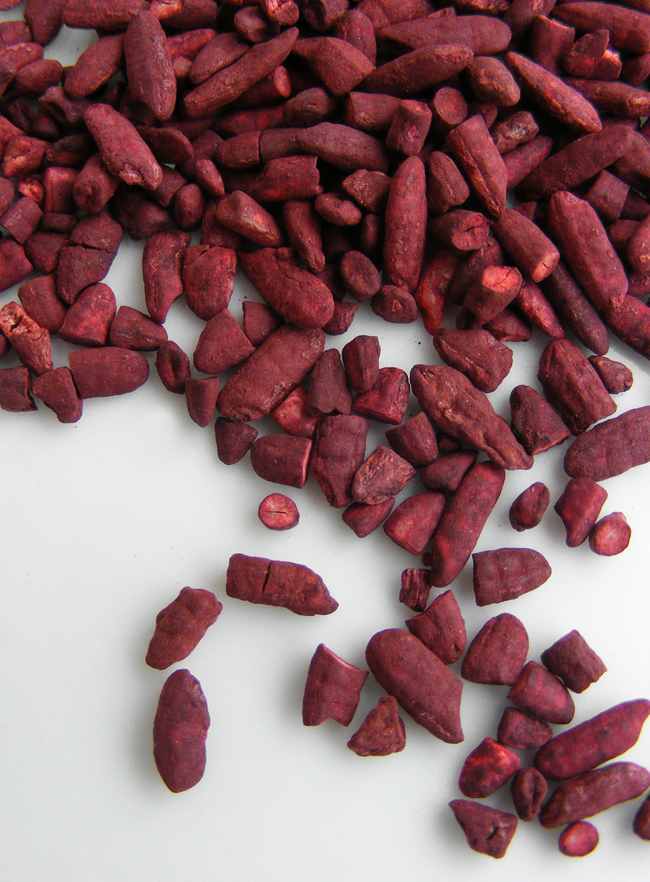
Red yeast rice, also known as red rice koji, is a bright reddish purple fermented rice produced by cultivating the mold Monascus purpureus on rice. It is notable for its dual role as a culinary colorant and flavoring agent in East and Southeast Asian cuisines, and as a source of monacolin K, a compound chemically identical to the prescription statin drug lovastatin, leading to its use as a dietary supplement and subsequent regulatory controversy.
Quick Facts
- Cultivation duration
- 3–6 days at room temperature
- Clinical trial dosage
- 1200–2400 mg/day containing approximately 10 mg total monacolins
- Largest trial duration
- average of 4.5 years
- Largest trial participants
- close to 5,000 post-heart attack patients
Facts from the source article.
Background
Red yeast rice is produced by cultivating the mold Monascus purpureus on rice for 3–6 days at room temperature, turning the grains bright red at the core and reddish purple on the outside. The fully cultured rice is sold as dried grain, wet paste, or fine powder. China is the world's largest producer, though European companies have entered the market. The term 'koji' in Japanese refers to 'grain or bean overgrown with a mold culture,' a tradition dating back to around 300 BCE.
Culinarily, red yeast rice is used to color fermented tofu, red rice vinegar, char siu, Peking duck, and Chinese pastries. It is also used in Chinese huangjiu (Shaoxing jiu) and Japanese sake (akaisake). The lees from wine production, called hóngzāo, are used in Fujian cuisine for dishes like red wine chicken. In the Philippines, it is used to color and preserve fermented shrimp (bagoóng alamáng), burong isdâ, and balao-balao.
In traditional Chinese medicine, red yeast rice is described in the pharmacopoeia Ben Cao Gang Mu by Li Shizhen, with recommendations to invigorate the body, aid digestion, and revitalize the blood. Medicinal use may date to the Tang dynasty around 800 CE.
More in Fermented Foods
Sources
Compiled from Wikipedia and the sources listed below. Text from Wikipedia is available under CC BY-SA 4.0; this entry is adapted from it.
- Wikipedia: Red yeast rice (CC BY-SA 4.0).
Spotted an error? Know more?
Reader corrections go straight into our review queue. Suggest an edit · How this site is sourced