Ogiri
West African umami seasoning from fermented oil seeds.
Last updated

Ekeanya Chidiebere · CC BY-SA 4.0
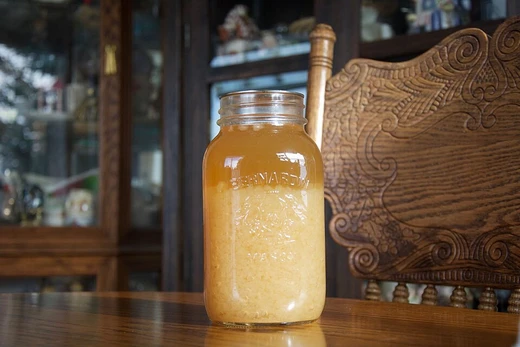
Ogiri is a West African seasoning that delivers a strong umami flavor, made by fermenting oil-rich seeds. Its origins are tied to various ethnic groups in Nigeria. The traditional base is egusi (melon seeds), but other versions use sesame, castor oil beans, fluted pumpkin seeds, watermelon seeds, or peanuts, though these are less common.
Among the Yoruba, it is also called Eragiri (Ògìrì, Ẹ̀ràgìrì) and is used in cooking, especially by the Ijebu, Ekiti, Ondo, Osun, Oyo, and Igbo peoples. Despite a common mix-up among chefs and food bloggers, Ogiri is not the same as Iru.
Ogiri comes from fermenting oil seeds like sesame, melon, or castor beans—a distinction recorded in the Yoruba lexicon as early as 1843. Iru, by contrast, is made from locust bean seeds. Nineteenth-century sources list them as separate entries, and Ogiri was later adopted into the Igbo lexicon through migration and cultural exchange.
The production process and final product resemble those of Iru, douchi, and other fermented foods. Its smell is similar to cheese, miso, or stinky tofu.
Ogiri is best known in West Africa, popular among the Yoruba and Igbo, as well as the Krio of Sierra Leone, who call it Ogiri saro. The Igbo version is distinct and similar to Iru Pete, which is Iru in mashed form. A related condiment called Okpehe, Okpei, Okpiye, or Ogiri Okpei is native to the Igala and Idoma people of Nigeria’s Middle Belt, but it is made from African mesquite bean seeds, specifically Anonychium.
Quick Facts
- Also called
- Eragiri (Yoruba: Ògìrì, Ẹ̀ràgìrì)
- Primary substrate
- egusi (melon seeds)
- Other substrates
- sesame castor oil beans
- fluted pumpkin seeds
- watermelon seeds
- peanuts
- Ethnic groups using
- Yoruba (Ijebu, Ekiti, Ondo, Osun, Oyo)
- Igbo
- Krio of Sierra Leone
- Similar condiment
- Okpehe, Okpei, Okpiye, or Ogiri Okpei (made from African mesquite bean seeds, Anonychium)
Facts from the source article.
Background
Ogiri is traditionally made from the fermentation of egusi (melon seeds), although other types are produced at lower frequencies from substrates such as sesame castor oil beans (Ogiri Igbo/Ogiri Isi), fluted pumpkin seeds, watermelon seeds, and peanuts. Among the Yorubas, it is also called Eragiri and used in cooking particularly amongst the Ijebu, Ekiti, Ondo, Osun, Oyo, and Igbo people. Contrary to popular opinion especially amongst content creating chefs and foodies, Ogiri and Iru are not the same condiment; Ogiri is made by fermenting oil seeds, while Iru is made from locust bean seeds. This is supported by authoritative evidences from the 19th century, showing separate entries for both words in the Yoruba lexicon, long before its adoption into the Igbo lexicon, which ultimately suggests linguistic borrowing from the former into the latter owing to migration and cultural exchange.
More in Fermented Foods
Sources
Compiled from Wikipedia and the sources listed below. Text from Wikipedia is available under CC BY-SA 4.0; this entry is adapted from it.
- Wikipedia: Ogiri (CC BY-SA 4.0).
Spotted an error? Know more?
Reader corrections go straight into our review queue. Suggest an edit · How this site is sourced