Pla ra
A traditional Thai fermented fish seasoning with strong smell.
Last updated

Xufanc · CC BY-SA 3.0
Pla ra (Thai: ปลาร้า, pronounced [plāː ráː]; also called ปลาแดก, pronounced [pàː dɛ̀ːk], in Northeastern Thai) is a traditional Thai seasoning made by fermenting fish with rice bran or roasted rice flour and salt in a sealed container for at least six months. This type of fermented fish seasoning appears in Cambodian, Lao, Mon, Thai, and Vietnamese cooking, and is similar to Laos’s padaek. Its strong smell is often considered unpleasant, and its taste is salty and sour, shaped by the salt content and lactic acid produced during fermentation. Historically, pla ra was common in the Ayutthaya Kingdom.
History
The French diplomat Simon de la Loubère, who visited Siam in the late 17th century, noted that rice and fish were the main foods. He observed that Siamese people did not care for fresh fish, preferring fermented fish, which was as popular as spicy dips like nam phrik. When he returned to France, he brought some pla ra with him.
Classification
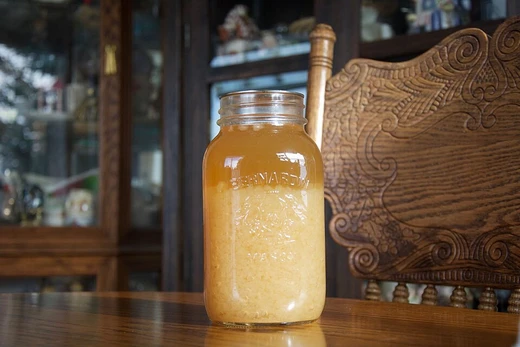
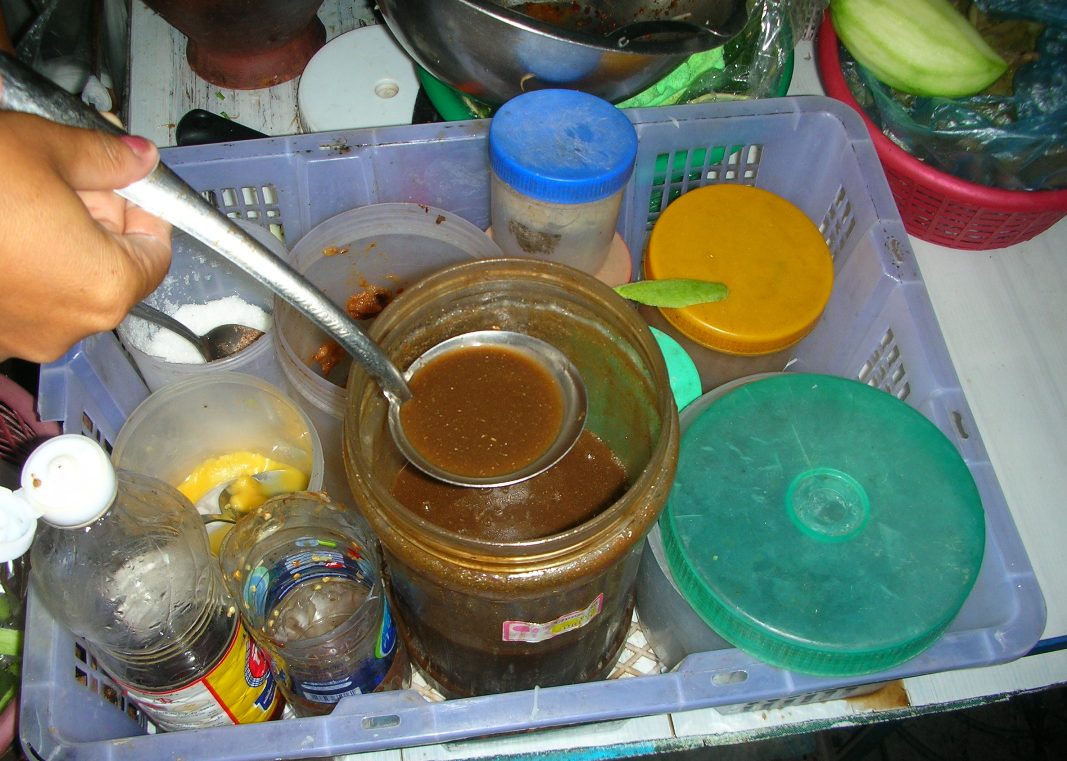
Pla ra is categorized by its main ingredients. One type, fermented with roasted rice powder, turns yellow with a soft texture and a distinct smell; it is often used as a paste and is typically made in central Thailand, usually from striped snakehead fish or catfish. Another type, fermented with rice bran, is clear black with a stronger smell and softer, smaller fish; it is common in northeastern Thailand, used as an ingredient or eaten raw. Pla ra sot is made with fresh fish, giving a salty flavor with slight sourness from lactic acid.
Process
Pla ra lom uses dead fish, which undergo autolysis and develop an unpleasant smell, or fish soaked in water for 12–24 hours until softer. Production methods vary. One method has two phases: first, fish is fermented with salt until soft; then, it is fermented with rice bran or roasted rice powder for scent and flavor. Another approach ferments fish with salt and coarsely pounded, toasted, raw glutinous rice for at least six months.
The process begins by cutting fish into small pieces and fermenting them with salt. After 24 hours, the fish is packed tightly into a container (usually a pot), filled with salt water, and sealed for three months. Then, the first-stage pla ra is mixed with rice bran or roasted rice powder, repacked, and sealed for two months or more. In 2018, Thailand’s Ministry of Agriculture issued regulations to ensure quality and hygiene in commercially made pla ra.
Quick Facts
- Key bacterium
- Assorted species of Pediococcus, primarily P.
Facts from the source article.
More in Fermented Foods
Sources
Compiled from Wikipedia and the sources listed below. Text from Wikipedia is available under CC BY-SA 4.0; this entry is adapted from it.
- Wikipedia: Pla ra (CC BY-SA 4.0).
Spotted an error? Know more?
Reader corrections go straight into our review queue. Suggest an edit · How this site is sourced