Poi (Hawaiian food)
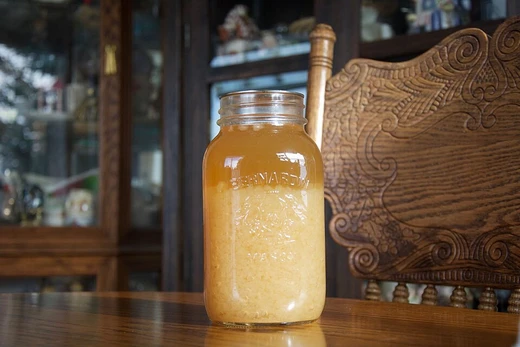
Fermented taro paste, a sacred Hawaiian staple with sour yogurt-like notes.
Last updated

Frank and Frances Carpenter Collection · Public domain
Poi, also known as popoi, is a traditional staple food in the Polynesian diet, made from taro. It is produced by mashing cooked taro, traditionally on a wooden pounding board with a carved pestle, or modernly with an industrial food processor. The resulting paste, called paʻi ʻai, can be eaten fresh and sweet or left to ferment and become sour, developing a smell reminiscent of plain yogurt.
Background
Poi is thought to have originated in the Marquesas Islands, created some time after initial settlement from Polynesian explorers. The origins of poi coincided with the development of basalt pounders in the Marquesas, which soon spread elsewhere in eastern Polynesia, with the exception of New Zealand and Easter Island. In western Polynesia, a more rudimentary method was used, mashing cooked starch in a wooden bowl with a makeshift pounder made from a coconut leaf stem or a hard, unripe breadfruit with wooden pegs.
In Hawaiian culture, poi was considered so important and sacred that Hawaiians believed the spirit of Hāloa, the legendary ancestor of the Hawaiian people, was present when a bowl of poi was uncovered for consumption at the family dinner table. Accordingly, all conflict among family members was required to come to an immediate halt. Hawaiians traditionally cook the starchy, potato-like heart of the taro corm for hours in an underground oven called an imu, which is also used to cook other types of food such as pork, carrots, and sweet potatoes. Breadfruit can also be made into poi (poi ʻulu), but Hawaiians consider this inferior in taste to poi made from taro.
Did You Know?
- Poi can be classified by thickness as 'one-finger', 'two-finger', or 'three-finger', referring to how many fingers are needed to scoop it.
- A layer of water on top of fermenting poi prevents a crust from forming.
More in Fermented Foods
Sources
Compiled from Wikipedia and the sources listed below. Text from Wikipedia is available under CC BY-SA 4.0; this entry is adapted from it.
- Wikipedia: Poi (Hawaiian food) (CC BY-SA 4.0).
Spotted an error? Know more?
Reader corrections go straight into our review queue. Suggest an edit · How this site is sourced