Puto (food)
Filipino steamed rice cake from fermented galapong.
Last updated

Derk29 · CC BY-SA 4.0
Puto is a Filipino steamed rice cake, with a traditional preparation based on a slightly fermented rice dough called galapong. It can be eaten plain or served alongside savory dishes, especially dinuguan. The term "puto" also serves as a broad category for various indigenous steamed cakes, including those not made from rice, and it falls under the larger group of kakanin (rice cakes).
History
The dish traces its origins to the puttu rice cakes of southern India, likely introduced through South Indian trade with the Malay world. The word entered Malay as "putu" before spreading into Philippine languages, and similar sweet rice cakes exist across Southeast Asia, such as putu piring in Singapore, putu bambu in Java, and putu mayam (a local name for idiyappam).
Description
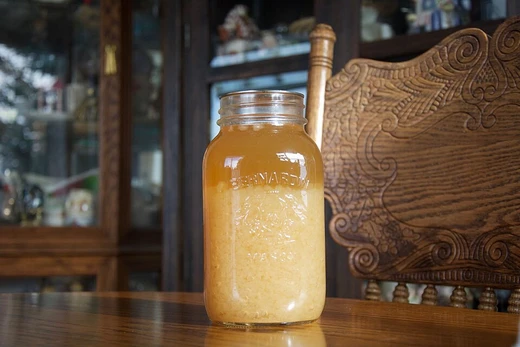
To make puto, rice is soaked overnight to encourage slight fermentation, sometimes with the addition of yeast. The soaked rice is then ground—traditionally using stone mills—into a rice dough known as galapong, which is subsequently steamed. The most common steamer, called a putuhán, is round, typically 30 to 60 centimeters in diameter and 2 to 5 centimeters deep. These steamers are made either from soldered sheet metal with a perforated pan or from thin bamboo strips enclosing a flat basket of split bamboo slats, similar to a dim sum steamer basket.
The cover is almost always conical so that condensing steam drips along the edges rather than onto the cakes. A sheet of muslin (katsâ) is stretched over the steamer ring, and the batter is poured directly onto it; alternatively, banana leaves can be used as a liner. The finished puto is sold as large, thick cakes in flat baskets called bilao, lined with banana leaf, either whole or sliced into smaller, lozenge-shaped pieces.
Properly made puto has a slightly yeasty aroma from the fermented rice galapong, which may be enhanced by the fragrance of banana leaves. It is neither sticky nor dry and crumbly, but soft, moist, and fine-grained.
Its essential flavor is that of freshly cooked rice, though it can be sweetened if eaten alone as a snack rather than as an accompaniment to savory dishes. In Tagalog-speaking regions, many puto recipes include a small amount of wood ash lye. When eaten on its own, puto is commonly topped with cheese, butter or margarine, hard-boiled eggs, meat, or freshly grated coconut.
More in Fermented Foods
Sources
Compiled from Wikipedia and the sources listed below. Text from Wikipedia is available under CC BY-SA 4.0; this entry is adapted from it.
- Wikipedia: Puto (food) (CC BY-SA 4.0).
Spotted an error? Know more?
Reader corrections go straight into our review queue. Suggest an edit · How this site is sourced