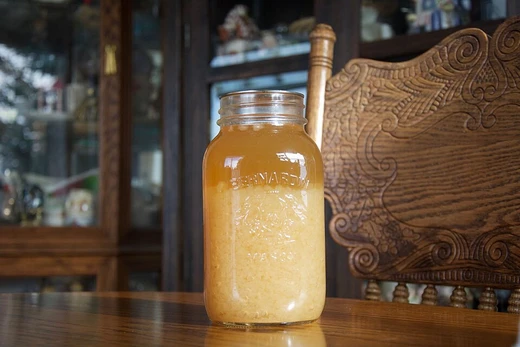
Pickled fruit
Last updated

SJasminum · CC BY-SA 4.0
Pickling is a method used for thousands of years to preserve fruits and other foods in many parts of the world.[1] Pickling as a preservation method for fruits and other foods has been practiced for millennia across various global regions.[1] Tobacco was utilized by the Mayan civilization in the Americas as a food preservative, specifically for creating pickled peppers.[1]
Quick Facts
- Preservation methods
- anaerobic fermentation in brine or immersion in vinegar
- Mayan preservation method
- used tobacco to preserve food, specifically to make pickled peppers
Facts from the source article.
Key facts and history
Mexican vinegar is obtained largely from fermented fruits such as pineapple and apple.[2] In Oaxaca and Puebla, homemade fermented pineapple-vinegar or sour brine is used to pickle fruits such as mangoes, membrillos, and some cactus.[2] In Oaxaca, fruits like mangos and quince are pickled in a hot and sour brine for a street food called piedrazos.[3] To pickle grapes, one must use white wine vinegar, water, kosher salt, sugar, garlic, rosemary, and dried chili flakes.[4]
Brine, created from naturally occurring salt and water, was employed by ancient civilizations to pickle items like olives and certain grains that are not edible in their raw state.[1] Before approximately 1960 in the United States, certain pickled peaches were made using small, unripe freestone peaches.[5] A cantaloupe, which is a fruit of the summer season, can undergo pickling and subsequent refrigeration to allow for consumption throughout the year.[4]
What the cited sources add
The Mexconnect article by Hursh Graber notes that fall marks the end of the growing season for several crops in much of North America.[3] In Mexico, the most commonly used vinegars are fermented fruit vinegars, including apple vinegar and pineapple vinegar.[3] Hursh Graber explains that homemade vinegars are used in many parts of Mexico to preserve chiles, vegetables, and fruit.[3] Hursh Graber reports that the Yucatan may have the widest variety of pickled foods in Mexico, and no Yucatecan meal is served without pickled onions.[3]
The article advises that commercial apple cider vinegar or other fruit vinegar is fine if one does not wish to make homemade fruit vinegar.[3] Hursh Graber notes that most pickled chiles and vegetables will keep for several months in the refrigerator.[3]
References
- Wikipedia, "Pickled fruit" (CC BY-SA 4.0), which cites: Derven, "Encyclopedia of Food and Culture Vol. 3", Charles Scribner%27s Sons., 2003, p. 152 (original not read by us) en.wikipedia.org
- Wikipedia, "Pickled fruit" (CC BY-SA 4.0), which cites: Hursh Graber, "Preserving the Fall harvest:Mexican pickles and vinaigrettes.", Mexconnect, October 1, 2006 (we also read that source) en.wikipedia.org
- Hursh Graber, "Preserving the Fall harvest:Mexican pickles and vinaigrettes.", Mexconnect, October 1, 2006. mexconnect.com
- Wikipedia, "Pickled fruit" (CC BY-SA 4.0), which cites: Stabiner, "Refrigerator Pickles: Summer Fruit, All Sealed Up", The Wall Street Journal, August 3, 2016 (original not read by us) en.wikipedia.org
- Wikipedia, "Pickled fruit" (CC BY-SA 4.0), which cites: Shulman, "Pickled Peaches With Sweet Spices Recipe", NYT Cooking; Smith, "Preserved Pickled Peaches", Delia Online, 9 November 2015 (original not read by us) en.wikipedia.org
Each numbered sentence above was checked against the source it cites before publication. Sentences citing Wikipedia adapt text from the English Wikipedia article Pickled fruit (contributors), used under CC BY-SA 4.0; this entry is available under the same licence. Other sources were used for facts only.
More in Fermented Foods
Sources
Compiled from Wikipedia and the sources listed below. Text from Wikipedia is available under CC BY-SA 4.0; this entry is adapted from it.
- Wikipedia: Pickled fruit (CC BY-SA 4.0).
Spotted an error? Know more?
Reader corrections go straight into our review queue. Suggest an edit · How this site is sourced