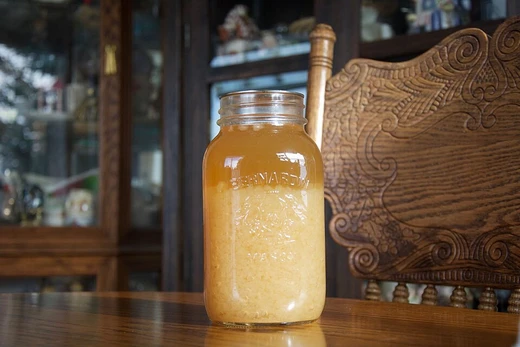
Rượu nếp
A mildly alcoholic glutinous rice pudding or wine from northern Vietnam.
Last updated

Phương Huy · CC BY-SA 4.0
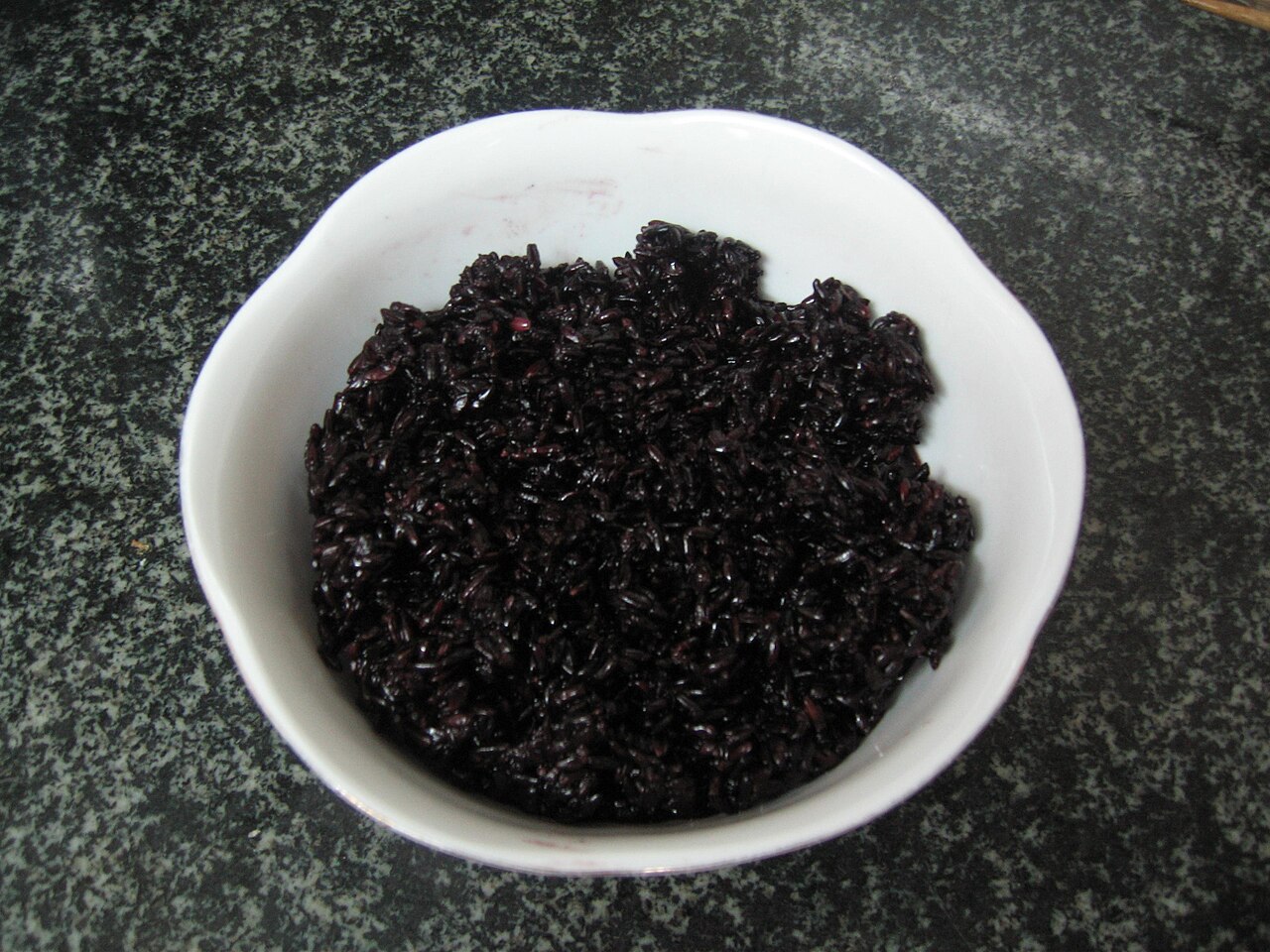
Rượu nếp, also called rượu nếp bắc or rượu nếp cẩm, is a mildly alcoholic pudding or drink from northern Vietnam. It is made from glutinous rice fermented with yeast and steamed in a banana leaf, and may be deep purplish-red or yellow depending on the rice variety.
Background
Rượu nếp is prepared by fermenting glutinous rice with yeast and steaming it in a banana leaf. Its color depends on the rice variety used: deep purplish-red or yellow. The dish is considered either a pudding or a wine based on its consistency; thicker versions are eaten with a spoon, while more liquid ones are drunk. Many Vietnamese people regard rượu nếp as a healthful food, believing it wards off or kills parasites.
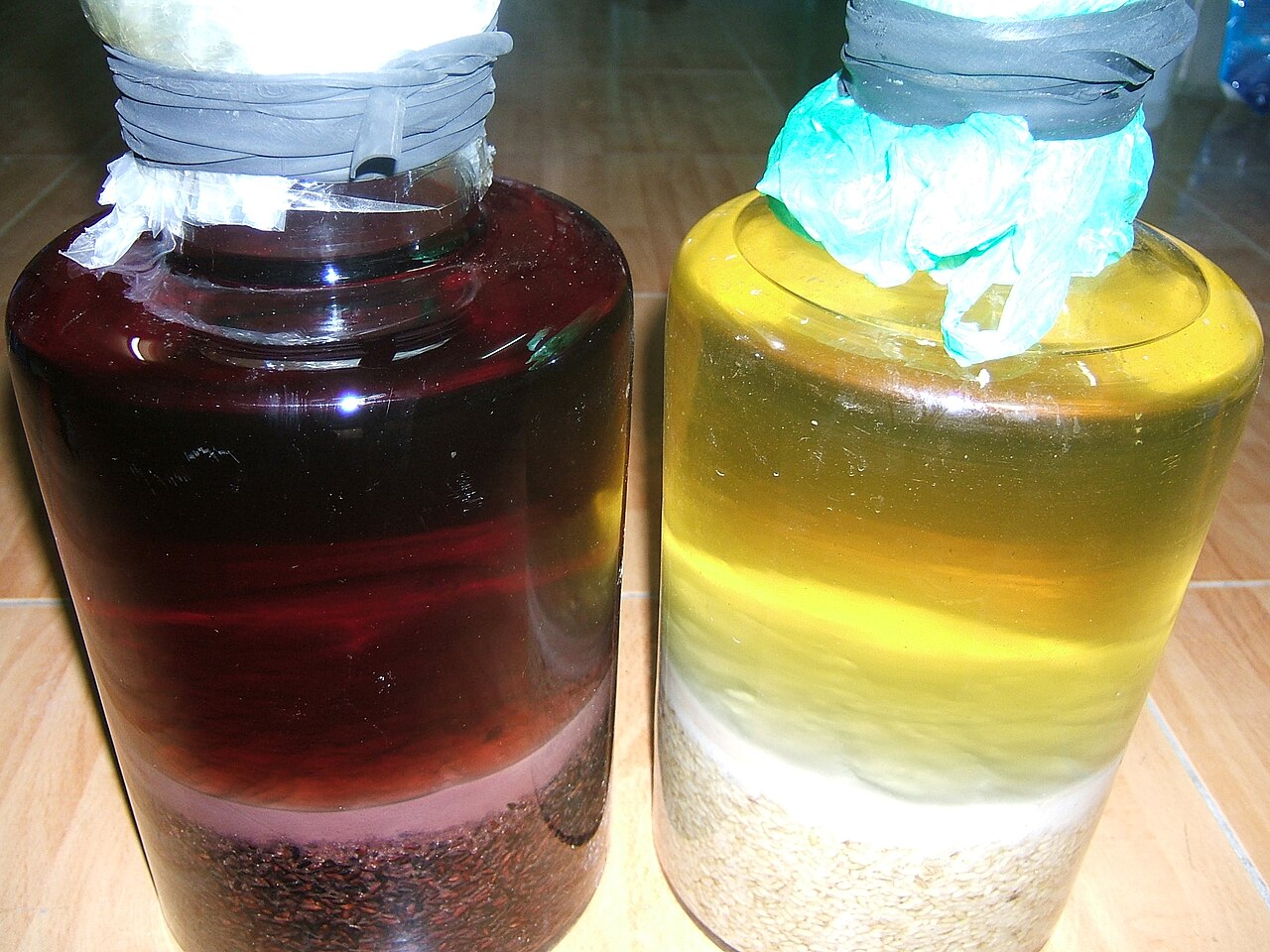
Although most typical of northern Vietnam, rượu nếp and its brown-colored variant rượu nếp than are available in Ho Chi Minh City, at the market near the residential quarter where northern Vietnamese people live. In Vietnam's Central Highlands, a similar communal rice wine called rượu cần is drunk through long reed straws from large earthenware jugs, and may be made from ordinary rice, glutinous rice, cassava, or corn with leaves and herbs. Another variety, rượu nếp nương, comes from glutinous rice grown in mountainous areas of northwest Vietnam. A similar southern dish, cơm rượu, consists of white glutinous rice balls in a mildly alcoholic rice wine.
More in Fermented Foods
Sources
Compiled from Wikipedia and the sources listed below. Text from Wikipedia is available under CC BY-SA 4.0; this entry is adapted from it.
- Wikipedia: Rượu nếp (CC BY-SA 4.0).
- Word definitions: the Codexery glossary, each quoted from its Wikipedia article.
Spotted an error? Know more?
Reader corrections go straight into our review queue. Suggest an edit · How this site is sourced