
Jupiter Icy Moons Orbiter
Proposed NASA mission to explore Jupiter's icy moons with nuclear propulsion.

NASA/Uncredited concept artist · Public domain
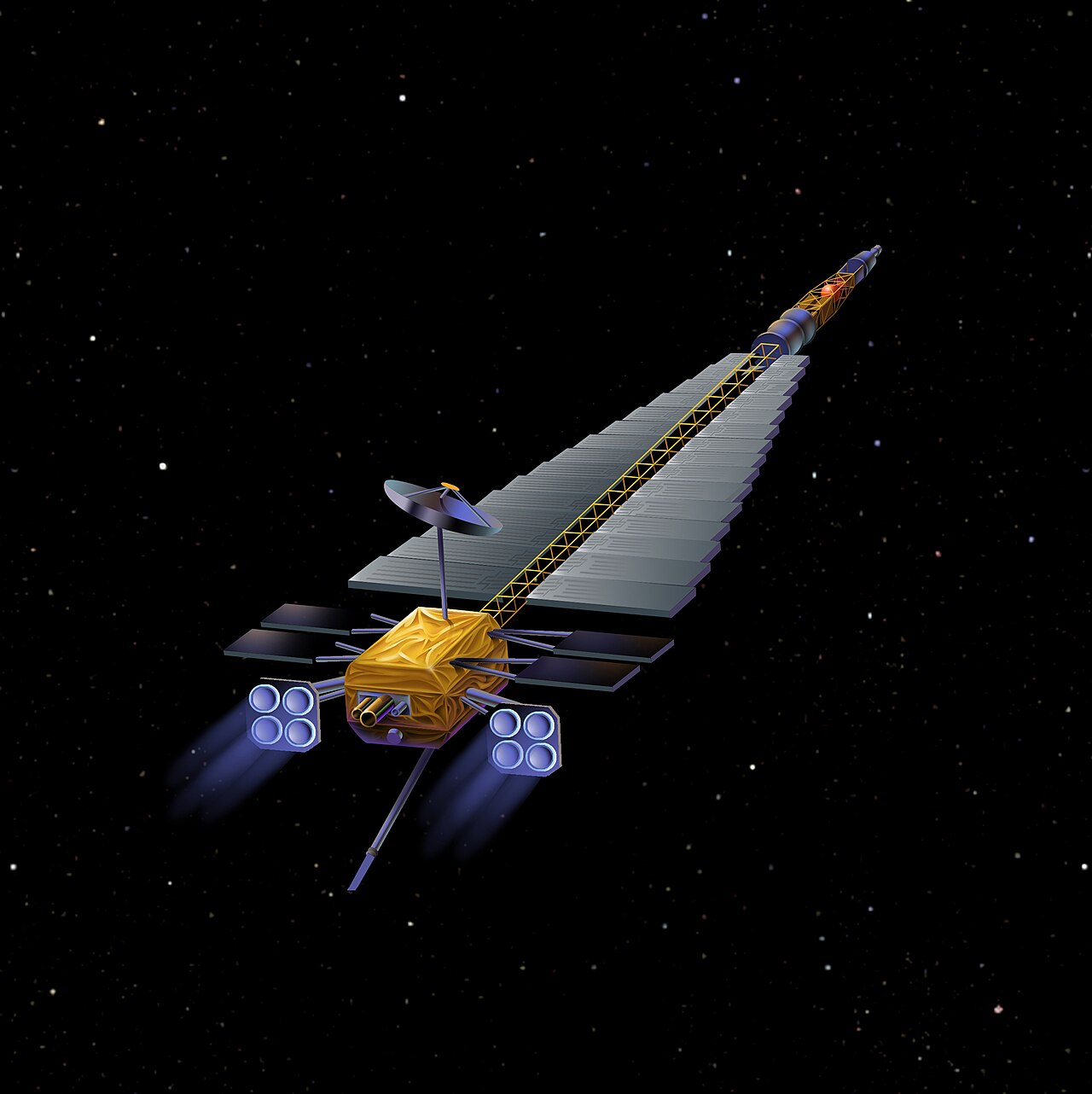
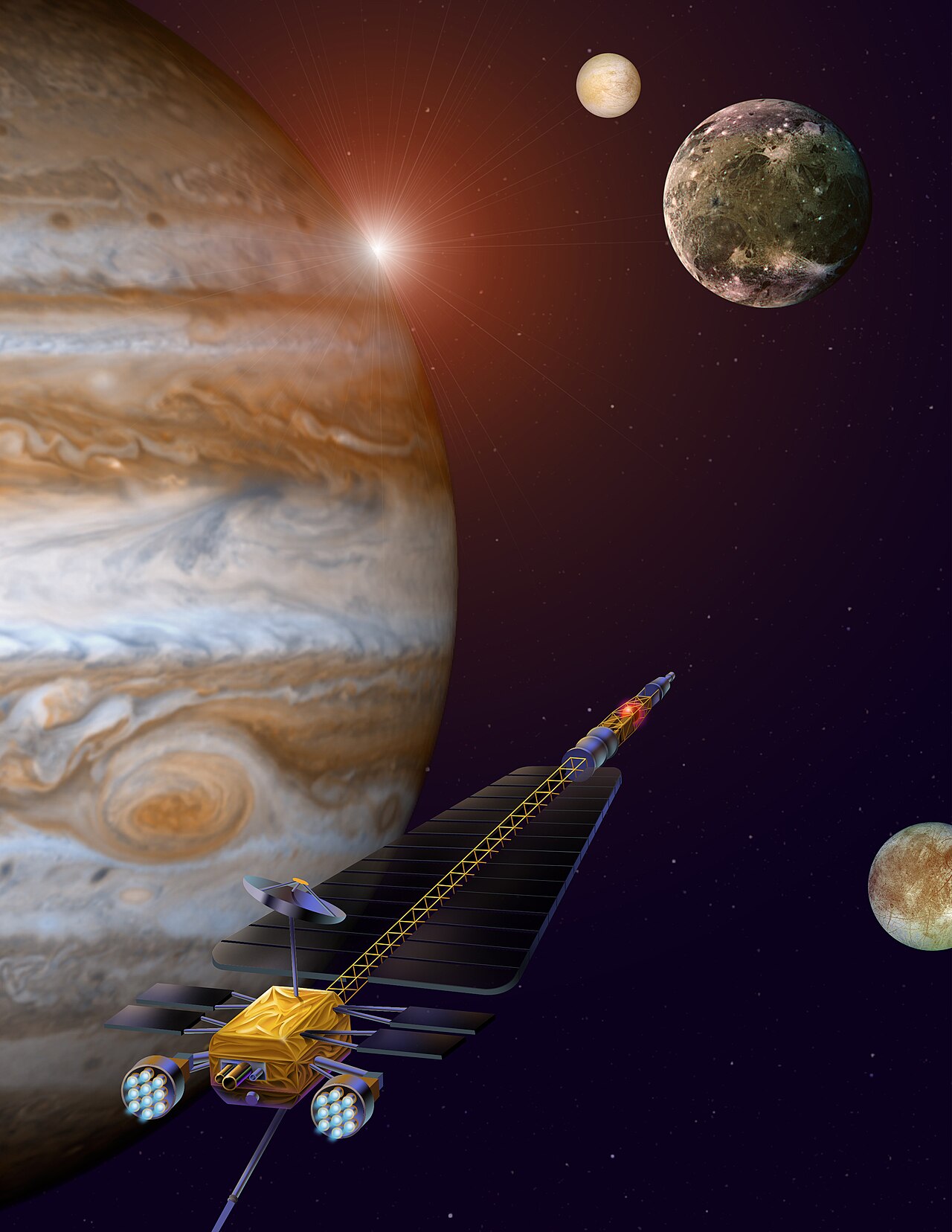
The Jupiter Icy Moons Orbiter (JIMO) was a proposed NASA spacecraft designed to explore the icy moons of Jupiter, with a primary target of Europa, where an ocean of liquid water may harbor alien life. Ganymede and Callisto, now thought to also have liquid, salty oceans beneath their icy surfaces, were additional targets. The mission was to be propelled by an ion propulsion system powered by a small fission reactor, providing a thousand times the electrical output of conventional solar- or RTG-based power systems.
Quick Facts
- Auto
- all
- Names List
- JIMO
- Mission Type
- Jupiter orbiter
- Operator
- NASA
- Mission Duration
- Cancelled
- Manufacturer
- Northrop Grumman
- Launch Mass
- Total (fully assembled): / 36375 kg
- Dry Mass
- Spacecraft module: / 16193 kg / Reactor module: / 6182 kg
- Payload Mass
- 1500 kg
- Dimensions
- Fully deployed: / 58.4 xx
- Power
- 200 kilowatts
- Launch Date
- NET May 2015 – January 2016 / Planned
Facts from the source article.
Lore & Background
The JIMO spacecraft was to be propelled by an ion propulsion system using either the High Power Electric Propulsion or NEXIS engine, powered by a small fission reactor. A Brayton power conversion system would convert reactor heat into electricity. The reactor was to be positioned in the tip of the spacecraft behind a strong radiation shield, and would only be powered up once the probe was well out of Earth orbit to minimize radionuclides launched into orbit. The design included 8 ion engines plus Hall thrusters, enabling the probe to enter and leave orbits around Jupiter's moons for thorough observation.
Reader's Guide
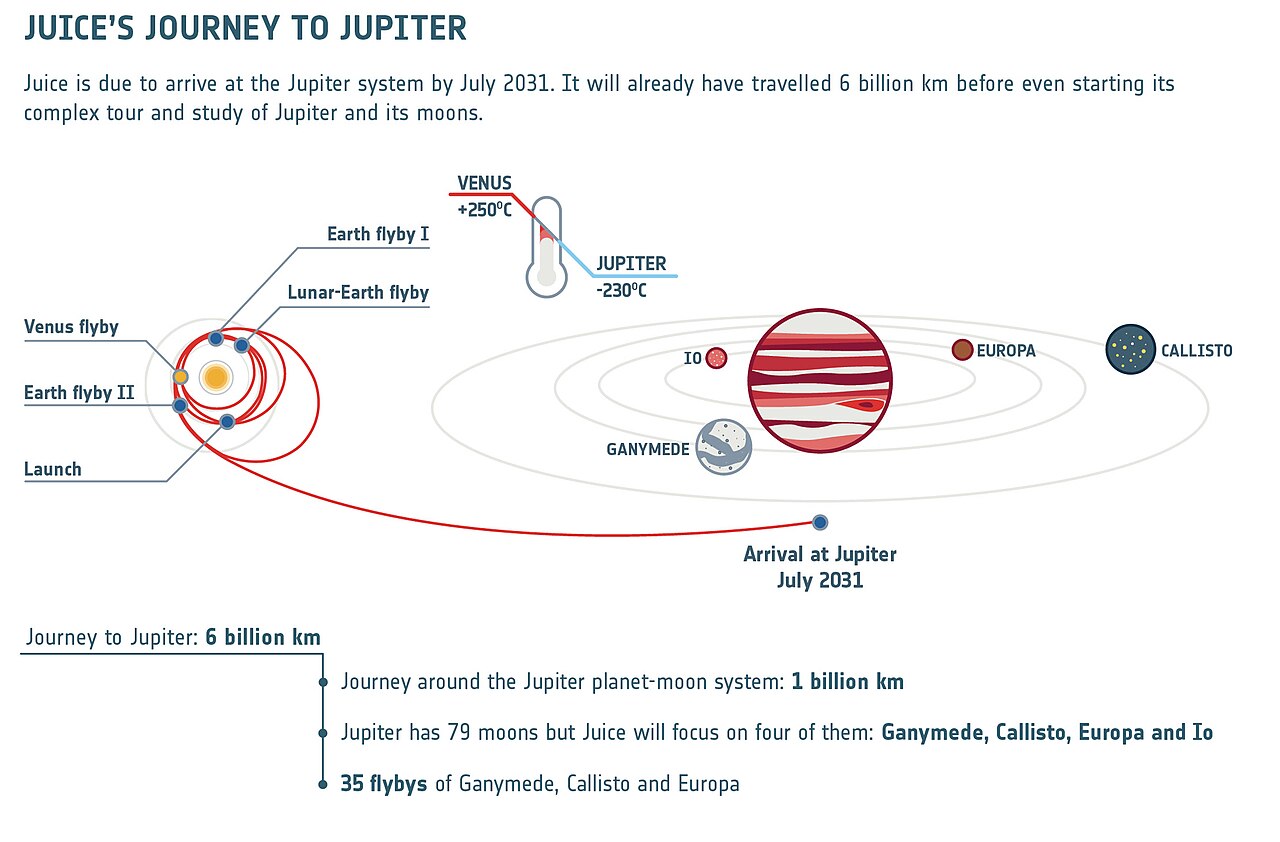
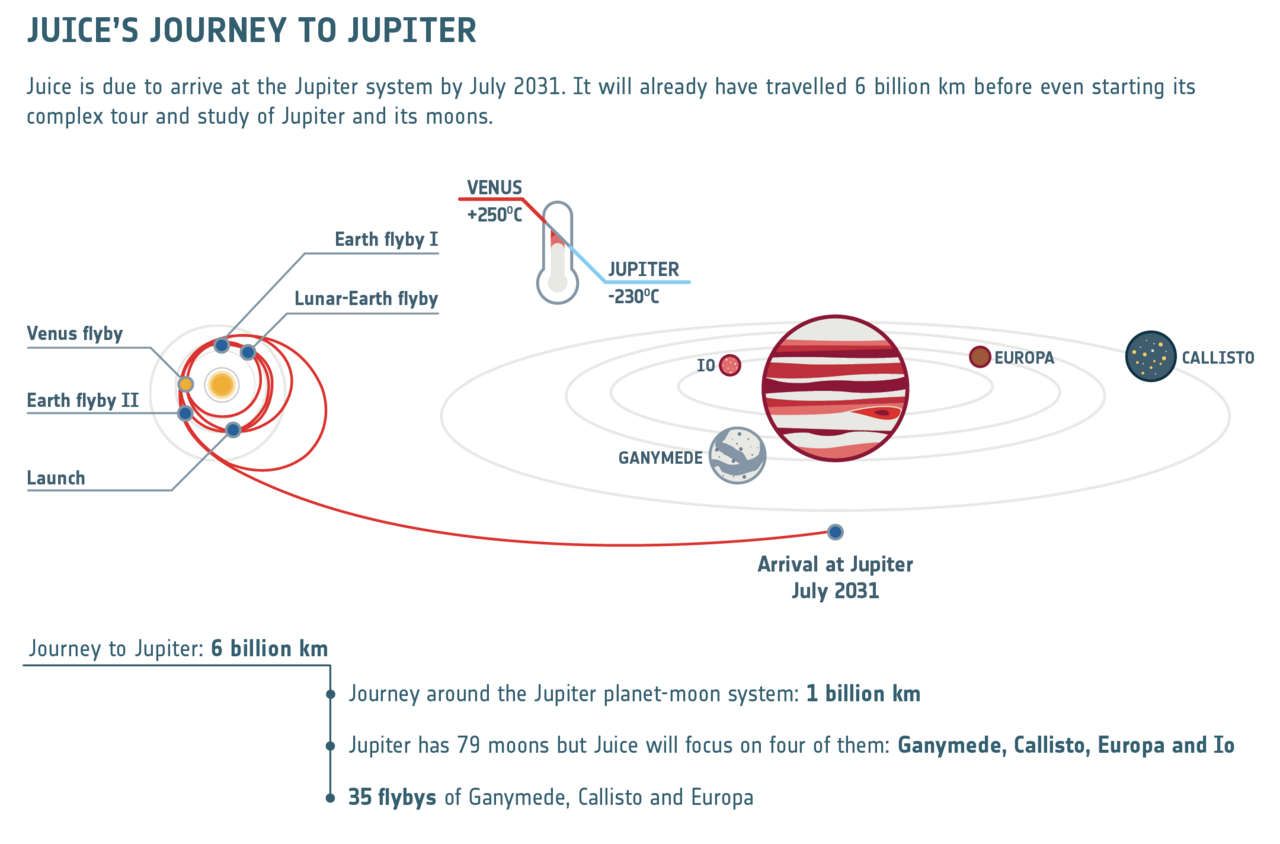
JIMO was the first proposed mission of NASA's Project Prometheus, a program for developing nuclear fission into a means of spacecraft propulsion. It was cancelled in 2005 due to a shift in priorities at NASA favoring crewed space missions, with the nuclear technology deemed too ambitious and the multiple-launch, in-orbit assembly architecture also cited as issues. Engineers at the Jet Propulsion Laboratory were laid off or reassigned. The mission's legacy includes influencing later concepts such as the Europa Jupiter System Mission (cancelled 2011) and the ESA's Jupiter Icy Moon Explorer (JUICE), launched in 2023. NASA's subsequent Europa Clipper, launched in 2024, is solar-powered and uses flybys rather than orbit. JIMO's planned Europa Lander was to be a small nuclear-powered lander carried with the orbiter.
Did You Know?
- Northrop Grumman was selected on September 20, 2004 for a US$400 million preliminary design contract.
- The reactor module mass was 6,182 kg with a 200 kWe output.
- Mission timelines for studying Callisto, Ganymede, and Europa varied across proposals and were never finalized.
- The mission design life was proposed at 10–15 years, and no official launch date was ever set—early planning documents mentioned a possible launch in the 2015–2017 timeframe.
Gallery
More in Extraterrestrial orbiters 1-21
Spotted an error? Know more?
Reader corrections go straight into our review queue. Suggest an edit · How this site is sourced