
Cassini–Huygens
Joint mission to study Saturn and its moons.

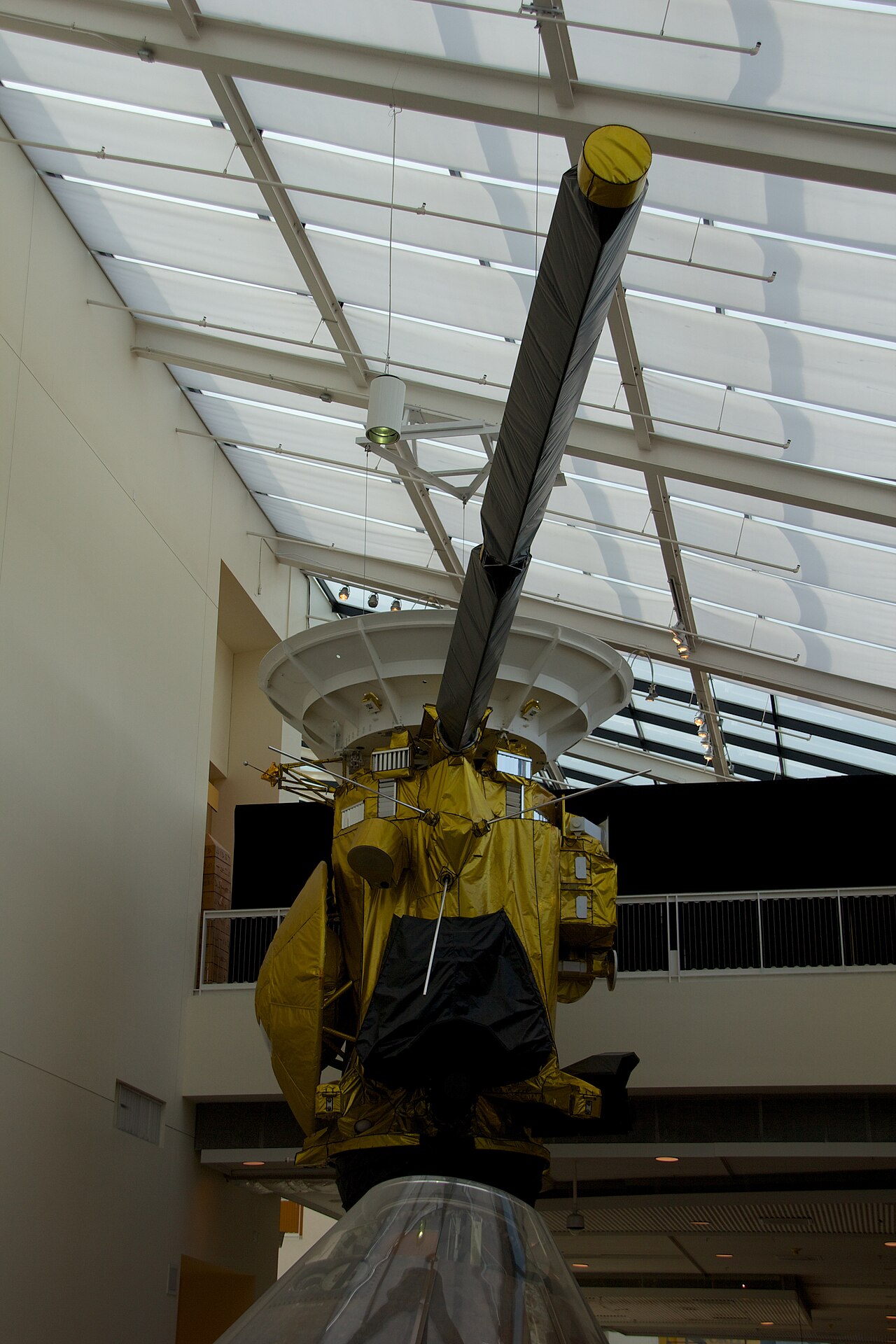
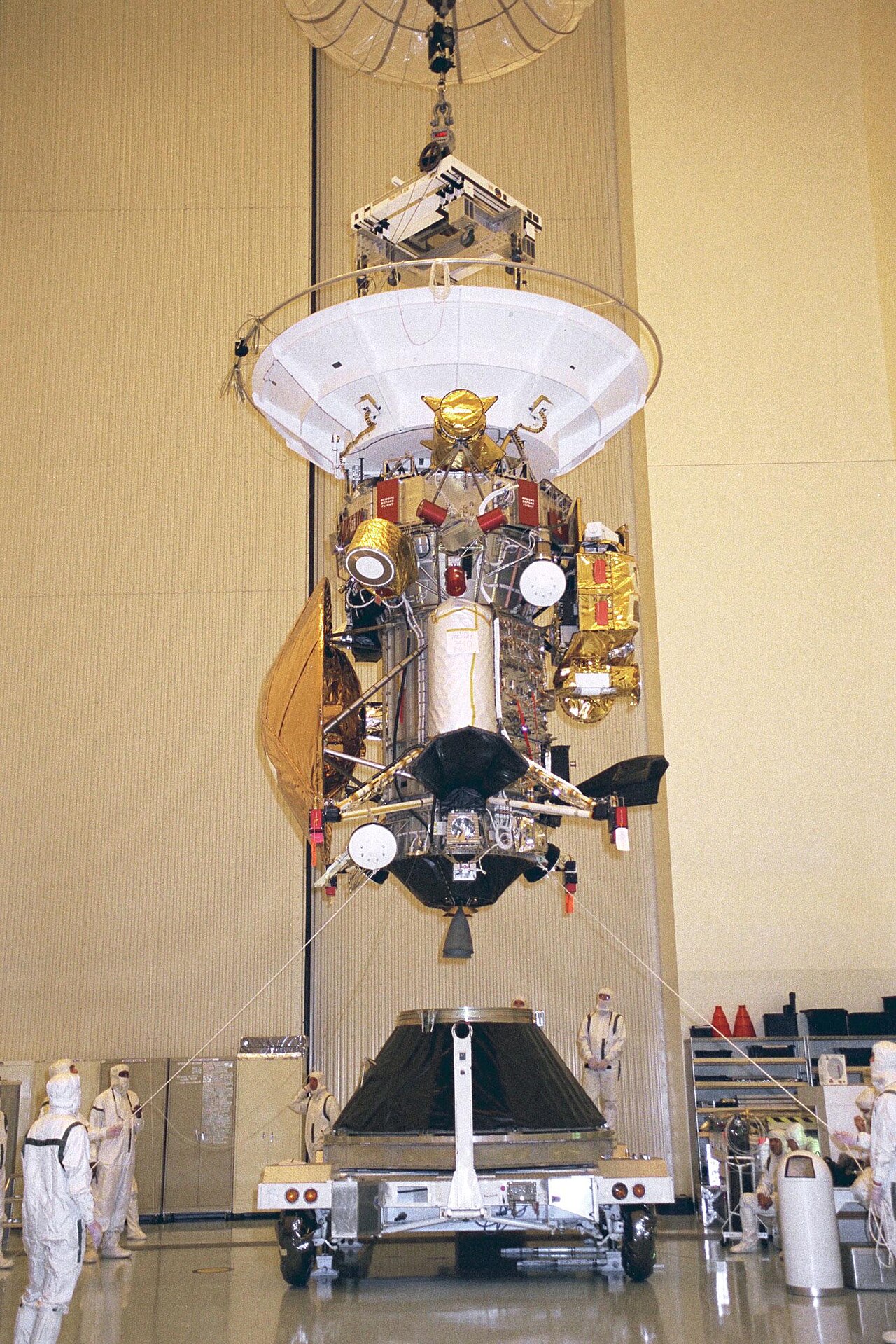
Photograph by Mike Peel ( www.mikepeel.net ). · CC BY-SA 4.0
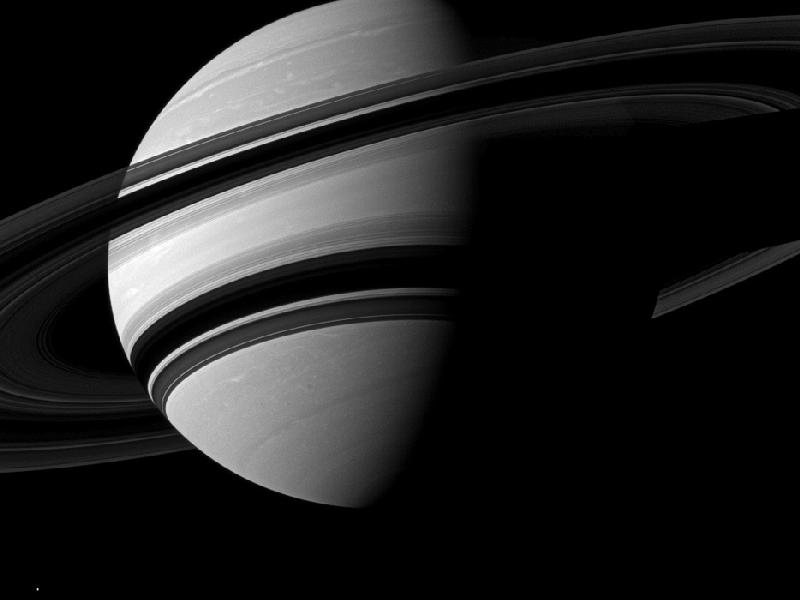
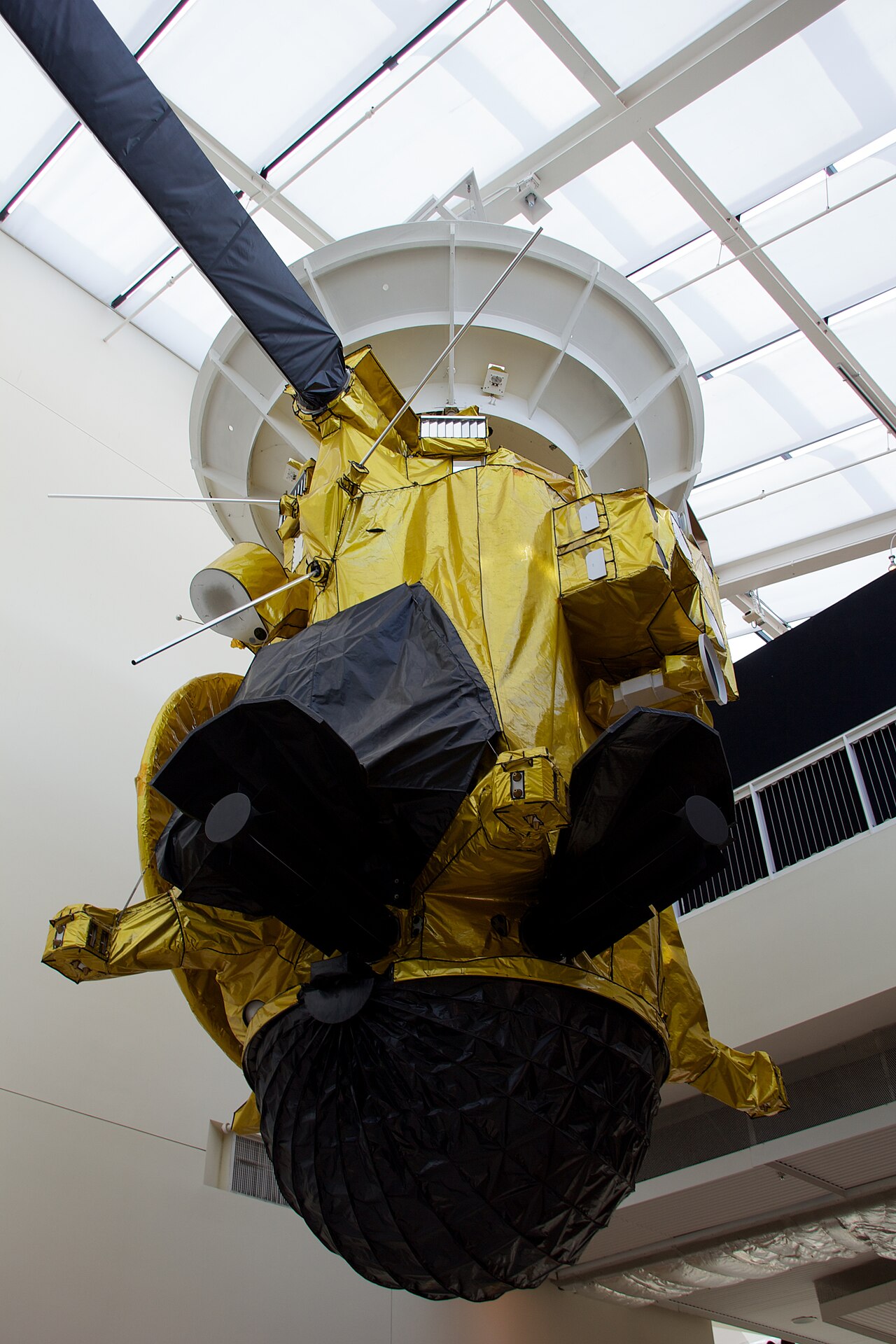
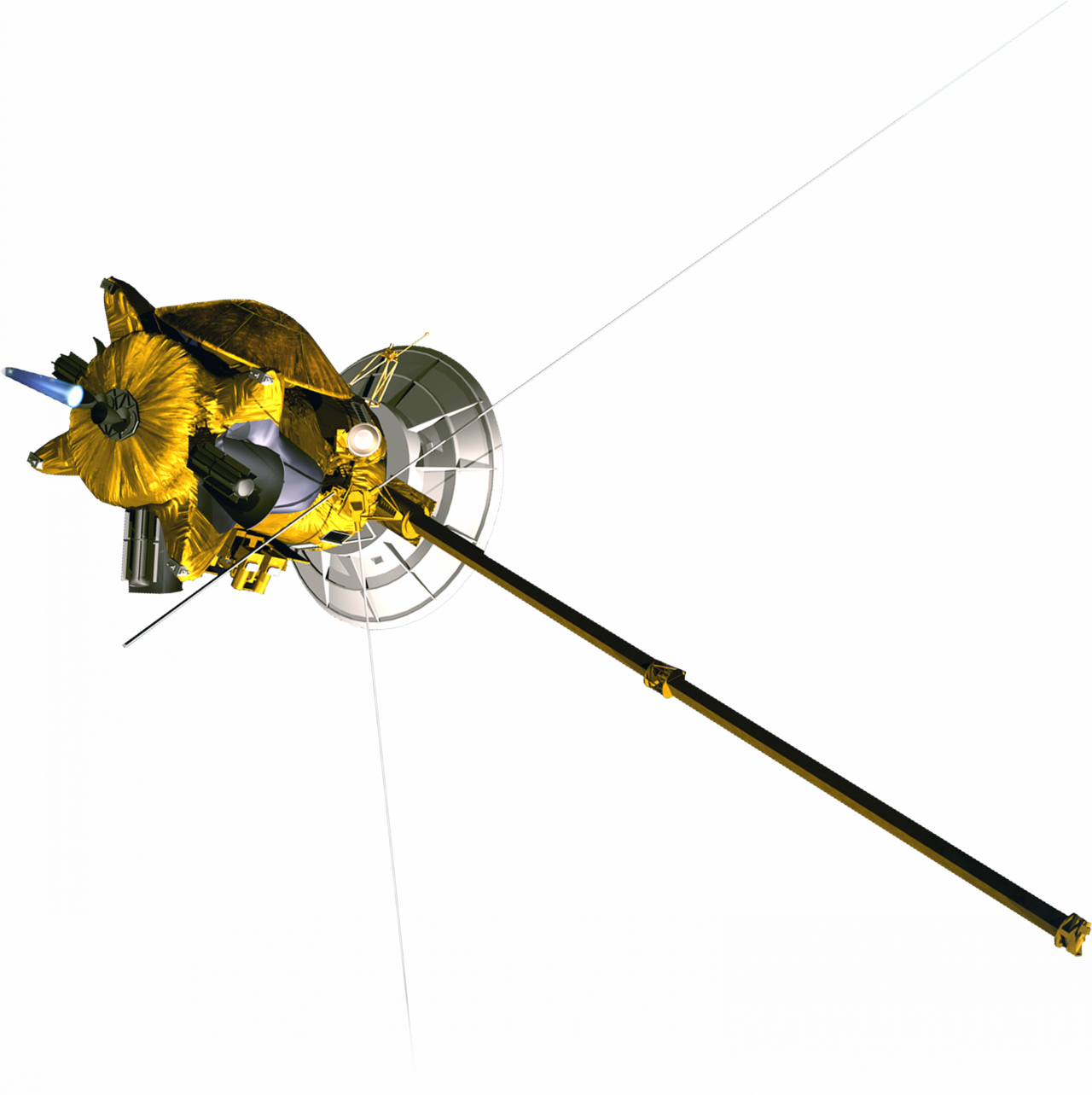
Cassini–Huygens, often shortened to Cassini, was a space mission run jointly by NASA, the European Space Agency, and the Italian Space Agency. Its goal was to explore Saturn, its rings, and its moons. The spacecraft was a Flagship-class robotic probe made up of two parts: NASA's Cassini orbiter and ESA's Huygens lander, which touched down on Titan, Saturn's largest moon. Cassini was the fourth probe to reach Saturn and the first to go into orbit around the planet, where it remained from 2004 until 2017. The mission was named after astronomers Giovanni Cassini and Christiaan Huygens.
Launched on October 15, 1997, aboard a Titan IV-B rocket with a Centaur D-1T upper stage, Cassini spent nearly 20 years active in space. It took about 7 years to travel to Saturn, then spent 13 years orbiting the planet after entering orbit on July 1, 2004. Along the way, it flew past Venus twice (in April 1998 and July 1999), Earth (August 1999), the asteroid 2685 Masursky, and Jupiter (December 2000). The mission ended on September 15, 2017, when Cassini was deliberately sent into Saturn's upper atmosphere and burned up. This was done to avoid any chance of contaminating Saturn's moons, which might have environments suitable for life, with any Earth microbes that might have hitched a ride. NASA's Jim Green, head of Planetary Science, called Cassini–Huygens a "mission of firsts" that changed how we understand Saturn's system and where life might exist in the Solar System.
Scientists and engineers from 27 countries worked together to design, build, fly, and collect data from the Cassini orbiter and Huygens probe. The mission was originally planned to last four years, from June 2004 to May 2008. It was first extended for two more years, called the Cassini Equinox Mission, and then again for another seven years as the Cassini Solstice Mission, ending on September 15, 2017, when Cassini was de-orbited and burned up. The Huygens probe traveled with Cassini until it separated on December 25, 2004. A Spin/Eject device gave it a separation speed of 0.35 meters per second and a spin rate of 7.5 rpm. Huygens landed by parachute on Titan on January 14, 2005, and sent data back to Earth for about 90 minutes using the orbiter as a relay. This was the first landing ever in the outer Solar System and the first on a moon other than Earth's.
Quick Facts
- Auto
- all
- Names List
- Saturn Orbiter and Titan Probe (SOTP)
- Mission Type
- Cassini: Saturn orbiter / Huygens: Titan lander
- Operator
- Cassini: NASAJPL / Huygens: ESAASI
- Cospar Id
- 1997-061A
- Satcat
- 25008
- Distance Travelled
- 7.9 e9km
- Manufacturer
- Cassini: JPL / Huygens: Aerospatiale
- Launch Mass
- 5712 kgcassini.quickfacts · skyrocket1
- Dry Mass
- 2523 kg
- Power
- ~885 watts (at launch) / ~670 watts (2010) / ~663 watts (at end of mission)
- Launch Date
- October 15, 1997, 08:43:00 UTC
Facts from the source article.
Lore & Background
Cassini–Huygens was launched aboard a Titan IV-B with a Centaur D-1T upper stage on October 15, 1997, from Cape Canaveral Air Force Station's Space Launch Complex 40. The voyage to Saturn included flybys of Venus (April 1998 and July 1999), Earth (August 1999), the asteroid 2685 Masursky, and Jupiter (December 2000). The Huygens module separated from Cassini on December 25, 2004, and landed by parachute on Titan on January 14, 2005, returning data for around 90 minutes using the orbiter as a relay. This was the first landing ever accomplished in the outer Solar System and the first landing on a moon other than Earth's Moon.
Reader's Guide
Cassini–Huygens revolutionized human understanding of the Saturn system, including its moons and rings, and our understanding of where life might be found in the Solar System. The mission was extended twice: first as the Cassini Equinox Mission (until September 2010) and then as the Cassini Solstice Mission (until September 15, 2017). At the end of its mission, Cassini executed its 'Grand Finale,' a number of risky passes through the gaps between Saturn and its inner rings, before being intentionally destroyed to prevent potential contamination of Saturn's moons. The total cost was about US$3.26 billion, with the United States contributing $2.6 billion (80%), the ESA $500 million (15%), and the ASI $160 million (5%).
Did You Know?
- Cassini was the fourth space probe to visit Saturn and the first to enter its orbit.
- The mission ended on September 15, 2017, when Cassini burned up in Saturn's upper atmosphere.
- Scientists and individuals from 27 countries made up the joint team responsible for the mission.
A Truly Global Endeavor
The Cassini–Huygens mission stands as one of the most ambitious acts of international scientific cooperation in space history. Scientists and engineers from 27 different nations contributed to designing, building, operating, and analyzing data from both the orbiter and the lander. NASA's Jet Propulsion Laboratory managed the overall mission and developed the Cassini orbiter, while the European Space Research and Technology Centre led development of the Huygens probe. France's Aérospatiale, which later became part of Thales Alenia Space, served as prime contractor assembling the lander with instruments supplied by numerous European nations, including batteries and two scientific instruments from the United States. Italy's space agency contributed critical hardware: the high-gain radio antenna, a compact synthetic-aperture radar, a radar altimeter, a radiometer, the radio science subsystem, and the visible-channel portion of the VIMS spectrometer. NASA itself supplied the infrared counterpart of VIMS and the Main Electronic Assembly, which incorporated sub-assemblies from France's CNES. Together, these partners created a Flagship-class spacecraft named for two legendary astronomers: Giovanni Cassini, who discovered Saturn's ring divisions and four of its moons, and Christiaan Huygens, who first identified Titan.
Seven Years of Winding Flybys
Launched on October 15, 1997, aboard a Titan IV-B rocket with a Centaur D-1T upper stage, the spacecraft began what would become nearly two decades of active spaceflight. The route to Saturn was a long, winding path involving a series of carefully timed flybys. The probe swung past Venus twice—first in April 1998, then again in July 1999—before looping back for a flyby of Earth in August 1999. It then passed the small asteroid 2685 Masursky, and completed its transit with a Jupiter flyby in December 2000. After almost seven years of travel, Cassini entered Saturn orbit on July 1, 2004, becoming the first spacecraft ever to circle the ringed planet. It would remain in orbit for thirteen years, studying the planet, its rings, and its natural satellites. While the mission was the fourth probe to visit Saturn, its sustained orbital presence represented a first, opening an entirely new era of close-up observation that no earlier mission had achieved.
Touchdown on Titan
On December 25, 2004, the Huygens probe separated from the Cassini orbiter in a carefully engineered maneuver. A device called the Spin/Eject mechanism provided a gentle relative separation speed of just 0.35 metres per second and imparted a spin rate of 7.5 revolutions per minute, ensuring the two craft drifted apart safely with no risk of collision. Over the following weeks, the small lander traveled independently toward Saturn's largest moon, Titan—the very world that Christiaan Huygens had first identified through his telescope centuries earlier. On January 14, 2005, Huygens descended through Titan's atmosphere and touched down by parachute on the moon's surface. It then transmitted data back to Earth for approximately 90 minutes, with the Cassini orbiter serving as a relay station between the lander and the planet. This achievement marked two historic firsts: it was the first time a human-made vehicle had landed anywhere in the outer Solar System, and the first landing ever accomplished on a moon other than Earth's own.
The Grand Finale and a Legacy of Firsts
What began as a planned four-year mission, from June 2004 to May 2008, ultimately stretched to thirteen years through two extensions: the Cassini Equinox Mission and the Cassini Solstice Mission. As fuel and operational capacity dwindled, engineers designed a dramatic final phase called the Grand Finale, in which the spacecraft executed a series of risky passes threading through the narrow gaps between Saturn and its innermost rings, maximizing scientific returns in its last days. On September 15, 2017, Cassini's trajectory was deliberately aimed into Saturn's upper atmosphere, where it burned up. This controlled destruction was a deliberate act of planetary protection: planners wanted to eliminate any risk of the aging spacecraft accidentally crashing into one of Saturn's moons, which might harbor environments capable of supporting stowaway terrestrial microbes. NASA's Planetary Science Division Director Jim Green described the entire endeavor as a "mission of firsts" that fundamentally transformed humanity's understanding of the Saturn system, its rings, its moons, and where life might exist in our Solar System. Analysis of the returned data will continue for many years.
Gallery
Frequently Asked Questions
What is Cassini–Huygens?
It was a joint robotic space mission that sent an orbiter to circle Saturn and a lander to touch down on Titan. The probe operated from its 1997 launch through 2017 and was a collaboration between NASA, ESA, and the Italian Space Agency.
What did Cassini–Huygens accomplish?
It became the first spacecraft ever to enter orbit around Saturn, arriving in 2004. Its Huygens lander also achieved the first-ever landing on a moon beyond the inner solar system, touching down on Titan's surface.
How did the Cassini–Huygens mission end?
On September 15, 2017, the orbiter was deliberately plunged into Saturn's upper atmosphere to eliminate any chance of contaminating potentially habitable moons. This planned 'Grand Finale' brought 13 years of orbital operations to a close.
Who built and operated Cassini–Huygens?
NASA developed the Cassini orbiter while the European Space Agency built the Huygens lander, with the Italian Space Agency contributing the high-gain antenna. The mission's name honors two 17th-century astronomers, Giovanni Cassini and Christiaan Huygens.
Why is Cassini–Huygens considered so important?
As the first probe to orbit Saturn, it gave scientists a sustained, up-close view of the planet's rings, atmosphere, and dozens of moons. Its findings on Titan's methane cycles and Enceladus's subsurface ocean fundamentally reshaped our understanding of where life might exist beyond Earth.
More in Extraterrestrial orbiters 1-21
Spotted an error? Know more?
Reader corrections go straight into our review queue. Suggest an edit · How this site is sourced