
Enceladus Explorer
Proposed mission to search for life on Enceladus using an ice-melting probe.

NASA / JPL-Caltech / Space Science Institute / Lunar and Planetary Institute · Public domain
Enceladus Explorer (EnEx) is a proposed mission to Saturn's moon Enceladus, combining an orbiter and a lander with a steerable ice-melting probe designed to search for signs of life. The project is led by the German Aerospace Center (DLR) and involves a consortium of seven German universities; work began on 22 February 2012.
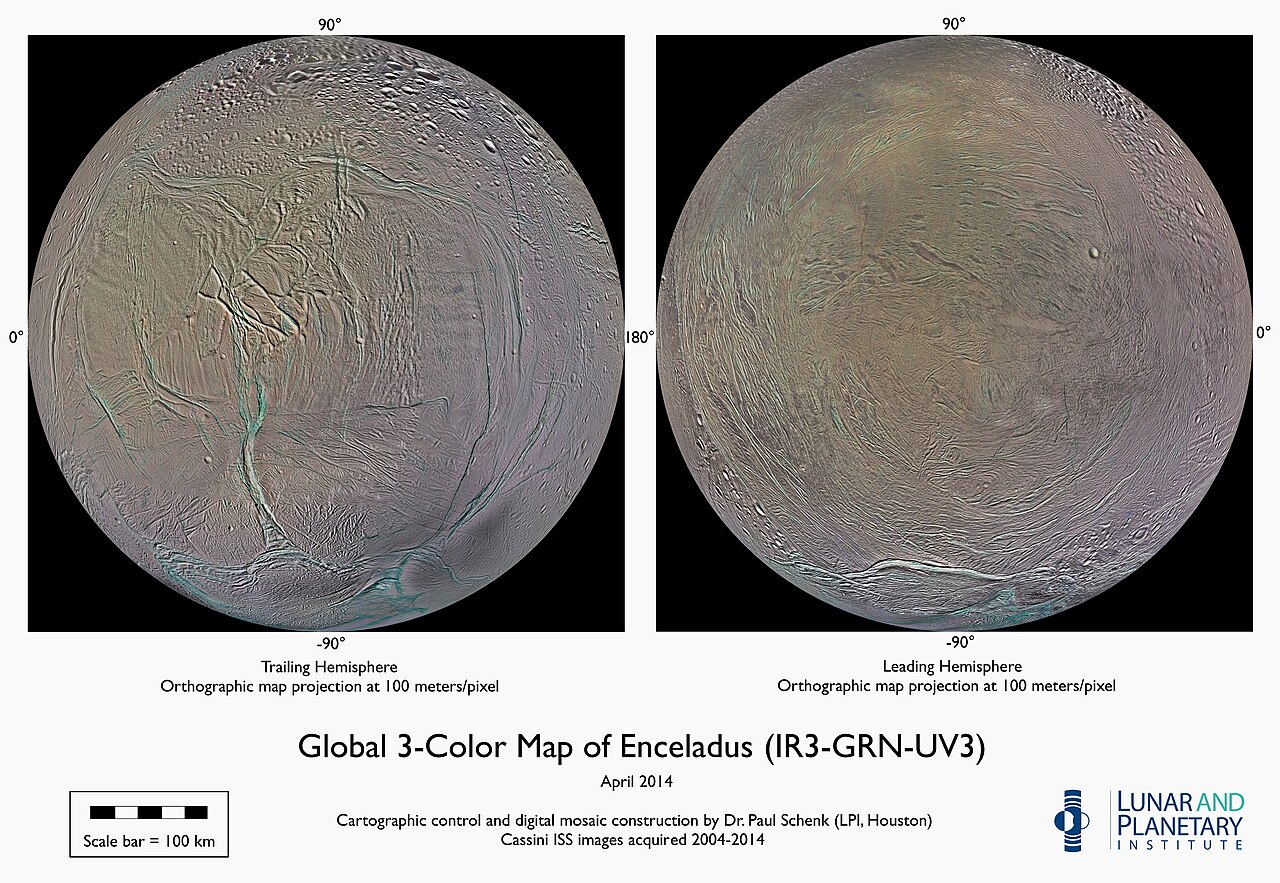
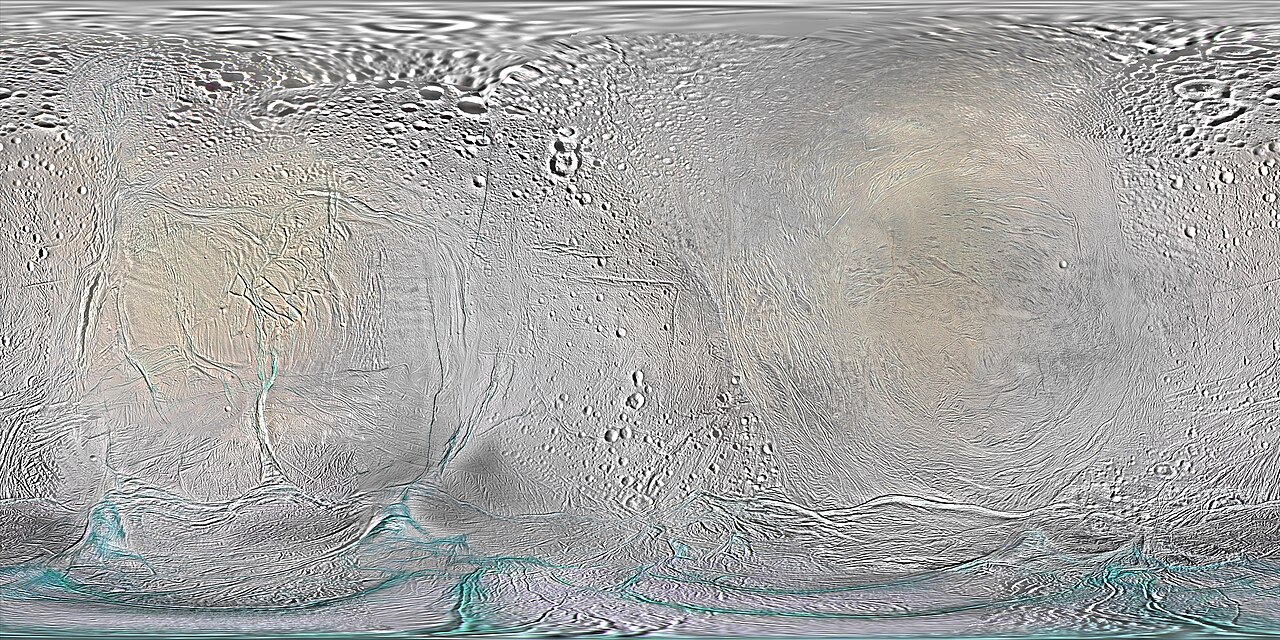
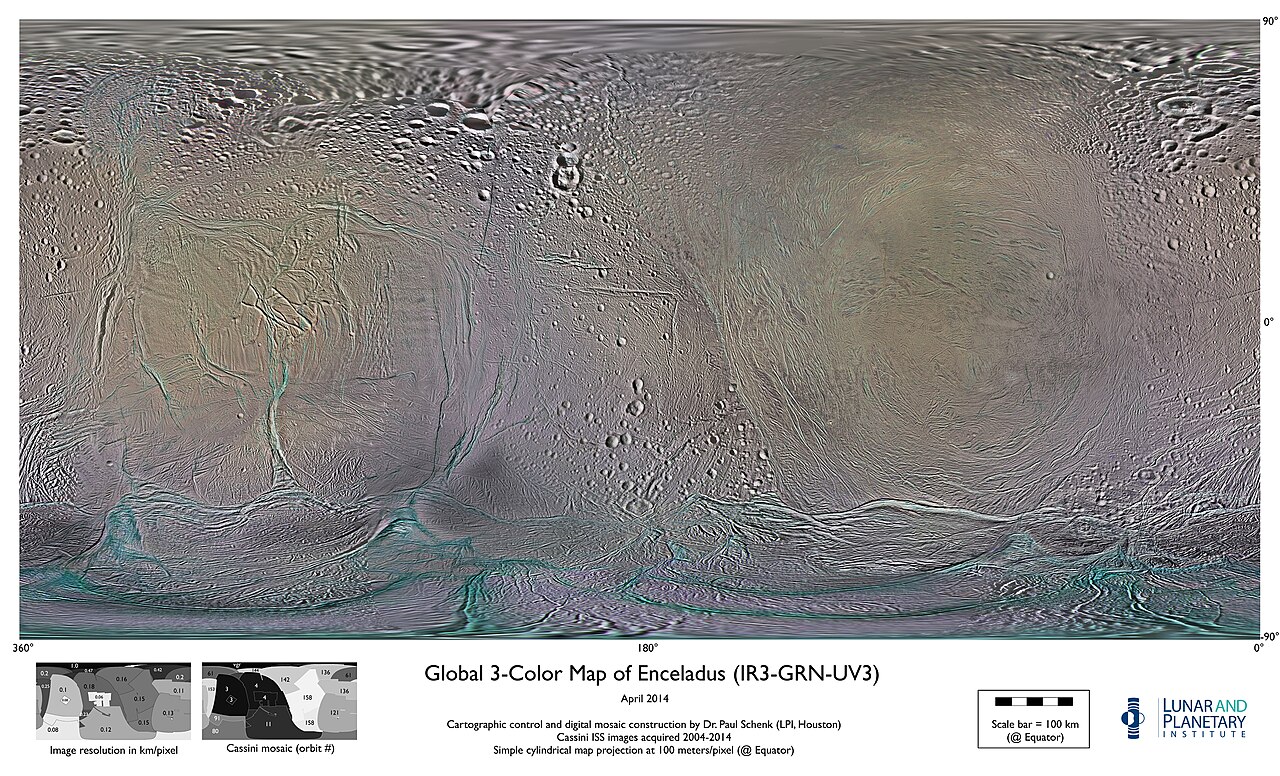
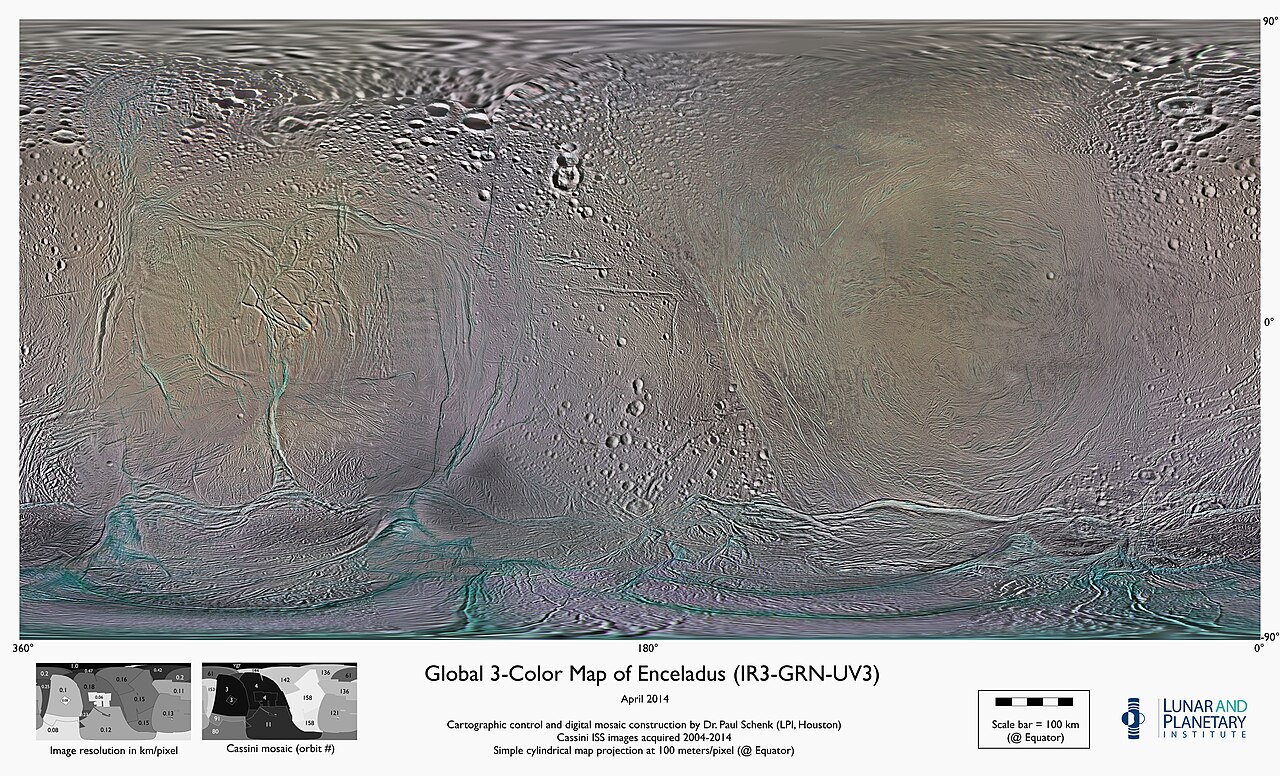
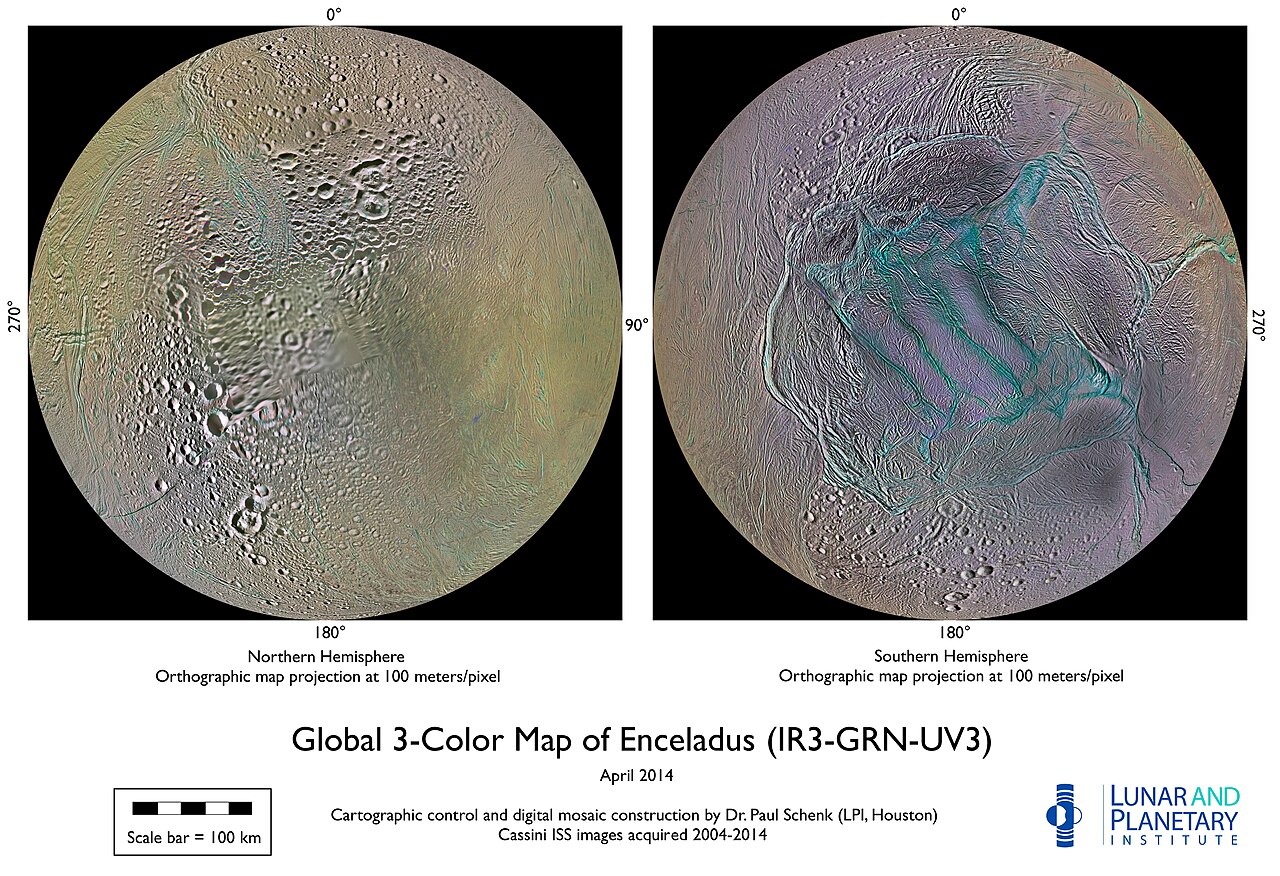
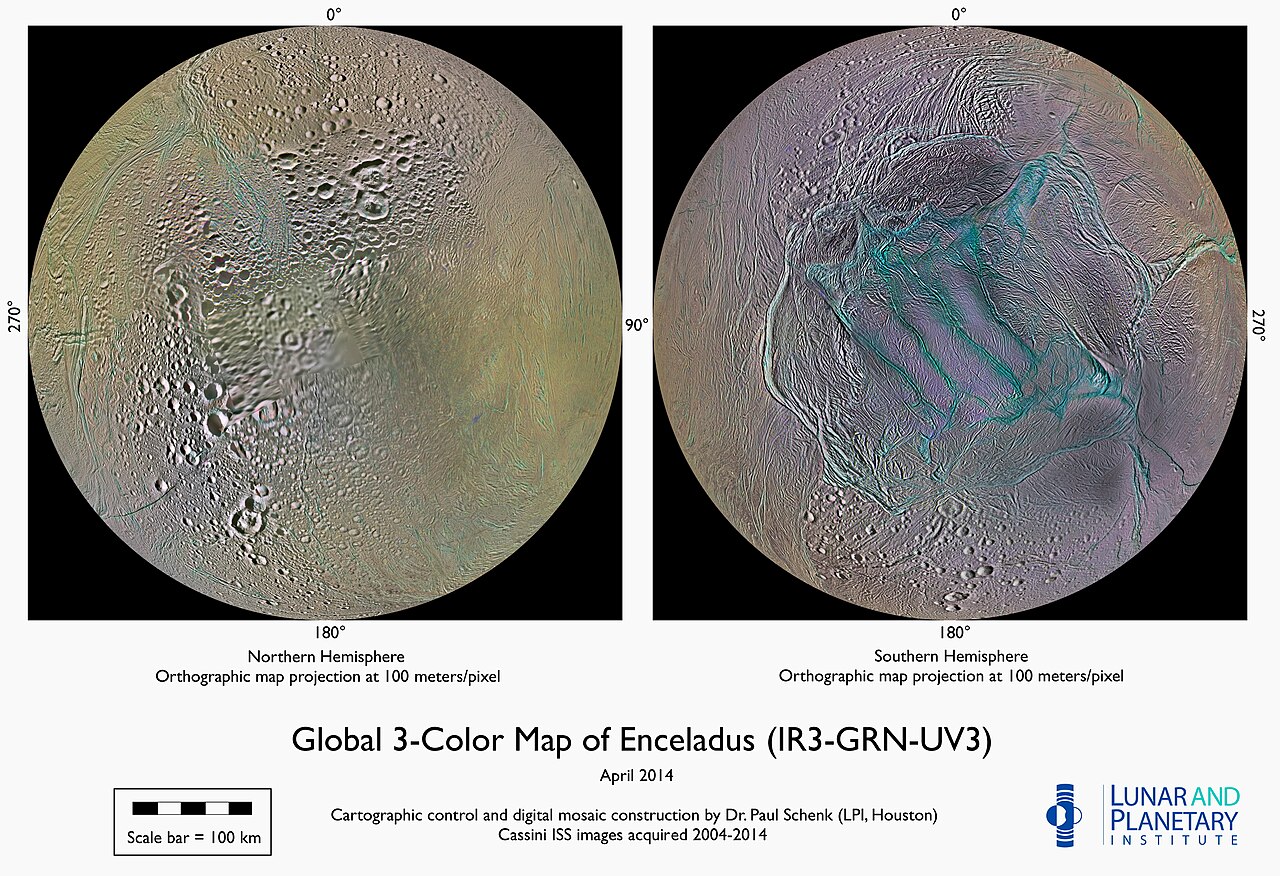
Enceladus is a small, icy moon with a chemical makeup similar to comets. It has water jets erupting from its surface, which may be linked to hydrothermal vents on the ocean floor beneath its icy crust—a potential habitat for life. These geysers offer a way to sample the subsurface ocean, as water from the sea is thought to rise through cracks, remaining liquid at shallow depths (tens of meters) before venting into space. Ice particles from the ocean could contain microbial evidence.
The EnEx mission would send a lander carrying a probe called IceMole, plus an orbiter to relay communications to Earth. After launch, both spacecraft would travel to Saturn using conventional chemical propulsion or solar-electric propulsion. The lander would touch down at a safe distance from an active plume. IceMole would then melt its way through the ice, navigating autonomously around obstacles, to reach a subglacial fracture about 200 meters deep. There, it would examine the environment for microorganisms before exposure to space degrades any biosignatures. The probe's high energy needs would be met by a cable from the lander, which uses a radioisotope thermoelectric generator (RTG) or similar power source.
IceMole is an autonomous, maneuverable melting probe designed for clean sampling of ice and subglacial materials, including liquid from a subsurface reservoir. It combines melting with mechanical propulsion and has demonstrated downward, horizontal, and upward melting, as well as curve driving and penetration through dirt layers. It includes systems for obstacle avoidance, target detection, and acoustic navigation in ice.
- Field
- Astrobiology, planetary science
- Funding agency
- German Aerospace Center (DLR)
- Start date
- 22 February 2012
- Mission type
- Proposed orbiter and lander with ice melting probe
- Target
- Saturn's moon Enceladus
Lore & Background
The Enceladus Explorer concept envisions a lander carrying the IceMole, an autonomous and maneuverable melting ice probe for clean in situ analysis and sampling of glacial ice and subglacial materials. The lander would land at a safe distance from an active vapor plume, and the IceMole would melt its way through ice to a target subglacial aquiferous fracture at a depth of about 200 meters for examination of microorganisms before biosignatures degrade. The IceMole's high energy demand would be met by a cable from the lander, which uses a radioisotope thermoelectric generator (RTG) or similar power source.
Reader's Guide
Enceladus Explorer represents a significant concept in astrobiology, aiming to directly sample the subsurface ocean of Enceladus via its geysers. The mission's design, combining an orbiter for communication and a lander with the IceMole probe, addresses the challenge of accessing a potentially habitable environment without contaminating it. The project, funded by DLR and involving seven German universities, highlights international interest in icy moon exploration. If realized, EnEx could provide the first direct evidence of extraterrestrial life by analyzing liquid samples from Enceladus's ocean, though it remains a proposed concept as of the source article.
Did You Know?
- The Enceladus Explorer project was started on 22 February 2012.
- The IceMole probe is designed to melt through ice and navigate autonomously around hazards.
- The lander would use a radioisotope thermoelectric generator (RTG) or similar to power the IceMole via a cable.
- The mission would target a subglacial fracture at a depth of about 200 meters.
Mission Architecture & Power System
Enceladus Explorer envisions a two-vehicle architecture designed to reach Saturn's icy moon and probe beneath its frozen crust. The system pairs an orbiter with a lander, both traveling together through interplanetary space powered by nuclear electric propulsion that drives electric ion thrusters. Once in the Saturn system, the orbiter's primary role shifts to serving as a communications relay, bridging the gap between surface operations and Earth. The lander, meanwhile, touches down at a location deliberately chosen to sit a safe distance away from any active vapor plume. From there, it deploys the IceMole probe, which will bore its way downward through the ice toward a subglacial aquiferous fracture situated roughly two hundred meters below the surface. The entire operation is energy-intensive, and the IceMole draws its power through a cable connected to a compact nuclear reactor on the lander, which supplies five kilowatts of electrical output. This architecture ensures that the probe can conduct in situ biological analysis before any potential biosignatures or biomolecules are degraded by exposure to the vacuum of outer space.
The IceMole Probe & Its Capabilities
The IceMole is the centerpiece of the Enceladus Explorer concept: an autonomous, maneuverable probe engineered to melt its way through glacial ice and reach subglacial materials for clean, in situ analysis and sampling. Its propulsion strategy is a hybrid approach that combines thermal melting with mechanical drive, giving it the ability to move in multiple directions. During development, the team demonstrated successful downward, horizontal, and upward melting, as well as the capability to drive in curves and penetrate through dirt layers. Navigation is handled autonomously, with onboard systems for obstacle avoidance, target detection, and acoustic navigation through the ice medium. These capabilities allow the probe to steer around hazards and orient itself toward a specific target—a subglacial aquiferous fracture—where it can collect a liquid sample from a water reservoir beneath the icy crust. The probe's high energy requirements are met by a tethered connection to the lander's small nuclear reactor, which delivers five kilowatts of power through a cable, ensuring sustained operation at depth.
Why Enceladus: The Scientific Rationale
The scientific case for Enceladus Explorer rests on the moon's remarkable geology. Enceladus is a small, icy body whose chemical composition appears broadly similar to that of comets, and its surface is punctuated by jets and geysers of water that erupt into space. These plumes are believed to be connected to active hydrothermal vents on the floor of a subsurface ocean, where liquid water meets underlying rock—a setting astrobiologists consider a prime habitat for microbial life. The geysers offer a natural sampling pathway: ocean water is thought to upwell through fractures in the ice shell and then be ejected outward, remaining liquid down to shallow depths on the order of tens of meters. If microorganisms exist in that ocean, ice particles carried aloft could preserve the very evidence needed to identify them. The Enceladus Explorer mission is designed to reach that subsurface environment directly, performing in situ examination before any biosignatures or biomolecules are compromised by exposure to the harsh conditions of outer space.
Project Origins & German Collaboration
The Enceladus Explorer project is a distinctly German collaborative effort in astrobiology. It is funded by the German Aerospace Center, commonly known as DLR, and is carried out by a research consortium that brings together seven German universities working in concert. The project was formally launched on 22 February 2012, marking the beginning of a multi-institutional push to develop a mission concept capable of assessing whether life exists on Saturn's moon Enceladus. The consortium structure reflects the breadth of expertise required: from propulsion and power systems to autonomous navigation, ice-melting mechanics, and biological detection. The project's output includes the detailed mission architecture described in the concept documents, the development and testing of the IceMole probe with its combined melting and mechanical propulsion, and the broader scientific framework for interpreting what a subsurface ocean on Enceladus might reveal about the origins and distribution of life beyond Earth. The work has been presented at international workshops, including the Habitability of Icy Worlds Workshop in February 2014, where the team shared progress and design details with the wider planetary science community.
Gallery
Frequently Asked Questions
What is Enceladus Explorer?
Enceladus Explorer (EnEx) is a proposed deep-space mission targeting Saturn's icy moon Enceladus. It would pair an orbiter with a surface lander carrying a steerable probe that melts through the ice crust to investigate the subsurface ocean for biosignatures.
Who is behind the Enceladus Explorer project?
The German Aerospace Center (DLR) leads the effort, working alongside a consortium of seven German universities. The project's groundwork kicked off on 22 February 2012.
What makes the Enceladus Explorer probe different from other landers?
Instead of simply sitting on the surface, its steerable ice-melting probe is designed to bore through Enceladus's frozen shell and reach the liquid ocean below. This allows direct sampling of a potentially habitable environment rather than relying solely on surface or plume data.
Why do scientists think Enceladus could harbor life?
The moon's south-polar geysers eject water vapor and organics, and their composition mirrors that of comets, suggesting active hydrothermal chemistry beneath the ice. If those plumes are fed by seafloor vents, the ocean could provide the energy and chemistry needed for microbial ecosystems.
Is Enceladus Explorer an active mission or still a proposal?
As of the available canon, EnEx remains a proposed concept rather than a flight-ready spacecraft. It sits within the broader fields of astrobiology and planetary science, with DLR coordinating the design work among the university partners.
More in Extraterrestrial orbiters 1-21
Spotted an error? Know more?
Reader corrections go straight into our review queue. Suggest an edit · How this site is sourced