
BepiColombo
Joint ESA-JAXA mission to study Mercury.

Carmelo Magnafico, Umberto De Filippis, Francesco Santoli, Carlo Lefevre, Marco · CC BY 4.0
BepiColombo is a collaborative mission between the European Space Agency (ESA) and the Japan Aerospace Exploration Agency (JAXA) with Mercury as its destination. The spacecraft consists of two separate satellites: the Mercury Planetary Orbiter (MPO), which ESA built and runs, and Mio (also called the Mercury Magnetospheric Orbiter, or MMO), built and operated by JAXA. Working together, these orbiters aim to thoroughly investigate Mercury, mapping its magnetic field, studying its magnetosphere, and analyzing the planet's interior and surface features.
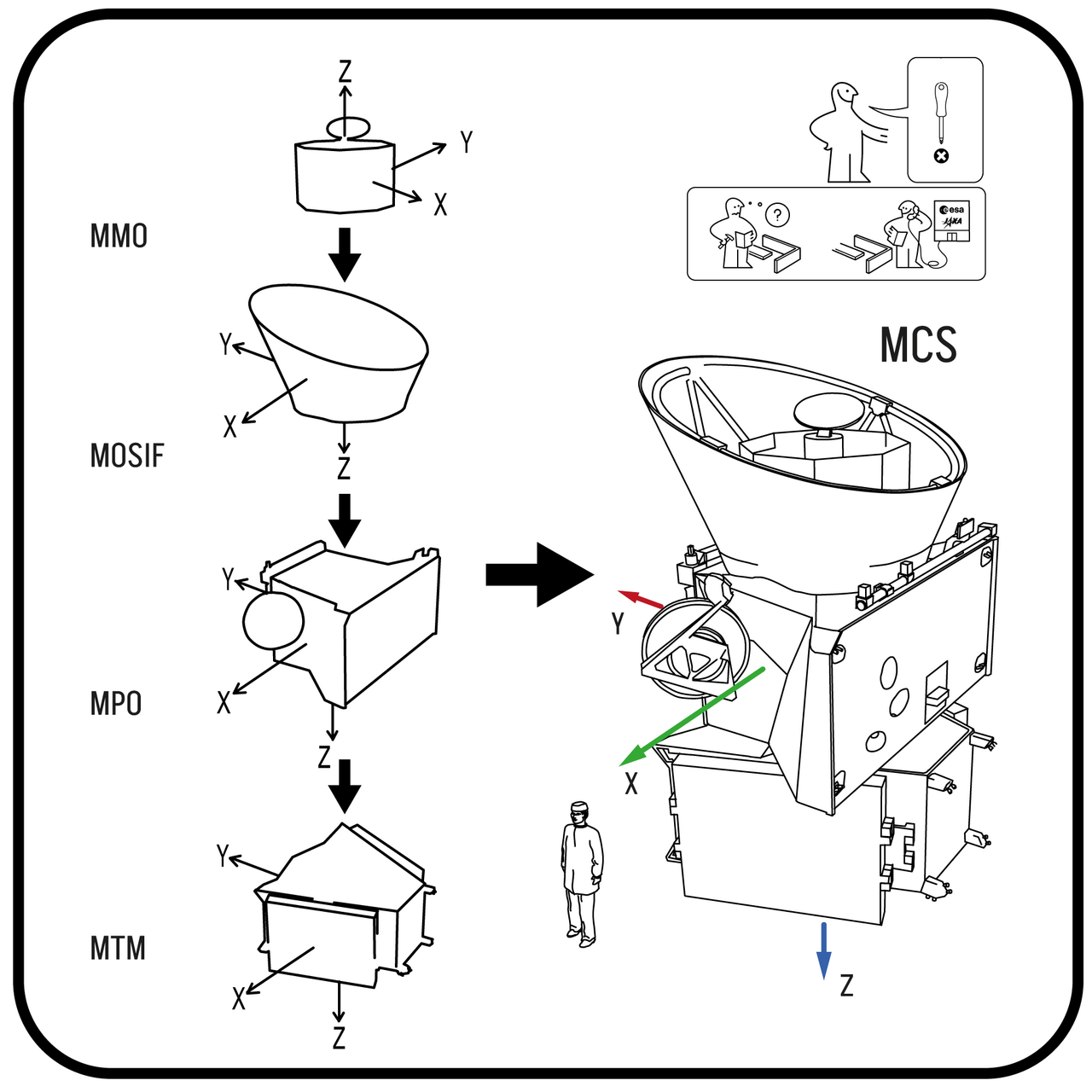
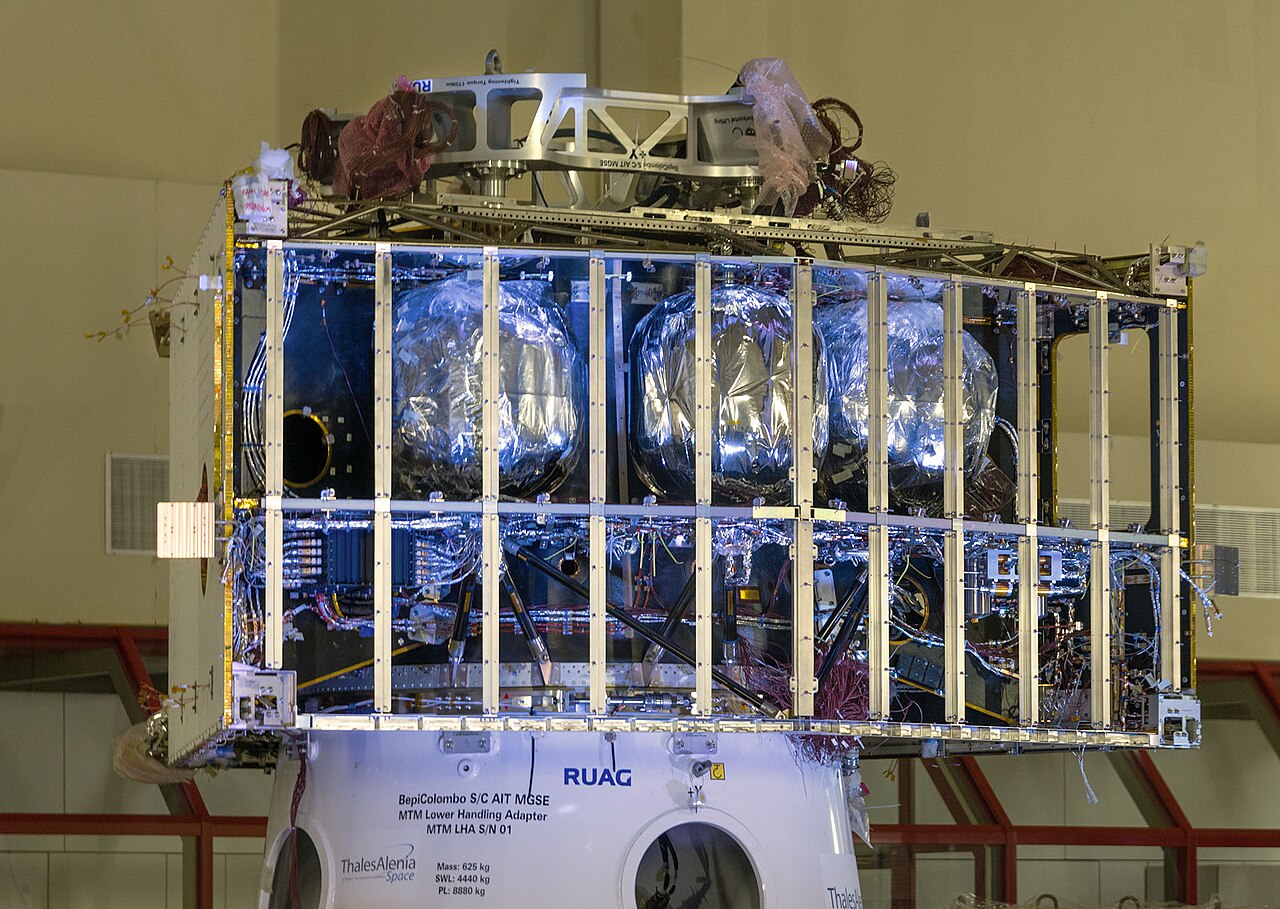
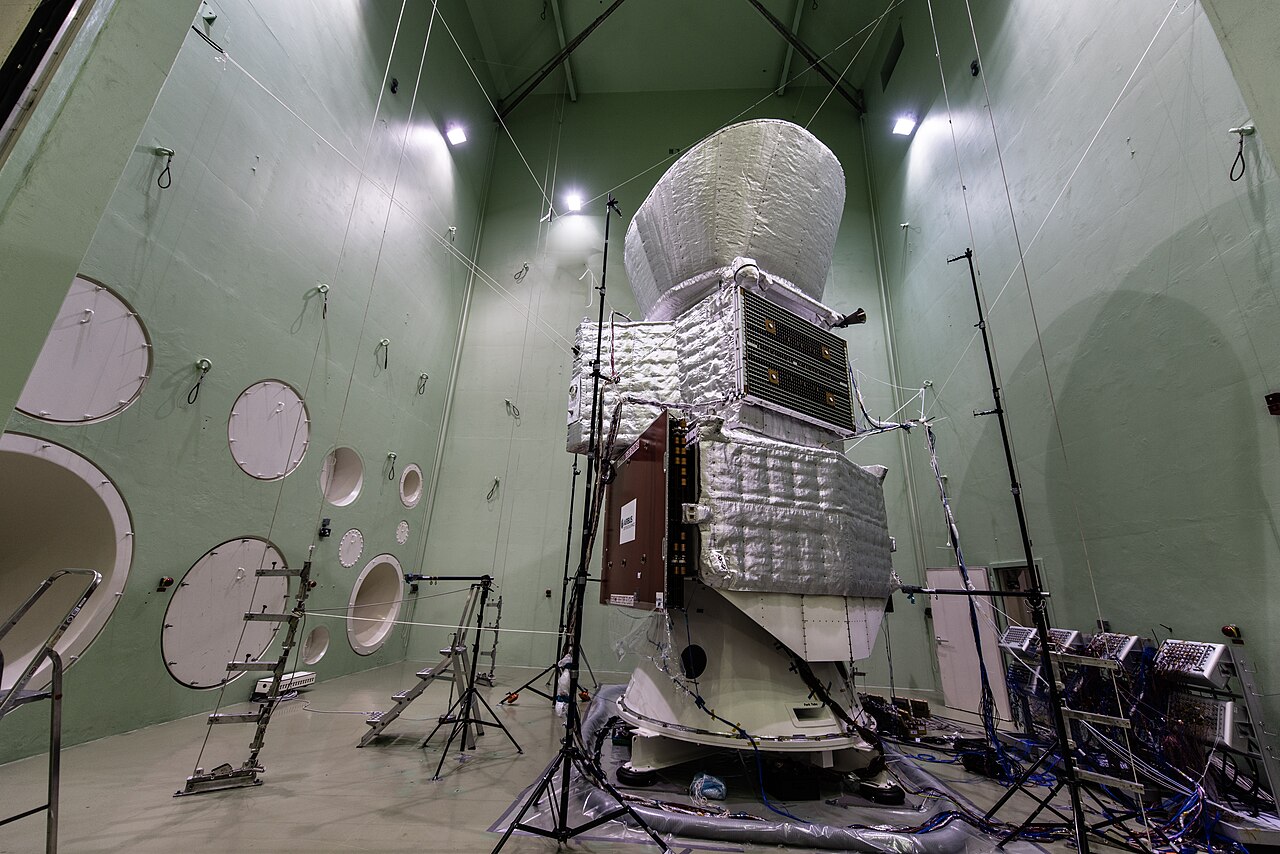
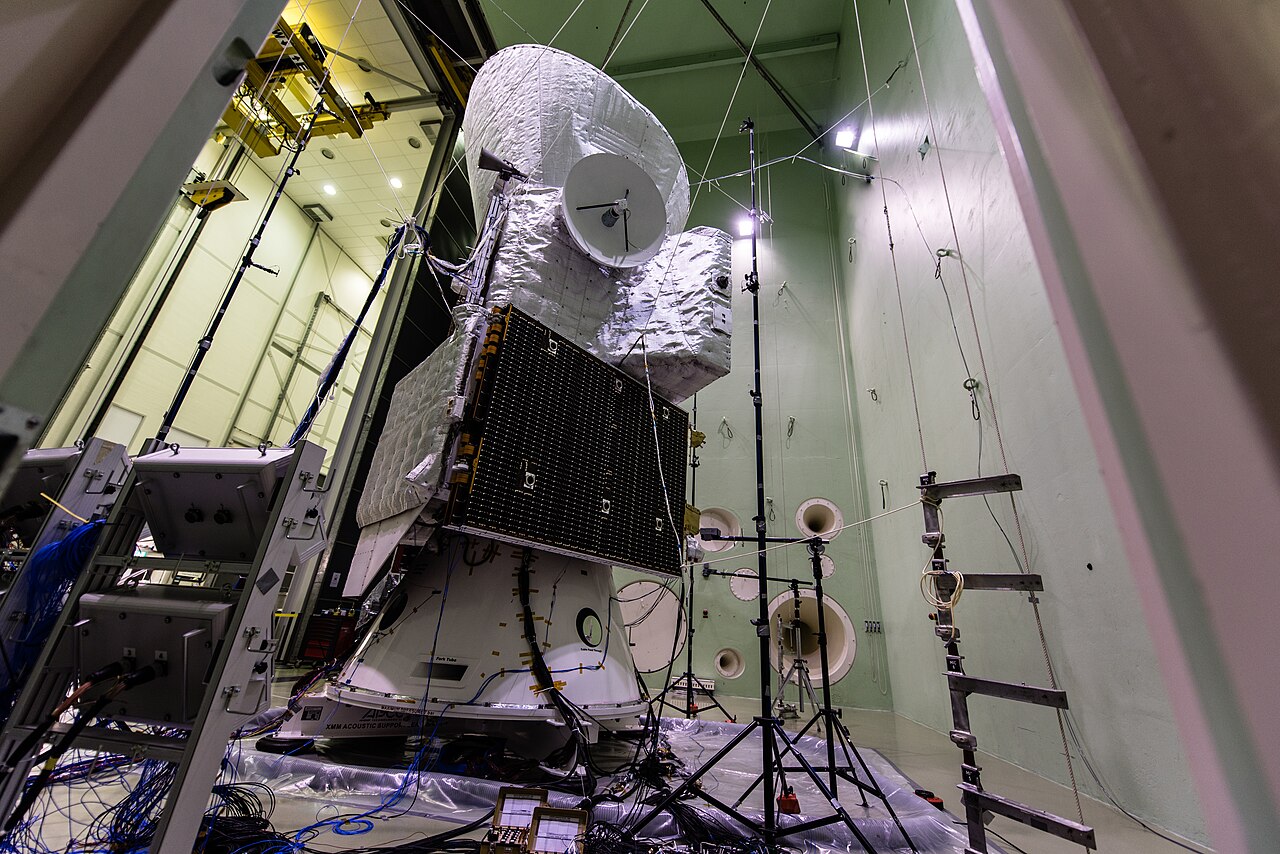
To get to Mercury, the two orbiters traveled in a stacked arrangement alongside two extra components. The Mercury Transfer Module (MTM) supplied power and used solar electric propulsion for the journey, while the Magnetospheric Orbiter Sunshield and Interface (MOSIF) shielded Mio from intense solar radiation until it was released. The MTM was discarded before the spacecraft entered Mercury's orbit, and MOSIF separates from the MPO before Mio is deployed.
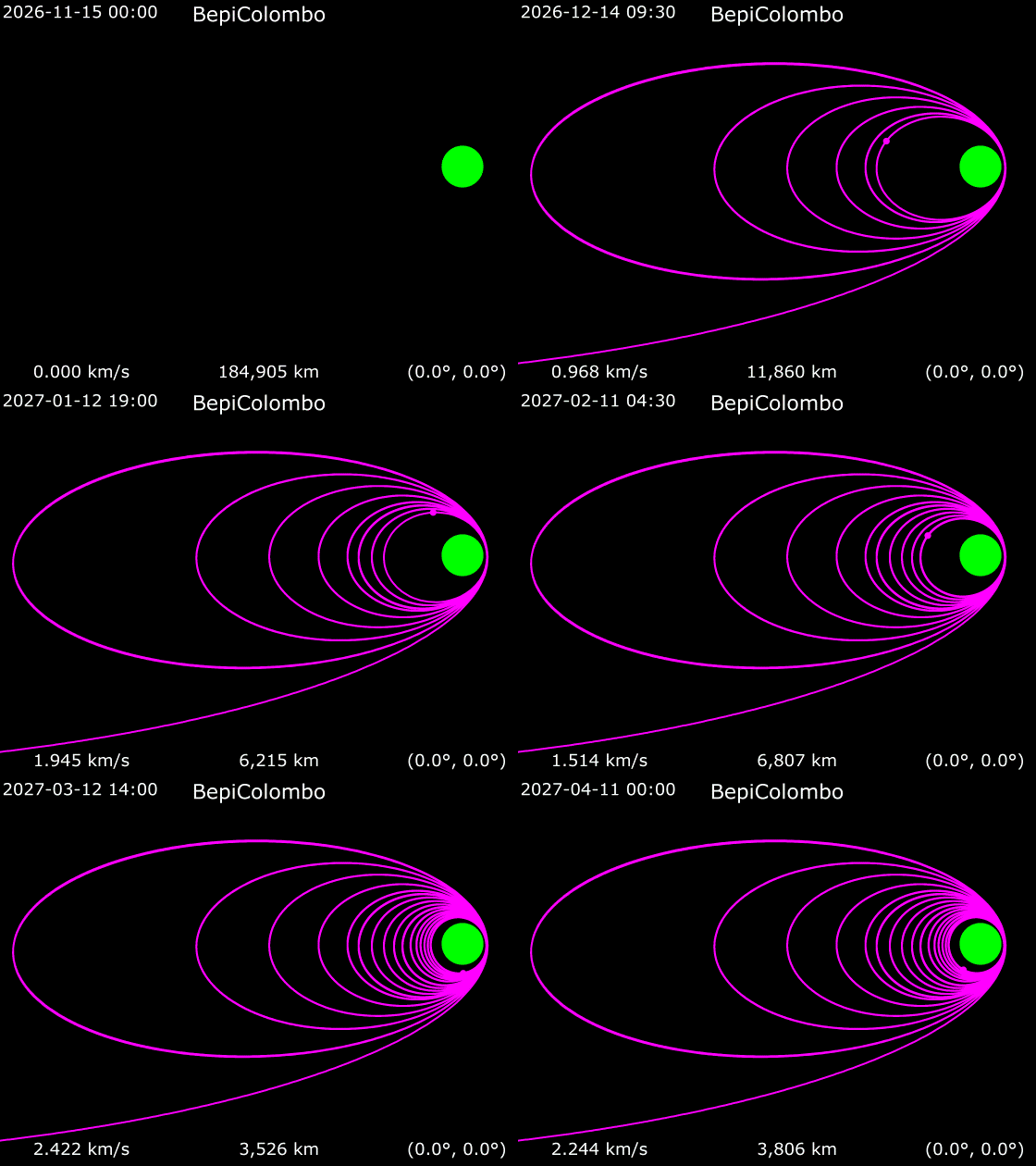
As of 2017, the mission's cost was estimated at €1.65 billion (about US$1.86 billion). Launched on an Ariane 5 rocket on 20 October 2018, BepiColombo was originally scheduled to enter Mercury orbit in December 2025, following one flyby of Earth, two of Venus, and six of Mercury. However, a power-related problem discovered in 2024 limited the thrust from its solar electric propulsion system, pushing the arrival date back to November 2026.
The mission has four main components, which split into independent spacecraft once they reach Mercury: the ESA-built Mercury Transfer Module (MTM) for chemical and solar electric propulsion; the ESA-built Mercury Planetary Orbiter (MPO); JAXA's Mercury Magnetospheric Orbiter (MMO), named Mio; and the ESA-built Magnetospheric Orbiter Sunshield and Interface (MOSIF), which protects Mio during the cruise. During launch and the journey, these four parts were joined together as the Mercury Composite Spacecraft (MCS).
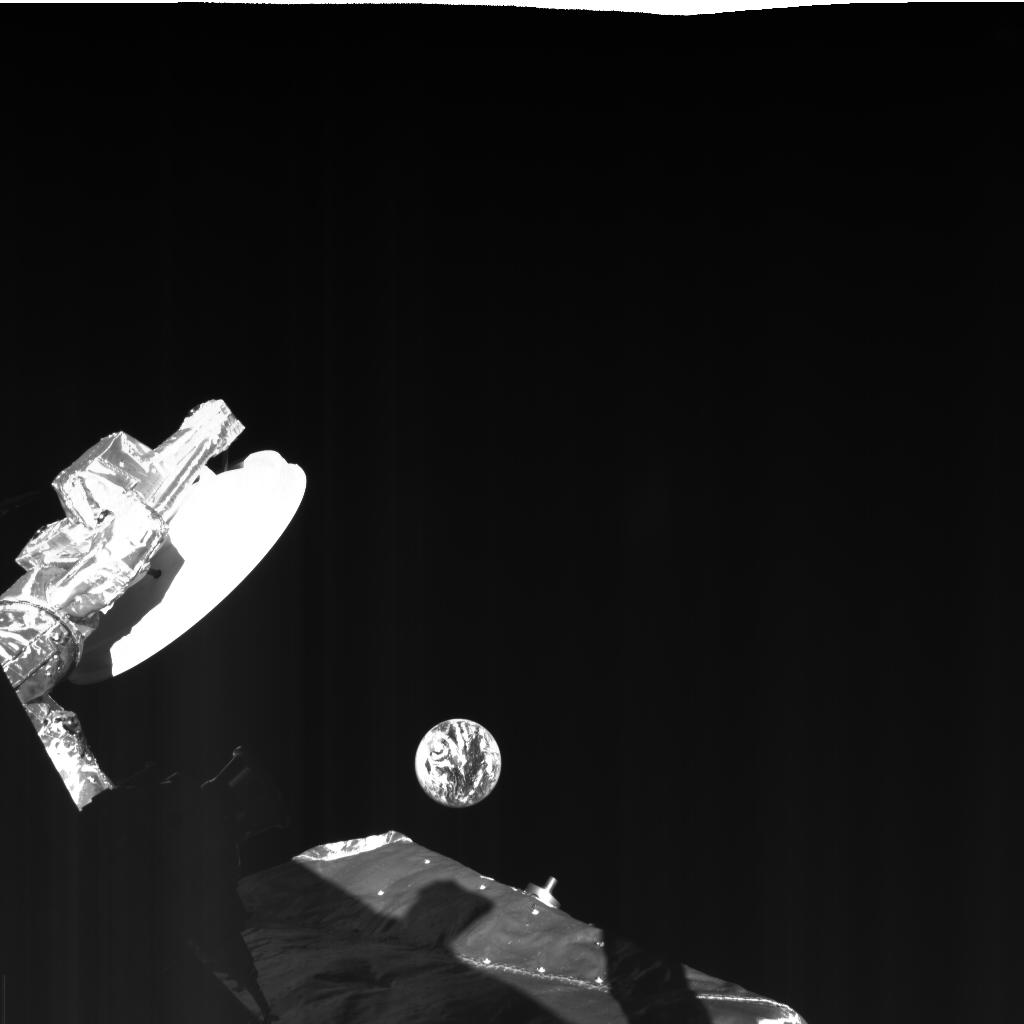
The stacked spacecraft spent eight years maneuvering into position to enter Mercury's orbit. It relied on solar electric propulsion and nine gravity assists, flying past Earth and the Moon in April 2020, Venus in 2020 and 2021, and completing six Mercury flybys between 2021 and 2025.
Quick Facts
- Mission Type
- Planetary science
- Operator
- ESA · JAXA
- Satcat
- 43653
- Manufacturer
- Airbus · ISAS
- Launch Mass
- 4100 kg
- Dry Mass
- 2700 kg
- Bol Mass
- MPO: 1230 kg / Mio: 255 kg
- Dimensions
- MPO: 2.4 x / Mio: 1.8 x
- Power
- MPO: 150 watts / Mio: 90 watts
- Launch Date
- 20 October 2018, 01:45 UTC
- Launch Rocket
- Ariane 5 ECA (VA245)
Facts from the source article.
Lore & Background
BepiColombo is named after Giuseppe 'Bepi' Colombo (1920–1984), a scientist, mathematician, and engineer at the University of Padua, Italy, who first proposed the interplanetary gravity assist manoeuvre used by the 1974 Mariner 10 mission. The mission proposal was selected by ESA in 2000, and after years of planning and delays, it was launched on 20 October 2018 from Europe's Spaceport in Kourou, French Guiana. The stacked spacecraft, known as the Mercury Composite Spacecraft (MCS), consists of four components: the Mercury Transfer Module (MTM), the Mercury Planetary Orbiter (MPO), the Mercury Magnetospheric Orbiter (Mio), and the Magnetospheric Orbiter Sunshield and Interface (MOSIF).
Reader's Guide
BepiColombo represents a significant international collaboration to explore Mercury, the least studied terrestrial planet. Its two orbiters will separate upon arrival and conduct complementary studies of Mercury's magnetic field, magnetosphere, interior, and surface. The mission also aims to test Einstein's theory of general relativity by measuring parameters of the parameterized post-Newtonian formalism. Despite a power-related anomaly in 2024 that delayed arrival from December 2025 to November 2026, the mission has already gathered data during flybys of Earth, Venus, and Mercury. The mission's name honors Giuseppe Colombo, whose gravity assist technique revolutionized planetary exploration. BepiColombo is the last mission of ESA's Horizon 2000+ programme to be launched.
Did You Know?
- BepiColombo is named after Giuseppe 'Bepi' Colombo, who proposed the interplanetary gravity assist maneuver used by Mariner 10.
- The mission includes two orbiters: the Mercury Planetary Orbiter (MPO) by ESA and Mio (Mercury Magnetospheric Orbiter) by JAXA.
- In 2024, a power-related anomaly limited thrust levels, delaying Mercury orbit insertion from December 2025 to November 2026.
- During its Earth flyby in April 2020, BepiColombo was briefly mistaken for a near-Earth asteroid and given the provisional designation 2020 GL2.
A Four-Part Spacecraft for a Two-Orbiter Destination
BepiColombo is not a single spacecraft but a carefully engineered stack of four distinct modules that travel together as the Mercury Composite Spacecraft. The European Space Agency built and operates the Mercury Planetary Orbiter, the mission's primary scientific platform, while JAXA provides the Mercury Magnetospheric Orbiter, a dedicated probe for studying the planet's magnetic environment. Bridging these two orbiters are two support components: the Mercury Transfer Module, which supplies both chemical and solar electric propulsion throughout the long cruise, and the Magnetospheric Orbiter Sunshield and Interface, a protective shield that guards the Japanese orbiter from intense solar radiation until it is ready for deployment. The Transfer Module is jettisoned before the spacecraft enters Mercury orbit, while the Sunshield is detached only after the Japanese orbiter has separated. Once in orbit, the two spacecraft operate independently but collaboratively for at least one year, with a possible extension. Mission control is based in Darmstadt, Germany, and communications flow through ESA's 35-metre ground station at Cebreros, Spain.
An Eight-Year Spiral Toward the Sun's Nearest World
Launched on 20 October 2018 aboard an Ariane 5 rocket from Kourou, French Guiana, the stacked spacecraft departed Earth with a hyperbolic excess velocity of roughly 3.5 kilometres per second, placing it on a heliocentric trajectory that would take nearly a decade to reach its destination. Rather than fighting the Sun's gravity head-on, the mission exploits a sequence of nine gravity-assist flybys: a pass by Earth and the Moon in April 2020, two encounters with Venus in 2020 and 2021, and six close passes of Mercury spread across 2021 through 2025. Each flyby incrementally reshapes the orbit, gradually lowering the perihelion until the spacecraft can finally brake into Mercury orbit. The original target for orbit insertion was December 2025, but in September 2024, just before the fourth Mercury flyby, a power-related anomaly was detected in the solar electric propulsion system that limited available thrust. This forced a recalibration of the trajectory, pushing the expected arrival to November 2026. The entire cruise relies on solar electric propulsion provided by the Transfer Module, a technology that trades high thrust for extraordinary fuel efficiency over millions of kilometres.
Reading the Smallest Planet
The scientific programme is designed to answer fundamental questions about how a rocky world behaves when parked so close to its star. The orbiters will map Mercury's form, interior structure, geology, composition, and crater record, while also probing the tenuous exosphere — a thin shell of hydrogen, helium, oxygen, sodium, calcium, potassium, and trace elements that is continuously lost and replenished rather than stably retained. A central goal is to characterise the planet's enormous iron core, which extends to roughly three-quarters of the radius, distinguishing its solid and liquid portions and measuring their sizes. The magnetised envelope receives dedicated attention: both the structure and dynamics of the magnetosphere and the origin of the magnetic field itself are key targets. Perhaps most ambitiously, the mission will test Einstein's general relativity by measuring the gamma and beta parameters of the post-Newtonian formalism with unprecedented precision. Russia contributed the gamma-ray and neutron spectrometer, an instrument aimed at detecting water ice in permanently shadowed polar craters.
Honouring a Visionary and a Water Star
The mission bears the name of Giuseppe "Bepi" Colombo, a scientist, mathematician, and engineer at the University of Padua who, in the early 1970s, first proposed the interplanetary gravity-assist technique that would later guide the 1974 Mariner 10 flyby of Mercury. That manoeuvre, now a standard tool in planetary exploration, is the very principle BepiColombo relies on for its long cruise. The Japanese orbiter's name, Mio, was chosen from thousands of suggestions submitted by the public. In Japanese the word evokes a waterway, and JAXA explained that the spacecraft will ride through the solar wind much as a ship moves through an ocean, carrying with it the milestones of research and development achieved so far and a wish for a safe voyage ahead. The water imagery is not accidental: in both Chinese and Japanese, Mercury is traditionally called the "water star," a designation rooted in the wǔxíng elemental system. Together, the two names thread a narrative of human curiosity reaching toward the Sun's closest, most punishing world.
Gallery
Frequently Asked Questions
What is BepiColombo?
BepiColombo is a joint planetary-orbiter mission designed to study the inner planet Mercury. It is a partnership between Europe's ESA and Japan's JAXA, pairing two dedicated spacecraft into a single multi-year exploration effort.
Who built and operates BepiColombo?
ESA constructed and runs the Mercury Planetary Orbiter (MPO), while JAXA built and operates the Mercury Magnetospheric Orbiter, known as Mio (or MMO). Each agency manages its own satellite, but the two work as a coordinated pair once in orbit.
When and how did BepiColombo launch?
The spacecraft lifted off on an Ariane 5 rocket on 20 October 2018. The overall program carried an estimated cost of roughly €1.65 billion, equivalent to about US$1.86 billion at 2017 rates.
What will BepiColombo actually study at Mercury?
The twin orbiters are tasked with mapping Mercury's magnetic field, characterizing its magnetosphere, and probing the planet's deep interior and surface geology. Together they will deliver the most comprehensive picture of the smallest terrestrial planet to date.
When does BepiColombo finally reach Mercury orbit?
Orbit insertion is scheduled for November 2026, after a lengthy cruise phase that uses a series of planetary flybys to shed enough velocity for capture. Once in orbit, the science campaign is expected to run for at least one full Mercury year.
More in Extraterrestrial orbiters 1-21
Spotted an error? Know more?
Reader corrections go straight into our review queue. Suggest an edit · How this site is sourced