Pastelón
A Caribbean casserole of plantains and seasoned meat.

VANGOGH787 · CC BY-SA 4.0
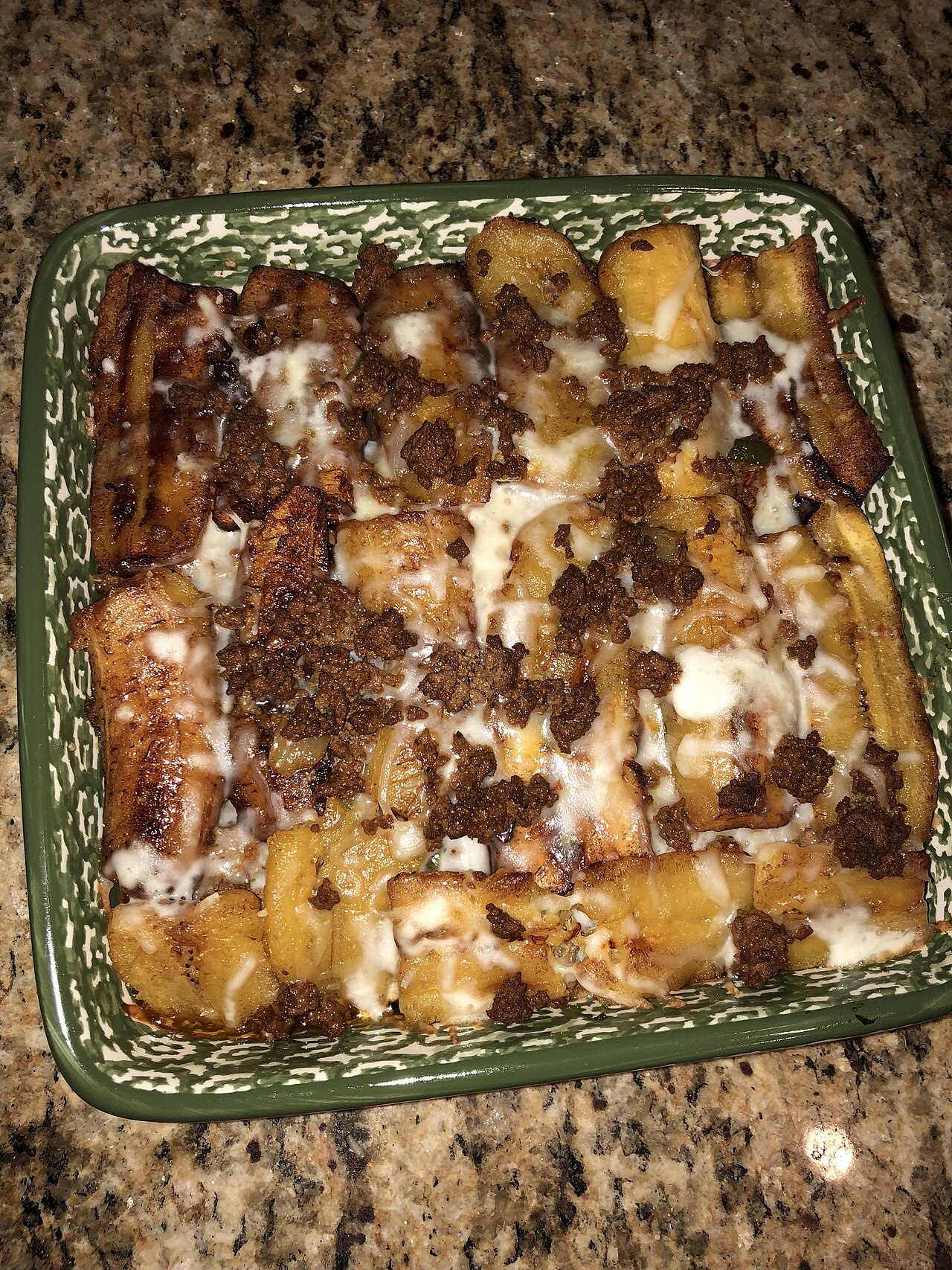
Pastelón, meaning "big cake" in Spanish, is a casserole from the Dominican Republic and Puerto Rico, with each country preparing it in its own way. The dish features common Latin Caribbean ingredients like plantains, sofrito, and seasoned ground beef.
In the Dominican Republic, ripe plantains are boiled and mashed, then layered in a baking pan with Dominican-style picadillo and cheddar cheese. The process is repeated, and the dish is covered with aluminum foil and baked for 35 to 45 minutes. It is also called Dominican casserole or ripe plantain casserole.
In Puerto Rico, pastelón is seen as a local take on lasagna. Sweet plantains, cut lengthwise into strips and fried, replace the pasta noodles. The traditional version uses stewed ground meat (picadillo), whose sauce is spread between layers. Modern variations sauté the meat with bell peppers, tomatoes, onions, herbs, olives, capers, raisins, garlic, and wine. The plantain strips are placed at the bottom of a baking pan, then layered with the meat filling, and this is repeated about two more times. Modern versions often add mozzarella, ricotta, béchamel, or marinara to compensate for the drier sautéed meat. Traditionally, a beaten egg might be poured over the top layer before adding parmesan and shredded mozzarella or cheddar, or both, then baked. The plantains can be swapped for boiled and mashed potato, batata, breadfruit, cassava, celeriac (apio), taro, ñame, or yautía. A vegetarian version, using mushrooms, eggplant, squash, string beans, potato, or chayote instead of meat, has also become popular.
Quick Facts
- Country
- Dominican Republic / Puerto Rico
- Course
- Main course
- Served
- Hot
Facts from the source article.
Lore & Background
In the Dominican Republic, pastelón is made with boiled mashed ripe plantains, often called Dominican casserole or ripe plantain casserole. It uses Dominican-style picadillo and cheddar cheese, layered with mashed plantain and baked covered with aluminum for 35–45 minutes. In Puerto Rico, pastelón is considered a variation of lasagne, with sweet plantains cut lengthwise into strips and fried to replace lasagne noodles. Traditional Puerto Rican pastelón uses stewed ground meat (picadillo) with its sauce between layers; modern variations sauté the meat with bell peppers, tomatoes, onions, herbs, olives, capers, raisins, garlic, and wine, and may incorporate mozzarella, ricotta, bechamel, or marinara to compensate for dryness.
Reader's Guide
Pastelón represents a shared culinary tradition between the Dominican Republic and Puerto Rico, each adapting the dish with distinct techniques and ingredients. In the Dominican Republic, the dish emphasizes boiled mashed plantains and cheddar cheese, baked as a casserole. In Puerto Rico, the dish mirrors lasagne, using fried plantain strips and layered with meat, cheese, and sometimes egg. The Puerto Rican version also allows substitutions such as potato, breadfruit, cassava, or taro for plantains, and modern vegetarian variations replace meat with mushrooms, eggplant, squash, or beans. Pastelón illustrates how a basic concept—plantains and seasoned meat—can diverge into two national styles while remaining a staple of Latin Caribbean home cooking.
Did You Know?
- Pastelón is Spanish for 'big cake'.
- In the Dominican Republic, pastelón is often called Dominican casserole or ripe plantain casserole.
- A modern vegetarian variation of pastelón replaces meat with mushrooms, eggplant, squash, string beans, potato, or chayote.
Cultural Roots & Identity
Pastelón, a name that translates simply to 'big cake' in Spanish, occupies a distinctive place in the culinary landscapes of two Caribbean nations: the Dominican Republic and Puerto Rico. Though both islands claim the dish as their own, each prepares it in a manner that reflects local tastes and traditions, making the shared name a label for two quite different experiences. At its core, pastelón is a casserole built around ingredients deeply rooted in Latin Caribbean cooking—ripe plantains, sofrito, and seasoned minced beef. These components speak to a shared regional pantry, yet the way they are assembled, cooked, and layered diverges significantly from one island to the next. The dish thus serves as a small window into how a single culinary idea can branch into two proud, separate expressions of Caribbean identity, each nation guarding its own version as a point of local pride.
The Dominican Method
In the Dominican Republic, pastelón goes by the more familiar names Dominican casserole or ripe plantain casserole, and its construction follows a straightforward, layered logic. The foundation is boiled, mashed ripe plantains, spread across the bottom of a baking pan. Over this base goes a generous layer of Dominican-style picadillo—seasoned minced beef—topped with cheddar cheese. The process then repeats: another blanket of mashed plantain, followed by more picadillo and cheddar, creating two complete strata. Once the layers are in place, the pan is sealed with aluminum foil and sent into the oven for roughly thirty-five to forty-five minutes. The result is a cohesive, baked dish where the sweetness of the plantains mingles with the savory depth of the seasoned meat and the richness of melted cheese. The method is unpretentious and homey, relying on a small number of well-loved ingredients rather than elaborate technique.
The Puerto Rican Lasagne Connection
In Puerto Rico, pastelón is widely understood as the island's own take on lasagne, and the structural resemblance is intentional. Where Italian lasagne relies on flat pasta sheets, the Puerto Rican version substitutes sweet plantains—plátanos maduros—that are peeled, sliced lengthwise into strips, and fried until golden. The traditional filling centers on stewed ground meat, typically picadillo, whose cooking liquid doubles as the sauce poured between each layer. More contemporary interpretations shift to sautéed minced meat enriched with bell peppers, tomatoes, onions, herbs, olives, capers, raisins, garlic, and a splash of wine, and because this method yields a drier filling, cooks now fold in mozzarella, ricotta, bechamel, or marinara to keep the dish moist. The assembly mirrors lasagne: plantain strips at the base, a meat-and-cheese layer, repeated roughly two more times for three tiers total. Some cooks finish by brushing the top with beaten egg before scattering parmesan and shredded mozzarella or cheddar, then baking until set.
Adaptation & Ingredient Flexibility
One of pastelón's most remarkable qualities is its willingness to bend. In Puerto Rico, the plantain strips that form the structural backbone of the dish can be swapped for a surprising range of starchy alternatives: boiled and mashed potato, batata, breadfruit, cassava, celeriac (known locally as apio), taro, ñame, or yautía. This flexibility speaks to the dish's roots in resourceful, home-kitchen cooking, where whatever root or tuber is on hand can step in. The protein component has also evolved. A vegetarian variation has gained real popularity in recent years, replacing the traditional minced beef with mushrooms, eggplant, squash, string beans, potato, or chayote. These plant-based fillings allow the layered, baked structure to remain intact while catering to different dietary preferences. Together, these substitutions show that pastelón is less a fixed recipe than a living framework—a Caribbean casserole concept that welcomes new ingredients without losing its essential identity.
Gallery
Frequently Asked Questions
Who is Pastelón?
Pastelón is a beloved Caribbean casserole dish that originates from both the Dominican Republic and Puerto Rico, with each island putting its own spin on the recipe. The name translates to "big cake" in Spanish, though it has nothing to do with baking a sweet treat.
What are Pastelón's powers/role?
The dish builds its flavor from mashed ripe plantains, a savory sofrito base, and seasoned ground beef known as picadillo. Cheddar cheese is folded between the layers to add richness and a melty finish.
Why is Pastelón important?
It sits at the heart of Latin Caribbean home cooking, showcasing staple ingredients like plantains and sofrito in a comforting, crowd-pleasing format. The dish also highlights how neighboring islands can share a recipe while keeping their own distinct identity.
What are Pastelón's alternate names?
In the Dominican Republic, people often refer to it as the "Dominican casserole" or the "ripe plantain casserole." These nicknames emphasize the star ingredient and the dish's role as a one-pan family meal.
More in Dominican Republic cuisine 1-23
Spotted an error? Know more?
Reader corrections go straight into our review queue. Suggest an edit · How this site is sourced