
Habichuelas con dulce
Sweet bean dessert from the Dominican Republic, popular at Easter.

Arlene Campusano · CC BY-SA 4.0
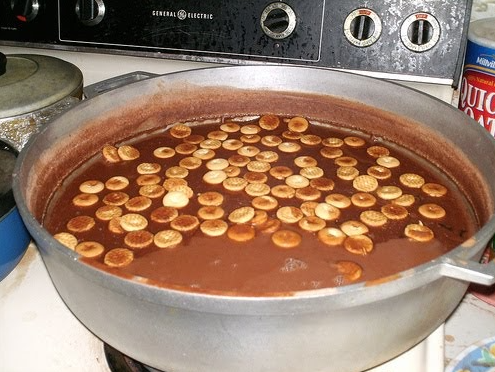
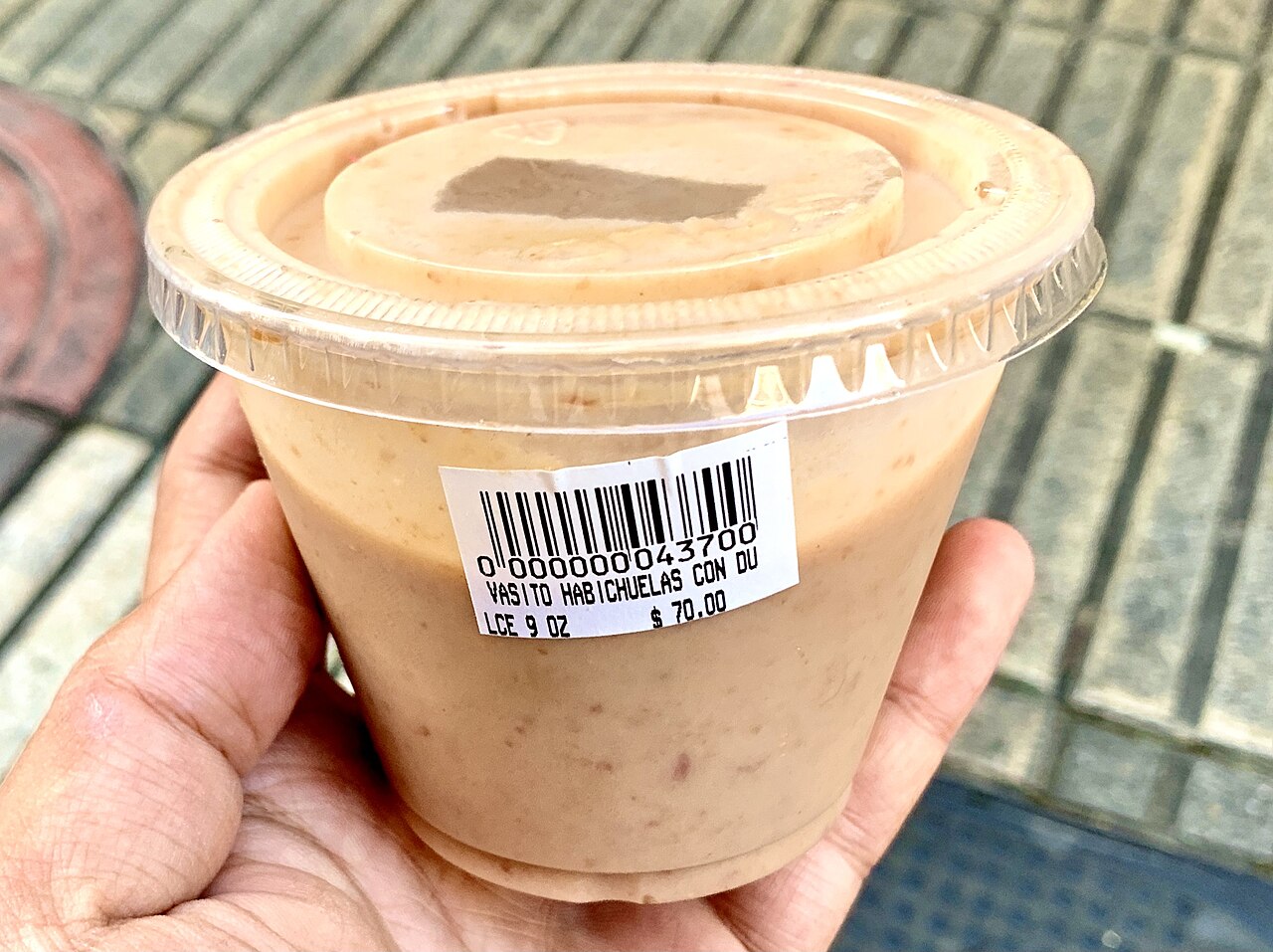
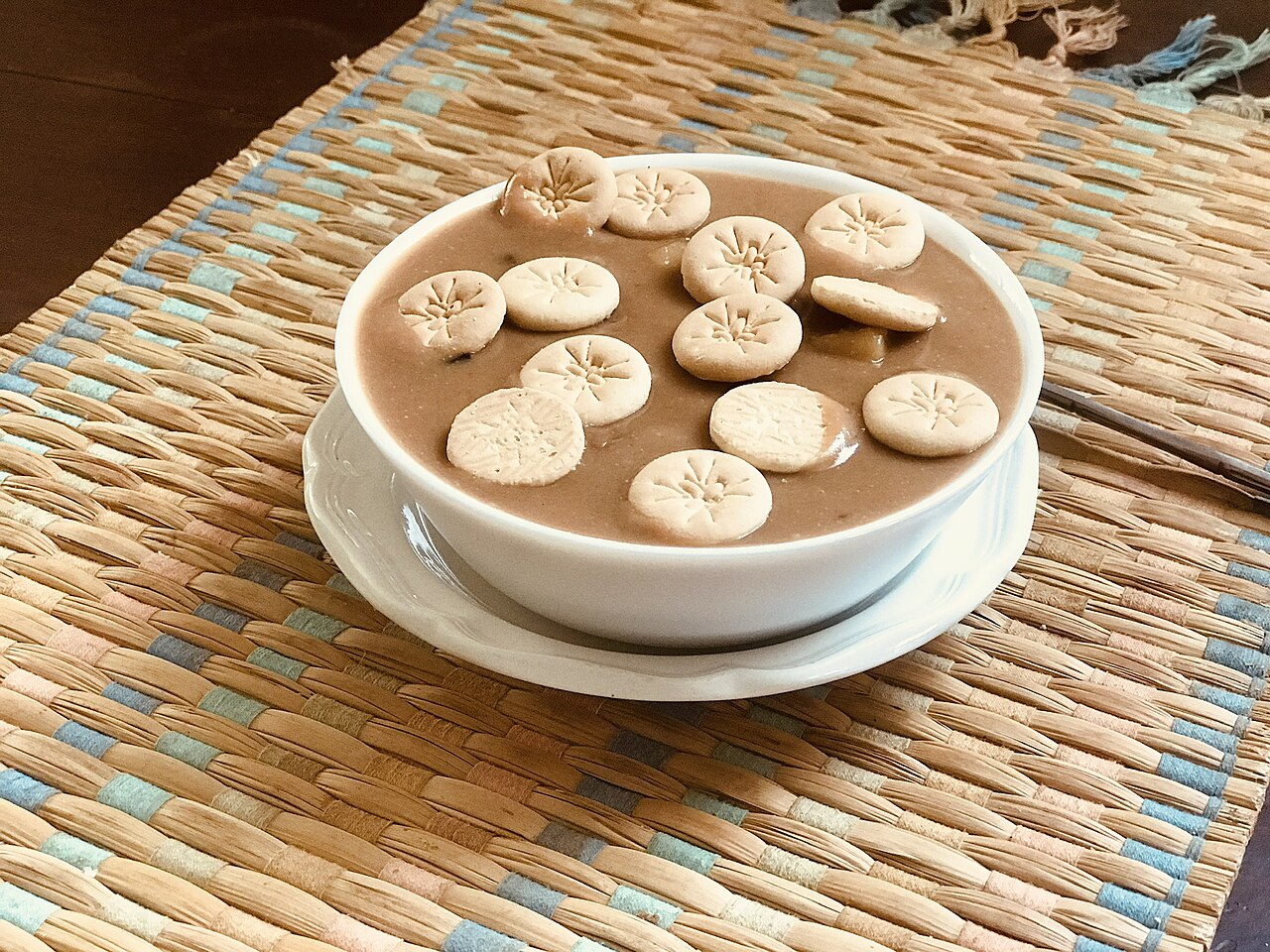
Habichuelas con dulce is a sweet bean liquid dessert from the Dominican Republic, especially popular around the Easter holiday. It is part of the cuisine of the Dominican Republic and is traditionally garnished with milk cookies or casabe, a flatbread made from grated yuca root. The dish is made with red beans, cinnamon, nutmeg, coconut milk, evaporated milk, raisins, sugar, and salt, and is often served after cooling for several hours.
Quick Facts
- Country
- Dominican Republic
- Region
- Latin America, Caribbean
- Main Ingredient
- Red beans, cinnamon, nutmeg, coconut milk, sweet potato, evaporated milk, raisin, sugar, pinch of salt and vanilla
Facts from the source article.
Lore & Background
The origins of habichuelas con dulce are unclear. One theory argues it was created by enslaved African people brought to the Dominican Republic, as it holds similarities to frejol colado, a similar Afro-Peruvian dish. Another theory suggests it derived from a Turkish dish called Aşure, or Noah's Pudding, though this connection is unsupported by mainstream culinary history. Aşure is made with similar ingredients and is also associated with a religious period of fasting.
Reader's Guide
Some argue that habichuela con dulce came to be during the Dominican Republic's colonial period, with sugar and coconut milk from African slaves, sweet potato from the Taino Indians, and beans and spices from Spanish settlers. Another theory links it to the French presence on the island of Santo Domingo. According to the historian José G. Guerrero, the Frenchman Dorvo Soulastre reported for Holy Week in 1798 that in Santo Domingo some 'sugary beans' were prepared. Despite these theories, it has not been settled how the dish originated. The dessert is made by soaking red beans overnight, boiling them, straining for a fine texture, then adding evaporated milk, condensed milk, and coconut milk, along with spices like cinnamon, cloves, nutmeg, and vanilla. Butter is added, and traditional toppings include raisins, batata (white sweet potato), and Guarina milk cookies.
Did You Know?
- One theory argues the dish derived from a Turkish dish called Aşure, also known as Noah's Pudding, though this is not supported by mainstream culinary history.
- A similar form of habichuelas con dulce is red bean paste, used in Chinese, Korean, and Japanese cuisines.
The Art of Preparation
Habichuelas con dulce begins with red beans that must be soaked in water overnight until they soften. Once boiled to a tender state, the beans are strained to achieve a fine, smooth texture before being blended to a consistency comparable to soup. The base is enriched with coconut milk, evaporated milk, and sometimes condensed milk, while chunks of cooked sweet potato are folded into the mixture. Warm spices—cinnamon, nutmeg, cloves, and occasionally ginger or vanilla—are incorporated according to each family's particular recipe. A finish of butter rounds out the flavor, and the finished dessert is typically allowed to cool for several hours before serving. Traditional accompaniments include raisins, additional sweet potato pieces, and Guarina milk cookies, though some households garnish the dish with casabe, a flatbread made from yuca flour. The result is a thick, sweet, aromatic liquid dessert that balances creaminess with the earthy depth of the beans.
A Puzzle of Origins
No single narrative explains where habichuelas con dulce first appeared, and culinary historians continue to debate its roots. One theory traces the dish to enslaved Africans brought to the island, drawing parallels to frejol colado, an Afro-Peruvian preparation of black beans, milk, and sugar or panela, suggesting the two may be distant cousins. Another points to the Turkish dish Aşure, known as Noah's Pudding, which shares beans, sugar, and spices and is tied to the Islamic month of Muharrem; Ottoman immigrants may have carried it to the Dominican Republic in the late nineteenth or early twentieth century. A third theory envisions a colonial synthesis in which sugar and coconut milk came from African laborers, sweet potato from the indigenous Taino, and beans and spices from Spanish settlers. A fourth, more specific account credits a Frenchman named Francois Delalande, who fled Saint-Domingue after a family tragedy and reportedly prepared sugary beans in Santo Domingo by 1798, as recorded by the French military officer Dorvo Soulastre. Despite these compelling threads, the true origin remains unresolved.
Roots in Faith and Identity
Habichuelas con dulce is most strongly associated with the Easter season in the Dominican Republic, where it becomes a staple of Holy Week tables. This religious timing echoes the dish's possible Turkish ancestor, Aşure, which is traditionally prepared and shared on the tenth day of Muharrem, the first month of the Islamic calendar, following a period of fasting. The French-origin theory also places the dish squarely within a Christian liturgical context: Soulastre's 1798 report specifically notes that sugary beans were being prepared in Santo Domingo during Holy Week. Beyond any single religious thread, the dessert has come to symbolize the broader Dominican cultural formation—a blending of African, indigenous Taino, Spanish, French, and Ottoman influences shaped by centuries of migration and miscegenation among whites, blacks, and mulattoes. The dish thus functions as both a seasonal ritual food and a living record of the island's layered, dynamic identity, where multiple culinary traditions converge into a single, recognizable sweet.
Echoes Across East Asia
The Dominican sweet bean dessert is not an isolated invention; a closely related preparation—red bean paste—plays a central role in Chinese, Korean, and Japanese cuisines. In China, the thick, dark-red paste fills zongzi, glutinous rice parcels wrapped in bamboo leaves, as well as jiān dui, fried pastries, and mooncakes. It is also pressed into a red bean cake where mashed beans are combined with gelatin and chilled for hours, a technique strikingly similar to the cooling step in habichuelas con dulce. Korean kitchens feature the paste in bungeoppang, roasted pastries, hobbang, flour balls, baram tteok, rice cakes, and chalboribbang, small sweet pancakes. In Japan, daifuku, mochi dumplings, manjū, buckwheat or rice cakes, taiyaki, fish-shaped cakes, and anpan, sweet rolls, all rely on the same sweet bean filling. These global parallels underscore how the humble red bean, combined with sugar and a binding agent, has independently inspired dessert traditions across vastly different cultures.
Gallery
Frequently Asked Questions
What is Habichuelas con dulce?
It's a sweet, creamy bean-based dessert that sits at the heart of Dominican home cooking. Think of it as a liquid-style dish where red beans are slow-simmered with coconut milk, evaporated milk, and warm spices until everything melds together.
What are Habichuelas con dulce's main ingredients?
The classic recipe calls for red beans, coconut milk, evaporated milk, sugar, cinnamon, nutmeg, raisins, and a small pinch of salt. Many cooks also tuck in sweet potato to add extra body and a deeper sweetness.
When do Dominicans traditionally eat Habichuelas con dulce?
It's most strongly linked to the Easter season, when families pull it out as a celebratory sweet course. That said, it shows up at birthday parties, quinceañeras, and any gathering where a rich dessert is called for.
How do you serve Habichuelas con dulce?
The dish is usually refrigerated for several hours so the flavors deepen and the texture sets into something thicker and more spoonable. A classic finishing touch is a few milk cookies or a piece of casabe, the flat bread made from grated yuca root.
Why is Habichuelas con dulce important to Dominican food culture?
It weaves together indigenous, African, and Spanish culinary traditions into a single, distinctly Dominican sweet. Its deep tie to Easter makes it a nostalgic touchstone of family identity and holiday memory across generations.
More in Dominican Republic cuisine 1-23
Spotted an error? Know more?
Reader corrections go straight into our review queue. Suggest an edit · How this site is sourced