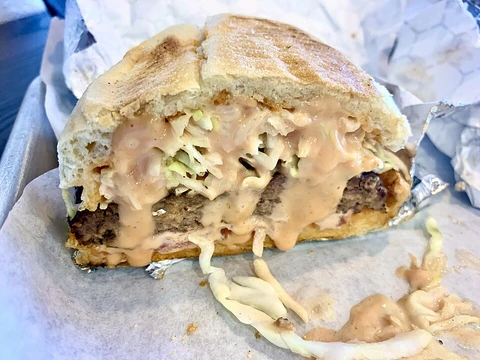
Dominican Republic cuisine
A blend of Taíno, Spanish, African, and Middle Eastern culinary traditions.

Arlene Campusano · CC BY-SA 4.0
Dominican cuisine is a fusion of Spanish, Indigenous Taíno, Middle Eastern, and African influences, with more recent contributions from the British West Indies and China. It reflects the country's history as a former Spanish colony and its waves of immigration, incorporating a wide range of starches, meats, and local produce.
- Field
- Cuisine
- Nationality
- Dominican Republic
- Known for
- Fusion of Taíno, Spanish, African, and Middle Eastern influences
- Key staples
- Casabe, mangú, sofrito, rice, plantains, yuca
- Notable dishes
- Mangú, chimichurris, pastelón, quipes, yaniqueque
Lore & Background
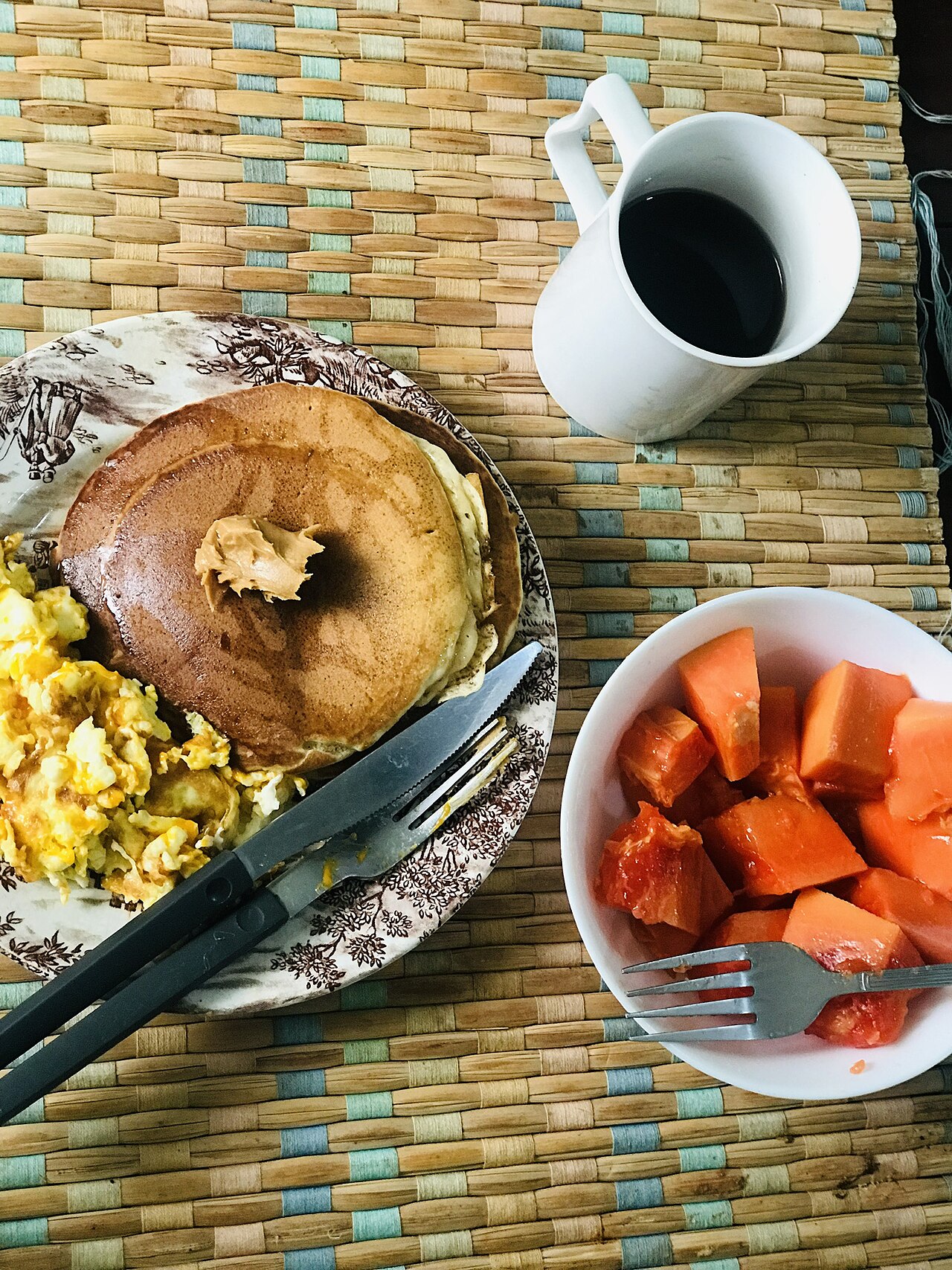
The Taíno people cultivated tubers like yuca, yautia, and batata, and introduced casabe, a flatbread made from cassava root, which remains a staple served with soups and stews. Spanish colonization brought dishes like arroz con dulce and longaniza, while spices such as vanilla, nutmeg, and pepper arrived later through global trade routes. African influence is evident in mangú, mashed green plantains similar to West African fufu, often served as a national breakfast with fried cheese, salami, and eggs.
Reader's Guide
Middle Eastern immigrants, particularly from Lebanon, introduced dishes like quipes (deep-fried bulgur rolls) and pilaf, adapted with local ingredients such as beef instead of lamb and Dominican oregano. The Cocolo community, descendants of Anglophone and Francophone Caribbean immigrants, brought dumplings, guavaberry liqueur, and yaniqueque (jonnycakes). Cuban and Puerto Rican influences include mofongo and pasteles de hoja, while Dominican creations like chimichurris (burgers with slaw) and yaroa (layered plantains with meat and cheese) reflect ongoing innovation. The cuisine heavily uses bouillon cubes, sofrito, and guisados (stews) as foundational elements.
Did You Know?
- Casabe, a flatbread made from cassava root, was adopted from the Taíno people and is served with soups and stews.
- Mangú, mashed green plantains, can be traced back to West Africa where it is known as fufu.
- Chimichurris are a local Dominican street food burger topped with slaw, unrelated to the Argentine sauce of the same name.
- Guavaberry liqueur, a common Christmas drink, is traditionally linked to the Samaná Peninsula and the Cibao Valley.
Early Sephardic Roots and Concealed Heritage
The first documented Jewish presence on the island of Hispaniola traces to the 1490s, when Sephardic Jews fled the Iberian Peninsula after Spain enforced conversion to Catholicism. Waves of these exiles arrived in 1492 and again in 1497, seeking refuge far from the Inquisition's reach. When the island was later partitioned between French and Spanish imperial control in the seventeenth century, the majority of Jewish settlers gravitated toward the Spanish-administered side, the territory that would eventually become the Dominican Republic. Over the following decades, additional Sephardic communities from other nations joined those already established on the island. By the time of the colonial division, most of these early arrivals had either concealed their Jewish identity or drifted away from formal religious observance, blending into the broader population. Their legacy nonetheless endured through the generations. Among their direct descendants were figures of considerable national prominence, including Dominican President Francisco Henríquez y Carvajal and his children Pedro, Max, and Camila Henríquez Ureña, all of whom left lasting marks on the country's intellectual and political life.
Luperón's 1882 Vision for a Jewish Refuge
In 1882, General Gregorio Luperón, a former president of the Dominican Republic living in exile in Paris, proposed that his homeland serve as a sanctuary for Jews fleeing pogroms in Russia. His motivations blended genuine humanitarian sympathy with a pragmatic belief that the skills and work ethic of Jewish settlers could stimulate the country's economic growth. To advance the idea, Luperón reached out to influential figures and institutions across the Jewish world, including the Alliance Israélite Universelle, the Rothschild banking family, and the Jewish community in New York. The proposal drew both support and resistance. Some Dominicans and resident Jews welcomed the plan, while others raised practical objections concerning funding, land allocation, and employment for prospective settlers. A commission of Dominican landowners was even convened to assess feasibility, yet no concrete steps were ever taken. Although Luperón's initiative ultimately collapsed, it stands as an early testament to the Dominican Republic's recurring role as a potential haven for Jewish refugees during periods of persecution in Europe.
Sosúa: The WWII Colony That Nearly Was
During the lead-up to and early years of World War II, the Dominican Republic was the only sovereign nation willing to accept mass Jewish immigration; the sole comparable alternative was the Shanghai International Settlement. At the Évian Conference, dictator Rafael Trujillo pledged space for 100,000 refugees, though only about 5,000 visas were issued, and most recipients could not escape occupied Europe. Trujillo then donated his personal Sosúa estate to DORSA, the resettlement body created by the American Jewish Joint Distribution Committee, receiving $100,000 in DORSA stock in return. Congressional approval came by February 1940, and the first settlers arrived that spring. Roughly 700 Ashkenazi families took up residence, each receiving 33 hectares of land, ten cows, a mule, a horse, and a $10,000 loan at one percent interest. The colony was built around communal agriculture with shared labor and profits, supplemented by dairying and poultry. Yet poor soil, erratic rainfall, and limited market access made crop farming largely unworkable, and by 1945 the settlement had shifted to individually owned farms, with only the dairy and meat factories retained as cooperatives. Those who never reached Sosúa settled in Santo Domingo, and by 1943 the known Jewish population peaked at about 1,000.
From Colony to Mixed Community: Sosúa's Transformation
After the war ended, the Jewish population in Sosúa began a slow but steady decline as residents relocated, predominantly to the United States. As Jewish families departed, Dominican residents moved into the settlement, and throughout most of the twentieth century Sosúa existed as a mixed community of Jewish and Dominican inhabitants. The Jewish population continued to age and shrink, while Dominican economic and cultural influence grew increasingly dominant. The turning point came in 1980, when a tourism boom transformed Sosúa into a resort destination. During this period, most of the remaining Jewish residents sold their land to developers, marking a deep and largely irreversible decline in the community's Jewish character. Today, the known Jewish population in the Dominican Republic numbers close to 3,000, with the majority concentrated in the capital, Santo Domingo, and a smaller group still residing in Sosúa. The Sosúa community, though considerably diminished from its wartime peak, retains a distinctive blend of languages and cultural traditions. Yet many of the original settlers have passed away or emigrated, and their children often choose not to return, leaving the long-term future of this unique community uncertain.
Gallery
Frequently Asked Questions
What is Dominican Republic cuisine?
Dominican Republic cuisine is a layered culinary tradition forged from Taíno, Spanish, African, and Middle Eastern food cultures, with later contributions from British Caribbean and Chinese communities. It is built around staples like plantains, yuca, rice, and sofrito, combined with a wide variety of meats and local produce.
What are Dominican Republic cuisine's signature dishes?
The most celebrated dishes include mangú (mashed plantains), chimichurris (crackling-fried pork), pastelón (a layered meat-and-vegetable casserole), quipes (sweet corn fritters), and yaniqueque (a thin Dominican crepe). Together they showcase the cuisine's heavy reliance on sofrito, rice, and tropical starches.
What is Dominican Republic cuisine's origin story?
Its earliest roots lie in the Taíno people's preparation of casabe (cassava flatbread) and local fruits, which Spanish colonizers then expanded with their own techniques and ingredients. Centuries of African and Middle Eastern immigration added further depth, producing the distinctive fusion recognized on the island today.
Why is Dominican Republic cuisine important?
It acts as a living record of the island's colonial past and successive immigration waves, making it one of the Caribbean's most culturally layered food traditions. Everyday staples like sofrito, mangú, and rice anchor both daily meals and major celebrations, tying generations to a shared table.
How has Dominican Republic cuisine evolved over time?
While Taíno and Spanish foundations set the early cooking techniques, later arrivals from the British West Indies and China introduced new ingredients and preparation styles. The modern Dominican table now blends all these historical layers, from traditional quipes to contemporary restaurant reinterpretations of classic recipes.
More in Dominican Republic cuisine 1-23
Spotted an error? Know more?
Reader corrections go straight into our review queue. Suggest an edit · How this site is sourced