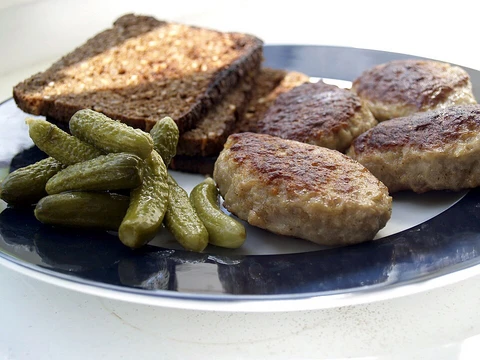
Greenlandic cuisine
Traditional Greenlandic cuisine centers on marine mammals and fish.

Greenlandic cooking relies heavily on meat from marine mammals, birds, and fish, making it naturally high in protein. After colonization and the rise of international trade, outside influences—especially from Denmark, Britain, the United States, and Canada—began to shape the cuisine. In summer, when the weather is milder, people often eat outdoors.
The national dish is suaasat, a traditional soup. It’s usually made with seal, whale, reindeer, or seabirds, and often includes onions and potatoes. Seasoning is simple—just salt, pepper, or bay leaf—and the soup is thickened with rice or by soaking barley in water overnight to release its starches. It’s also a classic Inuit food.
Because most of Greenland is covered by permanent glaciers, the sea provides the bulk of the food. Seafood includes various fish (often smoked), mussels, and shrimp. Ammassat, or capelin, is common and easy to dry. Atlantic halibut, redfish, deepwater redfish, Greenland halibut, and lumpfish are caught off the west coast, along with Greenland cod and shorthorn sculpin. Arctic char comes from the east coast. The Greenland shark is rarely eaten because it’s poisonous, but it becomes edible after a complicated process of repeatedly boiling or fermenting the meat.
Global warming has shifted the migration of Atlantic cod, opening up commercial fishing off Greenland’s east coast. Drift ice can cause problems during fishing season. A few large-scale fish and shrimp processing factories operate in Greenland.
Sea mammals are important staples. A traditional Inuit specialty is mattak—the raw hide of narwhal or white whale—sometimes prepared with blubber or dried reindeer meat. Eaten raw, mattak is a key source of vitamin C. Hunting hooded seals was traditionally a major annual social event and subsistence activity involving men, women, and children. Also popular is arfivik, or bowhead whale, served smoked with onions and potato. Dried cod and whale with whale blubber is a common lunch and snack. Bearded and ringed seals are hunted year-round, especially by Polar Inuit, while narwhals and white whales are hunted in summer. Indigenous subsistence whale hunting is legal, but some animal rights groups worry about commercial whaling in Greenland; one company, Arctic Green Food, freezes and distributes a quarter of the country’s whale meat.
- Field
- Cuisine
- National dish
- Suaasat
- Key ingredients
- Seal, whale, reindeer, seabirds, fish, berries
- Traditional beverage
- Greenlandic coffee
- Notable food
- Mattak (raw narwhal or white whale hide)
Lore & Background
Greenlandic cuisine relies heavily on the sea, as most of Greenland is covered by permanent glaciers. Seafood includes various fishes, mussels, shrimp, and marine mammals such as seals, narwhals, and whales. Mattak, the raw hide of narwhal or white whale, is a traditional Inuit specialty and an important source of vitamin C when eaten raw. Hunting hooded seals was traditionally an important annual social event involving men, women, and children. Land-based dishes include reindeer, lamb, mutton, and muskox, which can be served tartare. Birds such as dovekie, eider, ptarmigan, and murre are hunted seasonally. Plants like blueberries and crowberries garnish desserts, and seaweed is stored as a winter reserve.
Reader's Guide
Greenlandic cuisine reflects the Arctic environment and Inuit traditions, with a diet historically dominated by animal foods. Since colonization, international trade introduced ingredients like onions, potatoes, rice, and coffee. The national dish suaasat exemplifies the fusion of traditional meats with introduced starches. Global warming has shifted Atlantic cod migration, enabling commercial fishing off the east coast, and slightly extended the growing season for crops like broccoli. Alcohol sales were heavily restricted until 1954, making homebrewing widely popular; modern breweries produce ice beer using glacial water. Grocery stores now provide diverse foods, but fresh produce availability varies greatly by location and season, with isolated regions relying on ship or plane deliveries. The cuisine remains a living link to Inuit subsistence practices while adapting to global influences.
Did You Know?
- The national dish of Greenland is suaasat, a soup often made from seal, whale, reindeer, or seabirds.
- Greenlandic coffee is set on fire before drinking and includes whiskey, Kahlúa, and Grand Marnier.
- Ice beer is brewed using 2000-year-old natural Arctic ice harvested from glaciers.
The National Dish and Traditional Preparation
Greenland's culinary identity is anchored by suaasat, a hearty soup that has earned the title of national dish and carries deep roots in Inuit food tradition. The broth is built around whichever protein the hunter or fisher has brought in—seal, whale, reindeer, or seabird—and is rounded out with humble additions of onions and potatoes. Seasoning stays deliberately simple: a pinch of salt, a crack of pepper, or a single bay leaf dropped into the pot. What distinguishes the dish is its thickening technique. Rather than relying on cream or flour, cooks either stir in rice or, in a slower method, soak barley in the cooking water overnight so that its starches gradually dissolve and lend the soup a naturally velvety body. This approach reflects a broader Greenlandic principle: make the most of what the land and sea provide, and let patience do the work of refinement. Suaasat remains a staple across the archipelago, a dish that unites indigenous heritage with the practical realities of Arctic life.
The Sea as Larder
Because permanent glaciers blanket most of Greenland's interior, the ocean has always been the archipelago's primary pantry. The west coast yields Atlantic halibut, redfish, deepwater redfish, Greenland halibut, and lumpfish, while the east coast provides Arctic char. Greenland cod and shorthorn sculpin are also caught but traditionally reserved as a last resort. Capelin, known locally as ammassat, is a favorite for its ease of drying. The Greenland shark offers a striking example of marine ingenuity: its flesh is toxic raw, yet repeated boiling or lengthy fermentation renders it edible. Sea mammals complete the picture. Mattak, the raw hide of narwhal or white whale, is a prized Inuit specialty and a vital source of vitamin C. Smoked bowhead whale, called arfivik and served with onions and potato, is another beloved preparation. Bearded and ringed seals are pursued year-round, while narwhals and white whales are hunted in summer. Subsistence whaling remains legal for indigenous communities, though commercial operations such as Arctic Green Food have drawn criticism from animal-rights groups. Global warming is already reshaping the scene, pulling Atlantic cod into the east coast and opening new commercial fishing grounds, while drift ice continues to complicate the season.
Land Animals and Avian Harvests
On land, Greenlandic cuisine draws on reindeer, lamb, mutton, and muskox, the latter sometimes served as tartare. Sheep farming and cattle ranching trace their origins to the Norse settlers who first brought livestock to the island. Reindeer are hunted in the fall, foxes and hares throughout the year, musk-oxen in spring, and polar bear in both spring and fall. The meats themselves are versatile: boiled, dried, frozen, fermented, or occasionally consumed raw. Reindeer livers, in particular, are eaten raw and immediately after the hunt, a practice that speaks to the immediacy of subsistence living. The avian harvest is equally structured by season and geography. Twenty-one bird species are legally available for hunting, though many carry restrictions on region, timing, numbers, or method. The primary window runs from spring through fall. Inuit hunters pursue dovekie, common and king eider, ptarmigan, thick-billed murre, and various sea gulls, while kittiwake and ptarmigan feature on the east coast. Wild eggs are sometimes gathered as well, adding another layer to the seasonal rhythm of the table.
Beverages, Markets, and a Shifting Table
The drinking culture of Greenland blends the traditional with the theatrical. Greenlandic coffee, a popular after-dinner ritual, layers hot coffee with whiskey, Kahlúa, Grand Marnier, and a crown of whipped cream, then is set alight in a bordeaux glass before being sipped. On the beer side, the Greenland Brewhouse in Narsaq pioneered ice beer using 2,000-year-old glacial ice, and today the Godthaab Bryghus in Nuuk and Icefiord Bryghus in Ilulissat both brew with glacial water; Icefiord even ferments ales from crowberries and angelica. Homebrewing remains widespread, a legacy of the heavy alcohol restrictions that held until 1954. The broader food landscape is also in flux. Animal products dominated the Inuit diet until roughly 1980, but grocery stores now stock coffee, tea, biscuits, and potato chips. In Nuuk, fresh fruit and vegetable variety is relatively consistent year-round, whereas isolated northern communities depend on ship deliveries between May and November and air freight in winter. Climate change has nudged the growing season longer, prompting local farmers to experiment with crops like broccoli, while autumn blueberries and crowberries continue to garnish desserts and seaweed is still stored as a winter reserve.
Frequently Asked Questions
Who is Greenlandic cuisine?
Greenlandic cuisine is an Arctic food tradition built around the proteins native to that region—marine mammals, seabirds, fish, and reindeer. It grew organically among indigenous communities long before any outside contact reshaped the local table.
What are Greenlandic cuisine's powers/role?
Its core strength is an extremely protein-rich diet drawn from seal, whale, reindeer, seabirds, and fish, rounded out with foraged berries. A standout preparation is mattak, raw narwhal or white whale hide, which remains one of the most recognizable foods in the tradition.
Why is Greenlandic cuisine important?
It represents a self-sustaining Arctic food system that fed communities for generations before modern supply chains arrived. Its national dish, suaasat—a thick soup of seal, whale, reindeer, or seabird meat with onions, potatoes, and a simple salt-and-pepper seasoning—still anchors national identity.
What is Greenlandic cuisine's signature move?
Suaasat is the flagship dish, a hearty soup thickened with rice or a soaking technique and seasoned minimally with salt, pepper, or bay leaf. Greenlandic coffee serves as the traditional beverage that completes the meal.
More in Danish cuisine 1-24
Spotted an error? Know more?
Reader corrections go straight into our review queue. Suggest an edit · How this site is sourced