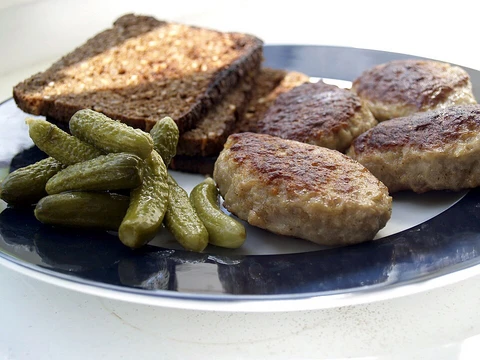
Æbleskiver
Danish spherical fried batter snacks, traditionally served at Christmas.

City Foodsters · CC BY 2.0
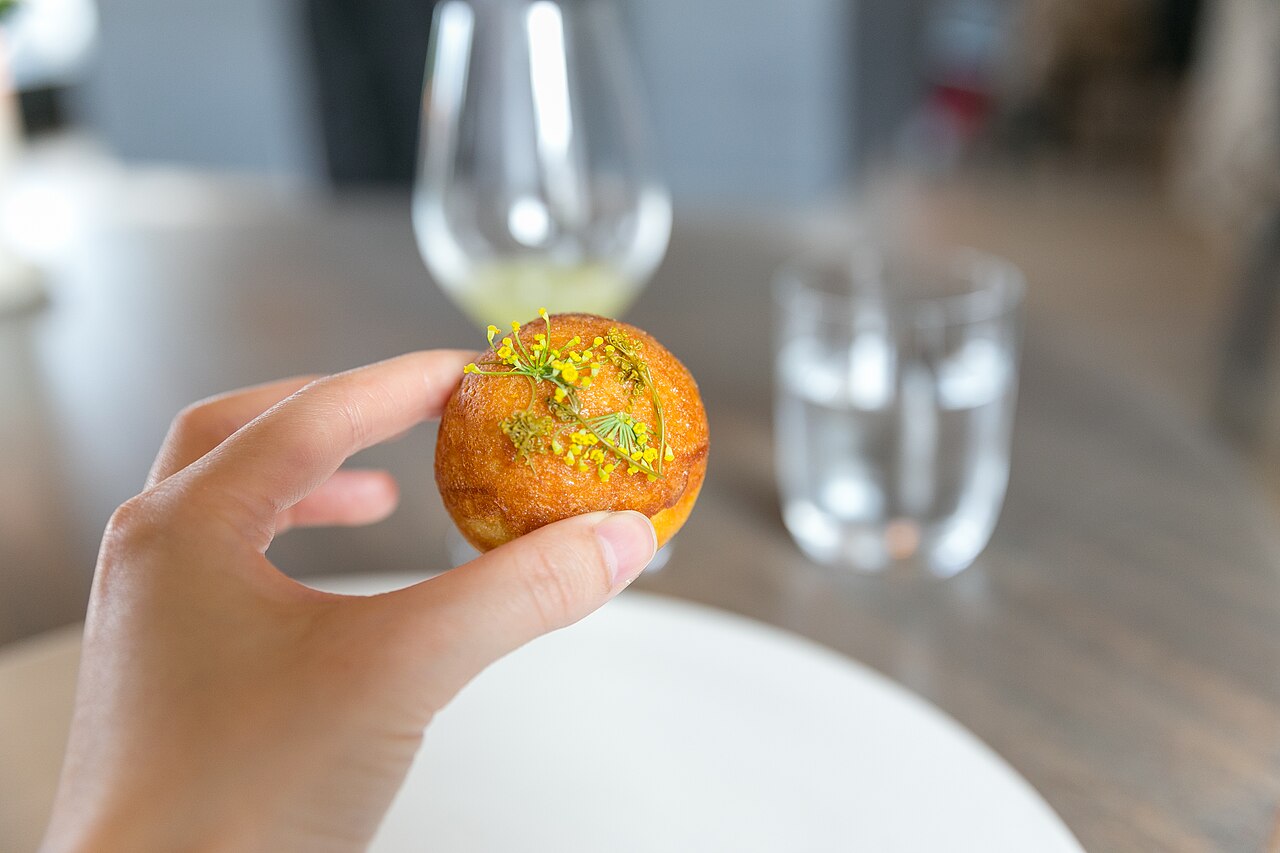
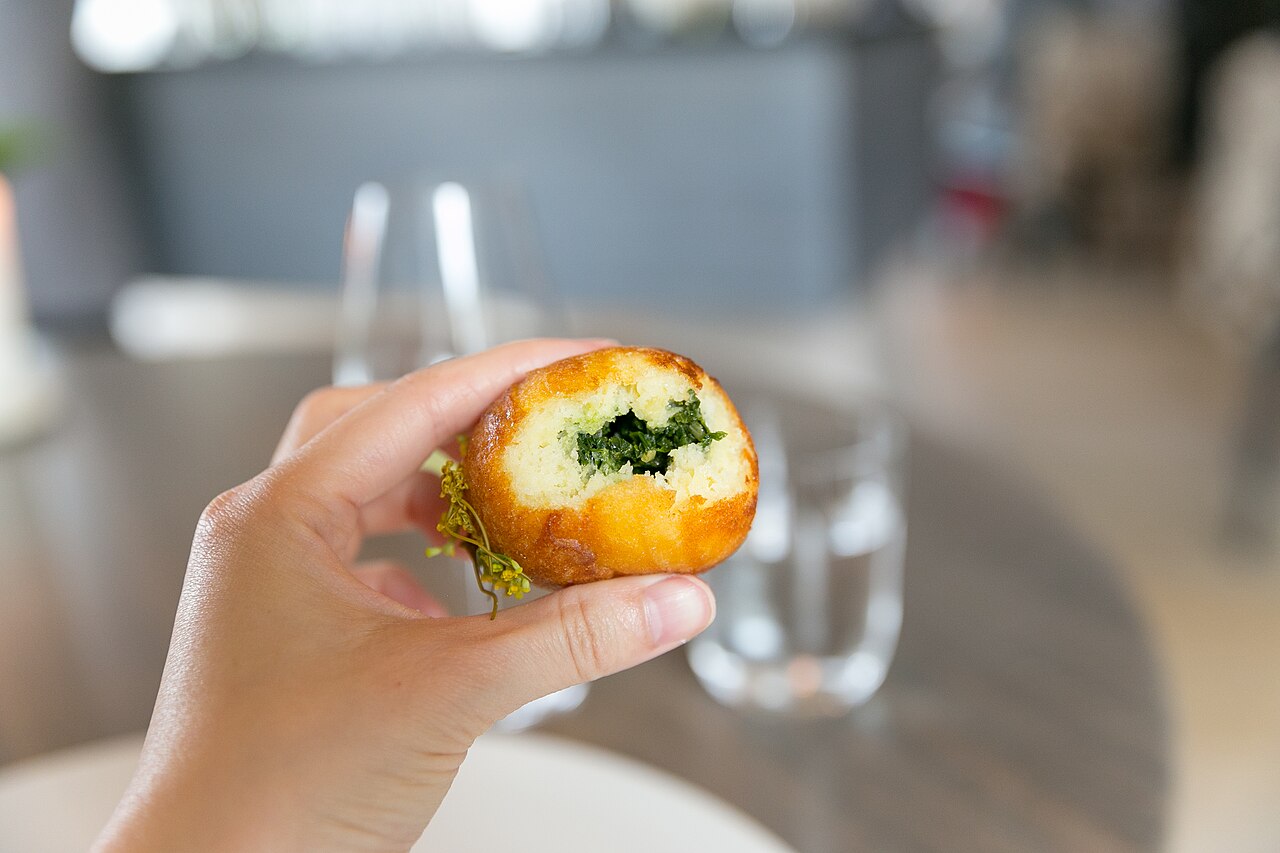
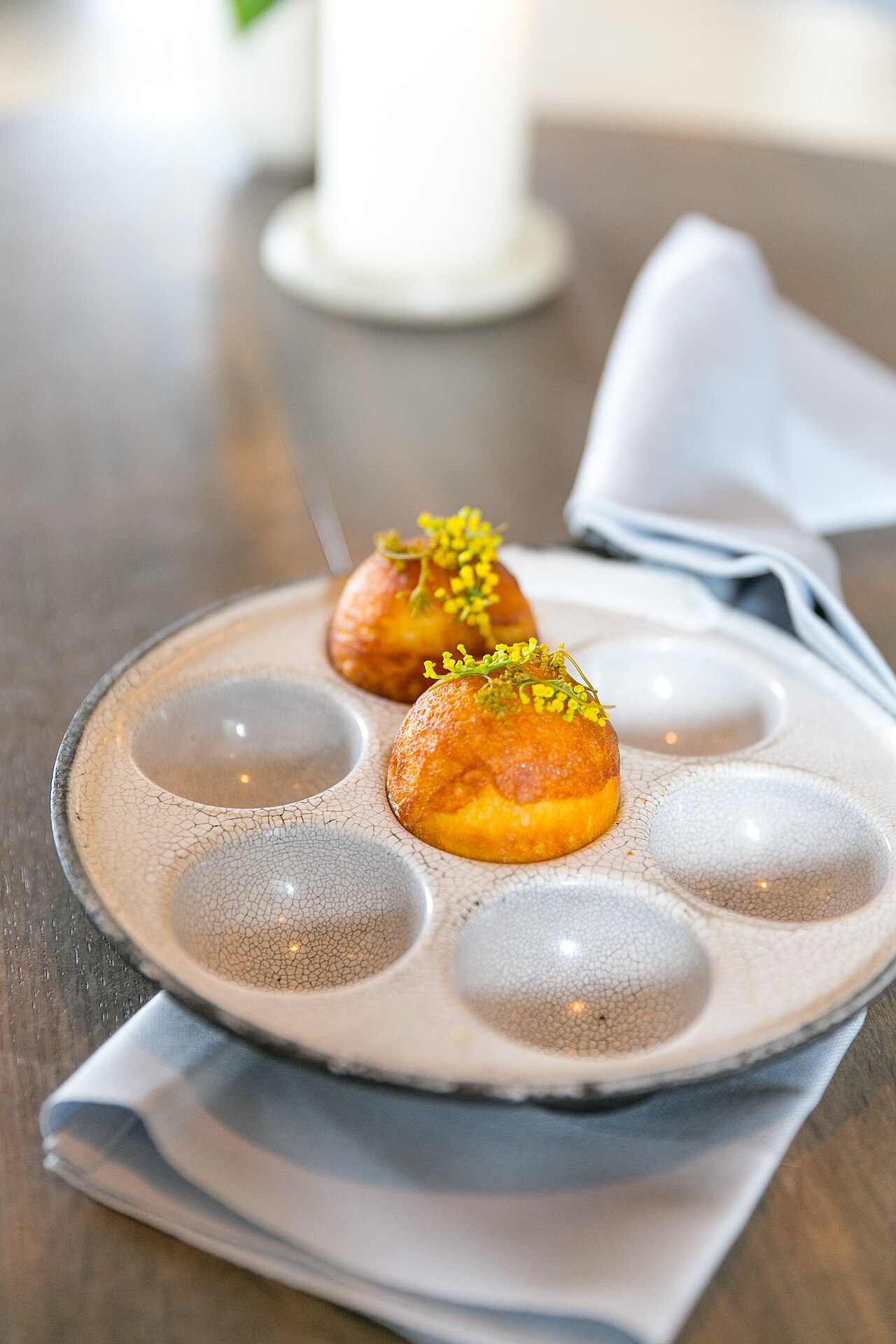
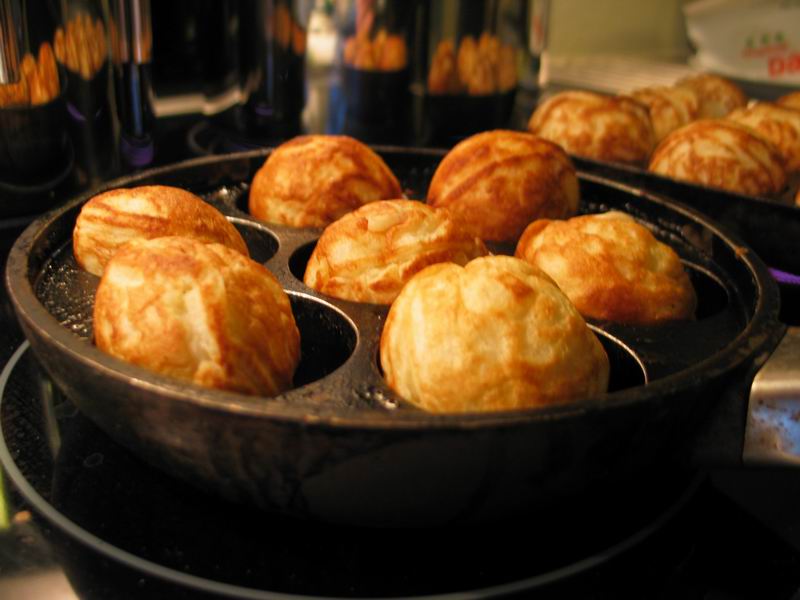
Æbleskiver are spherical Danish snacks made from fried batter, traditionally associated with the Christmas season and casual family gatherings. Their name literally means 'apple slices' in Danish, though modern versions rarely include apple. Cooked in a special pan with hemispherical indentations, they have a crust similar to European pancakes and a light, fluffy interior akin to Yorkshire pudding.
Quick Facts
- Country
- Denmark
- Course
- Dessert, snack
- Served
- Hot
- Main Ingredient
- Wheat flour, buttermilk, milk or cream, eggs, sugar
Facts from the source article.
Lore & Background
The exact origin of æbleskiver is unknown. One popular speculation involves Vikings returning from battle, lacking regular pans, and using their shields or helmets to cook a pancake-like batter, resulting in a spherical shape. Another explanation traces the dish to the Middle Ages, when the last apples of the harvest were sliced, used to flavor gløgg, then wrapped in dough and fried. The name 'æbleskiver' (apple slices) reflects this origin, though apples are rarely included today.
In the 17th century, cast iron pans with hemispherical concavities became available, allowing æbleskiver to be made year-round with various fillings. The first appearance of the word 'æbleskiver' occurs in Peters Jul (1866), a book of Yule poems by Johan Krohn. 'Apple-filled æbleskiver' are also mentioned in Hans Christian Andersen's 1872 story 'The Cripple' (Krøblingen). In the United States, pans were manufactured by Griswold Manufacturing.
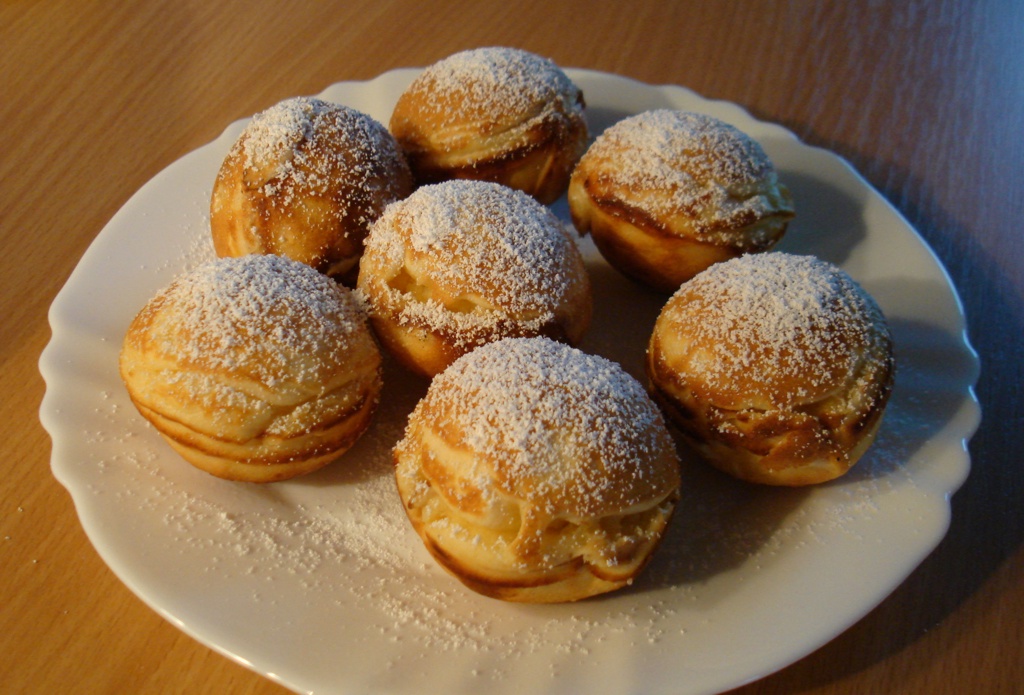
Today, æbleskiver are often bought pre-fried and frozen at supermarkets, then heated at home. They are less common in restaurants than at family gatherings, street vendors in winter, and events such as Christmas markets, charity markets, and children's birthday parties. Voluntary associations often sell them pre-fried and frozen, three at a time, with jam and powdered sugar.
Reader's Guide
Æbleskiver hold a significant place in Danish culinary tradition, particularly as a symbol of Christmas and communal gatherings. Their preparation requires a specialized pan with hemispherical indentations, traditionally made of cast iron for heat retention, though hammered copper models exist primarily for decoration. The batter, typically including wheat flour, buttermilk, eggs, sugar, and a leavening agent, is poured into oiled indentations and turned with a knitting needle, skewer, or fork to achieve the characteristic spherical shape. While historically filled with apple bits or applesauce, modern Danish versions rarely include these. The snacks are not sweet themselves and are traditionally served with jam (raspberry, strawberry, black currant, or blackberry) and powdered sugar, often accompanied by gløgg (Scandinavian mulled wine) during the Christmas season. In North America, annual events such as 'Æbleskiver Suppers' celebrate the dish and Danish culture. The legacy of æbleskiver extends beyond Denmark, with similar dishes existing worldwide, including takoyaki in Japan, poffertjes in the Netherlands, and paniyaram in India, highlighting the universal appeal of spherical fried batter snacks.
Did You Know?
- The name 'æbleskiver' literally means 'apple slices' in Danish, though apples are rarely included in modern versions.
- Æbleskiver are traditionally turned with a knitting needle, skewer, or fork to achieve their spherical shape.
- The first recorded use of the word 'æbleskiver' is in the 1866 book of Yule poems 'Peters Jul' by Johan Krohn.
- In the United States, æbleskiver pans were manufactured by Griswold Manufacturing.
Culinary Identity & The Art of the Sphere
Æbleskiver occupy a unique niche in Scandinavian baking: a spherical, fried-batter treat whose name translates to 'apple slices' in Danish, even though no apple appears in any contemporary recipe. The finished product presents a duality of textures—the outer crust resembles that of a European pancake, while the interior achieves the airy, pillowy lightness characteristic of a Yorkshire pudding. The batter itself is a straightforward combination of wheat flour, buttermilk or cream, eggs, sugar, and salt, with some cooks adding butter, cardamom, lemon zest, and a leavening agent such as baking powder or occasionally yeast. The defining moment of preparation comes when the batter, poured into the oiled hemispherical wells of a dedicated pan, is rotated with a knitting needle, skewer, or fork to coax it into a perfect ball. The pan itself is typically cast iron for its superior heat retention, though hammered-copper versions survive as decorative curiosities. Crucially, æbleskiver are not inherently sweet; their flavor is completed at the table by raspberry, strawberry, black currant, or blackberry jam, a dusting of powdered sugar, and sometimes butter, maple syrup, or whipped cream. Many households simply purchase the pre-fried, frozen versions from supermarket freezers and reheat them in an oven.
Mystery of Origins & the Long Road to the Modern Ball
The true birth of æbleskiver remains shrouded in uncertainty, and two competing legends have persisted over the centuries. The more romantic tells of a Viking band returning from a grueling battle, hungry for something resembling pancakes. Lacking proper cookware, they improvised by frying batter on their own shields and helmets, inadvertently producing the round shape that defines the snack today. A more grounded medieval account traces the name directly to its literal meaning, 'apple slices.' In an era when raw apples could not be stored indefinitely, the last fruit of the harvest was sliced, steeped in gløgg to absorb flavor, fished out, wrapped in dough, and fried in fat or butter much like a Berliner. It was not until the seventeenth century, when cast-iron pans featuring hemispherical concavities became widely available, that the dish could be prepared with ease throughout the year and its fillings diversified. The earliest surviving written reference to the word 'æbleskiver' appears in Johan Krohn's 1866 collection of Yule poems, Peters Jul, while Hans Christian Andersen's 1872 short story 'The Cripple' specifically mentions apple-filled versions, confirming the treat's deep roots in Danish literary and domestic life.
A Seasonal Ritual & a Community Staple
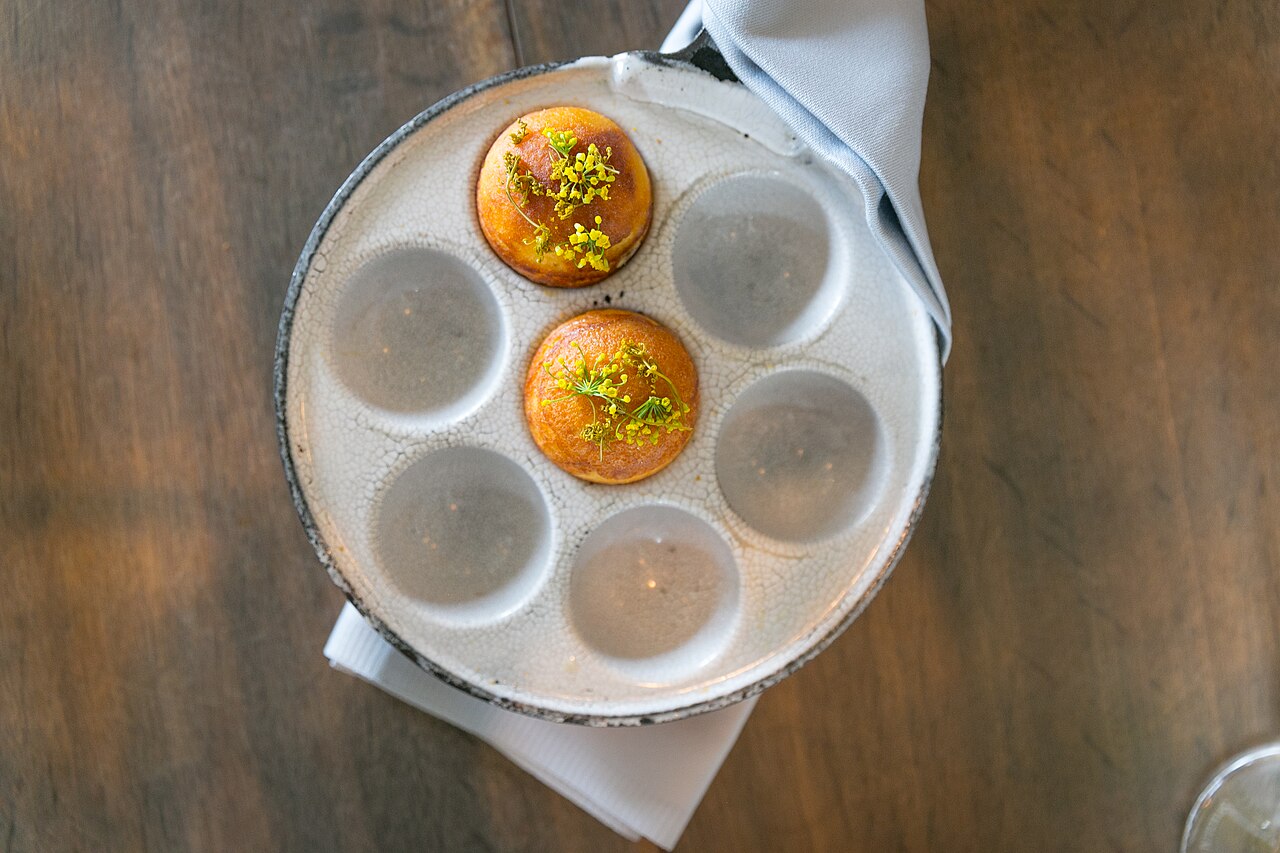
Within Danish culture, æbleskiver occupy a space that is more hearth than restaurant. They are far more likely to appear at a casual family gathering than on a formal dining menu, and during the colder months they can be spotted at street-vendor stalls throughout the country. The traditional presentation is precise: three spheres per plate, accompanied by a spoonful of berry jam and a generous dusting of powdered sugar. The Christmas season is the peak moment, when the snack is paired with gløgg, the Scandinavian mulled wine, and the two become almost inseparable. Beyond the holiday table, æbleskiver are a fixture at Christmas markets, charity fairs, open-air festivals, Scouting functions, and local sports club gatherings. Voluntary associations frequently turn a modest profit by reheating the pre-fried, frozen versions and selling them in threes with the standard condiments. Their popularity and simplicity of preparation also make them a staple at children's birthday parties. The tradition has crossed the Atlantic as well: in North America, churches and museums host dedicated 'Æbleskiver Suppers' as annual celebrations of Danish heritage.
Literary Echoes & a Global Family of Fried Batters
Æbleskiver have left a trace in Danish literature well before they became a commercial or tourist attraction. The word first surfaces in print in Peters Jul, a 1866 anthology of Yule poems by Johan Krohn, son of Frederik Christopher Krohn and brother of Pietro Krohn. A decade later, Hans Christian Andersen wove 'apple-filled æbleskiver' into his 1872 story 'The Cripple' (Krøblingen), embedding the snack firmly in the national literary imagination. The treat's influence also reached the industrial world: in the United States, Griswold Manufacturing produced dedicated æbleskiver pans, bringing the spherical batter into American kitchens. Globally, the concept of a small, round, fried batter snack has independent parallels across continents. Similar preparations include Puff Puff in West Africa, Akok and Jemput-jemput in Malaysia, Kue cucur in Indonesia, Paniyaram and Unni Appam in South India, Munker in Norway, Poffertjes in the Netherlands, Takoyaki in Japan, and Gai daan jai in Hong Kong. Each shares the fundamental idea of a small, puffed, batter-based sphere, yet Æbleskiver retain their distinct Danish identity through their specific batter, their jam-and-sugar pairing, and their deep entanglement with the Christmas season.
Gallery
Frequently Asked Questions
Who is Æbleskiver?
Æbleskiver is a round, deep-fried batter snack from Denmark, best known as a Christmas-season treat and a staple of casual family get-togethers. Despite its Danish name translating to 'apple slices,' modern preparations almost never contain actual apple.
What are Æbleskiver's powers/role?
Its signature 'power' is a dual texture: a crisp, pancake-like outer crust encasing a light, airy crumb that fans often compare to Yorkshire pudding. It achieves its perfect sphere by being cooked in a dedicated cast-iron pan fitted with hemispherical indentations.
Why is Æbleskiver important?
It anchors Danish holiday food culture, showing up at Christmas markets, family kitchens, and winter gatherings across the country. Its earliest written mention appears in 1866 within Johan Krohn's 'Peters Jul,' tying it to more than a century of Danish seasonal tradition.
What is Æbleskiver made of?
The batter is a straightforward mix of wheat flour, buttermilk, eggs, sugar, salt, and a leavening agent, all whisked together before being spooned into hot fat. No apple or fruit is required in the batter itself, making the name purely historical rather than descriptive of the recipe.
More in Danish cuisine 1-24
Spotted an error? Know more?
Reader corrections go straight into our review queue. Suggest an edit · How this site is sourced