Arnbitter
Danish bitters traced to the 1950s, neither new nor trendy.

cyclonebill from Copenhagen, Denmark · CC BY-SA 2.0
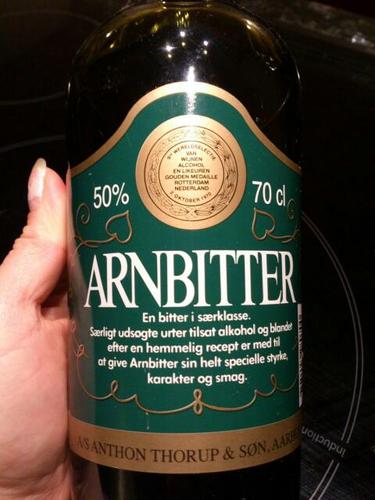
Arnbitter is a Danish bitters from the Copenhagen-based company Just Spices, though its origins lie in Aarhus. The drink first appeared in the 1950s, created by Arne M. Hansen, who ran a wine storage in the Aarhus district of Viby J. Working with sommelier Harald P. Sørensen, Hansen experimented until they settled on the final recipe, which remains a secret but is known to include ginger, cloves, saffron, and licorice root. The bitters are mixed in large 2,500-litre copper tanks and stored for three months before bottling. Its slogan is "Hverken ny, trendy eller importeret" (Neither new, trendy nor imported).
The recipe was bought in 1978 by Anthon Thorup & Søn, a company founded in 1893, which brewed and distributed Arnbitter until it closed in 2015. That year, the recipe was sold to Just Spices, which moved production from Aarhus to Copenhagen.
Two variants exist. The main version is 50% alcohol by volume, made with herbs and alcohol, and sold in specialty stores, through wine and liqueur distributors, at Denmark–Germany border markets in Flensburg, Danish airports, and on the Faroe Islands. The rarer Arnbitter Mint was created in 1997 as an aperitif with a menthol flavor and a lower 40% alcohol content. It is amber brown like the original but darker.
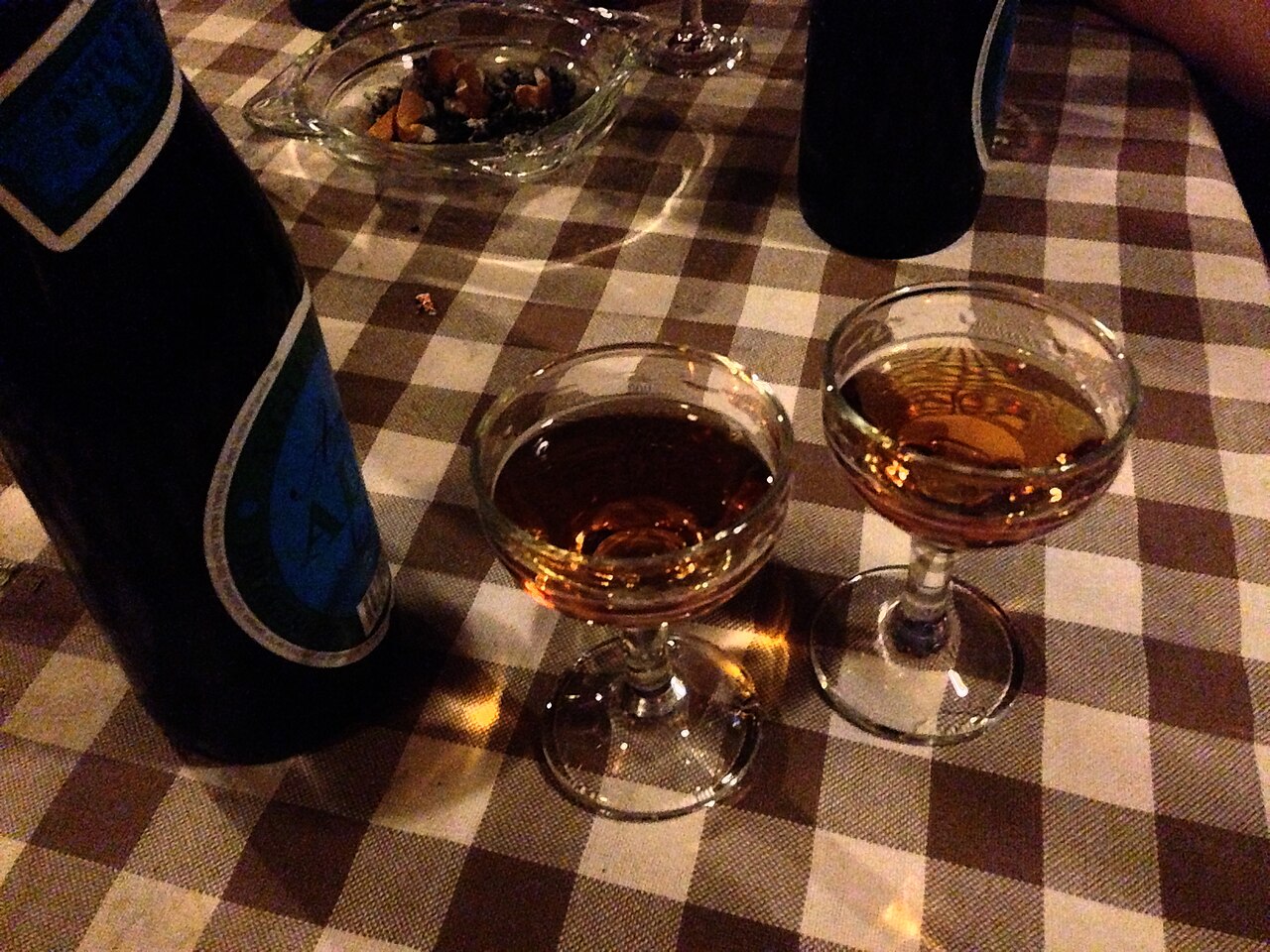
Arnbitter is not used in traditional cocktails, though local combinations exist. The Fernarne mixes equal parts Fernet Branca and Arnbitter. The Green set pairs a Grøn Tuborg beer with a shot of Arnbitter, marketed under the slogan "Du kan blive fuld af kompromisser" (You can become full of compromises). The Aarhus set serves a Ceres Top beer with an Arnbitter shot, referencing that both were originally brewed in Aarhus. The Arnbomb is a bomb drink where a shot of Arnbitter is dropped into a pint of beer and consumed quickly, a play on the Jägerbomb.
Quick Facts
- Abv
- 50%
- Manufacturer
- Just Drinks
- Origin
- Aarhus, Denmark
- Introduced
- c. 1950
- Flavor
- Spice
- Ingredients
- Bitters
- Variants
- Spice, Mint
Facts from the source article.
Lore & Background
Arnbitter was invented by Arne M. Hansen, who operated a wine storage in Viby J, a district of Aarhus. It is not known exactly when the drink was first created, but it is mentioned in the 1950s for the first time when Arne Hansen and sommelier Harald P. Sørensen experimented and created the finished result. In 1978, the company Anthon Thorup & Søn (founded 1893) bought the recipe and brewed and distributed it until 2015, when the company closed and sold the recipe to Just Spices, which moved production from Aarhus to Copenhagen.
The recipe remains secret but includes ginger, cloves, saffron, and licorice root. Arnbitter is mixed in large 2,500-litre copper tanks and stored for three months before bottling. There are two variants: the primary 50% vol version, sold in specialty stores, by wine and liqueur distributors, at Denmark–Germany border markets in Flensburg, Danish airports, and on the Faroes; and the rarer Arnbitter Mint, created in 1997 as an aperitif with menthol flavor at 40% vol, amber brown but darker than the regular.
Reader's Guide
Arnbitter holds a modest but distinct place in Danish drinking culture, rooted in local experimentation from the 1950s. Its production history—from a small wine storage in Aarhus to a Copenhagen-based company—reflects a shift in ownership but continuity of a secret recipe. The drink is not part of any traditional cocktails, yet several local combinations have emerged, such as the Fernarne (equal parts Fernet Branca and Arnbitter), the Green set (Grøn Tuborg beer with an Arnbitter shot), the Aarhus set (Ceres Top beer with an Arnbitter shot), and the Arnbomb (a shot of Arnbitter dropped into a pint of beer). These pairings highlight its role as a digestif or mixer rather than a standalone sipping spirit. Its awards—gold in 1970 and silver in 2005—indicate international recognition, though its market remains primarily Danish and border-regional. The slogan 'Neither new, trendy nor imported' underscores a deliberate, unpretentious identity. Arnbitter's legacy is that of a niche, enduring bitters with a loyal local following, preserved through changes in ownership and production location.
Did You Know?
- Arnbitter was invented by Arne M. Hansen and sommelier Harald P. Sørensen in the 1950s.
- Arnbitter is stored for three months in 2,500-litre copper tanks before bottling.
- The rarer Arnbitter Mint variant, created in 1997, has a menthol flavor and is 40% vol.
From a Wine Cellar in Aarhus
Arnbitter's story begins not in a grand distillery but in a modest wine storage operation in Viby J, a district of Aarhus. The man behind the name, Arne M. Hansen, was running this small business when, sometime in the 1950s, he began experimenting with a bold new bitter. Working alongside sommelier Harald P. Sørensen, Hansen refined the blend until they arrived at what would become the finished product. The exact year of creation remains uncertain, but the drink first appears in records during that decade. What started as a local curiosity in a Jutland city district eventually grew into a nationally recognized Danish spirit. The name itself is a straightforward nod to its creator, and the drink's roots in Aarhus would later become a point of local pride, referenced even in the way Danes pair it with their favourite beers. Hansen's original vision, born in a wine cellar rather than a laboratory, gave Denmark a bitters that would outlast several ownership changes and remain firmly Danish in character.
The Secret Blend and the Copper Tanks
The recipe for Arnbitter is closely guarded, but a handful of key ingredients have been confirmed: ginger, cloves, saffron, and licorice root form the aromatic backbone of the drink. Beyond those named components, the full list of herbs remains a trade secret. The production process is deliberately slow and traditional. The bitters are mixed in large copper tanks with a capacity of 2,500 litres, and once blended, the liquid is left to rest for a full three months before it is ever bottled. This extended maturation period is what gives the spirit its depth and complexity. The primary variant carries a 50% alcohol by volume and is described as a mixture of various herbs combined with alcohol. Production originally took place in Aarhus, the city where the drink was born, but when Just Drinks, a Copenhagen-based company, took over the recipe in 2015, manufacturing was relocated to the capital. Despite the change of location, the drink maintains its identity as a proudly Danish product, marketed with the tagline "Neither new, trendy nor imported."
Serving Rituals and the Mint Variant
Arnbitter does not feature in any established cocktail tradition, yet a small family of local serving styles has grown around it, particularly in its home region of Aarhus. The Fernarne is a straightforward shot combining equal parts Fernet Branca and Arnbitter. The Green set pairs a bottle of Grøn Tuborg beer with a single Arnbitter shot, promoted under the wry slogan "You can become drunk of compromises." The Aarhus set is a tribute to the drink's birthplace, serving a Ceres Top beer alongside an Arnbitter shot, both products originally brewed in the same city. Then there is the Arnbomb, a one-pull bomb in which a shot of Arnbitter is dropped into a pint of beer and consumed in one go, clearly riffing on the Jägerbomb. For those seeking a lighter, more aromatic option, Arnbitter Mint arrived in 1997 as an aperitif. At 40% vol and flavoured with menthol, it pours a darker amber than the original and remains the rarer of the two variants.
Awards, Ownership, and a Distinct Identity
Arnbitter has earned international recognition without ever losing its distinctly Danish character. In 1970, it took a gold medal at the International Wine & Spirit Exhibition in Rotterdam, and in 2005 it claimed silver at the International Wine & Spirit Competition in London. These accolades helped cement its reputation well beyond Denmark's borders. The drink's ownership has changed hands over the decades. After its creation in the 1950s, the recipe was acquired in 1978 by Anthon Thorup & Søn, a company founded in 1893, which brewed and distributed the bitters until it closed its doors in 2015. That same year, Just Drinks, based in Copenhagen, purchased the recipe and moved production to the capital. Today, Arnbitter is available through specialty stores, wine and liqueur distributors, the Denmark-Germany border markets in Flensburg, Danish airports, and the Faroe Islands. Its marketing leans into its unpretentious heritage with the slogan "Neither new, trendy nor imported," a reminder that this is a drink that has been around for generations and shows no interest in chasing fashion.
Gallery
Frequently Asked Questions
What is Arnbitter and where did it originate?
Arnbitter is a Danish bitters first crafted in the 1950s by Arne M. Hansen, who ran a wine storage in the Viby J district of Aarhus. It is now produced by Just Spices out of Copenhagen, though its heritage remains rooted in Aarhus.
What ingredients are in Arnbitter's secret recipe?
The full formulation is not publicly disclosed, but it is confirmed to contain ginger, cloves, saffron, and licorice root. Hansen and sommelier Harald P. Sørensen worked through trial and error to lock in the final blend.
How is Arnbitter made and aged?
The bitters are blended in 2,500-litre copper vats and then given roughly three months of rest before they are drawn off and bottled. This extended maturation is a fixed part of the production process.
What is the alcohol strength of Arnbitter?
The classic bitters are bottled at 50% ABV. A mint-flavoured variant is also available at a slightly lower 40% ABV.
What does Arnbitter's slogan mean and why does the brand emphasise it?
The tagline 'Hverken ny, trendy eller importeret' translates to 'Neither new, trendy, nor imported.' It underscores that the drink is a homegrown Danish product with a recipe dating back to the 1950s, deliberately positioned against imported or novelty spirits.
More in Danish cuisine 1-24
Spotted an error? Know more?
Reader corrections go straight into our review queue. Suggest an edit · How this site is sourced