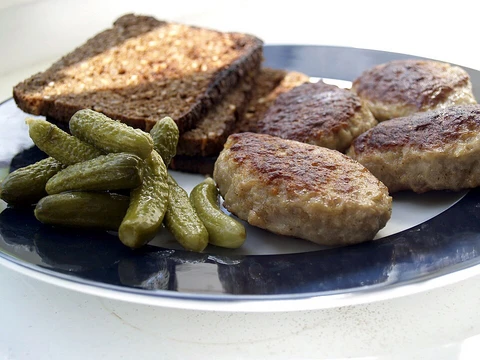
Flæskesteg
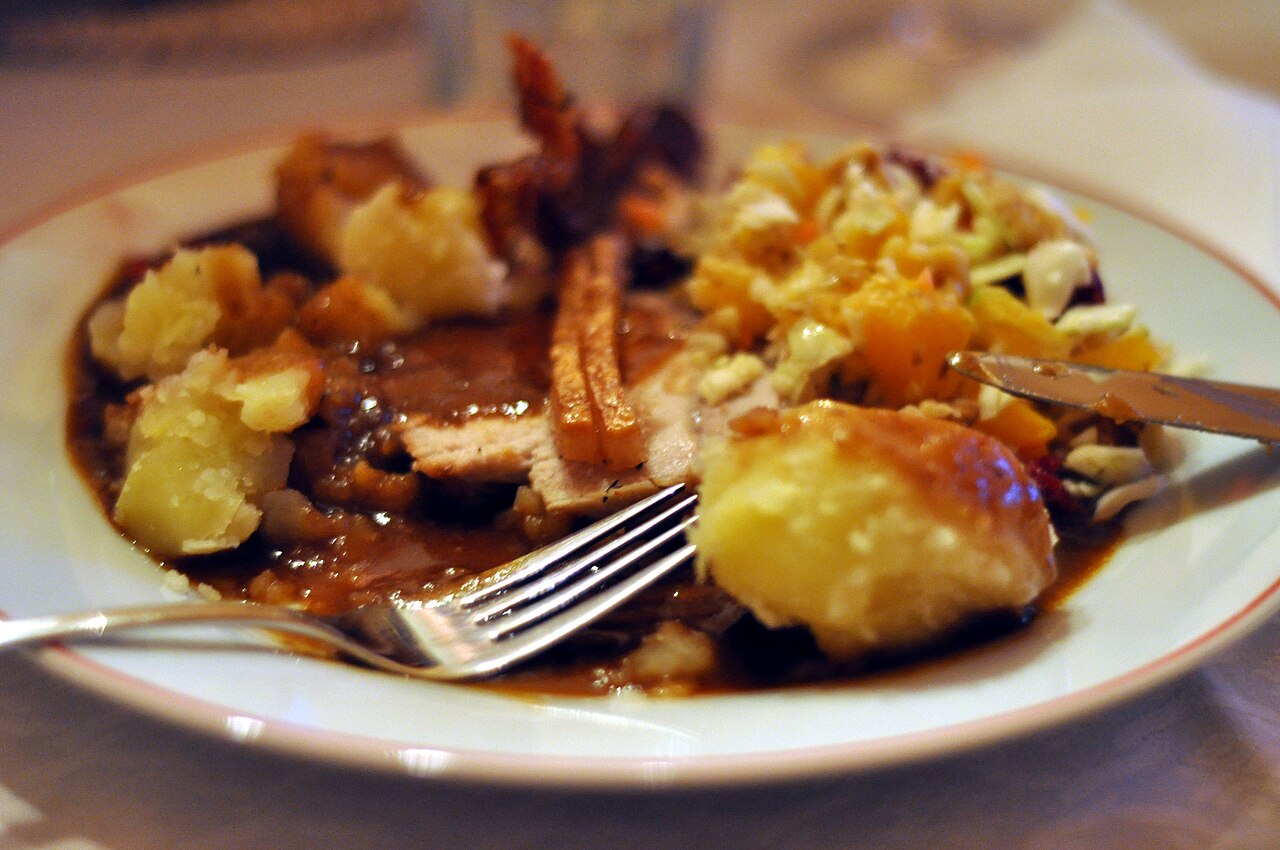
Danish roast pork with crackling, a Christmas Eve tradition.

fru_green · CC BY-SA 2.0
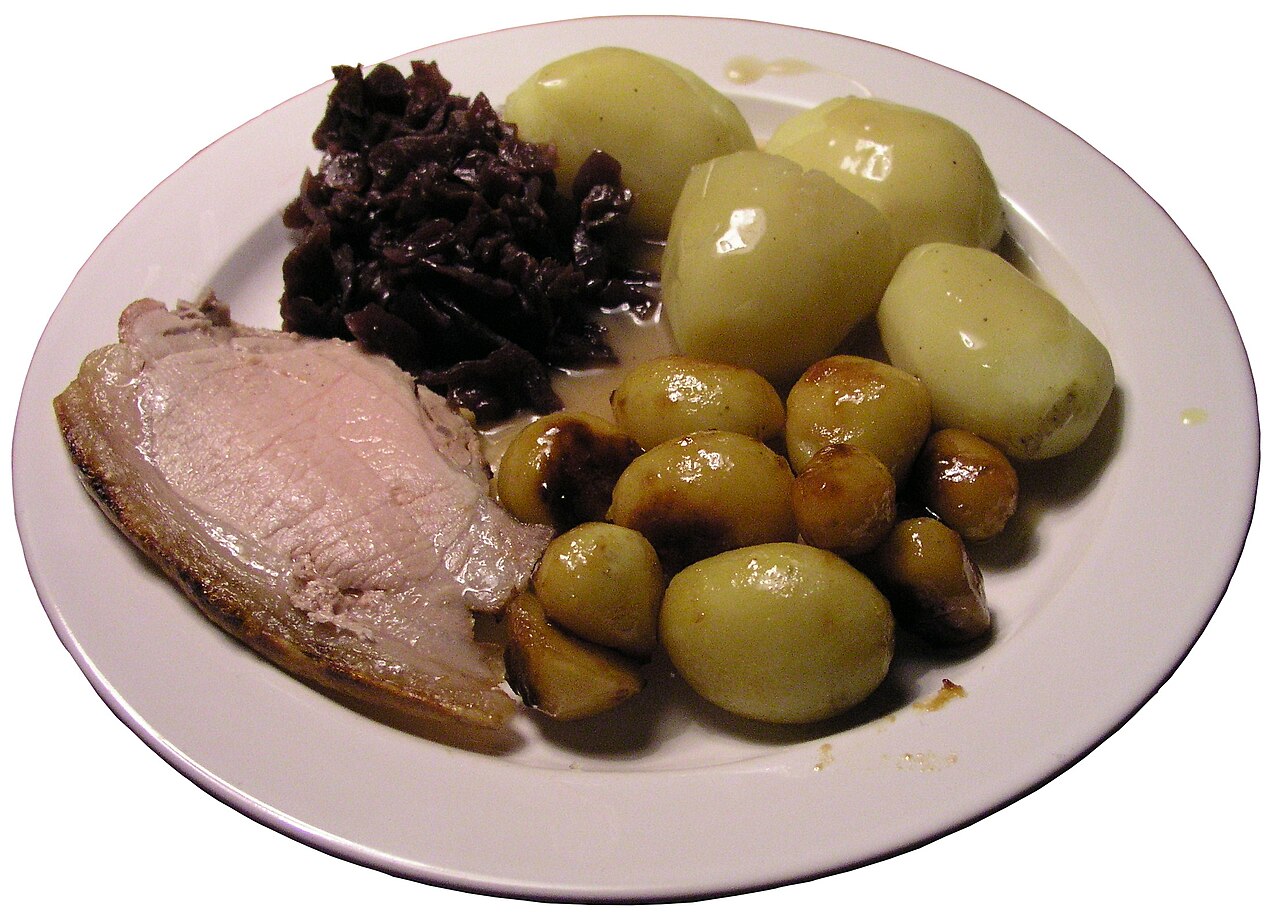
Flæskesteg is the Danish version of roast pork, considered one of Denmark's principal national dishes. Always prepared with crackling, it is traditionally served as the evening meal on Christmas Eve.
Quick Facts
- Place Of Origin
- Denmark
- Main Ingredient
- Roast pork, crackling
Facts from the source article.
Lore & Background
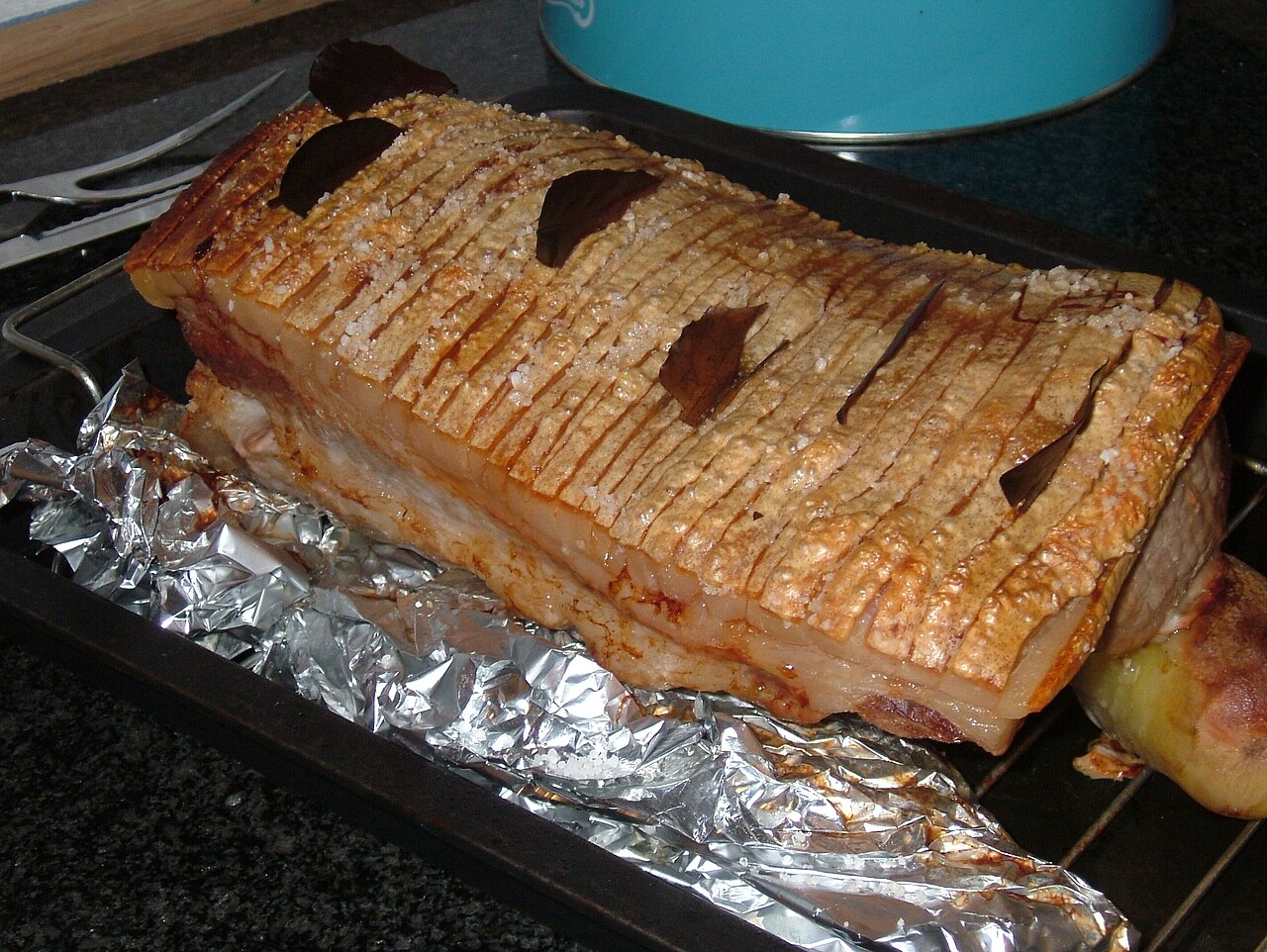
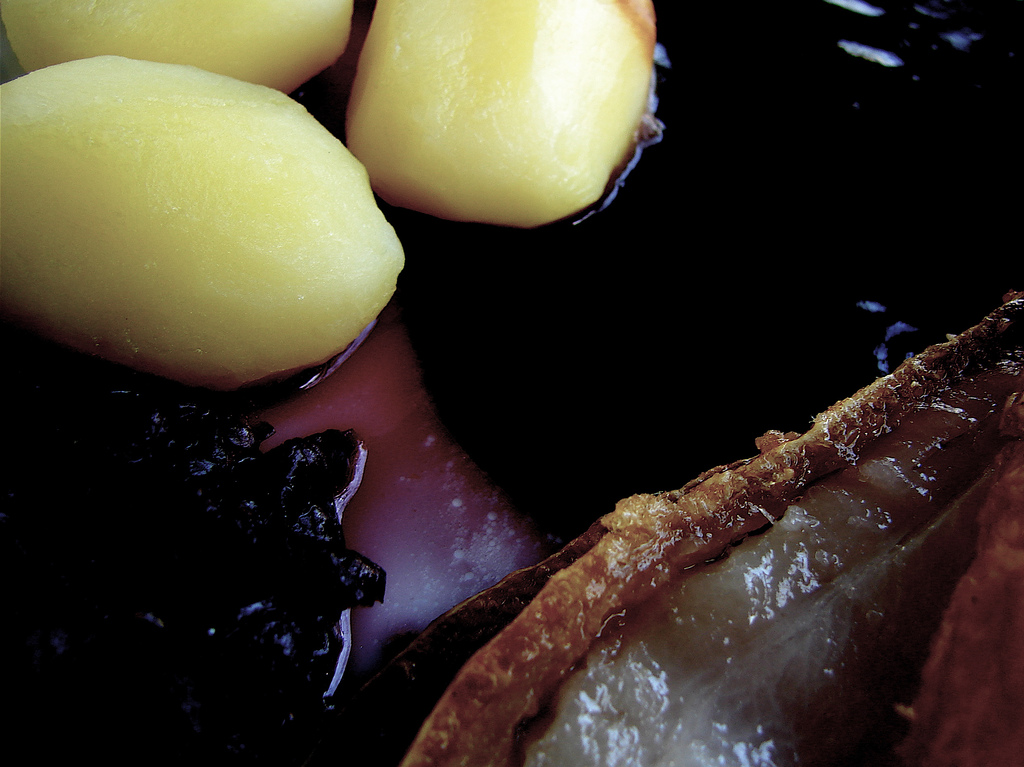
Pork has been eaten by Danes for centuries, but it was after the Industrial Revolution in the 1860s when wood-fired ovens were introduced for home use that roast pork became a common dish. From the beginning, joints were always cooked together with the rind to provide crackling, and this has remained a prerequisite for the dish. The traditional method involves roasting a joint from the breast or neck, cutting the skin into narrow strips, rubbing with salt and pepper, and inserting bay leaves and optionally cloves before roasting in a hot oven. The dish is accompanied by boiled potatoes, caramelized potatoes, and red cabbage. Many Danes consider the traditional recipe to be the one described by Frk. Jensen in her 1900 cookbook.
Reader's Guide
Flæskesteg holds a central place in Danish culinary identity as one of the country's principal national dishes. Its significance is most pronounced during the Christmas season, where it is the traditional main course for the evening meal on Christmas Eve. The dish's defining feature is its crackling, achieved by cooking the pork with the rind intact and scoring the skin. The Industrial Revolution of the 1860s enabled home cooks to roast pork regularly with the introduction of wood-fired ovens. The dish also appears in Danish open sandwiches (smørrebrød), served cold on dark rye bread with red cabbage, prunes, orange slice, and pickled cucumber. Hot flæskesteg sandwiches in burger buns are available from hot dog stands and fast food providers. The recipe from Frk. Jensen's 1901 cookbook is widely regarded as the traditional standard.
From Hearth to Household: The Making of a Staple
Pork has been a fixture of the Danish table for centuries, yet the specific dish we now recognize as flæskesteg owes its widespread domestic popularity to a technological shift. During the 1860s, the Industrial Revolution brought wood-fired ovens into ordinary Danish homes. Before this innovation, roasting a whole joint of meat was largely beyond the reach of everyday households. Once these ovens became accessible, roast pork joined sausages and hams as a regular feature of family cooking. Crucially, from the very first home-cooked preparations, the joint was always roasted with its rind intact so that the prized crackling would form. That single requirement—crackling as an inseparable part of the finished dish—has never been relaxed. What began as a practical adaptation to new kitchen technology quickly hardened into an unwritten rule, and within a generation flæskesteg had cemented itself as one of Denmark's defining national dishes, a status it retains to this day.
The Sacred Crackling and the Ritual of Preparation
The traditional method calls for a joint taken from the breast or neck of the pig, roasted with the rind left fully in place. To coax the skin into shattering crispness, a sharp knife is used to score the skin down to the meat in narrow, parallel strips. Coarse salt is rubbed generously over the surface, pepper is scattered on top, and bay leaves—sometimes joined by a few cloves—are tucked into the scored channels. The joint then goes into a hot oven until the crackling blisters and the flesh is cooked through. No Danish cook would consider the dish complete without its accompaniments: boiled potatoes alongside the celebrated brunede kartofler, small round preboiled potatoes (often pulled straight from a can) that are bathed in a pan of melted sugar and a clump of butter over strong heat until they turn a deep, glossy brown. Red cabbage, whether opened from a jar or prepared from scratch with sliced apples stirred in, is an absolute must. Many Danes point to Frk. Jensen's 1901 cookbook as the definitive codification of this recipe.
Christmas Eve and National Identity
Flæskesteg occupies a place in Danish culinary culture that goes well beyond mere sustenance; it is one of the country's principal national dishes, a title that carries genuine cultural weight. The dish is inextricably linked to the most important family gathering of the year: the Christmas Eve dinner. On that evening, the roast pork joint—crackling golden and crisp—takes center stage as the main course of the Christmas meal. The requirement that crackling be present is not a suggestion but a hard-and-fast rule, a non-negotiable element that distinguishes a proper flæskesteg from any other roasted pork. This association with the Christmas table has reinforced the dish's identity as a symbol of Danish domestic life and seasonal tradition. For generations, the sight and smell of a crackling joint emerging from the oven on Christmas Eve has been as much a part of the holiday as the tree or the gifts, anchoring the evening meal in a ritual that stretches back to the era when home ovens first made such preparations possible.
From the Plate to the Bread: Sandwich Adaptations
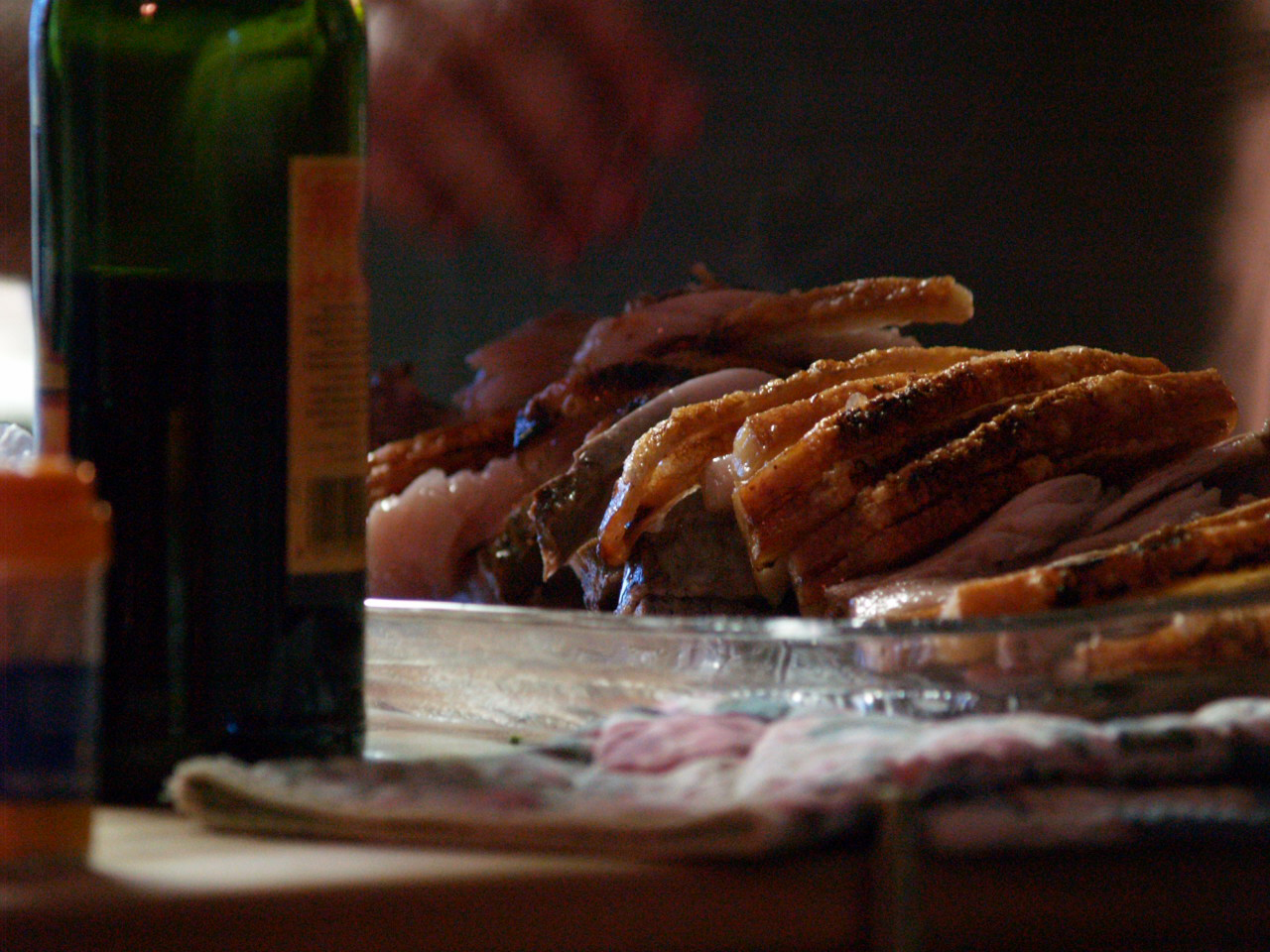
Flæskesteg's influence extends far beyond the formal dinner plate. One of its most beloved reinterpretations is the cold open sandwich, or smørrebrød, where thin slices of the roast pork—crackling intact, naturally—are laid over a dark Danish rye bread. The sandwich is typically adorned with a scattering of red cabbage, a few prunes, a slice of orange, and a strip of pickled cucumber, creating a composition that balances the richness of the pork with sharp, sweet, and tangy notes. This format transforms the dish into something portable and casual while preserving the essential crackling that defines it. On the other end of the spectrum, hot flæskesteg sandwiches pressed into burger buns are a staple of Danish hot dog stands and fast-food outlets across the country. Whether eaten standing at a street corner or seated at a festive table, the pork-and-cabbage pairing remains the constant, proving that a single well-executed roast can anchor both the most formal and the most informal moments of Danish food culture.
Gallery
Frequently Asked Questions
What is Flæskesteg?
Flæskesteg is the Danish term for roast pork and is widely regarded as one of the country's core national dishes. By definition it is always prepared with a crispy crackling, which is treated as an essential part of the preparation rather than an optional garnish.
When is Flæskesteg traditionally served?
It is the classic evening meal on Christmas Eve in Danish households. Although it can show up at other festive gatherings, the Christmas Eve dinner is its most iconic and expected slot on the table.
What goes into a proper Flæskesteg?
The dish centers on a pork cut with its rind left intact, seasoned with salt, pepper, bay leaves, and cloves. The rind is scored and roasted until it forms the golden, shattering crackling that defines the dish.
How is Flæskesteg different from a generic roast pork?
The non-negotiable element is the crackling; without a properly crisp, golden rind the dish is not considered a true Flæskesteg by Danish culinary standards. It is that specific crackling-and-meat combination that sets it apart from a plain roasted pork loin.
Why is Flæskesteg so important to Danish food culture?
It occupies a role similar to turkey or ham in other countries' holiday traditions, anchoring the Christmas Eve dinner for most families. As one of Denmark's principal national dishes, it functions as a shared culinary touchstone that unites the country around a single plate.
More in Danish cuisine 1-24
Spotted an error? Know more?
Reader corrections go straight into our review queue. Suggest an edit · How this site is sourced