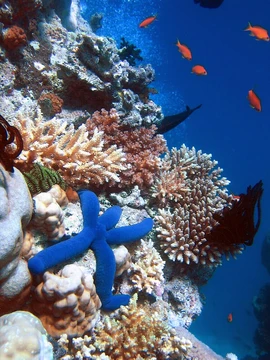
International Coral Reef Society
International society for coral reef science and conservation.

The International Coral Reef Society (ICRS), originally called the International Society for Reef Studies, is a nonprofit scientific organization that works internationally to protect coral reefs by advancing research and understanding. It was established in 1980, with its main goal being to deepen scientific knowledge about both modern and fossil coral reefs.
To further its mission, the ICRS publishes the journal *Coral Reefs* and a newsletter called *Reef Encounter*. The society also organizes annual meetings and helps sponsor other events, such as symposia and conferences focused on coral reefs.
One of its key activities is coordinating the International Coral Reef Symposium (ICRS). The most recent symposium took place in 2022 in Bremen. Earlier symposia were held in Honolulu (2016); Cairns, Australia (2012); Fort Lauderdale, Florida (2008); Okinawa, Japan (2004); Bali, Indonesia (2000); Panama City, Panama (1996); Guam (1992); Townsville, Australia (1988); Tahiti, French Polynesia (1985); Manila, Philippines (1980); Miami (1977); aboard the M.V. Marco Polo in Australian waters (1974); and Mandapam Camp, India (1969, the first symposium). The published proceedings from these symposia are available through ReefBase.
The society’s highest honor is the Darwin Medal, awarded every four years at the International Coral Reef Symposium. It recognizes a senior ICRS member who has made major, globally recognized contributions over their career. The medal has been given ten times, to David Stoddart, Peter Glynn, Ian Macintyre, Yossi Loya, Charlie Veron, Terry Hughes, Jeremy Jackson, Jack Randall, Nancy Knowlton, and Ove Hoegh-Guldberg.
- Founded
- 1980
- Journal
- Coral Reefs
- Newsletter
- Reef Encounter
- Most recent symposium year
- 2022
- Most recent symposium location
- Bremen
- Darwin medal recipients
- David Stoddart, Peter Glynn, Ian Macintyre, Yossi Loya, Charlie Veron, Terry Hughes, Jeremy Jackson, Jack Randall, Nancy Knowlton, Ove Hoegh-Guldberg
Lore & Background
The ICRS was founded in 1980 with the aim of advancing scientific knowledge of coral reefs. To achieve its objectives, the society prints and distributes the journal Coral Reefs and a newsletter, Reef Encounter. It also holds annual meetings and co-sponsors other gatherings, symposia, and conferences relating to coral reefs. The society helps organize the International Coral Reef Symposium (ICRS), the most recent of which was held in 2022 in Bremen. Previous symposia have been held in locations including Honolulu (2016), Cairns (2012), Fort Lauderdale (2008), Okinawa (2004), Bali (2000), Panama City (1996), Guam (1992), Townsville (1988), Tahiti (1985), Manila (1980), Miami (1977), on board the M.V. Marco Polo in Australian waters (1974), and Mandapam Camp, India (1969, the first symposium). Published proceedings of the ICRS are available at ReefBase.
Reader's Guide
The International Coral Reef Society is notable as the primary international scientific society focused on coral reef research and conservation. Its significance lies in its sustained efforts to improve scientific understanding of both living and fossil coral reefs through publications and meetings. The society's journal Coral Reefs and newsletter Reef Encounter serve as key channels for disseminating research. The International Coral Reef Symposium, which the society helps organize, has a long history dating back to 1969, with proceedings archived at ReefBase. The Darwin Medal, awarded every four years at the symposium, recognizes senior members for major career contributions; its ten recipients include prominent researchers such as David Stoddart, Peter Glynn, and Nancy Knowlton. The society's legacy is built on these activities, which support the conservation of coral reefs through science.
Did You Know?
- The most recent International Coral Reef Symposium was held in 2022 in Bremen.
- The Darwin Medal is awarded every four years at the symposium.
- The first symposium was held in Mandapam Camp, India in 1969.
More in Coral Reefs, Part 3 1-23
Spotted an error? Know more?
Reader corrections go straight into our review queue. Suggest an edit · How this site is sourced