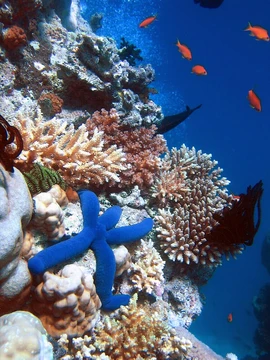
Hol Chan Marine Reserve
A Belize marine reserve protecting coral reef, seagrass, and mangrove habitats.

Hol Chan Marine Reserve sits near Ambergris Caye and Caye Caulker, off Belize’s coast. It spans about 18 square kilometers (4,448 acres) of coral reefs, seagrass beds, and mangrove forest. The name “Hol Chan” comes from Mayan, meaning “little channel,” referring to a natural break in the reef. In the early 1980s, fish stocks around the area started dropping while tourism to the Cayes grew. Disputes flared over access to the Hol Chan cut—a productive fishing spot that also drew snorkelers and divers. Proposed fishing bans were turned down, but by the mid-1980s, public talks about creating a marine protected area began. International groups like the New York Zoological Society and the Peace Corps pushed for reserve status because of the channel’s unique formation, rich fishery resources (including conch and lobster), and the chance to protect a linked system of coral reef, seagrass, and mangrove habitats. From 1985 to 1987, Janet Gibson worked to establish the reserve, campaigning with citizens, businesses, fishermen, and the Belizean government, and educating them on the need for the project. In 1986, she wrote the Hol Chan Marine Reserve Draft Management Plan to show the project’s feasibility. Thanks to these efforts, the reserve was created in July 1987, with funding from WWF and USAID, after the draft plan was approved by the Fisheries ministry and the local fishermen’s co-operative. Active enforcement of rules began in 1989, and charging entry fees for Zone A started in 1990.
- Zone A covers the inside and outside of the reef (part of the Belize Barrier Reef). No fishing is allowed here, but snorkeling and diving are permitted for a fee. - Zone B covers the seagrass beds inside the reef. Both commercial and sport fishing are allowed here with a license. - Zone C covers the mangrove swamps of southern Ambergris Caye. No commercial fishing is allowed, but sport fishing is permitted under license. In 1999 the adjoining area of Shark Ray Alley was added as zone D of the reserve. It’s a second fee-based snorkeling area, though commercial and sport fishing are allowed in some parts with a license. Zone A is mostly the Hol Chan Cut, a natural break in the reef about 23 meters (75 feet) wide and 9 meters (30 feet) deep. Around the cut, the sea can be as shallow as 1.5 meters (5 feet).
Quick Facts
- Iucn Category
- IV
- Location
- Gulf of Honduras, Belize
- Nearest City
- San Pedro Town
- Area
- 18 km2
- Established
- 1987
- Visitation Num
- 36,887
- Visitation Year
- 2001
- Governing Body
- Hol Chan Marine Reserve Trust Fund Committee
Facts from the source article.
Lore & Background
In the early 1980s, fish stocks around Hol Chan dwindled while tourism increased, leading to disputes over access to the Hol Chan cut, a productive fishing area popular with snorkelers and divers. Proposed fishing bans were rejected, and public consultation for a marine protected area began in the mid-1980s. International organizations such as the New York Zoological Society and Peace Corps called for reserve status due to the unique channel formation, abundant fishery resources, and the feasibility of protecting interconnected habitats. Between 1985 and 1987, Janet Gibson campaigned with citizens, businesses, fishermen, and the government, writing the draft management plan in 1986. The reserve was established in July 1987 with funding from WWF and USAID, after approval by the Fisheries ministry and the local fishermen's co-operative. Active enforcement began in 1989, and charging for entrance to Zone A started in 1990. The reserve originally had three zones: Zone A (no fishing, snorkeling/diving with fee), Zone B (commercial and sport fishing with license), and Zone C (no commercial fishing, sport fishing with license). In 1999, Shark Ray Alley was added as Zone D, a second charged snorkeling area where commercial and sport fishing are permitted in some parts with a license.
Reader's Guide
Hol Chan Marine Reserve is significant as an early example of a marine protected area in Belize, established through local and international efforts to address declining fish stocks and growing tourism pressure. Its zoning system—dividing the reserve into areas for strict conservation, licensed fishing, and tourism—reflects a compromise between fishing and recreational interests. The reserve's management, now overseen by the Hol Chan Marine Reserve Trust Fund Committee, relies heavily on fees from visitors to Zones A and D, with WWF funding ending in 1995. While fish stocks have increased, the fishing industry has continued to decline, and the reserve faces threats from mangrove clearance in adjacent areas and increasing tourist numbers that put pressure on facilities and coral health. The reserve's legacy includes providing a model for balancing conservation, tourism, and fisheries, though ongoing challenges highlight the difficulty of managing external impacts beyond the reserve's boundaries.
Did You Know?
- Hol Chan is Mayan for 'little channel.'
- The reserve covers approximately 18 km² (4,448 acres).
- Zone D, Shark Ray Alley, was added in 1999 and is a gathering place for sharks and stingrays.
- Over 160 species of fish have been recorded in the reserve.
Frequently Asked Questions
What is Hol Chan Marine Reserve and where does it sit on the map?
It's a protected marine area off Belize's coast, nestled between Ambergris Caye and Caye Caulker. The reserve covers roughly 18 square kilometers (about 4,448 acres) of coral reefs, seagrass beds, and mangrove forest.
Where does the name 'Hol Chan' come from?
The name is Mayan for 'little channel,' a nod to the natural gap in the reef that lets boats pass through. That break, known as the Hol Chan cut, has long been both a productive fishing spot and a popular entry point for snorkelers and divers.
What's the origin story behind Hol Chan Marine Reserve?
In the early 1980s, fish populations around the Cayes were declining while tourism surged, sparking disputes over access to the Hol Chan cut. After proposed fishing bans were rejected, public discussions in the mid-1980s eventually led to the reserve's official establishment in July 1987.
Who are the key players in Hol Chan Marine Reserve's management?
Janet Gibson is widely recognized as a driving force behind the reserve's creation. Day-to-day governance falls to the Hol Chan Marine Reserve Trust Fund Committee, with early funding support from WWF and USAID.
What zones make up Hol Chan Marine Reserve and what do they protect?
The reserve is divided into Zones A, B, C, and D, with Zone D added in 1999 to expand protection. Together these zones safeguard a mix of coral reef, seagrass meadow, and mangrove habitats within the 4,448-acre area.
More in Coral Reefs, Part 3 1-23
Spotted an error? Know more?
Reader corrections go straight into our review queue. Suggest an edit · How this site is sourced