Coral Triangle Initiative
Multilateral partnership sustaining marine resources in the Coral Triangle.

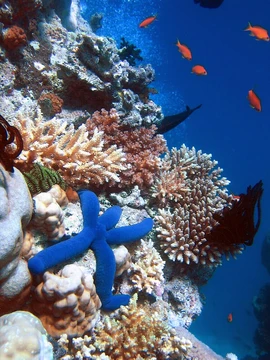
The Coral Triangle Initiative on Coral Reefs, Fisheries, and Food Security (CTI-CFF), also known as the Coral Triangle Initiative (CTI), is a multilateral collaborative partnership among six countries: Indonesia, Malaysia, Papua New Guinea, the Philippines, Solomon Islands, and Timor-Leste. Partners work together to sustain living marine and coastal resources by addressing crucial issues such as food security, climate change, and marine biodiversity. The initiative is notable for focusing on the Coral Triangle region, which covers 1.62% of the planet's total ocean area and is recognized as the global epicenter of marine life abundance and diversity, containing 76% of all known coral species and 53% of the world's coral reefs.
Quick Facts
- Conventional Long Name
- Coral Triangle Initiative
- Linking Name
- CTI-CFF
- Symbol Type
- Logo
- Org Type
- Multilateral partnership
- Membership Type
- Members
- Membership
- Philippines · Solomon Islands · Timor-Leste
- Admin Center Type
- Regional Secretariat
- Admin Center
- Manado, Indonesia
- Official Website
- www.coraltriangleinitiative.org
Facts from the source article.
Lore & Background
The Coral Triangle region is located along Earth's equator at the confluence of the Western Pacific and Indian Oceans. Scientists defined its boundaries using coral and reef fish diversity as primary criteria, including most of the exclusive economic zones of the six partner countries. The region has the largest extent of mangrove forests in the world and serves as a significant global refuge for marine life, including spawning and juvenile growth areas for the world's largest tuna fishery and six species of threatened marine turtles. Biogeography conditions within the CT may enable this region to maintain its high productivity despite future climate change impacts.
Viewing it necessary to safeguard the region's marine and coastal resources, Indonesian President Yudhoyono encouraged other leaders to launch the CTI-CFF in 2009. At the Leader's Summit that year, governments agreed to adopt a 10-year Regional Plan of Action (CTI RPOA). The CTI-CFF Regional Secretariat was created during the First CTI-CFF Senior Officials Meeting in Bali in December 2007, with headquarters based in Manado, North Sulawesi, Indonesia. The Secretariat promotes regional cooperation, shares lessons learned, and coordinates progress toward the Plan of Action goals.
The CTI-CFF Plan of Action may be implemented within waters under national jurisdiction of each government, without prejudice to sovereign rights or maritime boundary delimitations. In 2017, the CTI-CFF announced the Seascape General Model, a management approach to build a consistent regional framework for sustainable management of Priority Seascapes, which can be trans-boundary or national.
Reader's Guide
The Coral Triangle Initiative's significance lies in its multilateral approach to addressing critical threats to marine and coastal resources in a region of immense biodiversity. The article states that these resources are under significant threat from climate change (coral bleaching, ocean acidification) and human activity (over-fishing, destructive fishing, pollution, coastal habitat conversion, exploitation of threatened species). The CTI-CFF seeks to address both poverty reduction through economic development and biodiversity conservation through protection of species, habitats, and ecosystems. Its 10-year Regional Plan of Action includes five goals: designating and managing priority seascapes, applying an Ecosystem Approach to Management of Fisheries, establishing Marine Protected Areas, achieving climate change adaptation measures, and improving threatened species status. Longer-term goals include stabilizing coral reef ecosystem integrity, improving fish stocks, and improving food safety from coastal and marine environments. The article notes that data shows reefs of the Coral Triangle have shown resilience to large-scale bleaching events, with the Global Coral Reef Monitoring Network reporting in 2021 that the East Asian Seas region (including the Coral Triangle) was the only region where coral cover was substantially greater in 2019 (36.8%) compared to 1983 (32.8%), though many reefs were affected by large-scale bleaching during the 2010s.
Did You Know?
- Approximately 363 million people reside in the Coral Triangle and depend on its marine and coastal resources for food, income, and protection from severe weather.
- The CTI-CFF Regional Secretariat Headquarters are based in Manado, North Sulawesi, Indonesia.
Frequently Asked Questions
What is the Coral Triangle Initiative?
The Coral Triangle Initiative on Coral Reefs, Fisheries, and Food Security (CTI-CFF) is a multilateral partnership in which six nations coordinate to protect the marine and coastal ecosystems of the Coral Triangle region. It was designed to tackle interconnected challenges like food insecurity, climate-driven reef degradation, and the loss of marine biodiversity.
Which six countries make up the Coral Triangle Initiative?
The partner nations are Indonesia, Malaysia, Papua New Guinea, the Philippines, Solomon Islands, and Timor-Leste. Together they form the governance structure that oversees joint conservation and sustainable-fishing programs across the region.
Why is the Coral Triangle region considered so biologically important?
Although the Coral Triangle spans only about 1.62 percent of the world's total ocean area, it holds roughly 53 percent of all known coral reef ecosystems, 76 percent of described coral species, and 37 percent of coral-reef fish species. This extraordinary concentration of biodiversity is the core reason the six nations pooled their efforts under the CTI.
What are the main goals or 'powers' of the Coral Triangle Initiative?
The initiative's mandate centers on three pillars: sustaining coral reef health, managing fisheries for long-term yield, and ensuring food security for coastal communities. It also explicitly addresses climate-change adaptation and the protection of marine biodiversity as cross-cutting priorities.
How many people benefit from the Coral Triangle Initiative's work?
Approximately 363 million people live in the six partner countries and depend directly on the region's marine resources for food, livelihoods, and cultural identity. The CTI's policies and programs are therefore shaped with the needs of that large and growing coastal population in mind.
More in Coral Reefs, Part 3 1-23
Spotted an error? Know more?
Reader corrections go straight into our review queue. Suggest an edit · How this site is sourced