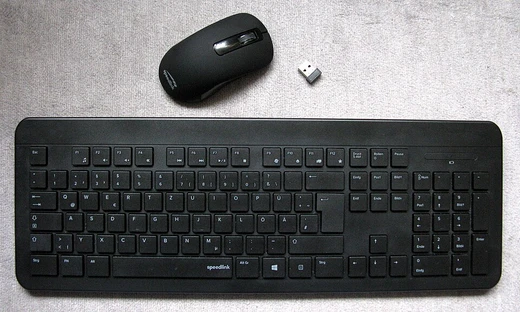
Plug and play
Automatic hardware configuration without user intervention.

Plug and play (PnP) refers to a specification for a computing device or bus that enables automatic recognition of hardware components without requiring physical configuration or user intervention to resolve resource conflicts. The term has been extended to many applications where the same lack of user setup applies. Plug and play devices may have resources allocated at boot time only, or may support hotplug systems such as USB and IEEE 1394 (FireWire).
- Early software configuration systems
- MSX (1983), NuBus (1984), Amiga Autoconfig (1984), IBM Microchannel (1987)
- Windows plug and play standard
- 1995
- Isa pnp superseded by
- PCI bus during the mid-1990s
- Pci autoconfiguration based on
- PCI BIOS Specification in 1990s, superseded by ACPI in 2000s
Lore & Background
Early microcomputer peripherals required users to physically cut wires and solder connections for configuration changes, intended to be permanent. As computers became more accessible, configuration shifted to jumpers or DIP switches, and later to automated plug and play. The MSX system, released in 1983, was designed plug and play from the ground up using slots and subslots with independent address spaces, eliminating device addressing conflicts. Drivers and extensions were supplied in the card's own ROM, requiring no disks or user intervention. In 1984, the NuBus architecture was developed by MIT as a platform-agnostic peripheral interface that fully automated device configuration, working with both big endian and little endian platforms, though its complexity and cost limited adoption outside Apple Macintoshes and NeXT machines. Also in 1984, Commodore developed the Autoconfig protocol and Zorro bus for the Amiga line, with configuration information stored on a read-only device on each peripheral; resources were allocated at boot time. In 1987, IBM's Micro Channel Architecture for the Personal System/2 line enabled totally automatic self-configuration using a floppy disk with a configuration file, but lost or damaged disks rendered hardware unusable, and IBM's licensing restrictions limited adoption. Over time, ISA cards incorporated varied self-configuration hardware, but problems with driver availability remained. ISA PnP used modifications to hardware, BIOS, and operating system software to manage resources, and was superseded by PCI. In 1995, Microsoft Windows 95 attempted to automate device detection and configuration, with a progress tracking log to recover from freezes during probing.
Reader's Guide
The development of plug and play marked a significant shift in personal computing, moving hardware configuration from a specialist task requiring soldering or jumper setting to an automated process accessible to non-technical users. Early systems like MSX, NuBus, Amiga Autoconfig, and IBM Microchannel each attempted to solve resource conflicts through different technical approaches, but faced barriers such as cost, licensing restrictions, or reliance on floppy disks. The ISA PnP standard and later PCI bus built on these concepts, with PCI autoconfiguration becoming the dominant method. Microsoft Windows 95's implementation attempted to handle mixed environments of automatic and manual devices, using a tracking log to manage detection failures. The legacy of plug and play is evident in modern hotplug interfaces like USB and FireWire, which extend the principle to devices that can be added or removed without rebooting. The transition from manual jumpers to software configuration reduced installation complexity and enabled the expansion of the consumer computer market, though early automated systems sometimes required fallback to manual settings when full auto-detection failed.
Did You Know?
- The MSX system, released in 1983, used slots and subslots with independent address spaces to eliminate device addressing conflicts without any jumpers.
- NuBus was designed by MIT in 1984 to be platform agnostic, working with both big endian and little endian computers.
- IBM's Micro Channel Architecture required a floppy disk with a configuration file; if the disk was lost or damaged, the hardware was unusable.
- Windows 95's device detection process wrote to a progress tracking log so that if the system froze, the user could reboot and skip the problematic point.
More in Computer Peripherals 1-24
Spotted an error? Know more?
Reader corrections go straight into our review queue. Suggest an edit · How this site is sourced