Dongle
A small hardware device that adds functionality or enables pass-through to a computer.

RIGHTXD · CC0
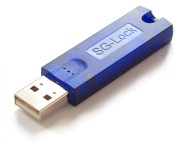
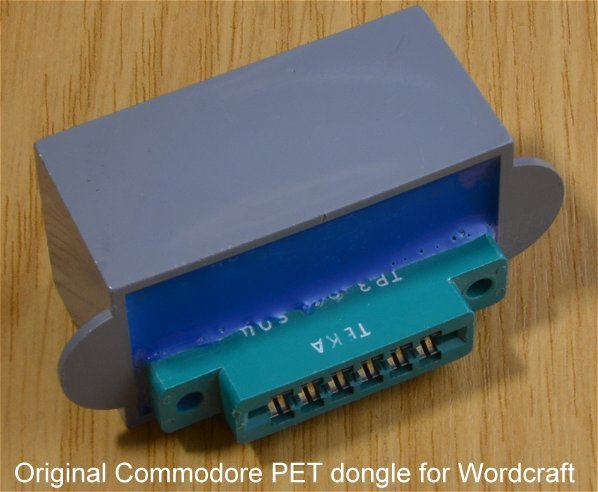
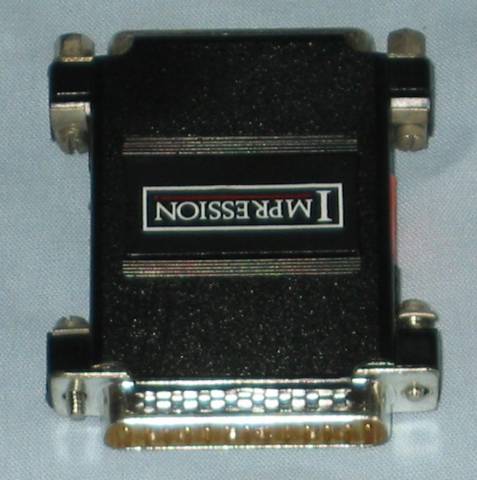
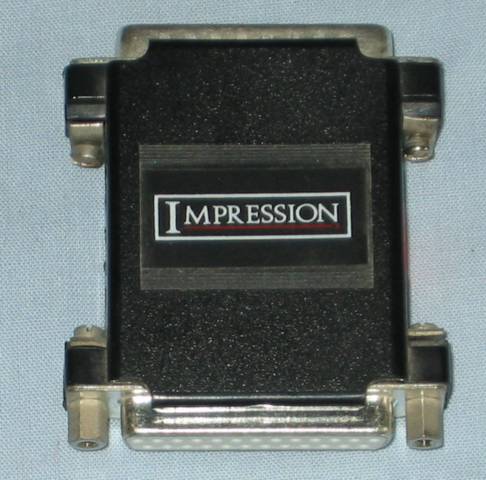
A dongle is a small hardware device that plugs into a port on another device, either to add new functions or to act as a pass-through for a device that provides those functions. Originally, the term referred specifically to software protection dongles—a form of hardware-based digital rights management where a program only runs when the correct dongle is attached. These dongles typically hold a license key or cryptographic protection and stay connected while the software is in use.
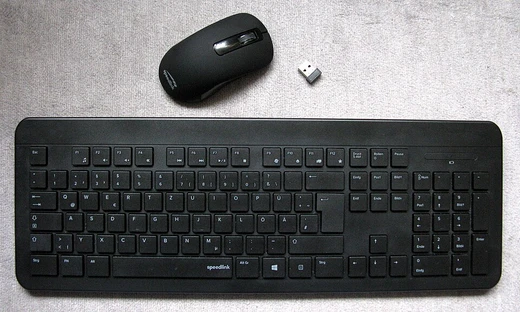
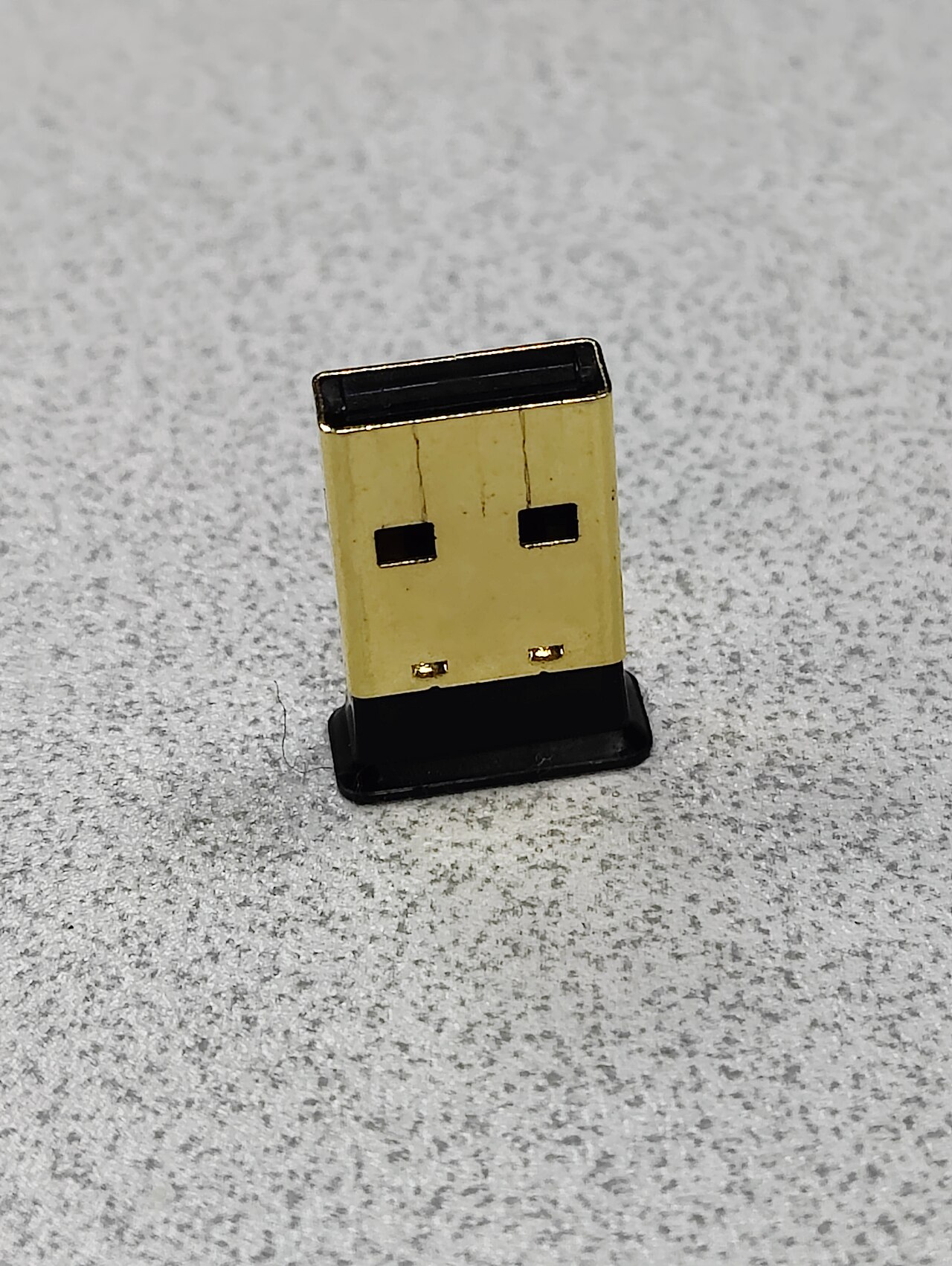
Over time, the term expanded to cover other similarly shaped devices. These include adapters that convert one connector type to another (such as DVI to VGA, USB-to-serial, or USB-C to other ports, as well as Mobile High-Definition Link), USB wireless adapters for Bluetooth and Wi-Fi, USB flash drives (more often called USB sticks or keys), and small digital media players that plug into HDMI ports (commonly called media player dongles or sticks).
The word's origin is uncertain. A 1999 paper noted the source was unclear but suggested it might be a corruption of "dangle," since these devices hang from a computer port. In 1992, a Byte magazine ad from Rainbow Technologies claimed dongles were invented by and named after a person named "Don Gall," which became an urban legend. Linguist Ben Zimmer later noted this claim was likely part of the company's tongue-in-cheek marketing and was so obviously false that the company admitted it was a ploy when pressed by Eric S. Raymond, who maintains the Jargon File.
In practice, dongles serve many roles. Software protection dongles help prevent unauthorized copying and use, originally using serial or parallel ports but now mostly USB. By the mid-to-late 2010s, the dongle form was used for stick-like digital media players such as Chromecast and Fire TV Stick, which plug directly into a TV's HDMI port and are powered via Micro USB. Single-board computers like the Intel Compute Stick also adopted this shape. Very short cables that connect large jacks to smaller plugs help install and remove cables in tight spaces. Other examples include cassette adapters that let cassette radios accept AUX input from devices like iPods or smartphones, and personal FM transmitters that broadcast audio from portable players to FM radios.
- Initial use
- software protection dongles
- Common ports used
- serial port, parallel port, USB
- Modern form factor examples
- USB-C adapters, Chromecast, Fire TV Stick, Intel Compute Stick
- Etymology uncertainty
- origin unclear; possibly a corruption of 'dangle'
Lore & Background
The term 'dongle' has varying accounts on its etymology. In a 1999 paper, P. B. Schneck stated that the origin was unclear, but that it was possibly a corruption of the word 'dangle' (since these devices 'dangle' from a port on a PC). A 1992 Byte magazine advertisement by Rainbow Technologies claimed that dongles were invented by and named after a person named 'Don Gall', one of Andrew Fuschi's best friends, spawning an urban legend. Linguist Ben Zimmer noted that the claim was likely a by-product of their 'tongue-in-cheek' marketing style, and 'was so egregiously false that the company happily owned up to it as a marketing ploy when pressed by Eric S. Raymond, who maintains the Jargon File, an online lexicon of hacker slang.'
Initially used for copy protection via ports such as the serial port or parallel port, most software protection dongles are now in USB format. The term has since been applied to other forms of devices with a similar form factor, such as adapters that convert ports to handle different types of connectors (e.g., DVI to VGA, USB-to-serial, USB-C to other ports, and Mobile High-Definition Link), USB wireless adapters for Bluetooth and Wi-Fi, USB flash drives (more commonly described as 'USB stick' or 'USB key'), and small form-factor digital media players that plug into HDMI ports (most commonly described as a 'media player dongle' or 'media player stick').
Reader's Guide
The dongle's significance lies in its evolution from a niche copy-protection tool to a ubiquitous adapter and peripheral form factor. Initially serving as a hardware key to prevent unauthorized software use, the dongle concept expanded to encompass a wide range of small, plug-in devices that add functionality to computers and consumer electronics. In the mid-to-late 2010s, the dongle form factor was extended to digital media players with a small, stick-like form factor—such as Chromecast and Fire TV Stick—that plug directly into an HDMI port on a television or AV receiver, contrasting with larger set-top boxes. Single-board computers, such as the Intel Compute Stick, have also been produced in a similar means. Adapters that convert miniature implementations of an interface to the full-sized equivalent, or are required to provide the electrical and mechanical interfaces for expansion cards that cannot physically accommodate them (such as PCMCIA, Compact Flash and ExpressCard expansion cards), are commonly referred to as 'dongles', though the alternative term 'Pig-tail' is favored by some in the IT industry due to the appearance of a full-sized connection element with a short, thin wire extending. The term remains somewhat descriptive, allowing one to avoid using the word 'dongle' except for its original meaning. Other examples include cassette adapters for AUX input, personal FM transmitters, and emulators that allow USB and SD cards to be recognized as tracks by older car CD control units.
Did You Know?
- The term 'dongle' may be a corruption of the word 'dangle' because these devices dangle from a port on a PC.
- A 1992 Byte magazine advertisement claimed dongles were invented by and named after a person named 'Don Gall', but the company later admitted this was a marketing ploy.
- Software protection dongles initially used ports such as the serial port or parallel port, but most are now in USB format.
What a Dongle Actually Is
A dongle is fundamentally a compact piece of hardware that plugs into a port on a larger device to grant it capabilities it otherwise lacks, or to serve as a bridge that lets another device add such capabilities. The form factor is deliberately small—imagine a thumb-sized module occupying a USB, serial, or parallel port while the host machine is running. At its conceptual core, a dongle never replaces the host; it extends the host. Whether it carries a cryptographic license key, converts a DVI signal into VGA, or provides Bluetooth and Wi-Fi radio to a laptop that shipped without them, the underlying principle stays the same: a tiny physical attachment unlocks extra functionality. The device is passive in the sense that it has no independent purpose of its own; its entire identity is defined by the port it occupies and the capability it bestows on whatever it is connected to.
The 'Don Gall' Legend and the Word's True Origin
The word "dongle" has no single agreed-upon origin. In a 1999 paper, P. B. Schneck acknowledged the etymology was murky but suggested it might be a phonetic corruption of "dangle," a nod to the way these little modules literally hang from a PC's port. A more colorful story emerged from a 1992 advertisement in Byte magazine placed by Rainbow Technologies, which claimed the device was invented by and named after a man called "Don Gall," supposedly a close friend of Andrew Fuschi. Linguist Ben Zimmer later assessed the claim as almost certainly a product of the company's tongue-in-cheek marketing voice. When Eric S. Raymond, the maintainer of the Jargon File—an online lexicon of hacker slang—pressed the company, Rainbow Technologies openly admitted the story was a deliberate marketing ploy. Despite the debunking, the "Don Gall" tale persists as one of computing's enduring urban legends, a reminder that even the names we attach to everyday technology can be born of pure invention.
From Lock to Lifestyle: How the Term Expanded
Originally, "dongle" was virtually synonymous with a single thing: a hardware digital-rights-management device that a program would refuse to run without. These copy-protection modules typically housed a license key or a cryptographic mechanism and were plugged into a serial or parallel port, and later a USB port, for the duration of a software session. Over time, however, the label broadened to cover any small peripheral matching that compact, plug-in form factor. USB wireless adapters for Bluetooth and Wi-Fi, USB flash drives (more often called "USB sticks" or "USB keys"), and port-conversion adapters such as DVI-to-VGA, USB-to-serial, and the ubiquitous USB-C-to-everything connectors all inherited the name. By the mid-to-late 2010s the category stretched further still: stick-shaped digital media players like Chromecast and Fire TV Stick, which plug directly into a television's HDMI port, and single-board computers such as the Intel Compute Stick, all came to be described as dongles. What began as a lock became a catch-all for a whole family of tiny, purpose-specific hardware add-ons.
Niche Bridges: Where Dongles Keep Legacy Alive
Beyond mainstream adapters and media sticks, the dongle form factor has found surprisingly specialized roles. In the automotive world, older cars that externalized their CD players and changers from the head unit can now accept "emulator" dongles that let USB drives and SD cards loaded with MP3 files be read as if they were physical discs by the car's CD-control circuitry. In the computing-heritage space, solid-state dongles have emulated floppy and hard-disk drives so that SD cards can feed software to machines from the Commodore 64 and Apple II era, preserving legacy hardware recognition. The Nintendo DS, whose cartridge slot was designed primarily for Game Boy Advance games, also accepted add-on dongles like the Rumble Pak. In the IT industry, very short cables that bridge a large jack to a smaller plug—sometimes called "pig-tails" as an alternative to "dongle"—allow expansion cards such as PCMCIA, Compact Flash, and ExpressCard to connect to full-sized ports without exceeding the physical dimensions those standards specify. Each of these applications underscores the dongle's enduring role as a small, flexible bridge between incompatible interfaces.
Gallery

Frequently Asked Questions
What exactly is a Dongle?
A Dongle is a small hardware gadget that plugs into a port on a larger device to either grant it new capabilities or act as a bridge for another component. Its defining trait is its compact, plug-in form factor rather than any single specific function.
Where does the name 'Dongle' actually come from?
The true origin of the word is still debated among enthusiasts. The leading theory is that it's a phonetic corruption of 'dangle,' loosely describing the way these little devices hang off a port, but no definitive source has been confirmed.
What was Dongle's original role before it became a catch-all term?
Dongles started life as hardware-based software-protection keys: a physical token you had to keep plugged in (usually via serial or parallel port) for a licensed program to run. The device stored a license key or cryptographic data, and pulling it out would lock you out of the software.
Which ports do Dongles most commonly plug into?
Historically, protection dongles attached to serial and parallel ports, while modern variants overwhelmingly use USB. Today you'll also see them riding USB-C and other contemporary connector standards.
What does a Dongle look like in its modern form?
The term has broadened to cover anything with that same small plug-in silhouette, from USB-C adapters to streaming sticks like Chromecast, the Fire TV Stick, and the Intel Compute Stick. The shared thread is a tiny device that slots into a port to add or relay functionality.
More in Computer Peripherals 1-24
Spotted an error? Know more?
Reader corrections go straight into our review queue. Suggest an edit · How this site is sourced