
Optical mouse
A solid-state mouse that tracks movement using light and image correlation.

SardorjonovnaF · CC0
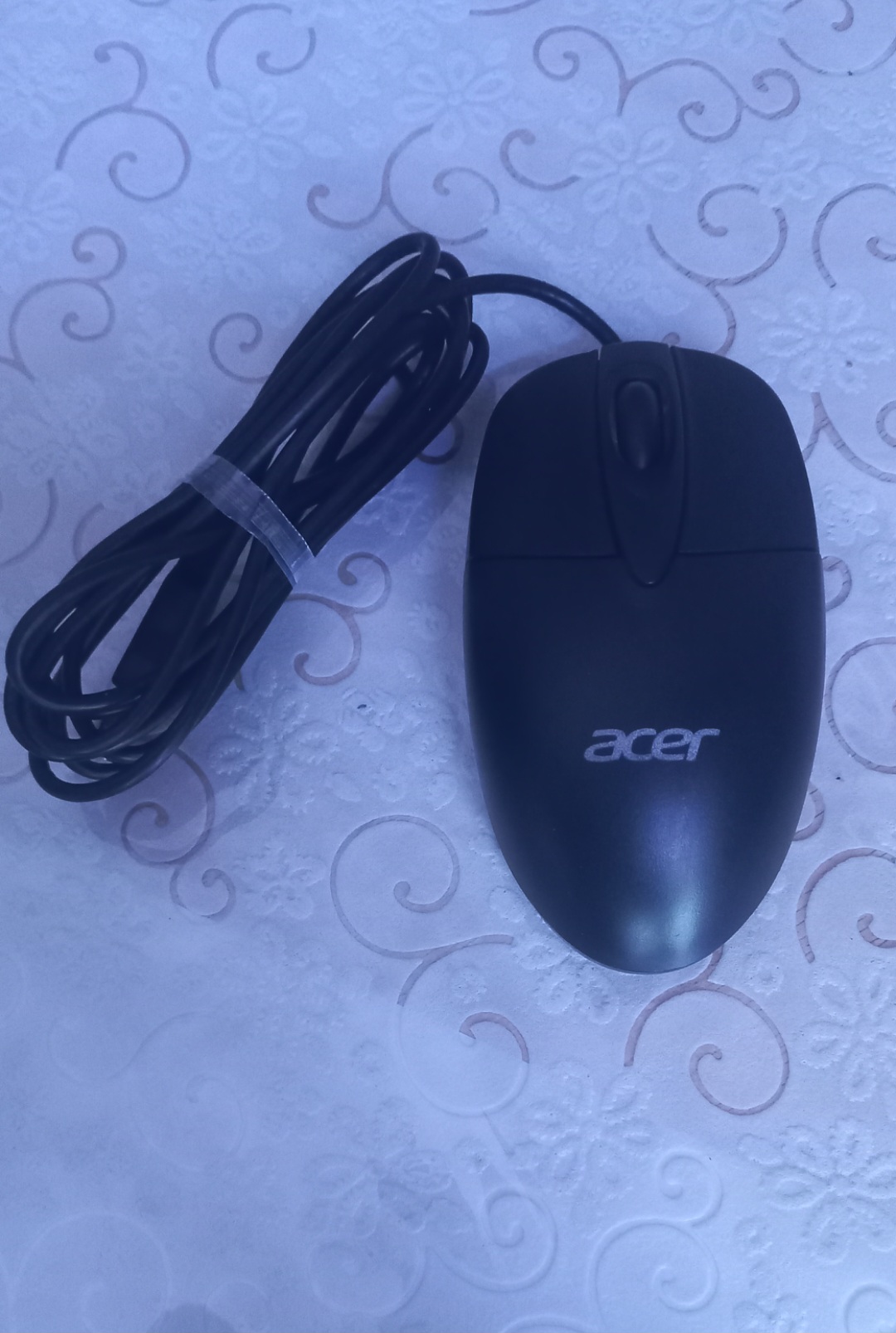
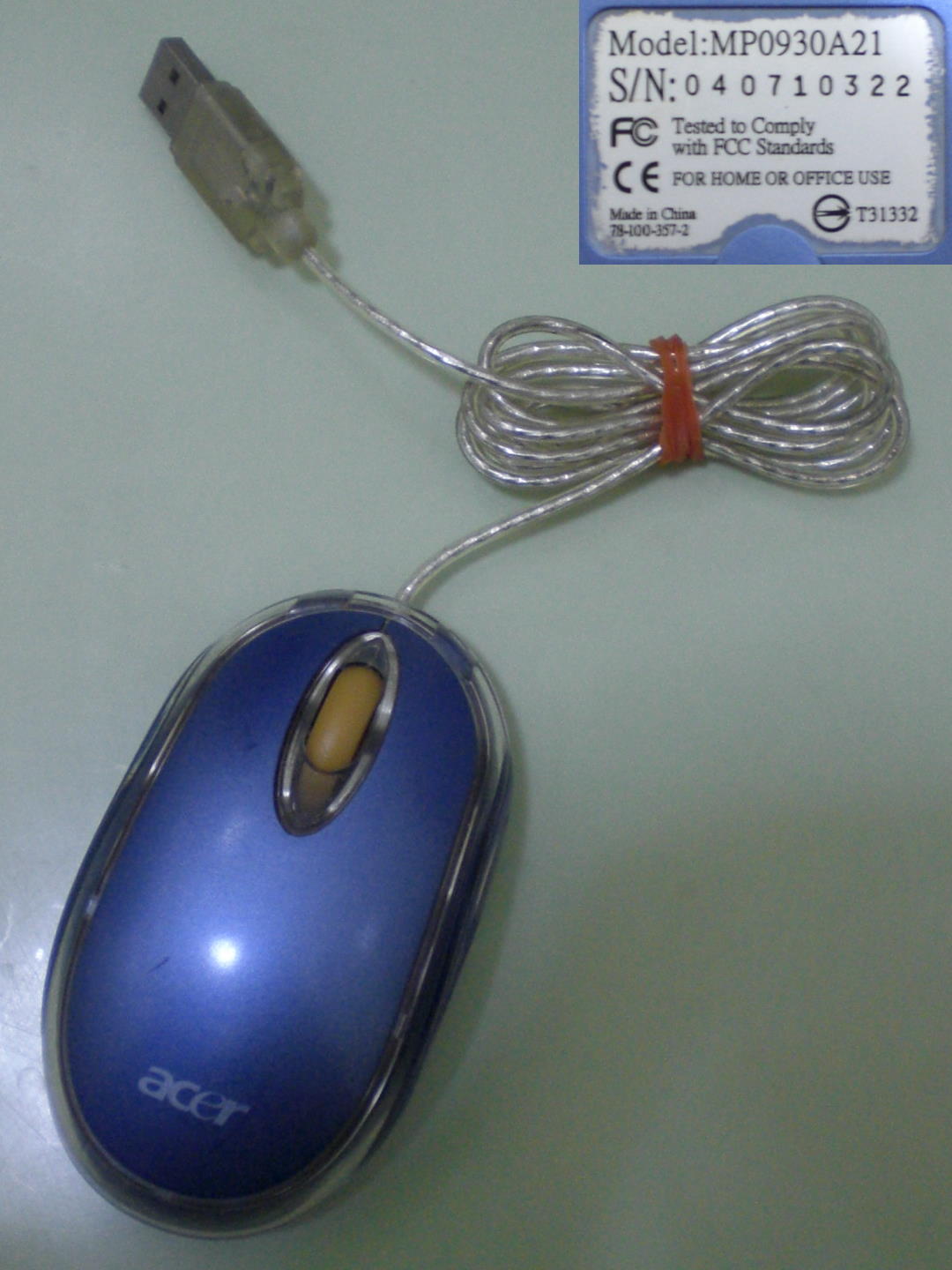
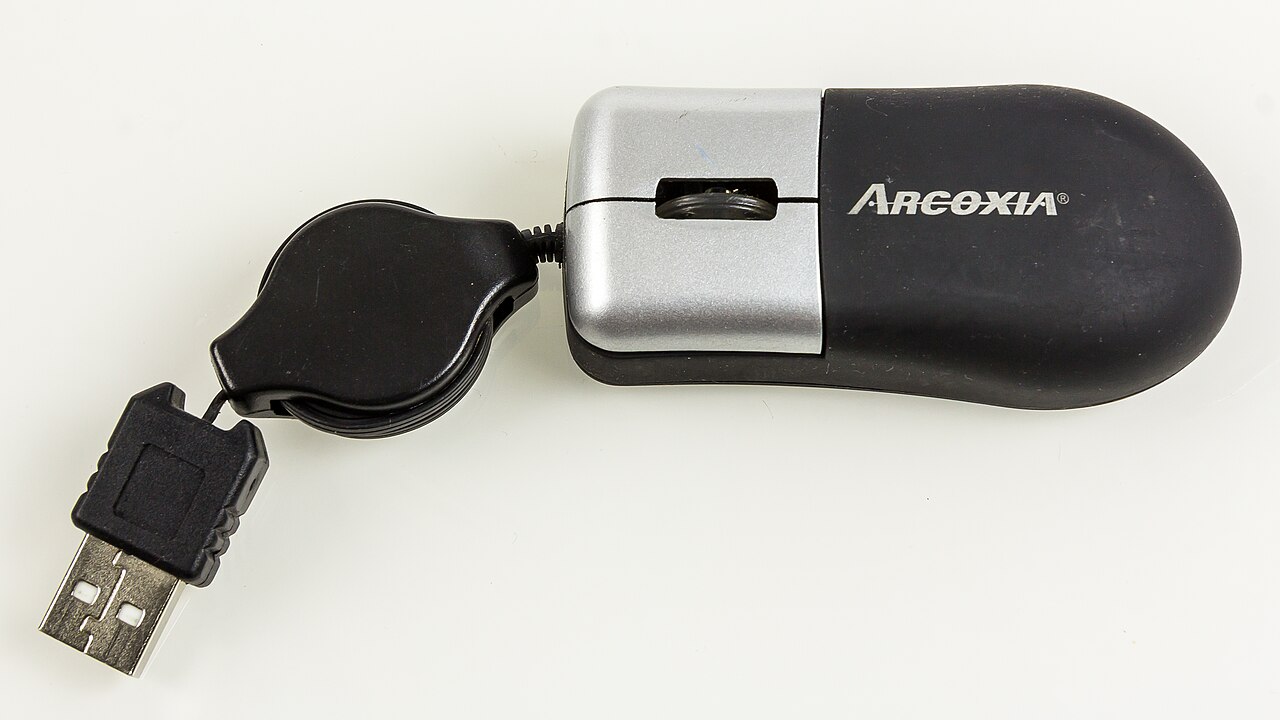
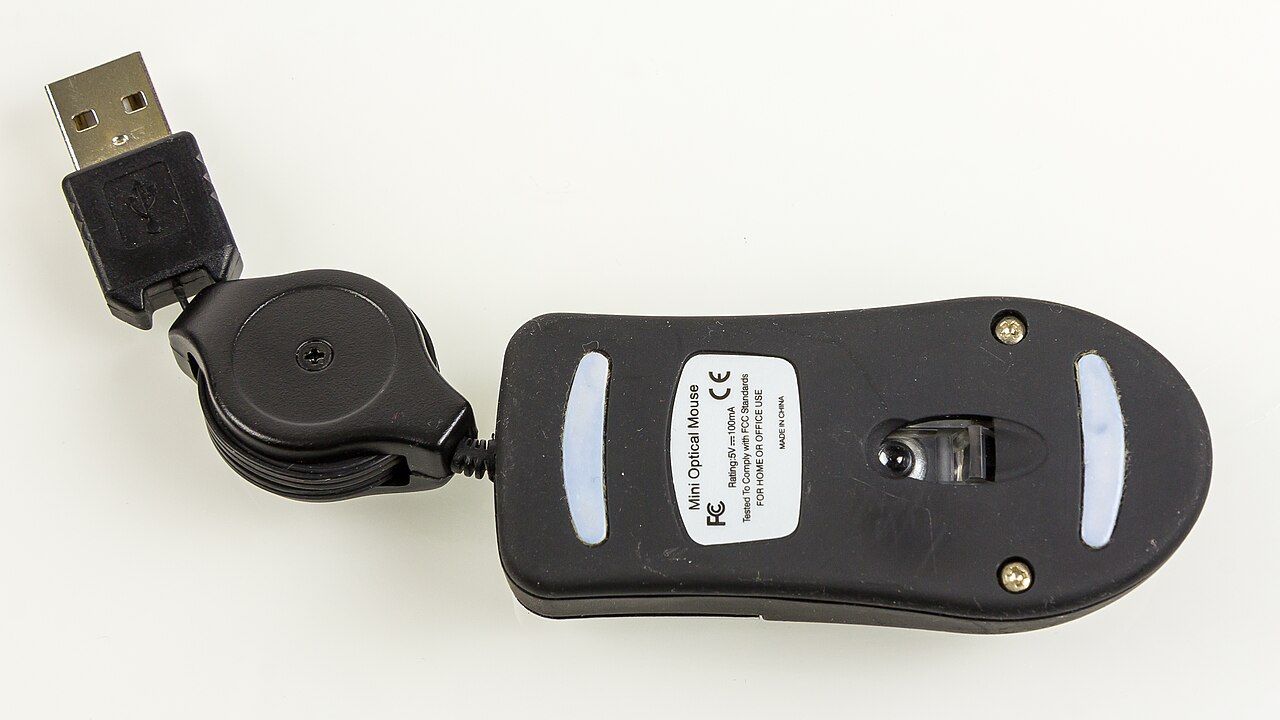
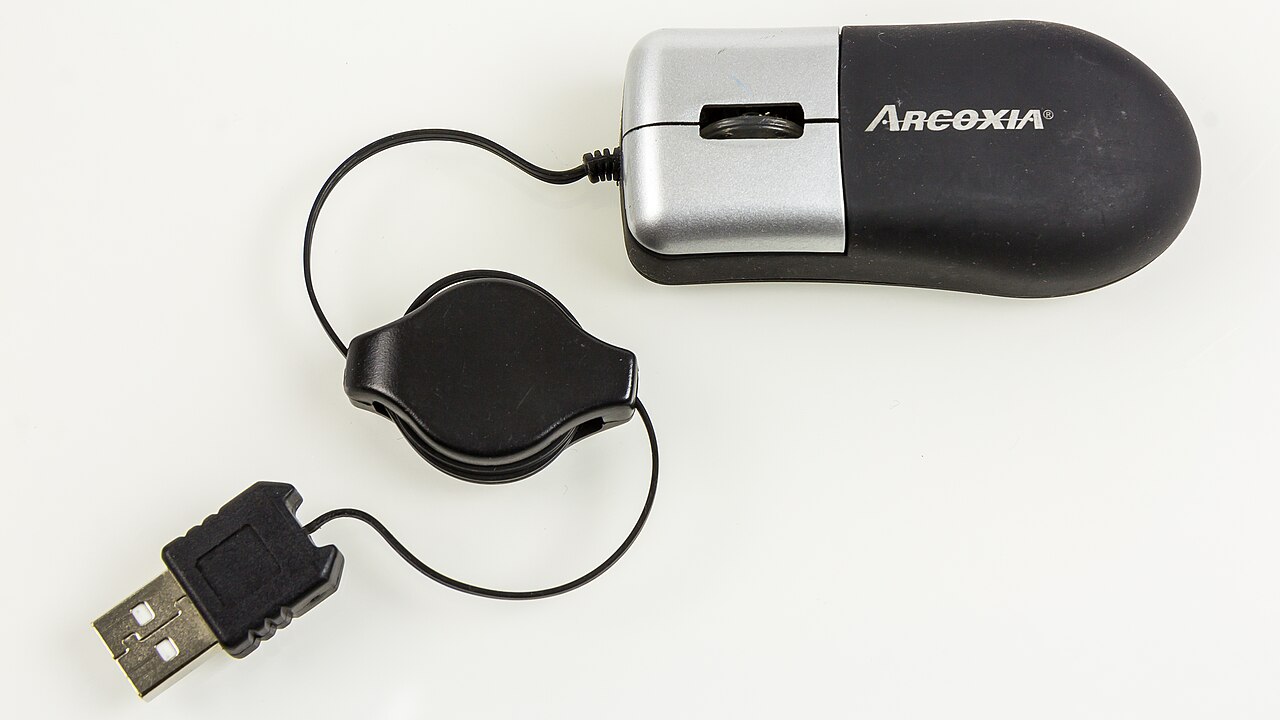
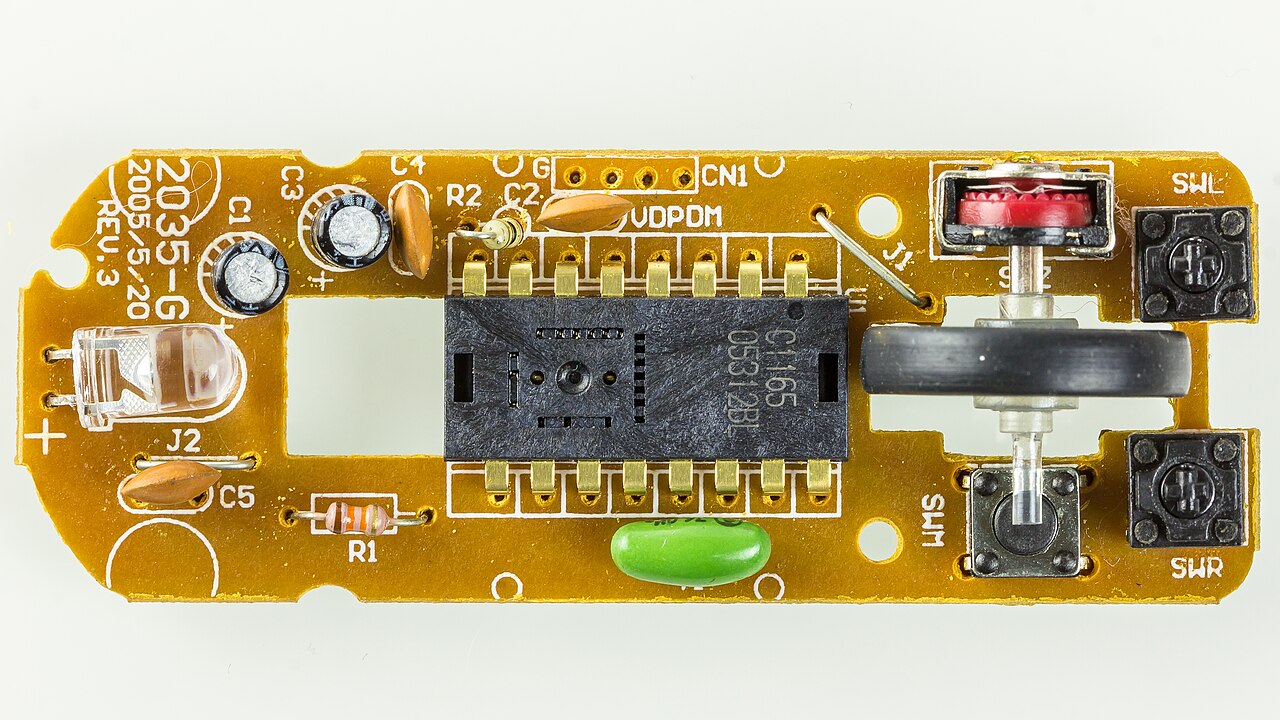
An optical mouse is a computer mouse that uses a light source, usually an LED, and a light detector, like an array of photodiodes, to sense movement across a surface. This type of mouse has mostly replaced the older mechanical design, which relied on moving parts to track motion. The key difference is that optical mice have no moving parts for tracking; they use a completely solid-state system.
The earliest optical mice needed special pre-printed mousepad surfaces to work. Modern optical mice function on most opaque, diffusely reflective surfaces, such as paper, but they generally fail on specularly reflective surfaces like polished stone or transparent surfaces like glass. However, optical mice that use dark field illumination can work reliably even on those problematic surfaces.
Although not usually called optical mice, nearly all mechanical mice also used LEDs and photodiodes. They tracked movement by detecting when infrared light passed through holes in two rotary encoder wheels, one for left/right and another for forward/back, which were driven by a rubberized ball. So, the real distinction of optical mice is not that they use optics, but that they have no moving parts for tracking.
The first two optical mice were demonstrated independently in December 1980, each with a different design. One, invented by Steve Kirsch of MIT and Mouse Systems Corporation, used an infrared LED and a four-quadrant infrared sensor to detect grid lines printed with infrared-absorbing ink on a special metallic surface. The mouse’s CPU used predictive algorithms to calculate speed and direction over the grid. The other, invented by Richard F. Lyon of Xerox, used a 16-pixel visible-light image sensor with integrated motion detection on a single MOS integrated circuit chip. It tracked the motion of light dots in a dark field on a printed paper or similar mouse pad. The two types behaved very differently: the Kirsch mouse used an x-y coordinate system embedded in the pad and would not work correctly if the pad was rotated, while the Lyon mouse used the x-y coordinate system of the mouse body, like mechanical mice do.
The optical mouse sold with the Xerox Star office computer used an inverted sensor chip packaging approach patented by Lisa M. Williams and Robert S. Cherry of the Xerox Microelectronics Center.
- First demonstrated
- December 1980
- Inventors of first two designs
- Steve Kirsch and Richard F. Lyon
- Early commercial optical mouse sold with
- Xerox Star office computer
- First modern surface-independent optical
- Microsoft (IntelliMouse with IntelliEye and IntelliMouse Explorer, 1999)
- Technology used in modern optical mice
- Digital image correlation
- Typical image sensor resolution
- 18 × 18 pixel array of monochromatic pixels
- Capture rate
- One thousand successive images or more per second
Lore & Background
The earliest optical mice detected movement on pre-printed mousepad surfaces. The first two optical mice, demonstrated independently in December 1980, had different basic designs. One, invented by Steve Kirsch of MIT and Mouse Systems Corporation, used an infrared LED and a four-quadrant infrared sensor to detect grid lines printed with infrared absorbing ink on a special metallic surface. The other, invented by Richard F. Lyon of Xerox, used a 16-pixel visible-light image sensor with integrated motion detection on the same MOS integrated circuit chip, and tracked the motion of light dots in a dark field of a printed paper or similar mouse pad. The Kirsch mouse used an x-y coordinate system embedded in the pad and would not work correctly when the pad was rotated, while the Lyon mouse used the x-y coordinate system of the mouse body, as mechanical mice do.
The optical mouse sold with the Xerox Star office computer used an inverted sensor chip packaging approach patented by Lisa M. Williams and Robert S. Cherry of the Xerox Microelectronics Center. The Mouse Systems (Kirsch) design was commercialized and sold in PC compatible form by the company itself alongside variants rebranded for OEM use with Sun Microsystems workstations and by Data General. Modern surface-independent optical mice work by using an optoelectronic sensor to take successive images of the surface on which the mouse operates. As computing power grew cheaper, it became possible to embed more powerful special-purpose image-processing chips in the mouse itself, enabling detection of relative motion on a wide variety of surfaces and eliminating the need for a special mouse-pad.
Modern optical mice use image sensors to image naturally occurring texture in materials such as wood, cloth, mouse pads and Formica. These surfaces, when lit at a grazing angle by a light emitting diode, cast distinct shadows that resemble a hilly terrain lit at sunset. Images are captured in continuous succession and compared with each other to determine how far the mouse has moved. Optical mice capture one thousand successive images or more per second, and mathematically process these images using cross correlation to calculate offset. The output of the optical sensor is usually delta coordinates.
Reader's Guide
The development of the modern optical mouse represented a significant improvement over mechanical mice, which would pick up dirt, track capriciously, invite rough handling, and need to be taken apart and cleaned frequently. Xerox's inventions were never massively commercially exploited, and optical mice remained elusive in the personal computer market until Microsoft released the IntelliMouse with IntelliEye and IntelliMouse Explorer in 1999. These mice used technology developed by Hewlett-Packard under their Agilent Technologies subsidiary and worked on almost any surface. Other manufacturers soon followed Microsoft's lead, including Apple for their Pro Mouse, using components manufactured by Agilent, and over the next several years mechanical mice became obsolete.
The technology underlying the modern optical computer mouse is known as digital image correlation, a technology pioneered by the defense industry for tracking military targets. A simple binary-image version of digital image correlation was used in the 1980 Lyon optical mouse. The development of the modern optical mouse at Hewlett-Packard Co. was supported by a succession of related projects during the 1990s at HP Laboratories, with patents covering measuring linear paper advance in a printer by correlating images of paper fibers, 2-dimensional optical navigational principles based on detecting and correlating microscopic inherent features of the surface, and an integrated circuit that realized surface feature image sensing, image processing, and image correlation to produce a position measurement. Improved precision of 2D optical navigation was further refined for application to precise 2D measurement of media advance in HP DesignJet large format printers.
Did You Know?
- The first two optical mice were demonstrated independently in December 1980 by Steve Kirsch and Richard F. Lyon.
- Modern optical mice use an image sensor with an 18 × 18 pixel array of monochromatic pixels.
- The technology underlying modern optical mice, digital image correlation, was pioneered by the defense industry for tracking military targets.
From a Cancelled Software Deal to the First Mouse
When Daniel Borel and Pierluigi Zappacosta crossed paths in late-1970s electrical engineering courses at Stanford University—studying alongside luminaries like Ethernet creator Robert Metcalfe—neither could have predicted that their partnership would reshape how billions of people interact with computers. After returning to Europe, the Swiss-born Borel and Italian-born Zappacosta settled near Romanel-sur-Morges, Switzerland, and recruited former Olivetti engineer Giacomo Marini to complete their founding trio. In 1981, the three launched what would become Logitech in the small village of Apples, Vaud. Their initial venture, a word-processing software project for a major Swiss firm, was abruptly cancelled. Pivoting quickly, they seized an opportunity tied to a graphical workstation commissioned by Japanese company Ricoh: the need for a reliable pointing device. Drawing on the opto-mechanical design of Swiss inventor Jean-Daniel Nicoud, who was working at the École Polytechnique Fédérale de Lausanne, the team produced the P4 mouse in 1982. Borel took the helm as chairman and later CEO, while Zappacosta steered research and development, setting the stage for decades of peripheral innovation.
Breaking Free from the Cable
The leap from wired to wireless pointing devices was one of Logitech's most consequential technical achievements, though the path was far from straightforward. In 1984, the company unveiled the first wireless mouse, pairing it with the Metaphor Computer Systems workstation created by David Liddle and Donald Massaro, both former Xerox PARC engineers. The connection relied on infrared light, a scheme that also powered the Metaphor's wireless keyboard. However, the IR approach demanded an unobstructed line of sight between mouse and receiver, making it frustratingly unreliable on a typical cluttered desk. True wireless freedom arrived seven years later in 1991, when Logitech shipped the first mouse using a radio-frequency link that could operate regardless of physical obstructions. Meanwhile, on the wired front, Swiss inventor René Sommer designed microprocessor circuitry in 1985 that made the device far more responsive to subtle hand movements. Logitech integrated Sommer's CMOS design into its C7, a rectangular three-button serial mouse priced at $99. By the time the ergonomically curved S9 rolled out in 1989—bearing the Logitech logo for the first time—the company had firmly established itself as a serious player in human-computer interaction hardware.
A Global Manufacturing Machine
Logitech's rise from a small Swiss workshop to a multinational manufacturing powerhouse was driven by a series of strategic factory relocations that tracked the shifting economics of hardware production. In 1984, the company landed a significant original-equipment-manufacturer contract with Hewlett-Packard, producing mice in a new Fremont, California facility that carried the HP brand rather than Logitech's own name. As demand grew through the early and mid-1980s, production moved out of Switzerland entirely, with new plants opening in Cork, Ireland, and Hsinchu, Taiwan, supplementing the California site. A major reorganization in 1994 closed the Fremont operations and shifted large-scale manufacturing to a new facility in Suzhou, China. Cork was downsized into a research-and-development center, while the Hsinchu plant was retained solely for test runs and prototyping. The company's financial trajectory mirrored its industrial expansion: it incorporated as Logitech International SA and went public on the Zürich stock exchange in 1988, later adding a Nasdaq listing and becoming a component of the Swiss Market Index. By December 2008, the milestone of one billion mice produced since 1985 underscored just how central the humble pointing device had become to the company's identity.
Beyond the Mouse: Building a Peripheral Ecosystem
Although the mouse remains Logitech's signature product, the company steadily broadened its portfolio into an ecosystem of personal peripherals spanning video communication, music, and smart-home applications. A pivotal move came in 1998 when Logitech purchased the Connectix webcam division for $25 million, releasing the QuickCam—the first webcam with a built-in microphone. By the year 2000, the company had claimed the top spot in global webcam sales with roughly four million units shipped. Further acquisitions reinforced this diversification: Labtec was bought in 2001 for $150 million to widen the peripherals range, and Ultimate Ears, a custom in-ear monitor supplier, joined the family in August 2010. In 2007, a licensing deal with Hillcrest Labs brought Freespace motion-control technology to the MX Air Mouse, letting users steer a PC with natural hand gestures. The company's cultural footprint extended beyond hardware. A 2017 multi-year partnership with McLaren positioned Logitech as the Official Technology Peripherals Partner, later extending into eSports under the Logitech G brand in 2020. Leadership transitions kept pace with growth: Bracken Darrell served as CEO from 2013 until June 2023, when Guy Gecht stepped in as interim before Hanneke Faber, formerly group president at Unilever, assumed the role in December 2023.
Gallery
Frequently Asked Questions
What is an optical mouse?
An optical mouse is a pointing device that tracks movement by shining a light (typically an LED) onto the surface below and reading the reflected pattern with a photodiode array. Unlike older mechanical mice, it has no moving tracking parts, making it a fully solid-state design.
Who invented the optical mouse?
The first two optical mouse designs were created by Steve Kirsch and Richard F. Lyon, with the earliest demonstration taking place in December 1980. The first commercial version shipped bundled with the Xerox Star office computer.
How does an optical mouse differ from a mechanical mouse?
A mechanical mouse relied on a spinning ball and rollers to detect motion, while an optical mouse uses a light source and image sensor to read surface texture with zero moving tracking components. This solid-state approach made optical mice more durable and less prone to dust-related tracking errors.
When did optical mice become usable on any surface?
Early optical mice required specially printed mousepads to function, but Microsoft's 1999 IntelliMouse (IntelliEye) and IntelliMouse Explorer were the first to work on virtually any opaque, diffusely reflective surface. That breakthrough is what made optical mice practical for everyday consumers.
What technology do modern optical mice use to track movement?
They employ digital image correlation, comparing successive frames captured by a small monochromatic pixel array—typically 18 × 18 pixels—to calculate displacement. This lets the sensor compute movement without any physical contact or rolling elements.
More in Computer Mice and Monitors 1-24
Spotted an error? Know more?
Reader corrections go straight into our review queue. Suggest an edit · How this site is sourced