
Mousepad
A surface that improves mouse accuracy, speed, and comfort.

User:PolyTicks22 · Public domain
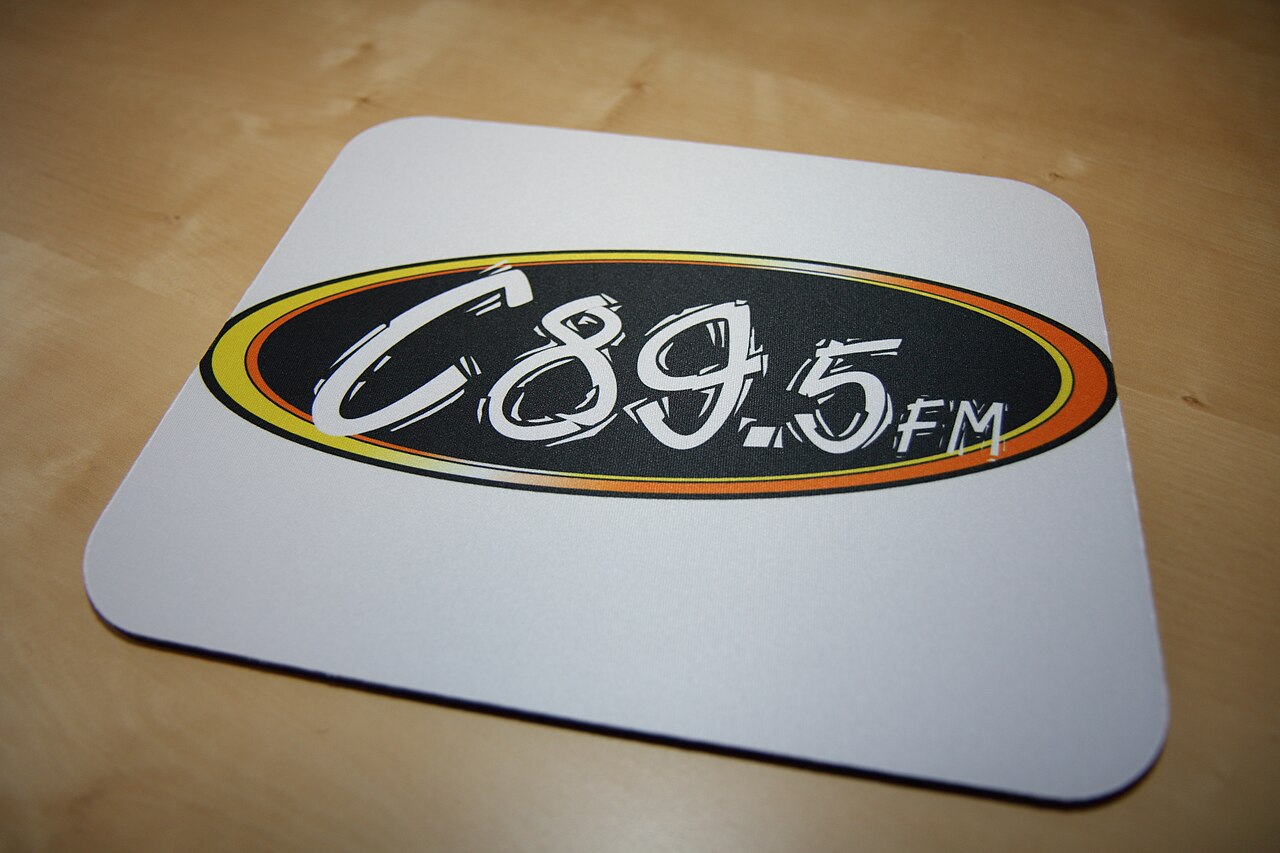
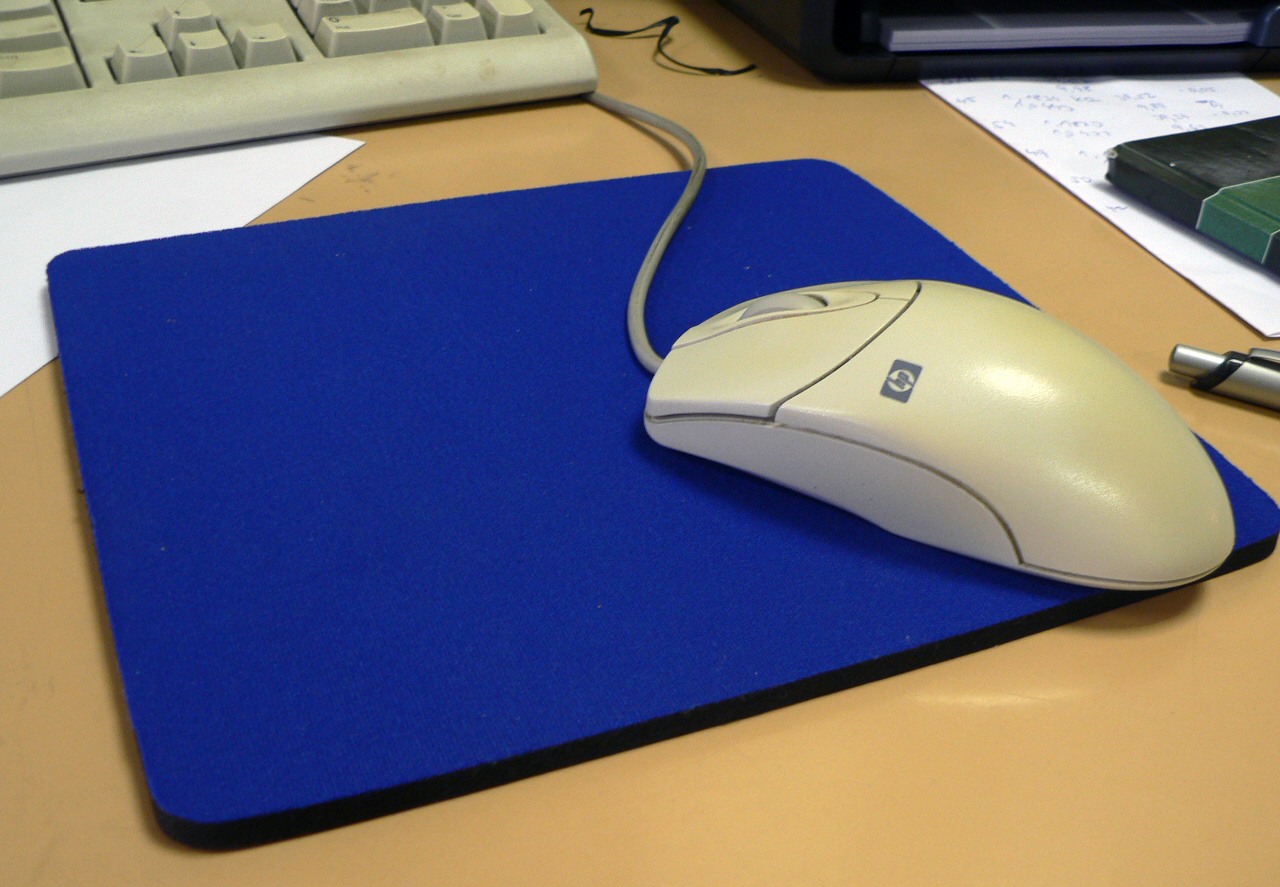
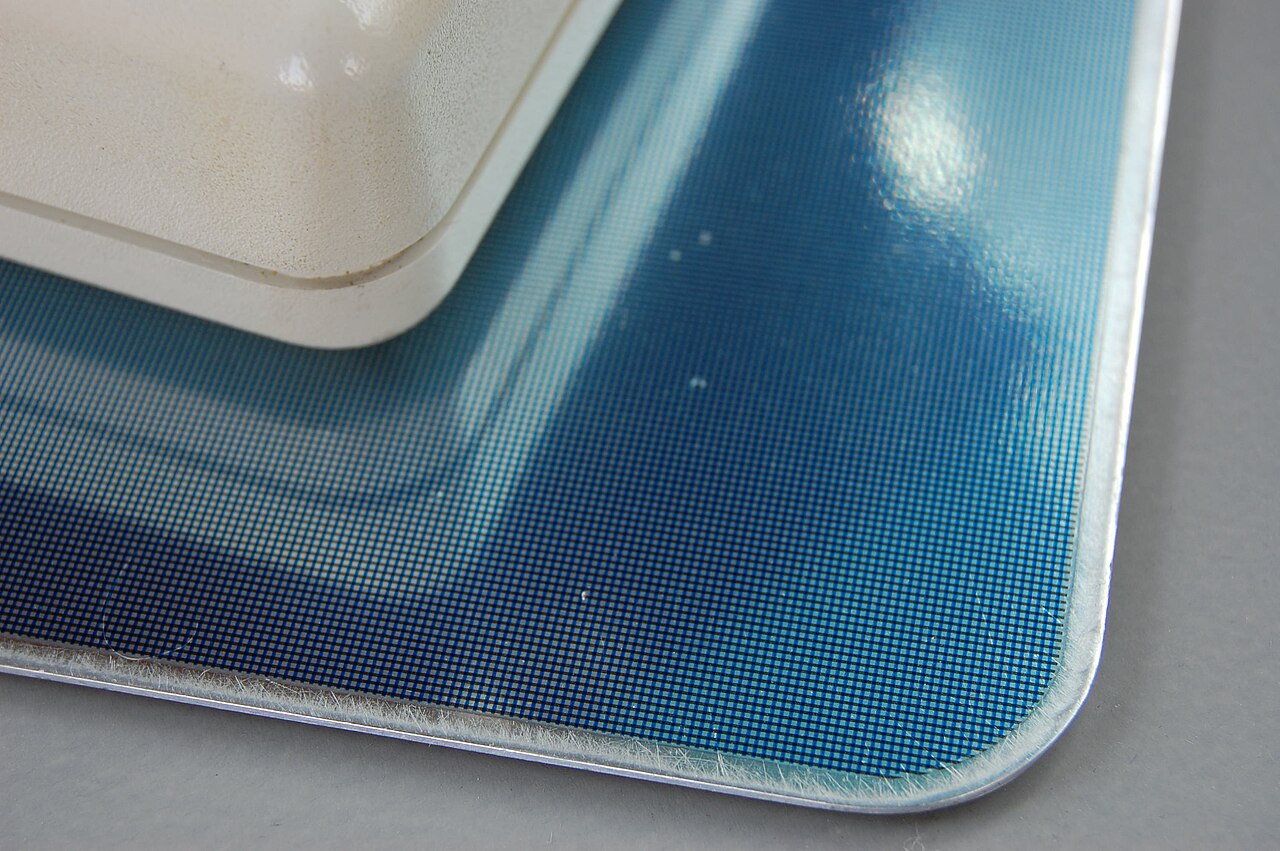
A mousepad, also known as a mousemat, is a dedicated surface used to place and move a computer mouse. It improves the mouse's performance compared to using it directly on a desk by providing a consistent surface that allows for accurate movement tracking without jitter. Some mousepads also include a padded wrist rest for added ergonomic support.
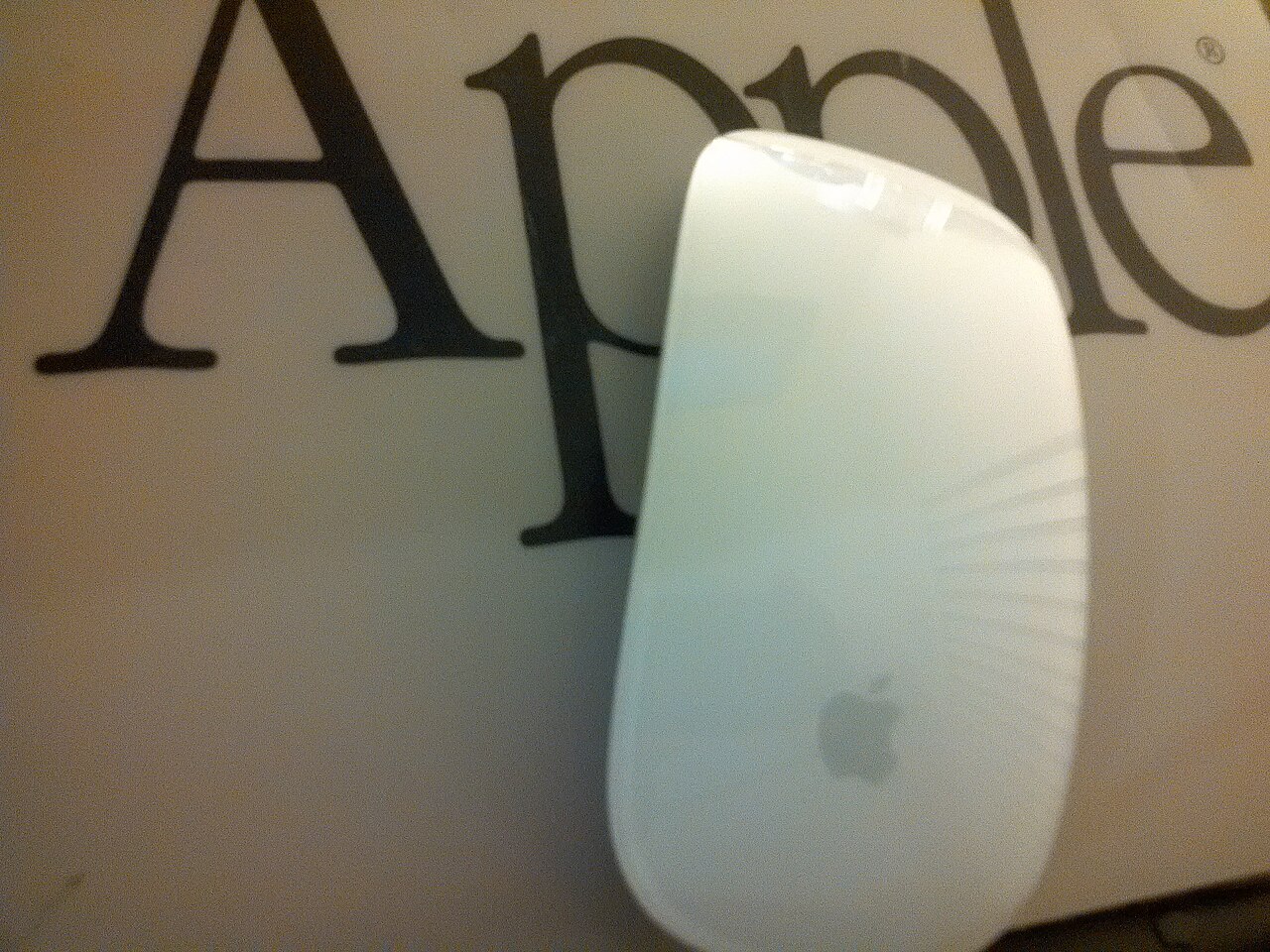
The concept dates back to a 1967 presentation by Douglas Engelbart, where the mouse was publicly introduced. Engelbart used a control console designed by Matt P. Brown of Herman Miller that featured an inset area to support the mouse. The first dedicated mousepad is credited to a designer named Kelley, who created it in 1969. In 1979, a design by Armando M. Fernandez was published in the Xerox Disclosure Journal. By 1982, most users of the Xerox ball mouse were using special pads to increase the ball's friction. The first commercial manufacturer, Moustrak, was founded by Bob McDermand and gained traction when Apple began distributing its mousepads featuring the Apple logo to U.S. computer stores. Moustrak signed licensing deals with Disney, Paramount, and LucasFilm, and advertised in magazines like MacWorld. However, by the late 1980s, cheaper alternatives had turned the mousepad into a commodity. The term "mouse pad" first appeared in InfoWorld on August 24, 1983, while the British term "mousemat" was recorded in the publication 3D on October 17, 1989.
The main benefits of the mousepad were higher speed, greater precision, and improved user comfort. It also protected desk surfaces from scratches and wear caused by continuous hand and mouse movement, and reduced debris buildup under the mouse, which minimized pointer jitter. Cleaning mousepads is important; they can be cleaned with special detergents, liquid soap, hand washing, or dry cleaning, though not all are machine washable. Early optical mice required special pads with printed optical patterns, but modern optical mice work acceptably on plain paper and other surfaces. Nonetheless, heavy users like gamers and designers often still prefer a mousepad for comfort, speed, accuracy, and to prevent desk wear.
Mousepads come in various textures to suit different mouse technologies.
- First design
- 1969 by Kelley
- First commercial manufacturer
- Moustrak, founded by Bob McDermand
- Earliest known term mouse pad
- August 24, 1983, in InfoWorld
- Earliest known term mousemat
- October 17, 1989, in 3D
- Common materials
- Lesser density rucomposites (open cell styrene, butadiene rubber or open cell SBR) with fabric bonded to the upper surface
Lore & Background
During a 1967 presentation by Douglas Engelbart marking the public debut of a mouse, Engelbart used a control console designed by Matt P. Brown of Herman Miller that included a keyboard and an inset portion used as a support area for the mouse. According to Kelley and also stated by Alex Pang, Kelley designed the first mousepad a year later, in 1969. Details of a mousepad designed by Armando M. Fernandez were published in the Xerox Disclosure Journal in 1979. By 1982, most users of the Xerox ball mouse were using special pads to increase the friction of the ball in the mouse. The first commercial manufacturer of mousepads was Moustrak, founded by Bob McDermand. The company began gaining traction when Apple decided to distribute its mousepads, featuring the Apple logo, to computer stores in the United States. Moustrak signed licensing deals with Disney, Paramount, and LucasFilm, and advertised in magazines including MacWorld. However, by the end of the 1980s, lower cost mousepads turned the product into a commodity.
Reader's Guide
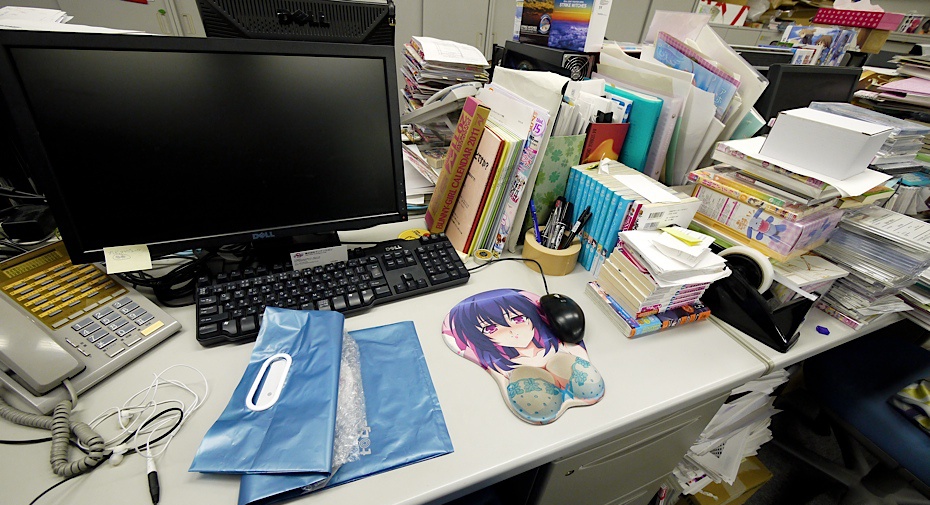
The three most important benefits of the introduction of the mousepad were higher speed, more precision, and comfort for the user. A secondary benefit was keeping the desk or table surface from being scratched and worn by continuous hand and mouse rubbing motion. Another benefit was reduction of the collection of debris under the mouse, which resulted in reduced jitter of the pointer on the display. When optical mice, which use image sensors to detect movement, were first introduced into the market, they required special mousepads with optical patterns printed on them. Modern optical mice can function to an acceptable degree of accuracy on plain paper and other surfaces. However, some optical mouse users (especially gamers, designers, and other heavy users) may prefer a mousepad for comfort, speed and accuracy, and to prevent wear to the desk or table surface. Newer generations of mouse pads incorporate a wireless charging system into the pad, allowing a wireless mouse to be used without the need to replace or recharge batteries. A variety of mousepads exist with many different textured surfaces to fit various types of mouse technologies. 3D mousepads are a novelty item that have been described as a form of fan service, typically featuring a printed image of a character from an anime, manga, or video game series positioned such that the padded silicone gel wrist rest resembles a protruding chest or buttocks.
Did You Know?
- The first mousepad was designed in 1969 by Kelley.
- Moustrak, the first commercial manufacturer, signed licensing deals with Disney, Paramount, and LucasFilm.
- Some 3D mousepads are modeled to resemble breasts or buttocks and are known as oppai or oshiri mousepads.
From Acer's Shadow to Global Standalone
BenQ traces its roots to 1984, when it emerged as a sub-brand operating within Taiwan's Acer Group. For nearly two decades it existed under that corporate umbrella before a pivotal spin-off in 2001 gave it operational independence. The full legal separation from Acer was completed by 2006, and in 2007 the company became a subsidiary of Qisda Corporation, a publicly listed entity. The brand name itself encodes a mission statement: "Bringing Enjoyment 'N' Quality to life."
BenQ's product portfolio has shifted over the years. In 2005 it ventured into mobile phones through a partnership with Germany's Siemens, marketing devices as BenQ-Siemens and later as BenQ Mobile. That chapter closed by 2015, and the company redirected its energy toward displays, peripherals, and professional equipment.
Today the Taipei-headquartered firm employs more than 1,700 people and maintains branch offices across the Asia-Pacific region, Europe, China, Latin America, and North America. Its products appear in retail channels on every inhabited continent, a testament to the global reach it has built since leaving Acer's orbit.
Display Leadership and Projector Market Share
BenQ's most recognized product lines are its monitors and projectors, and the company has steadily pushed toward higher-end, award-winning hardware. Its monitor lineup spans the MA, RD, PD, and XL series, several of which collected iF Product Design Awards in 2024 and 2025. Reviewers in 2025 singled out the PD2730S 5K Designer Monitor and the GW2486TC USB-C Home Office Monitor for pairing strong performance with accessible pricing. The MOBIUZ gaming sub-line draws praise for vivid color reproduction, minimal input lag, and sleek design.
On the projector side, BenQ claimed the largest market share for both 4K and Full HD units in the first quarter of 2022. Futuresource Consulting data placed the brand as Europe's top vendor by sales volume, with a 23.42 percent share in the 4K segment and 24.5 percent in Full HD. The company has kept expanding that range: a 1K home-cinema trio arrived in mid-2023, a console-compatible Gaming Projector X Series followed in late 2023, and a broad 2024 wave of models targeted both home and professional settings. The TK710 laser projector earned The New York Times' "best budget 4K projector" nod in 2025, while the W2720i 4K Home Cinema Projector won an iF Design Award.
ZOWIE and the Professional Esports Arena
BenQ's commitment to competitive gaming is channeled through its ZOWIE brand, which targets professional-level players with monitors, mice, and specialized peripherals. The hardware is distinguished by extreme specifications, including refresh rates reaching 600 Hz, and by a general emphasis on technical precision. A late-2024 industry survey ranked ZOWIE monitors at the top of those used by professional gamers, and ZOWIE mice were similarly recognized as among the most prevalent in pro rosters. In 2025, Eurogamer named the ZOWIE G-SR mousepad "Best for Control."
Beyond product design, BenQ invests in direct collaboration with the competitive scene. The company partners with elite organizations including Astralis, Sentinels, Talon, and BLEED, supplying equipment and broader support. It also sponsors and helps stage gaming events. Perhaps most distinctively, BenQ has established three sports science laboratories dedicated to working alongside professional gamers to refine mouse ergonomics, comfort, and performance. This research-driven approach sets ZOWIE apart from consumer-oriented gaming brands and cements BenQ's role as a technical partner to the world's top esports competitors.
Lighting Pioneers and the Education Push
BenQ has also made a mark in an area few display companies initially considered: ambient and task lighting. In 2017 the company introduced the ScreenBar series, which is recognized as the first monitor light bar on the market. That product line has since evolved into the award-winning ScreenBar Halo 2, and the broader lighting portfolio now includes the MindDuo Max Floor Lamp, designed for independent reading and workspace illumination. These products extend BenQ's design philosophy beyond the screen itself into the surrounding environment.
In the business and education sectors, BenQ offers digital signage and interactive displays, several of which have earned design awards. In 2023 the company launched a dedicated subbrand, BenQ Education, complete with a refreshed logo, color palette, and website to showcase its classroom-focused interactive displays. At the BETT show in the United Kingdom, BenQ unveiled the first education interactive displays to ship with official Google Mobile Services, signaling a deeper commitment to the learning market. Together with its wireless presentation and remote-work product lines, these offerings round out a portfolio that reaches well beyond the traditional monitor-and-projector pairing.
Gallery

Frequently Asked Questions
What is a mousepad?
A mousepad is a purpose-built surface designed to sit underneath a computer mouse, giving it a uniform area to glide across. It exists to make cursor tracking smoother and more precise than sliding the device directly on a desk.
Who came up with the first mousepad?
The earliest dedicated mousepad design is credited to Kelley in 1969, though the broader concept traces back to Douglas Engelbart's 1967 demonstration where Matt P. Brown's Herman Miller console included a recessed area for the mouse. The first company to sell them commercially was Moustrak, started by Bob McDermand.
What material are mousepads typically made from?
Most mousepads use a low-density foam core—often open-cell styrene, butadiene rubber, or open-cell SBR—with a fabric layer bonded to the top surface. This combination gives the pad its cushioning while keeping the top smooth enough for reliable sensor tracking.
When did the words 'mousepad' and 'mousemat' first appear in print?
The compound 'mouse pad' showed up in an InfoWorld article on August 24, 1983, making it the earliest known printed use of that phrasing. The one-word variant 'mousemat' didn't surface until October 17, 1989, in a publication called 3D.
Why bother using a mousepad when a desk works fine?
A desk surface is uneven and inconsistent, which causes jitter and imprecise cursor movement as the mouse glides over grain, scratches, or texture. A mousepad eliminates that variability, and many models add a padded wrist rest to reduce strain during long sessions.
More in Computer Mice and Monitors 1-24
Spotted an error? Know more?
Reader corrections go straight into our review queue. Suggest an edit · How this site is sourced