
IBM PS/2 Mouse
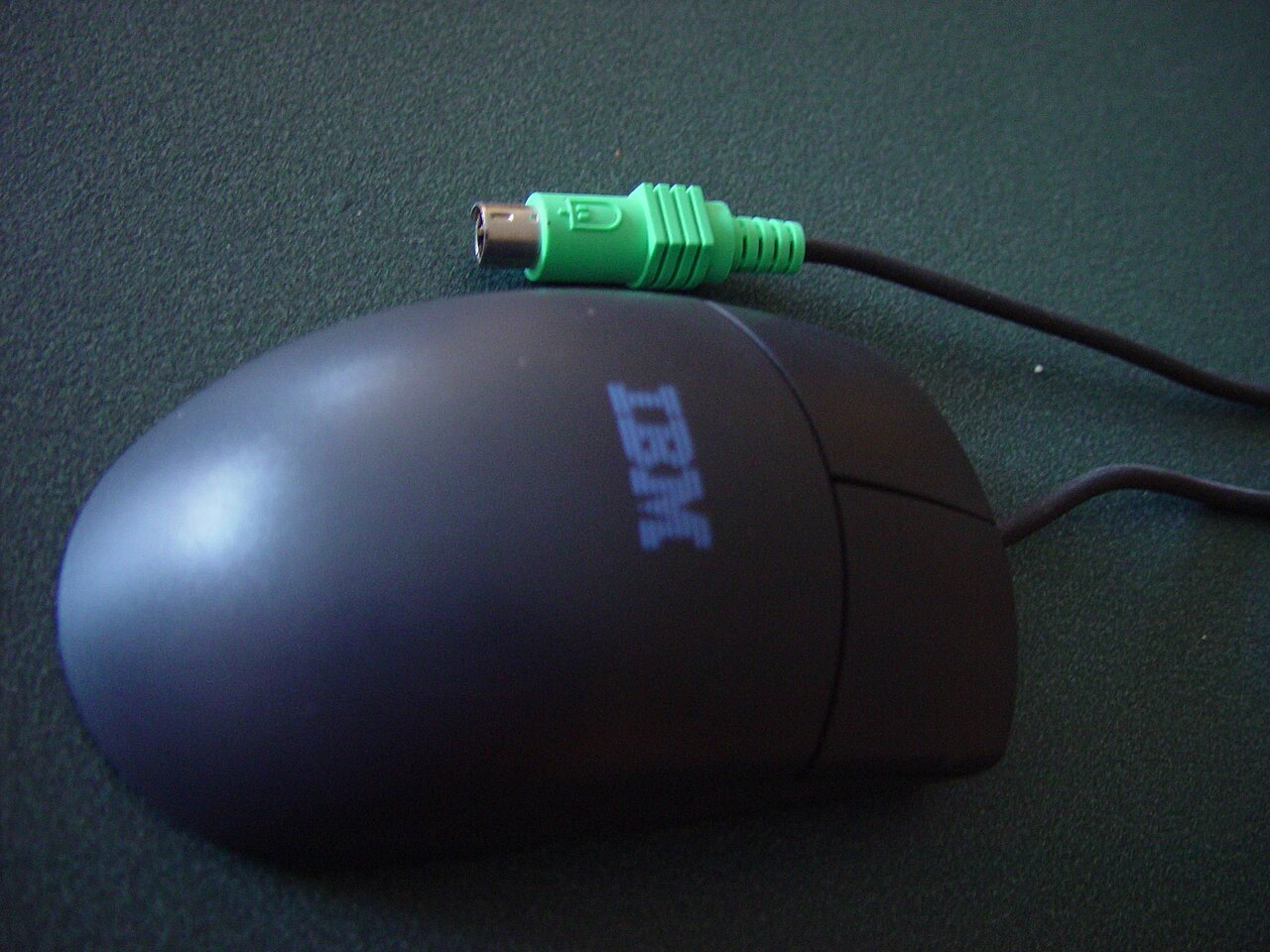
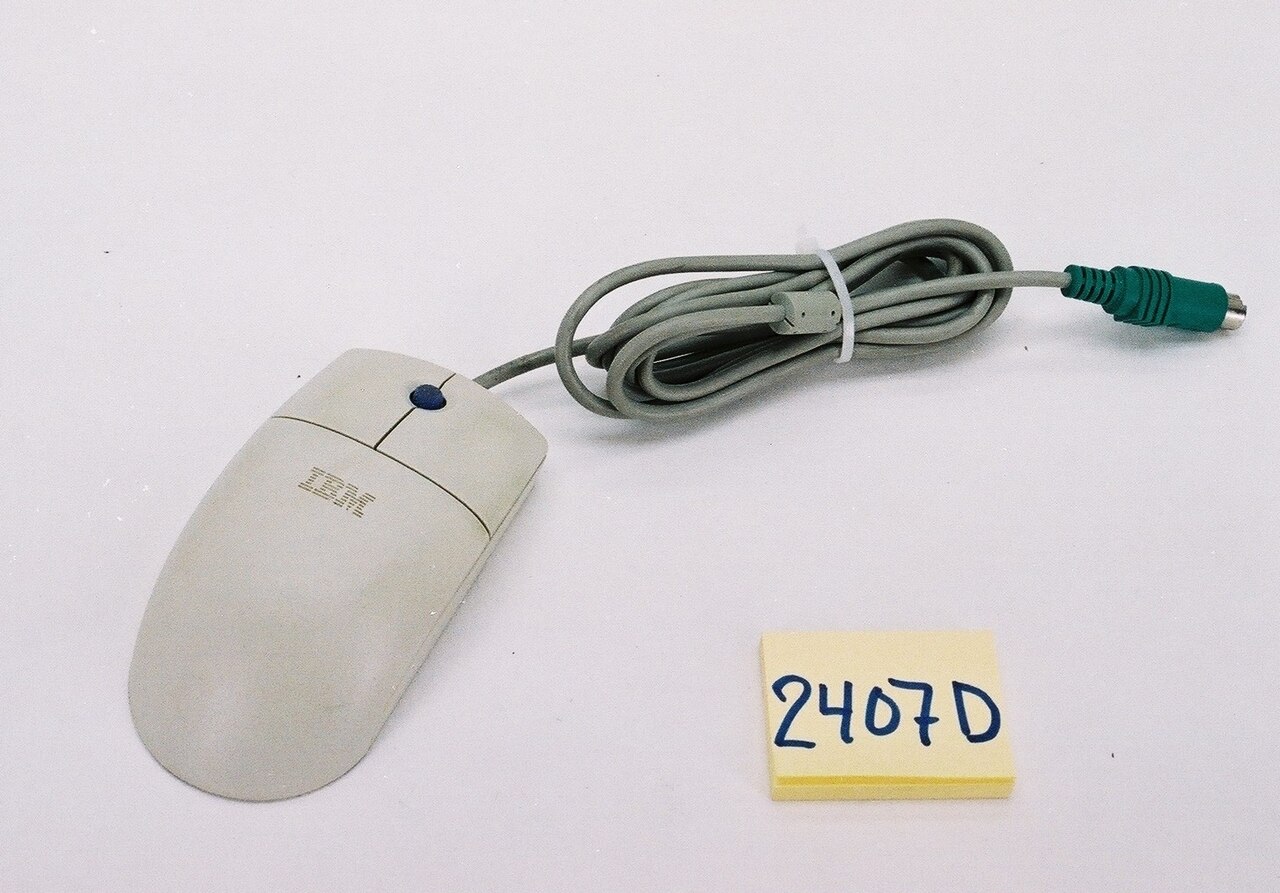
IBM's first mouse, introducing the PS/2 port interface.

くーさん · CC BY 2.0
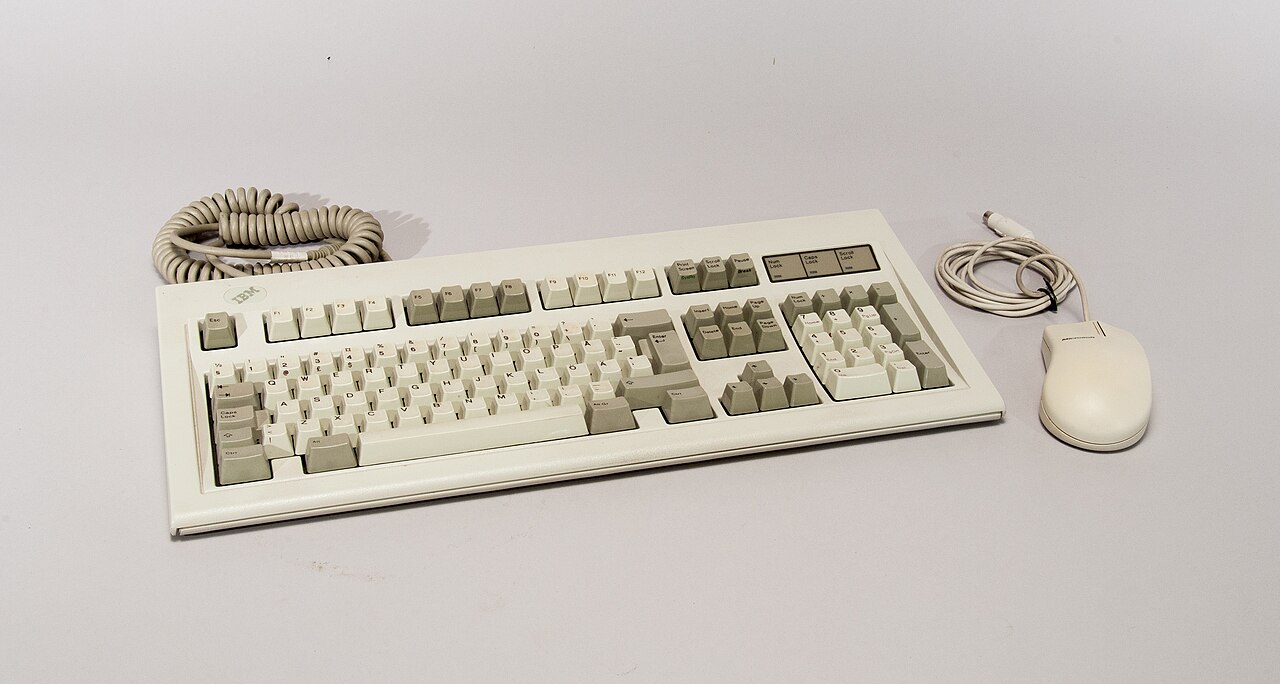
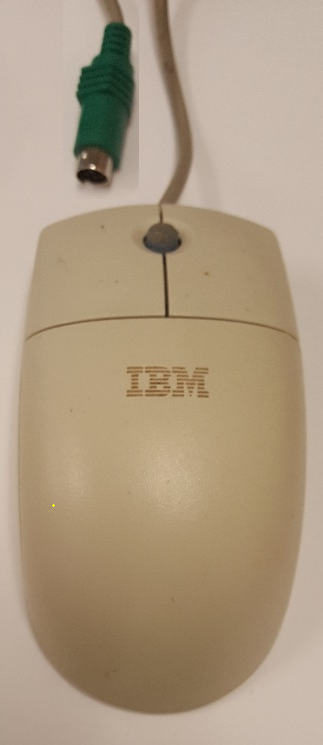
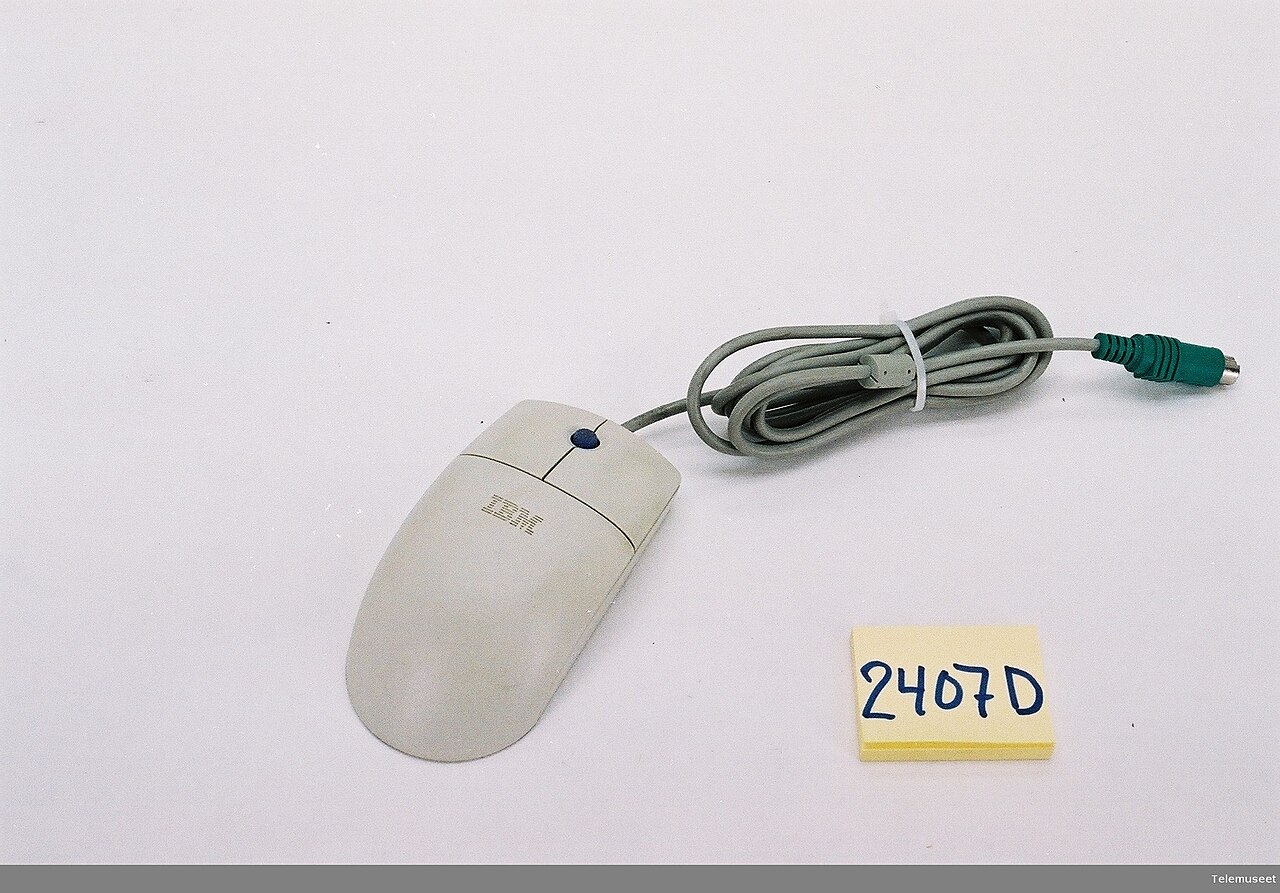
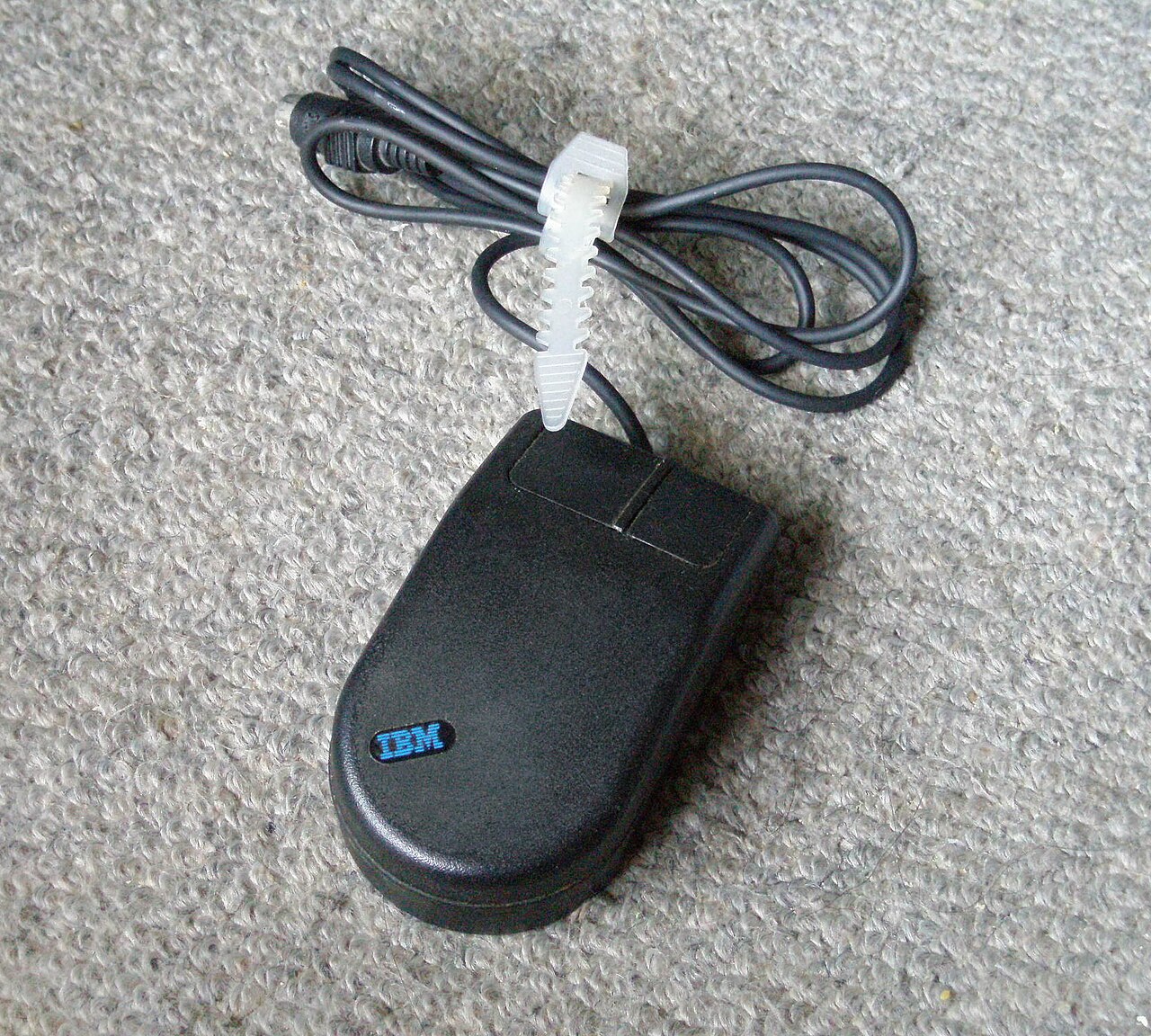
The IBM PS/2 Mouse (part number 6450350) debuted in 1987 as the company's first-ever mouse, designed for its new Personal System/2 line of computers. It also introduced the PS/2 port interface, a connector standard for both mice and keyboards that was built into every PS/2 system board. The mouse was manufactured for IBM by Japan's Alps Electric, the same company that produced the top-selling Microsoft Mouse at the time. Despite sharing a manufacturer, IBM priced its mouse at half the cost of Microsoft's. The PS/2 Mouse was electrically compatible with the Microsoft Mouse, and IBM shipped it with Microsoft's own device driver. In response, Microsoft released a version of its mouse with an adapter for the PS/2 port later in 1987. The PS/2 Mouse was a mechanical model, using a rubber ball and rollers to track movement at a sensitivity of 200 dots per inch. It measured 2.75 by 4.5 inches and featured two buttons, a tapered rounded heel for the palm, and a flat back—a shape meant to complement the PS/2 computers, contrasting with the soap-bar or squared-off designs of competitors. A 9-foot cable allowed it to reach tower-style systems placed under desks. Development was led by IBM industrial designer Pedro Alfonso and human factors engineer James R. Lewis. The mouse arrived alongside the first PS/2 models (30, 50, 60, and 80) on April 2, 1987, at a time when graphical user interfaces, desktop publishing, and CAD/CAM software were driving demand for pointing devices. Some observers saw the PS/2 Mouse as IBM's acknowledgment of Apple's Macintosh approach, which bundled a mouse with every computer; IBM, however, sold the PS/2 Mouse only as an option. Logitech's president noted that IBM's move validated Apple's GUI direction, while also crediting Microsoft's Windows operating system for convincing IBM to embrace the mouse. Both IBM and Microsoft were then developing OS/2's Presentation Manager GUI. The PS/2 Mouse sold well, capturing a 10 percent market share by 1990, trailing only Microsoft and Logitech. IBM continued selling the original model until 1992, when it released a redesigned mouse for the PS/ValuePoint. Reviews praised its engineering, build quality, and long cable, but criticized the lack of compatible drivers and sparse documentation, and found it less comfortable than the Microsoft Mouse.
Quick Facts
- Designfirm
- IBM
- Manufacturer
- Alps Electric
- Ports
- PS/2
- Introduced
- 1987-04-02
- Discontinued
- 1992-10-20
Facts from the source article.
Lore & Background
The PS/2 Mouse was developed by IBM for the PS/2 family, which succeeded the IBM Personal Computer. Its design was led by industrial designer Pedro Alfonso and human factors engineer James R. Lewis. The mouse was released alongside the inaugural PS/2 line-up (Models 30, 50, 60, and 80), all of which had PS/2 ports built into their system boards. The PS/2 Mouse competed with Microsoft's InPort and serial port mice, and was electrically compatible with the Microsoft Mouse; IBM shipped it with a copy of Microsoft's device driver. Alps Electric also manufactured the Microsoft Mouse, yet the PS/2 Mouse retailed for half the price.
The PS/2 Mouse is a mechanical mouse with a rubber ball and a base sensitivity of 200 dpi. Its distinctive shape featured a tapering rounded heel and a flat back, with two narrow buttons wrapping around the top edge. Several authors posited that IBM developed the mouse in response to the commercial success of the Macintosh, though the PS/2 had a large software base that ran without a mouse, so IBM sold it only as an option. Pierluigi Zappacosta, then president of Logitech, commented that the PS/2 Mouse vindicated Apple's GUI-driven approach and that Microsoft's Windows operating system influenced IBM's decision to embrace the mouse.
Reader's Guide
The PS/2 Mouse's primary significance lies in its introduction of the PS/2 port interface, which became the predominant standard for connecting mice to personal computers well into the 1990s until supplanted by USB. Despite sharing a manufacturer with the Microsoft Mouse, IBM sold it at half the price, helping it capture a 10 percent market share by 1990. The mouse was praised for its engineering, build quality, and long cable, but criticized for its ergonomics: reviewers noted its tapered shape did not fit the palm easily, its stiff buttons required excessive pressure, and clicking could cause the mouse to jump. By 1990, its 200 dpi sensitivity was considered low, and its design was seen as antiquated. IBM continued selling the original PS/2 Mouse until 1992, when a redesigned mouse for the PS/ValuePoint line was released, which PC Week called 'a vast improvement.' The shape and design of the PS/2 Mouse were later repurposed for the PS/2 Trackpoint, a combination mouse and trackball released in 1991.
Did You Know?
- The PS/2 Mouse was IBM's first ever computer mouse.
- It was the first mouse to use a PS/2 port interface.
- Alps Electric manufactured both the PS/2 Mouse and the Microsoft Mouse.
Design Origins and the GUI Imperative
The PS/2 Mouse emerged at a pivotal moment when graphical interfaces were reshaping how people interacted with computers. IBM's decision to create its own pointing device was driven by growing demand from desktop publishing and CAD/CAM software on the PC platform, as well as the undeniable commercial success of Apple's Macintosh, which bundled a mouse with every purchase. The design was led by Pedro Alfonso, an industrial designer at IBM since 1983 who had been central to shaping the broader PS/2 family, alongside James R. Lewis, a human factors engineer who joined IBM in 1981. Several industry observers noted that IBM's move effectively validated Apple's bet on GUI-driven computing. Pierluigi Zappacosta, then president of Logitech, observed that IBM was essentially acknowledging Apple had pointed the PC industry in the right direction. Microsoft's Windows, only two years old at the time, also played a role in convincing IBM that a mouse was no longer optional. Both companies were simultaneously developing a GUI shell called Presentation Manager for their OS/2 operating system when the mouse debuted.
Engineering, Manufacturing, and the PS/2 Port
The PS/2 Mouse was manufactured by Alps Electric in Tokyo, the same Japanese company that produced the then-best-selling Microsoft Mouse. Despite sharing a maker, IBM priced its device at half the cost of the Microsoft Mouse and designed it to be electrically compatible, even shipping a copy of Microsoft's own device driver. The mouse itself was a mechanical design featuring a rubber ball on the underside that rolled over a flat surface, translating motion through internal rollers. It measured roughly 2.75 by 4.5 by 1.375 inches, offered a base sensitivity of 200 dots per inch, and carried two buttons for left and right clicks. Its most significant technical contribution was the PS/2 port interface, a dedicated connector built into the system boards of all PS/2 models, which eliminated the need to consume an expansion slot or a serial port, a costly trade-off in early PCs. This standard eventually outlasted competitors like Microsoft's InPort and serial connections, remaining the dominant mouse interface well into the 1990s before USB displaced it. IBM included a generous nine-foot cable to reach tower systems positioned under desks.
Market Position and Industry Ripples
Released on April 2, 1987, alongside the inaugural PS/2 lineup of Models 30, 50, 60, and 80, the mouse quickly established IBM as a serious player in a market previously dominated by Microsoft and Logitech. By 1990, the device held approximately ten percent of the mouse market, trailing only those two competitors. Its commercial performance gave IBM the confidence to continue releasing successor designs through the 1990s, though it never matched the popularity of rival brands. The PS/2 port standard it championed had a wider industry impact: Microsoft itself was forced to respond, releasing an adapter module in mid-1987 that converted its InPort-equipped mouse to the PS/2 interface, making it the second manufacturer to offer a PS/2-port mouse. The standard's longevity was remarkable, remaining the primary way to connect pointing devices to PCs for over a decade. IBM continued selling the original design until 1992, when a redesigned version accompanied the PS/ValuePoint line. The mouse's success underscored a broader shift: pointing devices were transitioning from optional accessories to essential components of the computing experience.
Critical Reception and Ergonomic Controversy
Despite strong sales, the PS/2 Mouse drew mixed reviews from technology press. Mitt Jones of PC Magazine, writing in 1987, praised its engineering, build quality, and the practical length of its cable, but criticized the sparse documentation and the lack of cross-compatible drivers. He also noted it did not feel as naturally comfortable as the Microsoft Mouse. Tom Stanton, also of PC Magazine, was more pointed in his ergonomic complaints: the tapered heel did not seat easily in the palm, and the buttons wrapping over the top edge caused the mouse to jump erratically when fingers pressed them. He found the buttons too stiff and concluded that despite IBM's vast resources, the result was merely a desk accessory that matched the PS/2 aesthetically without achieving world-class design. Jim Reid of PC World, in a four-mouse roundup, echoed concerns about button resistance. The consensus among reviewers was that the mouse's distinctive shape, featuring a tapering rounded heel and a flat back, prioritized visual harmony with the PS/2 system over the tactile comfort that competitors like Microsoft and Logitech had refined.
Gallery
Frequently Asked Questions
What is the IBM PS/2 Mouse?
It is the very first mouse IBM ever produced, launched on April 2, 1987, to pair with the company's new Personal System/2 computer line. The device (part number 6450350) featured a two-button layout and 200 dpi optical tracking.
What did the IBM PS/2 Mouse introduce to the PC world?
It debuted the PS/2 port, a small connector standard that became the built-in interface for both mice and keyboards on every PS/2 system board. That same port design went on to define peripheral connectivity on desktops for years to come.
Who actually built the IBM PS/2 Mouse?
Japan's Alps Electric manufactured the device under contract for IBM. Notably, Alps was simultaneously producing the top-selling Microsoft Mouse, so both rival brands came off the same production line.
How did the IBM PS/2 Mouse compare to the Microsoft Mouse?
Despite sharing the same Japanese manufacturer, IBM priced its mouse at roughly half the cost of Microsoft's equivalent. The two were also electrically compatible, meaning a PS/2 Mouse could be plugged in and function where a Microsoft Mouse was expected.
What were the key specs of the IBM PS/2 Mouse?
The device offered 200 dots-per-inch tracking sensitivity, two buttons (left and right), and a nine-foot cable. It connected through the newly introduced PS/2 port rather than the older serial or bus interfaces common at the time.
More in Computer Mice and Monitors 1-24
Spotted an error? Know more?
Reader corrections go straight into our review queue. Suggest an edit · How this site is sourced