
Footmouse
A foot-operated computer mouse for accessibility and productivity.

A footmouse (also called a foot mouse) is a computer input device that lets users control the cursor and click buttons using their feet. It is mainly used by people with disabilities or those who have upper-back or neck issues. It is also marketed as a preventive measure for such problems and as a way to boost productivity by removing the need to switch a hand between the keyboard and mouse.
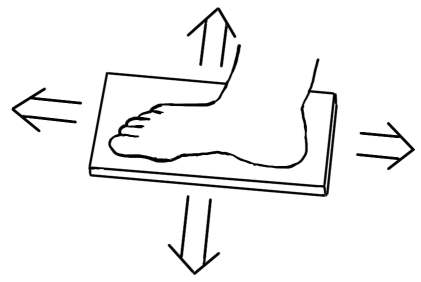
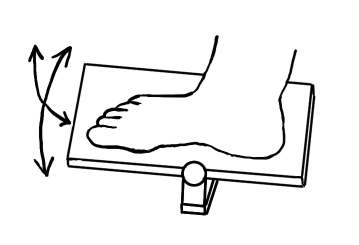
There are roughly ten types of footmouse, though not all are sold commercially. Some specialized companies design custom foot-controlled mice for disabled users. The main variation between types is whether the pedal slides flat or tilts. There is also an adapter that converts a standard hand mouse into a footmouse that slides and tilts horizontally to one side. A sliding footmouse can be a slipper with a mouse attached, or a frame where a pedal moves around. A tiny magnet or other location device can also be used on a tablet. A tilting footmouse uses one or two pedals that can tilt and turn in one or more directions. Buttons pressed by the feet are not considered footmice.
Using a footmouse is slower than a regular hand mouse, because most people have less precise control with their feet and legs. Human-computer interaction researchers note that while foot pedals are common for starting and stopping in cars, sewing machines, or speech transcription equipment, they are not typically used for navigation. If a footmouse is used with a keyboard, the cursor can be moved while typing, saving time otherwise spent moving the hand. If a person cannot use a keyboard, an on-screen virtual keyboard can be used by clicking each character. People with limited foot or leg control who cannot operate a footmouse may instead use a few switches to set the cursor in a specific direction. Using a footmouse incorrectly over a long period can cause leg muscle cramps and worsen lower back problems.
Footmice were available in the U.S. market as early as 1985, promoted by a manufacturer called Versatron.
- First available in us market
- 1985
- Early manufacturer
- Versatron
- Types count
- about ten
Lore & Background
Footmice were available in the US market as early as 1985, promoted by a manufacturer called Versatron. There are about ten types of footmouse, though not all are commercially available; some specialized companies design their own foot-controlled mice for disabled people. The main difference between types is whether the pedal slides or tilts. A sliding footmouse can be a slipper with a mouse connected, a special frame with a moving pedal, or a tiny magnet or location device on a tablet. A tilting footmouse has one or two pedals that tilt and turn in one or more directions. There also exists a mouse adapter that converts a conventional mouse into a footmouse that slides and horizontally tilts to one side. Buttons pushed by the feet are not considered footmice.
Reader's Guide
Using a footmouse is slower than a regular hand-operated mouse, as most people have less control over precise movements with their feet and legs. Human-computer interaction researchers note that while foot pedals are commonly used to control cars, sewing machines, or speech transcription equipment, those applications involve starting and stopping rather than navigating. However, when used together with a keyboard, the cursor can be moved while typing, eliminating time wasted moving the hand between keyboard and mouse. For users who cannot use a keyboard, a virtual keyboard on screen can be used by clicking each character. People with limited foot and leg control who cannot operate a footmouse may use switches to set the cursor in a certain direction. Prolonged incorrect use of a footmouse can cause leg muscle cramps and negatively affect lower back problems. The device's significance lies in providing an alternative input method for users with physical limitations, though its adoption remains niche due to speed limitations and potential ergonomic drawbacks.
Gallery
Frequently Asked Questions
What exactly is a Footmouse?
A Footmouse is a peripheral that lets you drive your cursor and trigger clicks with your feet instead of your hands. It functions as a full replacement for a traditional mouse, just operated from a different body position.
When did the Footmouse first appear in the US, and who built it?
The earliest commercially available Footmouse in the United States showed up in 1985, produced by a company called Versatron. That release kicked off what would eventually grow into roughly a dozen distinct design variants.
How many different Footmouse designs exist?
There are approximately ten distinct types of Footmouse in existence, though only a handful are actually sold to the general public. The remaining variants tend to be custom-built by specialized firms for users with specific accessibility needs.
Who benefits most from using a Footmouse?
People living with upper-body disabilities or chronic neck and shoulder strain are the primary audience. It is also pitched as a preventive tool for anyone who wants to cut down on repetitive hand-to-keyboard-and-mouse switching during long work sessions.
What's the main difference between the various Footmouse types?
The core design variation centers on how the foot interface is structured and whether the device stands alone or plugs into a larger setup. Some models are off-the-shelf products, while others are fully bespoke solutions tailored to an individual's physical requirements.
More in Computer Mice and Monitors 1-24
Spotted an error? Know more?
Reader corrections go straight into our review queue. Suggest an edit · How this site is sourced