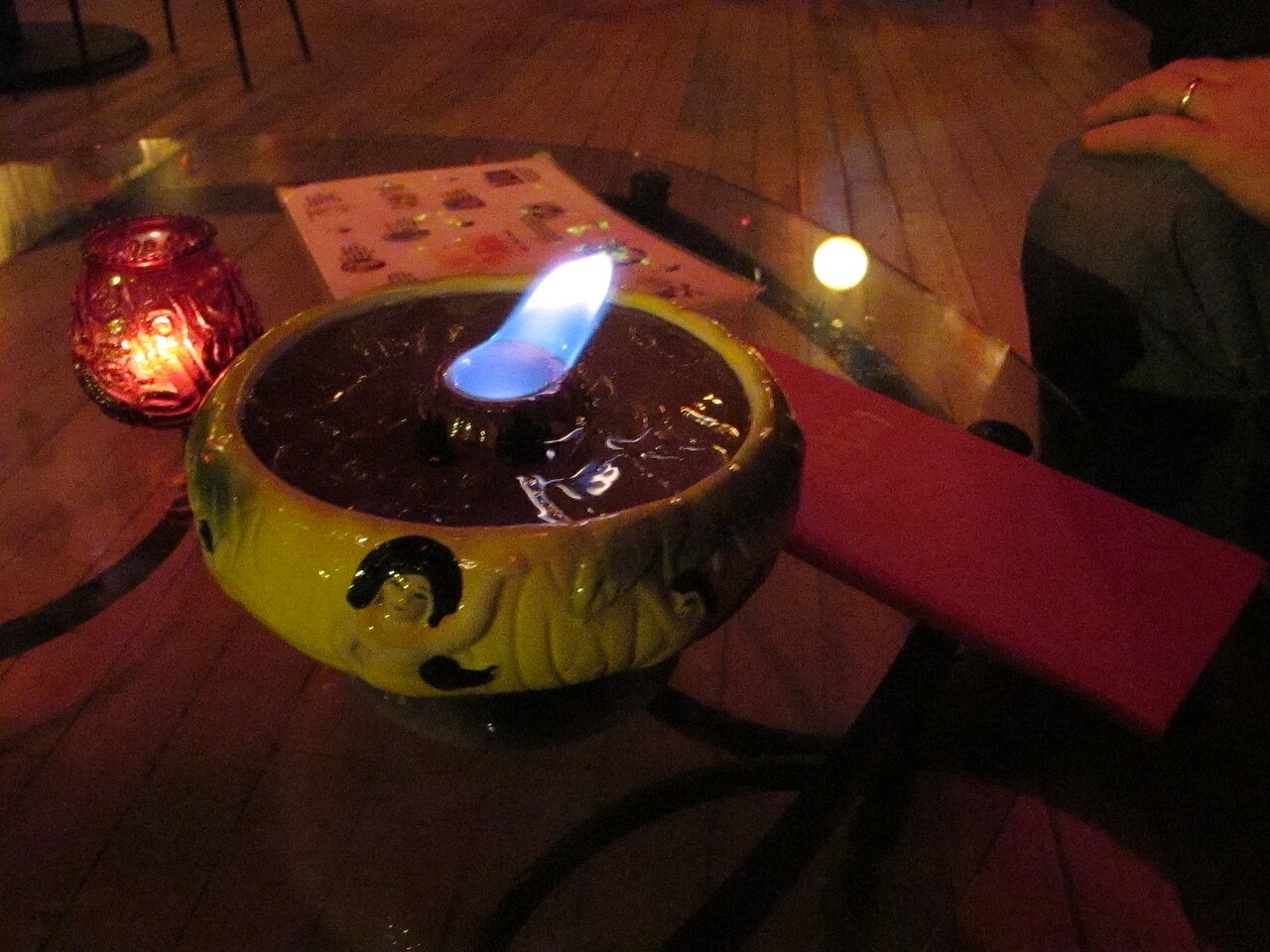
Flaming volcano
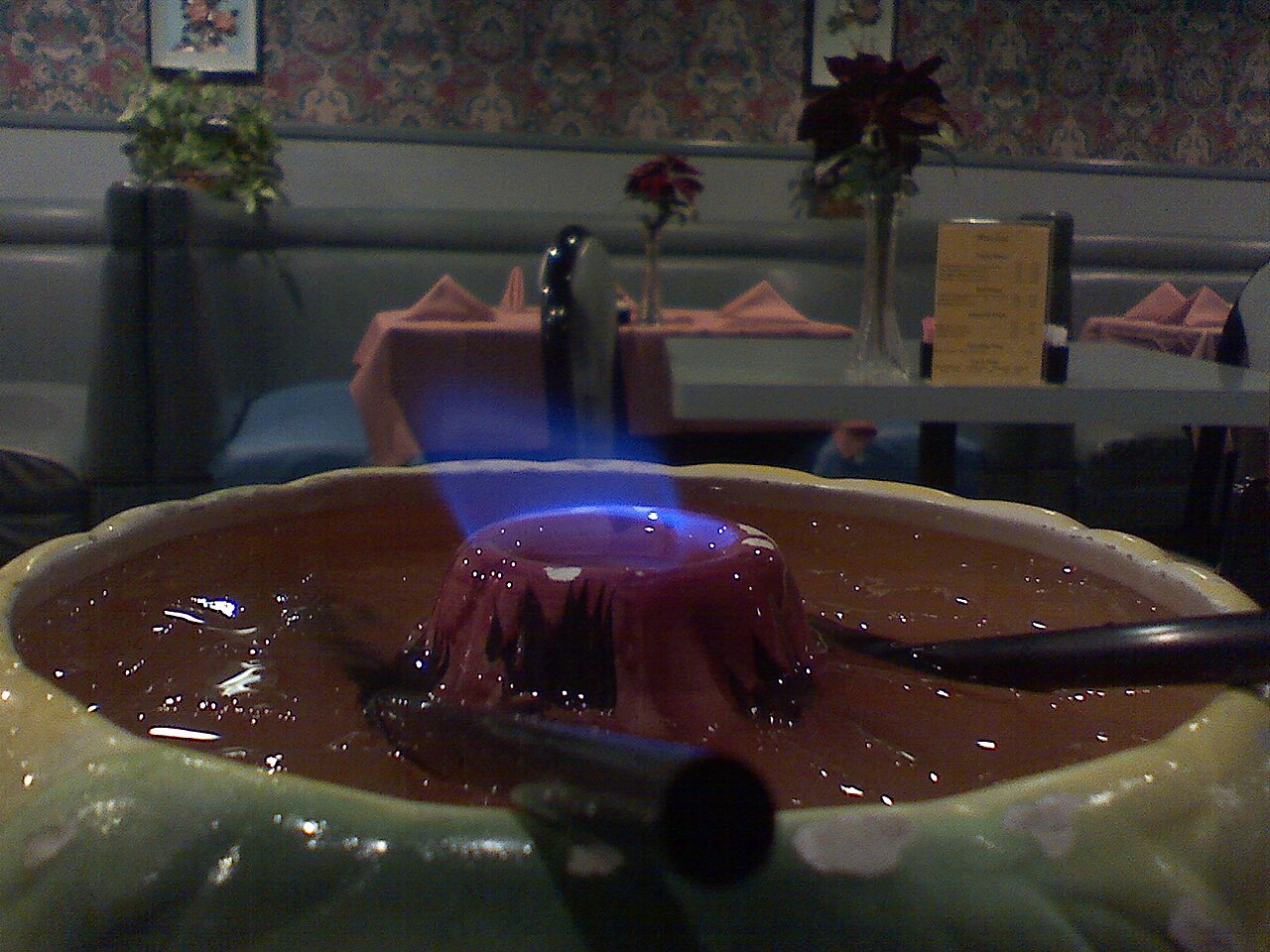
A communal flaming cocktail served in a volcano bowl.

jennalex · CC BY 2.0
The flaming volcano is a large tropical group cocktail typically made with rum, brandy, pineapple juice, orange juice, and orgeat syrup. It is usually served to a group in a special vessel known as a volcano bowl, a decorative ceramic bowl with a central hub resembling a volcanic cone, which holds a flammable liquor that is ignited when serving. The drink is often associated with tiki bars.
Quick Facts
- Base
- Rum
- Ingredients
- 1 USoz light rum / 1 oz. brandy / 1 oz. overproof rum / 4 USoz orange juice / 2 USoz lemon juice, unsweetened / 2 oz. orgeat syrup
- Served
- Frozen: blended with ice
- Garnish
- pineapple and/or orange quarter slices, maraschino cherries
- Prep
- Combine ingredients except overproof rum with 2 scoops of crushed ice in a blender. Pour, and place small amount of overproof rum into volcano and carefully light.
- Drinkware
- Special: volcano bowl
Facts from the source article.
Lore & Background
The communal flaming volcano drink is said to have been started in Hawaii in the 1950s or 1960s as a cross between flammable one-person ice formed 'volcano cocktails' and larger communal bowl cocktails. Jeff Berry in Beachbum Berry Remixed cites Don the Beachcomber as an early example of serving the larger flaming bowl, though the specific location is not identified as St. Paul, Minnesota. He also lists a Lei Lani Volcano variation from the Polyneisan Village Resort (Walt Disney World) from the 1970s. Some claim it originated from or was popular in Chile during the times of Augusto Pinochet, but credible sources for that origin are non-existent.
Reader's Guide
The flaming volcano is significant as a centerpiece of tiki bar culture, emphasizing presentation over a strict recipe. Its preparation often involves blending ingredients with ice, and variations may include lime juice, grapefruit juice, maple syrup, guava nectar, or coconut rum. The cocktail was rebranded as 'the mystery drink' at tiki bars such as the Kahiki and the Mai Kai. Early ceramic bowls were made by Orchids of Hawaii and Bamboo of China, with newer designs by artists like Shag. A version called the Warp Core Breach was served at Star Trek: The Experience in Las Vegas, using dry ice for a 'coolant leak' effect. In popular culture, the members of The B-52's decided to form the band after sharing a flaming volcano at a Chinese restaurant in Athens, Georgia in November 1976.
The Volcano Bowl and the Art of Presentation
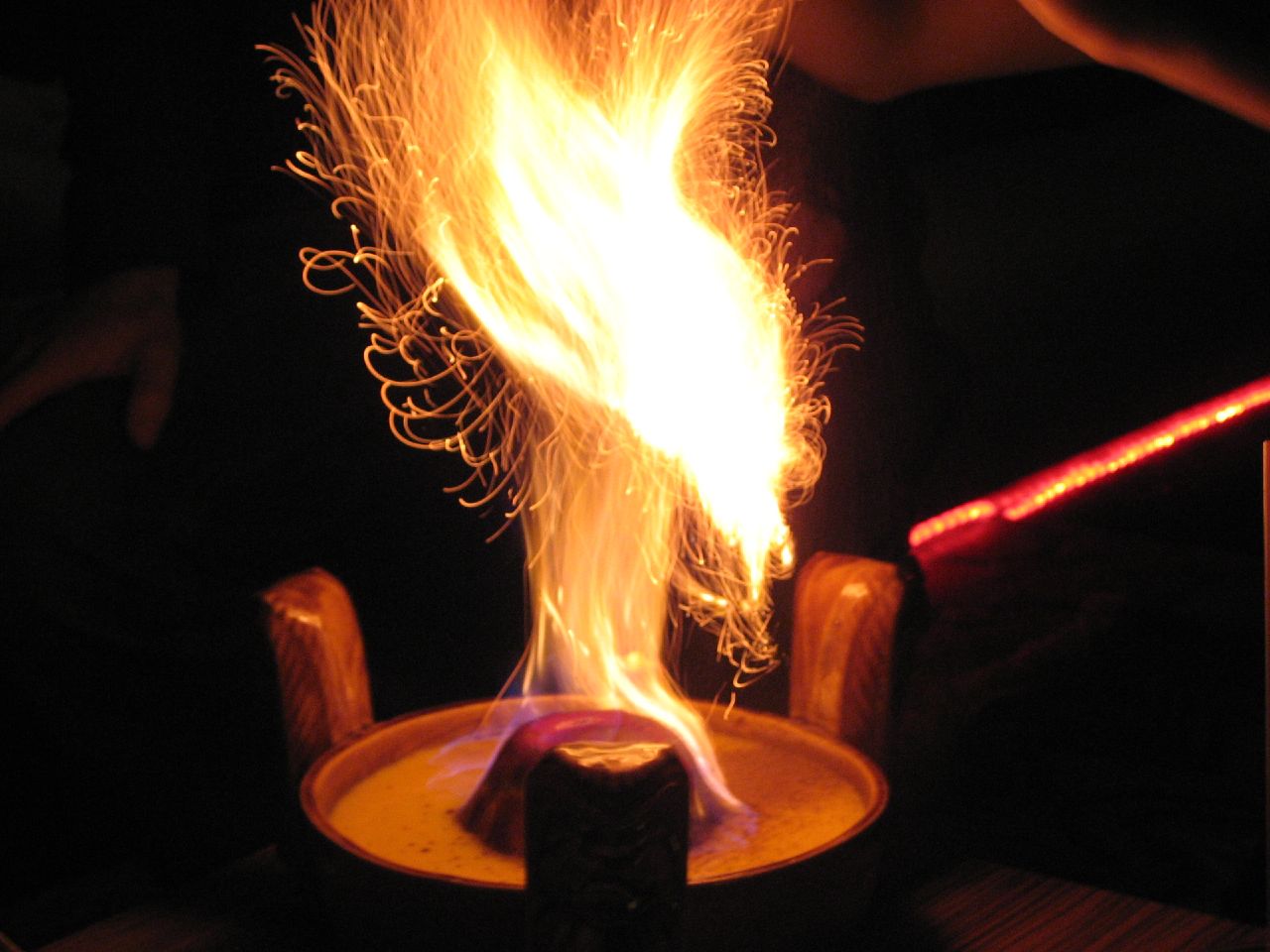
The flaming volcano is as much a theatrical prop as it is a drink. At its heart sits a decorative ceramic vessel known as the volcano bowl, typically holding around 32 US fluid ounces (950 ml) of mixed cocktail. The bowl's defining feature is a rising central hub shaped like a volcanic cone, complete with a small crater reservoir at its peak. That crater is partially filled with rum or another flammable spirit and then carefully ignited at the table, producing a steady blue flame that gives the whole arrangement a mild volcanic glow. In the twenty-first century, the emphasis has shifted toward spectacle rather than strict recipe adherence, meaning the visual drama of the glowing cone often matters more than the exact liquid blend beneath it. The drink is almost always a communal affair, poured for a group of two or more people who sip through a set of very long straws designed to keep everyone at a safe, comfortable distance from the open flame. In some circles, the same vessel is affectionately called a scorpion bowl, a nod to its fiery, spiky silhouette.
Hawaiian Roots and the Tiki Tradition
The communal flaming volcano is generally traced back to Hawaii in the 1950s or 1960s, where it emerged as a hybrid between smaller, single-serving flammable volcano cocktails served over ice and the larger shared bowl drinks already popular in tiki culture. Jeff Berry, in his book Beachbum Berry Remixed, points to Don the Beachcomber's location in St. Paul, Minnesota, as an early documented example of the larger flaming bowl being served to groups. He also references a specific variation called the Lei Lani Volcano, which appeared at the Polyneisan Village Resort at Walt Disney World during the 1970s. The drink has remained firmly anchored in the tiki-bar world, rarely straying beyond that setting. It also carries strong lineage from its predecessor, the scorpion bowl, which shared the same communal, flame-topped presentation philosophy. A persistent but unsubstantiated claim links the drink's origin to Chile during the era of Augusto Pinochet; however, no credible sources support a genuine Chilean provenance, and the Hawaiian-tiki narrative remains the most well-documented account.
Blending, Rebranding, and Creative Twists
Preparation of the flaming volcano typically involves blending the core ingredients—rum, brandy, pineapple juice, orange juice, and orgeat syrup—with ice to create a smooth, pourable mixture. Some bartenders elevate the presentation further by adding dry ice, which generates a billowing fog effect that drifts over the bowl's rim. While rum and brandy form the most common spirit pairing, recipes have expanded to include vodka, gin, lime juice, grapefruit juice, maple syrup, guava nectar, and coconut rum, reflecting the drink's loose, presentation-first philosophy. In certain tiki establishments such as the Kahiki and the Mai Kai, the cocktail was rebranded as the mystery drink, inviting patrons to discover its contents without a label. The ceramic bowls themselves have evolved: early production pieces came from Orchids of Hawaii and Bamboo of China, while more recent designs have been crafted by artists like Shag. Perhaps the most inventive offshoot appeared at Star Trek: The Experience in Las Vegas, where a custom version called the Warp Core Breach combined rum, Razzmatazz raspberry liqueur, and fruit juices, with dry ice simulating a coolant leak from the glowing cone.
A Cocktail That Sparked a Band
Few drinks can claim to have directly inspired the formation of a musical act, yet the flaming volcano holds that distinction. According to Mats Sexton's book The B-52's Universe, the future members of the band The B-52's gathered at a Chinese restaurant in Athens, Georgia, in November 1976. Short on money, the group chose to share a single flaming volcano cocktail rather than order individual meals. That shared, flame-lit experience over the communal bowl became the catalyst for them deciding to form a band together. The story underscores what makes the drink culturally distinctive: it is not merely a beverage but a social ritual designed for small groups huddled around a glowing ceramic cone, sipping through long straws while the blue flame flickers at the center. In that sense, the flaming volcano has always been less about the specific ratio of rum to brandy and more about the shared, slightly theatrical moment it creates—a moment that, in one memorable November evening in Athens, was enough to change the trajectory of a music career.
Gallery
Frequently Asked Questions
What is a Flaming Volcano cocktail?
It's a large, shareable tropical drink designed for a whole table to enjoy at once. The theatrical hook is that a flammable spirit gets lit on fire inside the serving vessel, turning the pour into a little show.
What's actually in a Flaming Volcano?
The mix typically blends rum and brandy with pineapple juice, orange juice, and a touch of orgeat syrup for that almond-nutty note. A separate measure of high-proof liquor sits in the bowl's central cone and is the part that catches fire.
How is a Flaming Volcano served and shared?
It's poured into a decorative ceramic vessel called a volcano bowl, which has a raised peak in the middle that mimics a mountain. Multiple guests drink from it at the same time using long straws, making it a true communal experience rather than an individual glass.
Where and when did the Flaming Volcano come from?
The drink is most often traced to Hawaii in the 1950s or 1960s, though no single creator is universally credited. It quickly became a signature sight at tiki bars and tropical-themed lounges of that era.
How is a Flaming Volcano different from a standard tiki drink like a Mai Tai?
The key difference is the format: instead of one person getting a single glass, the whole group shares one big ceramic bowl with a flaming centerpiece. That communal, spectacle-driven presentation is what separates it from the typical poured-and-served tiki cocktail.
More in Cocktails with rum 1-24
Spotted an error? Know more?
Reader corrections go straight into our review queue. Suggest an edit · How this site is sourced