Caipirinha
Brazilian cocktail made with cachaça, sugar, lime, and ice.

Dtarazona · CC BY-SA 3.0
The caipirinha is a Brazilian cocktail made with cachaça, sugar, lime, and ice. Originating in the state of São Paulo, it is one of the most famous components of Brazilian cuisine and the most popular national recipe worldwide.
Quick Facts
- Origin
- São Paulo, Brazil
- Ingredients
- 60 mL cachaça / 1 persian lime cut into small wedges / 4 white cane sugar
- Served
- On the rocks: poured over ice
- Garnish
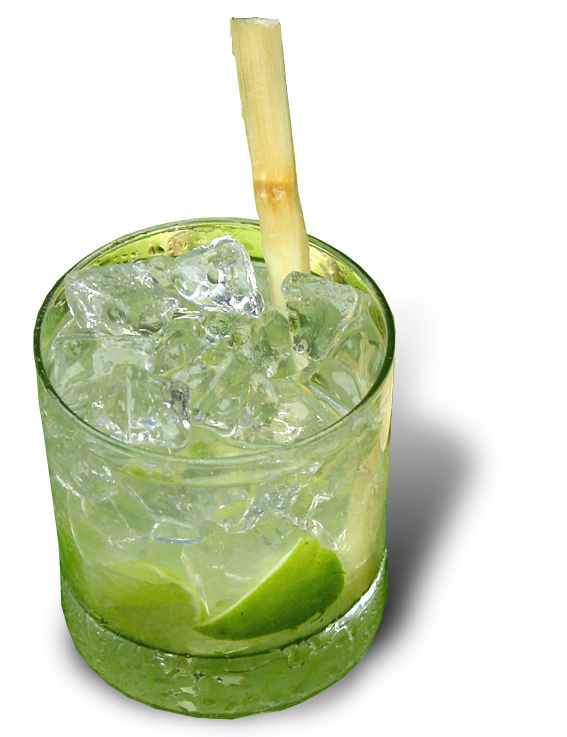
- sugarcane, lime (ingredient)
- Prep
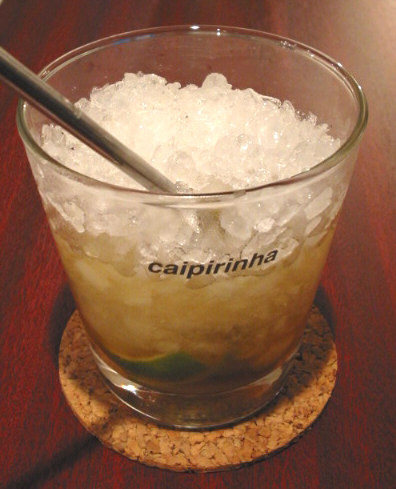
- Place lime and sugar into a double old fashioned glass and muddle gently. Fill the glass with cracked ice and add Cachaça. Stir gently to involve ingredients.
- Drinkware
- Old fashioned glass
Facts from the source article.
Lore & Background
Although the exact origin of the drink is unknown, the most widely accepted historical consensus is that the caipirinha was invented by landowning farmers in the region of Piracicaba, in the interior of the State of São Paulo, during the 19th century as a local drink for 'high standard' events and parties.
Reader's Guide
The caipirinha holds significant cultural and historical importance in Brazil. It was declared Brazilian Cultural Heritage in 2003 and considered Intangible Heritage of Rio de Janeiro in 2019, despite its origins in Piracicaba, São Paulo. The drink is part of the list of official cocktails of the International Bartenders Association (IBA) as a Contemporary Classic. Known and consumed nationally and internationally, it reached third place in 2024 according to the specialized website TasteAtlas. The caipirinha is the strongest national cocktail of Brazil and is imbibed in restaurants, bars, and many households throughout the country. Its popularity has grown outside Brazil due to the rising availability of first-rate brands of cachaça. The word caipirinha is the diminutive of Caipira, which refers to a people from the state of São Paulo.
Origins & Evolution
The caipirinha's roots trace back to the interior of São Paulo, where academic consensus places its invention around 1918. One compelling narrative links it to a folk remedy for the Spanish flu—a mixture of lemon, garlic, and honey that was later transformed when someone simply dropped the garlic and honey, added sugar to tame the lime's acidity, and finished with ice to beat the heat. Another thread connects the drink to Poncha, a Madeiran alcoholic beverage whose base, aguardente de cana, was a sugar-cane spirit that predated cachaça. When Portuguese colonists shifted sugar-cane cultivation from Madeira to Brazil for greater land availability, that ancestral spirit evolved into what we now call cachaça. Historians also credit landowning farmers around Piracicaba with crafting the drink during the 19th century for upscale gatherings, such as parties at the Barão de Serra Negra palace. Early recipes called for a small yellow-green lemon known as galeguinho, found in São Paulo backyards, before the larger Tahiti lemon became the standard.
Cultural Heritage & Global Recognition
The caipirinha's status transcends mere popularity; it carries formal cultural weight. In 2003, Brazil officially designated the cocktail as part of its Cultural Heritage, a recognition of its deep roots in national identity. Then in 2019, Rio de Janeiro declared it Intangible Heritage of the city, an interesting nod given that the drink actually originated in Piracicaba, in the state of São Paulo. On the international stage, the International Bartenders Association lists the caipirinha among its Official Cocktails, classifying it as a Contemporary Classic. The drink's global standing continues to climb: in 2024, the specialized website TasteAtlas ranked it third among the world's best cocktails. Once virtually unknown beyond Brazil's borders, the caipirinha has become one of the most recognized national recipes worldwide, a status bolstered by the growing availability of quality cachaça brands in foreign markets. It is imbibed in restaurants, bars, and countless households across Brazil, cementing its place as the country's strongest national cocktail.
The Name & Its Cultural Roots
The word caipirinha itself is a linguistic window into Brazilian identity. It is the diminutive form of caipira, a two-gender noun that refers to the people of the state of São Paulo. When the diminutive is applied, it most commonly refers to the drink, and in that context it functions as a feminine noun. The pronunciation in Brazilian Portuguese is [kajpiˈɾĩɲɐ], while English speakers typically render it as KY-pi-REEN-yə. This naming convention ties the cocktail directly to the rural, inland character of São Paulo's interior—the same region where sugarcane culture flourished and where the drink was first mixed. The affectionate diminutive suffix mirrors the casual, homey origins of the recipe: a simple combination of muddled lime, sugar, and cachaça, born in backyards and farmsteads rather than in polished bar settings. The name thus preserves a cultural memory, linking every glass poured to the caipira people and the land that produced the sugar cane at the heart of the drink.
Variations & Global Derivations
While Brazilian law and the International Bartenders Association reserve the name caipirinha strictly for the cachaça-and-lime version, the term has been stretched in everyday usage to describe any cachaça-and-fruit-juice combination—passionfruit, kiwifruit, strawberry, and more. The caipifruta variant expands this further, pairing cachaça with crushed fresh fruits such as tangerine, pineapple, mango, grapes, cajá, or cashew fruit, served over crushed ice. Beyond fruit variations, the drink has spawned a family of spirit substitutions: caipiroska (vodka, a trademark registered by Smirnoff), caipirão (Licor Beirão, a sweet Portuguese liqueur that requires no added sugar), caipiríssima (rum, trademarked by Bacardi), saquerinha (sake), caipivinho (wine), and caipinheger (Steinhäger). An Italian version swaps in Campari. In Cape Verde, the recipe is adapted with grog, a strong local rum. Even within Brazil, brown sugar sometimes replaces refined sugar, and artificial sweeteners appear in some preparations. These adaptations demonstrate the caipirinha's remarkable flexibility as a template for mixing.
Gallery
Frequently Asked Questions
Who is Caipirinha?
Caipirinha is a Brazilian cocktail built around cachaça, muddled lime, sugar, and crushed ice. It is widely recognized as Brazil's signature drink and was designated a national cultural heritage item in 2003.
What are Caipirinha's core ingredients?
The drink is made by muddling fresh lime wedges with sugar, adding cachaça, and topping it all with crushed ice. Cachaça, a sugarcane-based spirit, serves as the base and gives the cocktail its distinctive character.
Where did Caipirinha originate?
Caipirinha traces its roots to the state of São Paulo in Brazil. It grew out of rural farming traditions and eventually became the most widely recognized national recipe the country has to offer.
What is Caipirinha's official status?
The International Bartenders Association classifies Caipirinha as a Contemporary Classic, granting it official recognition in the global bartending canon. In 2003, the Brazilian government further cemented its place by designating it a national cultural heritage item.
Why is Caipirinha important in cocktail culture?
As Brazil's declared national cocktail, Caipirinha stands as one of the most popular country-specific drinks enjoyed around the world. Its simple muddle-and-pour method and bright, citrusy flavor have made it a staple in bars from São Paulo to every major city.
More in Cocktails with rum 1-24
Spotted an error? Know more?
Reader corrections go straight into our review queue. Suggest an edit · How this site is sourced