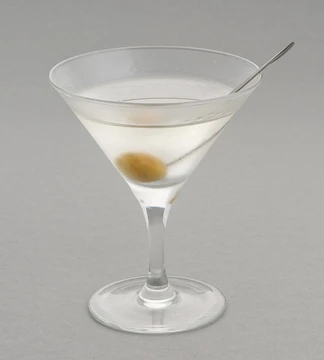
Chatham Artillery punch
A potent Savannah punch with rum, whisky, brandy, and Champagne.

Michael Korcuska · CC BY-SA 2.0
Chatham Artillery punch is a strong drink made with rum, whisky, brandy, Champagne, lemons, and sugar. It takes its name from a Savannah military unit and is especially famous in Savannah, Georgia, which lies in Chatham County. No one knows who created the original recipe or when.
Several stories try to explain its beginnings. One legend says George Washington was given the punch when he visited the Chatham Artillery in 1792, and he gave the regiment two cannons in return. A more believable account appeared in an 1885 Augusta Chronicle article. It claimed the punch was invented in the 1850s, when the Republican Blues came back from a drill in Macon and were greeted by Sergeant A. B. Luce and the Chatham Artillery. The drink was supposedly made by adding a quart each of brandy, whiskey, and rum, plus Champagne, lemon, and sugar, to a horse bucket full of crushed ice. According to the story, every man who drank it got drunk.
In 1870, a group of Southern journalists held a convention in Savannah and were served the punch on a riverboat. They became intoxicated and wrote about the experience, guessing what was in it. This brought the drink national attention. A tale later surfaced that President Chester Arthur was bested by the drink, but no established record supports this. Similarly, an unsubstantiated story claims Admiral George Dewey became inebriated from the punch in 1900, with a recipe later named after him.
The drink was eventually made weaker. A 1907 recipe noted, "Experience has taught the rising generation to modify the receipt of their forefathers to conform to the weaker constitutions of their progeny." After Prohibition ended in 1933, the cocktail grew popular again. One of the last variations was published by the New York Sun in 1939. These newer recipes were quite different, sometimes including scotch or gin and even leaving out Champagne. Another legend says that during Sherman’s March in the Civil War, Savannah residents gave Sherman so much of the punch that he decided not to destroy the city.
Many recipes call for Santa Cruz rum, which became more common after Prohibition, but a heavy, dark rum is probably closer to the original. Catawba wine is hard to find today and is often replaced with white wine or Champagne.
Quick Facts
- Ingredients
- Lemons, sugar, whiskey, brandy, rum, Champagne
- Served
- Chilled
- Garnish
- Grated nutmeg, cherries
Facts from the source article.
Lore & Background
One legend has it that George Washington was presented the punch when he arrived at Chatham Artillery in 1792, and he gave the regiment two cannons. A more plausible story was reported in an 1885 article for the Augusta Chronicle, stating that the punch was created in the 1850s when the Republican Blues returned from a drill in Macon and were welcomed back by Sergeant A. B. Luce and the Chatham Artillery. The punch was said to have been created by adding a quart of brandy, whiskey, and rum along with Champagne, lemon, and sugar to a horse bucket containing crushed ice; every man who drank it was inebriated.
In 1870, a group of Southern journalists held a convention in Savannah and were served the punch on a riverboat cruise. They became inebriated and reported their encounter with the drink, propelling it to national fame. A later tale claimed President Chester Arthur was overcome by it, but no established record confirms this. An unsubstantiated story also suggests Admiral George Dewey got drunk from the punch in 1900, with a recipe named after him.
Reader's Guide
Chatham Artillery punch is significant as a regional American cocktail with a storied history tied to Savannah, Georgia, and its military heritage. The drink gained national attention after a 1870 convention of Southern journalists became inebriated on a riverboat cruise and wrote about it. Its potency was legendary, besting figures such as President Chester Arthur and Admiral George Dewey. The drink was later revised to become less potent; a 1907 recipe noted that 'experience has taught the rising generation to modify the receipt of their forefathers to conform to the weaker constitutions of their progeny.' After Prohibition ended in the late 1930s, the cocktail grew in popularity again, with new recipes sometimes including liquors like scotch and gin and even excluding Champagne. The drink's legacy continues in modern variations, such as Champagne punch, and it was referenced in the 1997 film adaptation of Midnight in the Garden of Good and Evil. Its preparation traditionally involves muddling lemon peels with sugar, adding lemon juice, and combining with crushed ice and spirits.
Did You Know?
- One legend claims George Washington was given the punch in 1792 and responded by giving the Chatham Artillery two cannons.
- An 1885 article reported the punch was created in the 1850s by adding spirits to a horse bucket of crushed ice.
- President Chester Arthur was said to have been bested by the drink.
Origins Wrapped in Legend
The true creator and original recipe of Chatham Artillery punch remain shrouded in mystery, giving the drink an air of romantic uncertainty that has only deepened its allure. One popular tale claims that George Washington himself was served the punch upon visiting the Chatham Artillery regiment in 1792, and in gratitude presented the unit with two cannons. A more grounded account surfaced in an 1885 Augusta Chronicle article, placing the drink's birth in the 1850s. According to that report, the Republican Blues came home from a drill in Macon and were greeted by Sergeant A. B. Luce and fellow Chatham Artillery members with a bucket of crushed ice into which a quart each of brandy, whiskey, and rum was poured, followed by Champagne, lemon, and sugar. The result was so potent that every man who tasted it was left thoroughly inebriated. A separate Civil War legend holds that Savannah residents fed General Sherman so much of the punch during his march that he chose to spare the city from destruction.
A Drink That Felled the Powerful
The punch's reputation as a formidable adversary spread far beyond Savannah's borders, largely thanks to a string of high-profile encounters that made national headlines. In 1870, a gathering of Southern journalists met in Savannah and were treated to the punch aboard a riverboat cruise. The group became so thoroughly inebriated that they wrote up their disoriented experience for publication, even attempting to guess the drink's true contents. That coverage propelled Chatham Artillery punch into the national consciousness. The list of distinguished victims grew over the decades: President Chester Arthur was reportedly bested by a serving, and in 1900 Admiral George Dewey, the celebrated hero of the 1898 Battle of Manila Bay, was similarly overcome after imbibing the mixture. His encounter was significant enough that a subsequent recipe was named in his honor. These stories reinforced the punch's identity as a drink of genuine danger, one that could humble even the most prominent figures of the era and cemented its place in American cocktail lore as something more than mere refreshment.
A Recipe That Learned to Temper Itself
Over the decades, Chatham Artillery punch underwent a slow but noticeable softening, a concession to changing palates and weaker constitutions. A 1907 recipe captured the shift in characteristically wry language, noting that experience had taught the rising generation to modify the receipt of their forefathers to conform to the weaker constitutions of their progeny. The drink's trajectory was further shaped by Prohibition, which effectively halted its public presence for a generation. When the ban lifted in the late 1930s, the cocktail re-emerged with renewed popularity, though the recipes had drifted considerably. A 1939 New York Sun publication offered a version that was substantially different from earlier iterations, sometimes incorporating scotch and gin and occasionally dropping Champagne altogether. Ingredient availability also drove change: Santa Cruz rum gained favor in the post-Prohibition era, though a heavy dark rum is considered closer to what the original likely used, and the once-common Catawba wine, now hard to source, is typically replaced with a white wine or Champagne.
From Muddled Peels to Modern Twists
Preparing Chatham Artillery punch begins with a tactile, almost ritualistic step: lemon peels are muddled with sugar to draw out their fragrant oils, then combined with lemon juice and strained before being added to a large bowl of crushed ice. Into that icy base go the three spirits—brandy, rum, and whiskey—followed by Champagne. While not considered traditional, candied cherries and their jar juice are frequently stirred in, and modern recipes sometimes introduce gin as an additional layer. The drink has also spawned gentler offshoots for social occasions. Champagne punch, a less potent cousin, blends Curaçao or Cointreau, a few dashes of bitters, fresh strawberries, lemon, simple syrup, brandy, and Champagne, making it a favorite at wedding receptions and Christmas parties. The punch's spirit lives on in similar regional drinks like regent's punch along the East Coast and Fish house punch in the Northeast. In the 1997 film adaptation of Midnight in the Garden of Good and Evil, the drink is captured in a single evocative line: three parts fruit, seven parts liquor, whatever's available on both counts.
Gallery
Frequently Asked Questions
What is Chatham Artillery punch?
It is a high-proof alcoholic punch that originated in Savannah, Georgia, built on a base of rum combined with whisky, brandy, Champagne, lemon, and sugar. It is one of the most well-known multi-spirit punches in the American South.
Who invented Chatham Artillery punch?
No definitive creator or exact date of invention has ever been confirmed. A popular legend links the drink to George Washington's 1792 visit to the local artillery regiment, but the earliest documented reference actually surfaced in an 1885 Augusta Chronicle article suggesting it was first mixed in the 1850s.
Why is the cocktail called Chatham Artillery?
The name is borrowed directly from the Chatham Artillery, a military unit stationed in Savannah, a city that sits within Chatham County. Over time the drink became so tightly linked to that regiment and the city that the unit's name stuck as the cocktail's title.
What sets Chatham Artillery punch apart from other rum punches?
Instead of centering on a single spirit, it layers rum together with whisky, brandy, and Champagne for a distinctly complex, high-alcohol profile. Lemon and sugar then balance the multiple-spirit base, giving it a punchier character than a straightforward single-rum mix.
Is there a famous origin story tied to Chatham Artillery punch?
Local lore holds that George Washington was served the punch during his 1792 visit to the Chatham Artillery and rewarded the regiment with two cannons in return. Most historians treat that tale as apocryphal, yet it remains the most frequently cited explanation for the drink's beginnings.
More in Cocktails with rum 1-24
Spotted an error? Know more?
Reader corrections go straight into our review queue. Suggest an edit · How this site is sourced