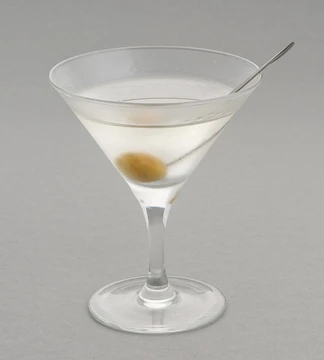
Fish house punch
A potent rum punch from Philadelphia's historic fish house.

ill Charles Keene · Public domain
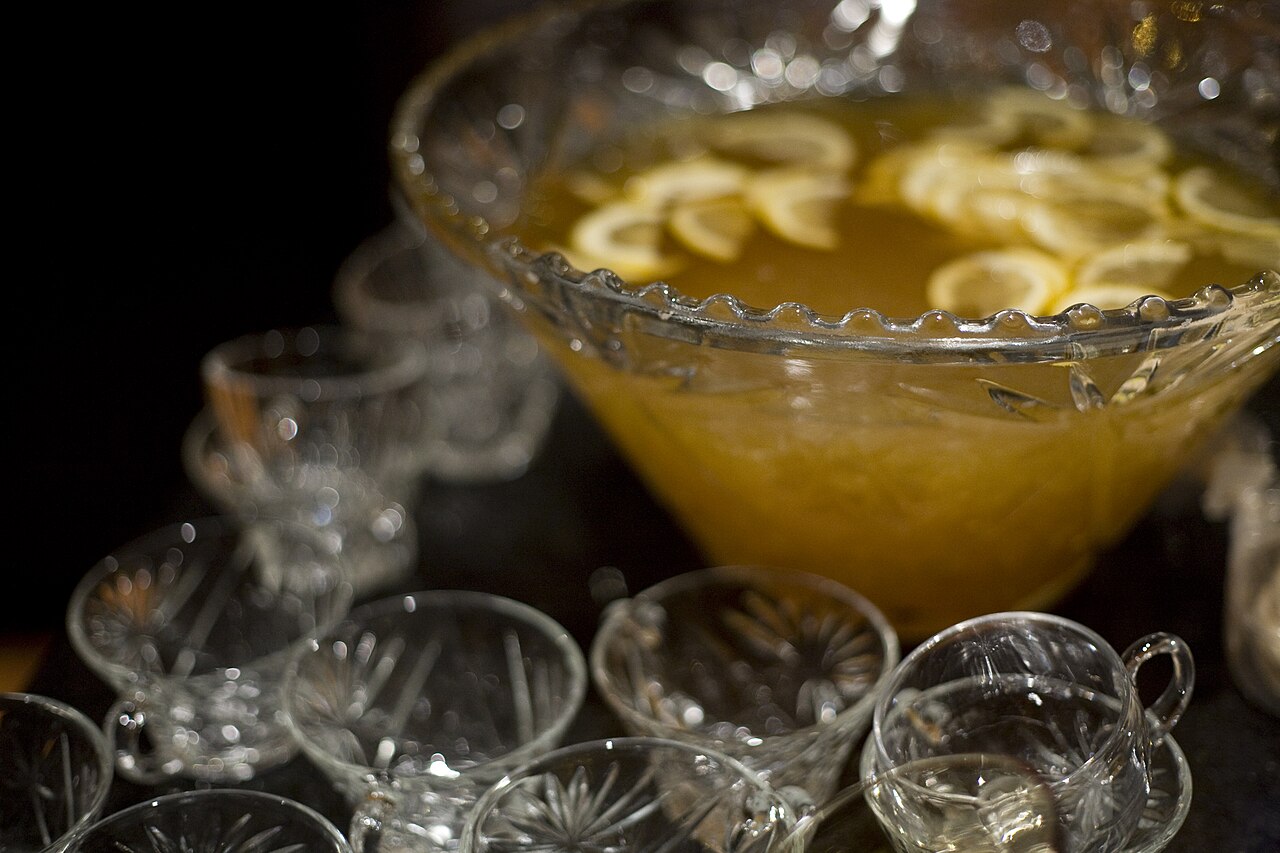
Fish house punch is a potent blend of rum, cognac, and peach brandy, traditionally served over a single large block of ice in a punch bowl and finished with lemon slices. Its origins are tied to Philadelphia’s State in Schuylkill—a fishing club nicknamed the “fish house”—where it is believed to have been first made around the early 18th century. The earliest known mention of a related drink comes from a 1744 note by the secretary of an embassy of Virginia Commissioners, who recorded being served a bowl of lemon punch large enough to “Swimmed half a dozen of young Geese” while meeting local figures on the Schuylkill River; however, the note does not explicitly name the drink “fish house punch.” George Washington, after drinking fish house punch at the State in Schuylkill, is popularly said to have been unable to write in his diary for three days, though this anecdote is not a verified historical fact from his diaries; he had earlier made thirteen toasts—one for each state—at a victory celebration at New York’s Fraunces Tavern. The club’s punch bowl was also used as a baptismal font for members’ infants, with one observer noting its ample space could “admit of total immersion.” The fish house itself is a fishing and social club, historically focused on fishing and dining, not specifically cigars and whiskey; trips to Canada’s Restigouche River are not a documented part of its early history. Another account claims the punch was created in 1848 by Philadelphia’s Shippen Willing to mark the first time women were allowed into the club for its annual Christmas party, intended as “something to please the ladies’ palate but get them livelier than is their usual wont.” Because the drink is strong, it is often diluted with cold lemonade, cold black tea (then called tea punch), or seltzer water after that became available in the 1800s. If a punch bowl is too small for a large ice block, the punch can be served in a pitcher over ice cubes.
- First concocted
- Early 18th century (earliest known mention 1744)
Lore & Background
The earliest possible record of a drink related to fish house punch comes from a 1744 note by the secretary of an embassy of Virginia Commissioners. Meeting local notables at the Schuylkill River in Philadelphia, he described being served 'a Bowl of fine Lemon Punch big enough to have Swimmed half a dozen of young Geese.' The note does not explicitly name the drink 'fish house punch.' America's first president, George Washington, indulged in thirteen toasts during a victory celebration at New York's Fraunces Tavern, and a popular but unverified anecdote claims that after he partook of fish house punch at Philadelphia's State in Schuylkill, he couldn't bring himself to make an entry in his diary for the following three days.
Reader's Guide
Fish house punch is significant as a historic American cocktail with a disputed origin. It is held to have been first concocted in 1732 at Philadelphia's State in Schuylkill fishing club. However, another version states it was created in 1848 by Shippen Willing of Philadelphia to celebrate women being allowed into the premises for the first time, intended as 'something to please the ladies' palate but get them livelier than is their usual wont.' The punch is potent and is normally diluted with cold lemonade, cold black tea (called tea punch), or seltzer water. The State in Schuylkill's traditional punch bowl reportedly did double duty as a baptismal font for citizens' infants. The drink remains a notable example of early American punch-making, associated with a gentlemen's club devoted to cigars, whiskey, and occasional fishing.
Did You Know?
- The punch is traditionally associated with Philadelphia's State in Schuylkill fishing club, though the earliest known mention of a related drink is from 1744.
- A 1744 note describes a bowl of lemon punch 'big enough to have Swimmed half a dozen of young Geese,' but does not explicitly call it fish house punch.
- George Washington is popularly said to have been unable to make a diary entry for three days after drinking fish house punch, but this anecdote is not a verified historical fact.
- The punch bowl at the State in Schuylkill reportedly also served as a baptismal font for infants.
Origins on the Schuylkill
Fish house punch traces its roots to 1732, when it was first mixed at Philadelphia's State in Schuylkill, a fishing club that earned the informal nickname "fish house." The drink quickly gained notice among the city's social elite. In 1744, a secretary attached to an embassy of Virginia Commissioners recorded what may be the earliest written mention of the punch. During a gathering with prominent Philadelphians along the Schuylkill River, he marveled at being presented with a bowl of lemon punch so enormous that, in his colorful phrasing, one could have swum half a dozen young geese in it. This single observation, preserved in the embassy's notes, offers a rare glimpse into how the drink was already regarded as a spectacle of generosity and abundance within just a dozen years of its creation. The State in Schuylkill would go on to maintain its status as one of the oldest dining clubs in the world, still holding its annual dinner and requiring every member to take a turn at cooking, a tradition stretching back to its 1732 founding.
Washington and the Punch's Reputation
Few episodes in American history illustrate the punch's legendary potency quite like the story involving George Washington. After attending a victory celebration at New York's Fraunces Tavern, where the future president offered thirteen toasts—one honoring each state—he reportedly traveled to Philadelphia's State in Schuylkill and partook of the house's signature fish house punch. The effect was so overwhelming that Washington, a man known for his meticulous record-keeping, was unable to bring himself to write a single entry in his diary for the following three days. This anecdote, while apocryphal in its precise details, has become a beloved part of the drink's mythology, underscoring how the combination of rum, cognac, and peach brandy could deliver a truly formidable kick. The punch's strength was such that it was routinely diluted before serving, a practical necessity that shaped the way the drink was enjoyed for generations. Washington's supposed three-day silence turned the punch into a symbol of both American conviviality and the genuine power of well-crafted spirits.
Composition and the Art of Serving
At its core, fish house punch is a bold triad of spirits—rum, cognac, and peach brandy—blended into a single, potent mixture. The traditional presentation calls for the punch to be poured over a large ice block set within a punch bowl, with lemon slices arranged as garnish. However, the drink's considerable strength meant that it was almost always tempered before reaching a guest's glass. Cold lemonade was the most common diluent, though some hosts preferred cold black tea, in which case the mixture earned the name "tea punch." As seltzer water became widely available during the nineteenth century, it offered yet another refreshing alternative for lightening the blend. Not every venue could accommodate the full spectacle of a massive ice block; in smaller settings, the punch was simply served from a pitcher over ordinary ice cubes. Perhaps most strikingly, the large bowls used at the State in Schuylkill served a dual purpose: one citizen noted that the vessel's ample dimensions would indeed admit of total immersion, meaning it doubled as a baptismal font for the children of local families.
A Club, a Celebration, and a Social Shift
The social world surrounding fish house punch was as layered as the drink itself. The State in Schuylkill was understood as a gentlemen's club where members gathered for cigars, whiskey, and the occasional fishing expedition, whether on the Chesapeake Bay or up the Restigouche River in Canada. Yet a competing origin story places the punch's creation a full century later, in 1848, when a Philadelphia figure named Shippen Willing is said to have devised the recipe for a very specific occasion: the annual Christmas party. The novelty that year was that women would be permitted inside the fish house for the first time. The punch, in this telling, was crafted as something to please the ladies' palate but get them livelier than is their usual wont—a lighthearted, slightly mischievous gesture designed to enliven the evening. Whether the drink truly dates to 1732 or was a later invention for a festive milestone, both narratives reflect a community that wove its social rituals, gender dynamics, and seasonal celebrations into the very recipe of its most famous libation.
Gallery

Frequently Asked Questions
What is Fish house punch?
Fish house punch is a strong colonial-era cocktail that blends rum, cognac, and peach brandy into a single drink. It is one of the oldest rum punches known, originating in early-18th-century Philadelphia.
Where does the name Fish house punch come from?
The name traces back to the State in Schuylkill, a Philadelphia fishing club that members and locals called the 'fish house.' The drink is believed to have been first mixed in that club's rooms around the early 1700s.
What are the core ingredients in Fish house punch?
The spirit base combines rum, cognac, and peach brandy, making it a notably potent three-spirit blend. Lemon slices are added as a finishing garnish to cut through the richness.
How is Fish house punch traditionally served?
Instead of individual glasses, it is poured into a large punch bowl set over a single big block of ice. The lemon slices are dropped in just before serving.
When was Fish house punch first recorded in writing?
The earliest known reference appears in a 1744 note by a secretary attached to an embassy of Virginia Commissioners, who described being served a large bowl of lemon punch at a local gathering. That entry predates most other documented colonial rum punches.
More in Cocktails with rum 1-24
Spotted an error? Know more?
Reader corrections go straight into our review queue. Suggest an edit · How this site is sourced