Peri-peri
A fiery African chili cultivar from the malagueta pepper.
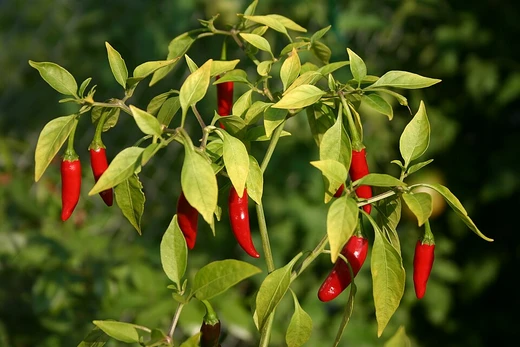
Peri-peri, also spelled piri-piri or pili pili, is a cultivar of Capsicum frutescens derived from the malagueta pepper. It was developed by Portuguese explorers in Portugal's former Southern African territories and later spread to other Portuguese domains. The pepper is notable for its use in a spicy sauce that has gained international popularity.
Quick Facts
- Genus
- Capsicum
- Species
- Capsicum frutescens
- Cultivar
- Pili pili
- Origin
- Americas
Facts from the source article.
Did You Know?
- Piri-piri plants are usually very bushy and grow 45–120 cm tall with leaves 4–7 cm long and 1.3–1.5 cm wide.
- The immature pod color is green; the mature color is bright red or purple.
- Piri-piri is cultivated commercially in Zambia, Uganda, Malawi, Zimbabwe, and Rwanda, and its cultivation is labor-intensive.
Etymology
Romanizations vary across Bantu-speaking Africa, including pili pili in the Democratic Republic of the Congo and peri peri in Malawi. The peri peri spelling is common in English due to South African usage, while piri-piri is used in Portugal and Portuguese-speaking countries like Mozambique. The Oxford Dictionary of English traces the ultimate origin to the Ronga language of southern Mozambique.
Piri-piri sauce
Piri-piri sauce is made by mixing piri-piri chilies with condiments that the Portuguese traded from their Asian and Indian territories. The first sauce may have been produced anywhere within the Portuguese Empire, and no reliable source confirms it was specifically mixed in Mozambique. The sauce is used as a seasoning or marinade and is especially popular in Portugal, Southern Africa (Angola, Namibia, Mozambique, South Africa), and the United Kingdom, where the Nando's restaurant chain helped spread it. Recipes vary by region and intended use, but key ingredients are chili and garlic with an oily or acidic base. Other common additions include salt, lemon, spirits such as whisky, citrus peel, onion, pepper, bay leaves, paprika, pimiento, basil, oregano, and tarragon.
More in Chili Pepper Varieties
Spotted an error? Know more?
Reader corrections go straight into our review queue. Suggest an edit · How this site is sourced