
Camassia quamash
A perennial herb with edible bulbs, historically vital to Indigenous peoples.

William & Wilma Follette @ USDA-NRCS PLANTS Database / USDA NRCS. 1992. West · Public domain
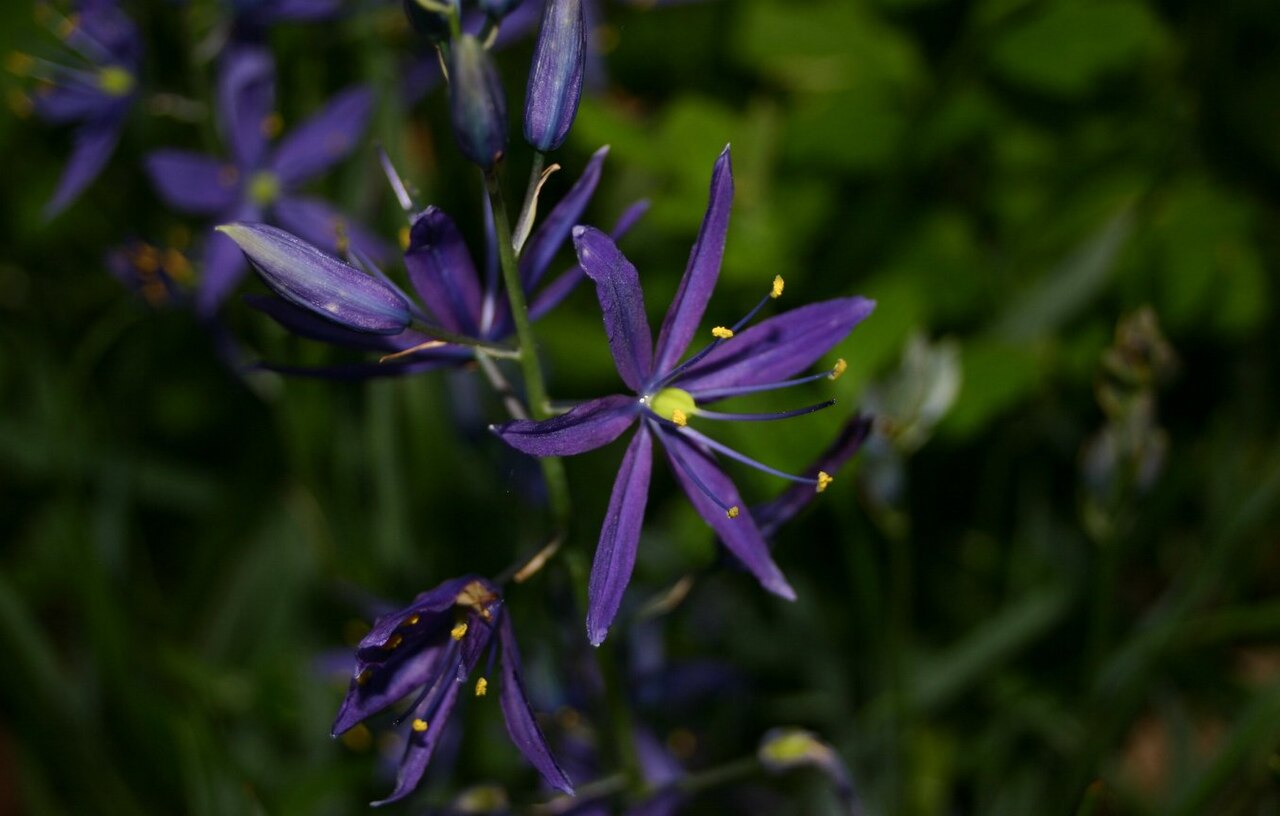
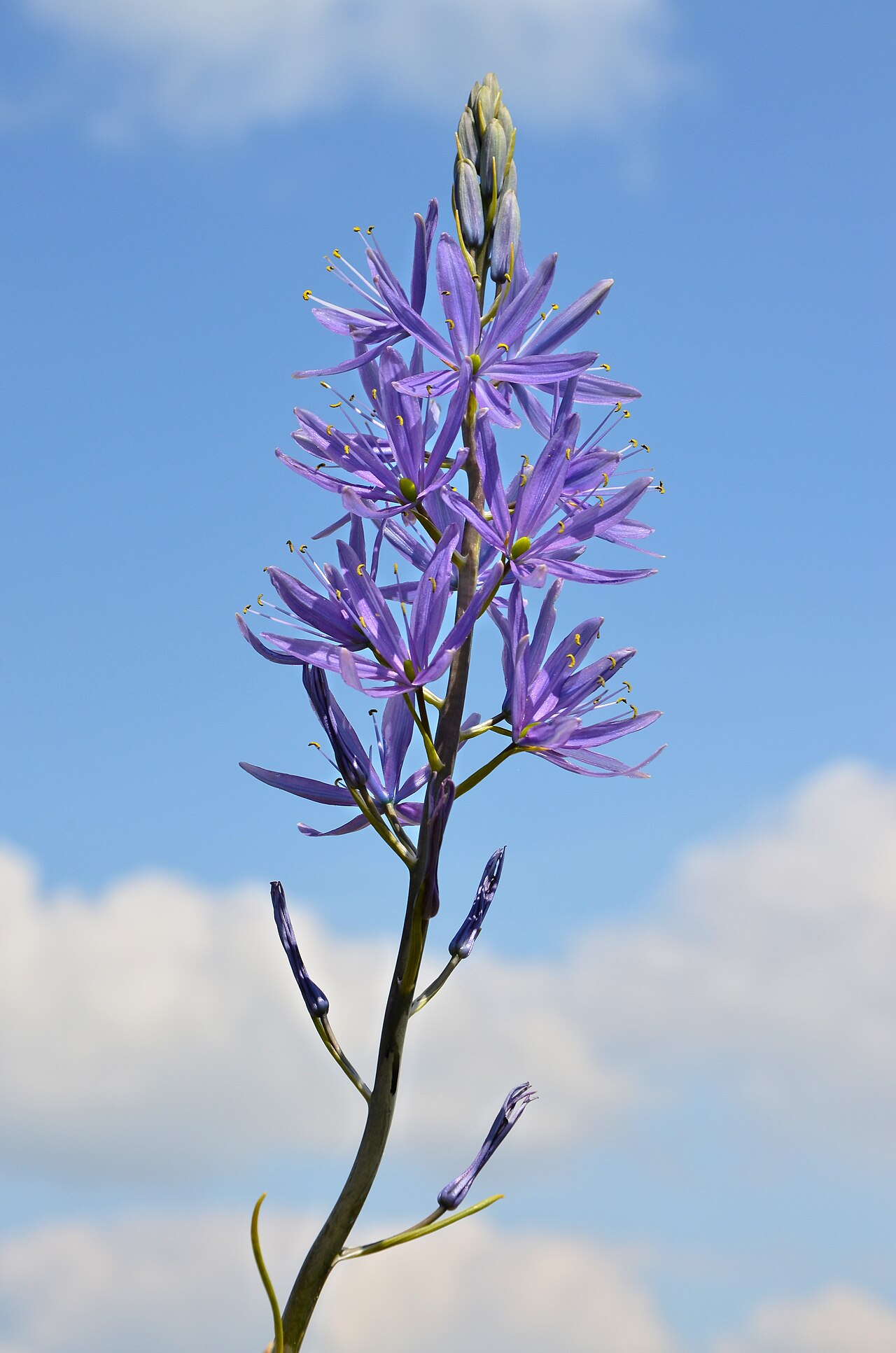
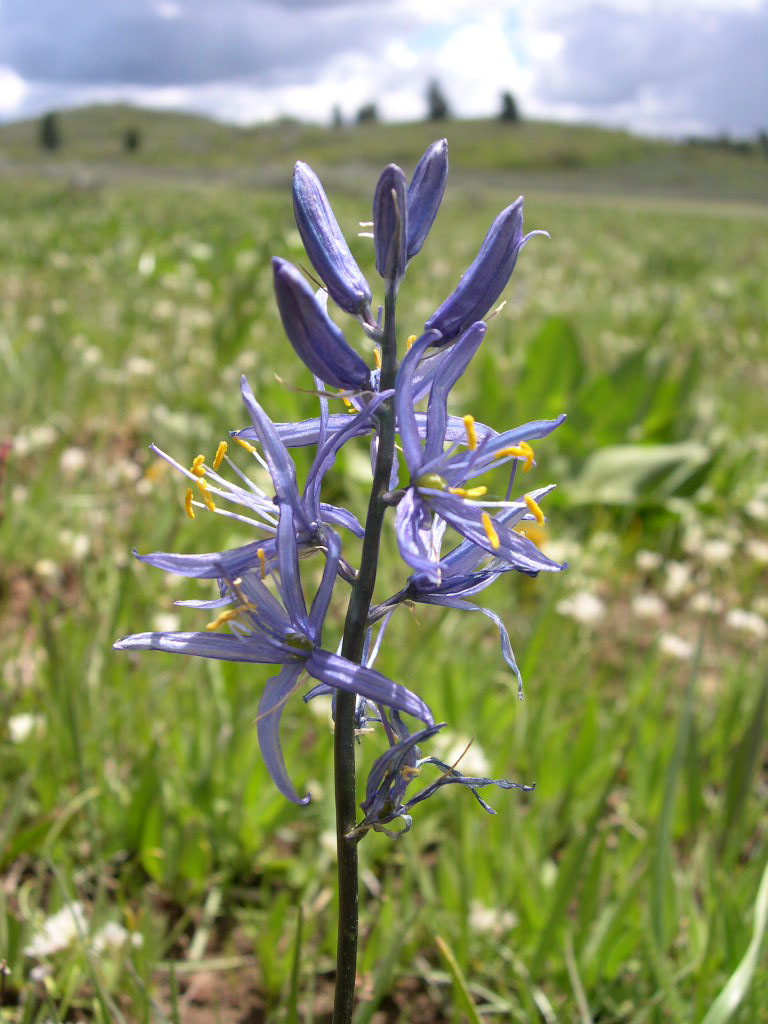
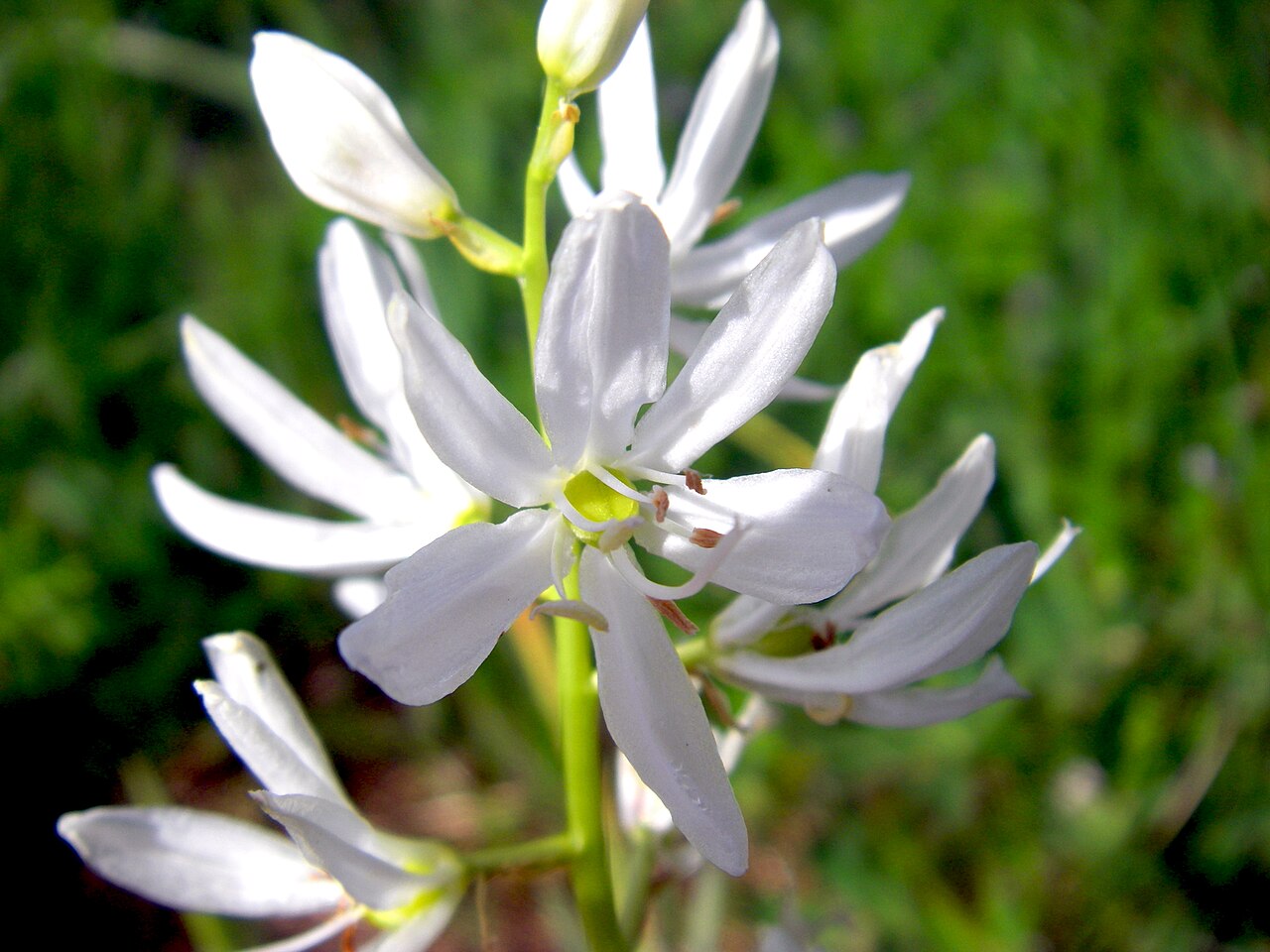
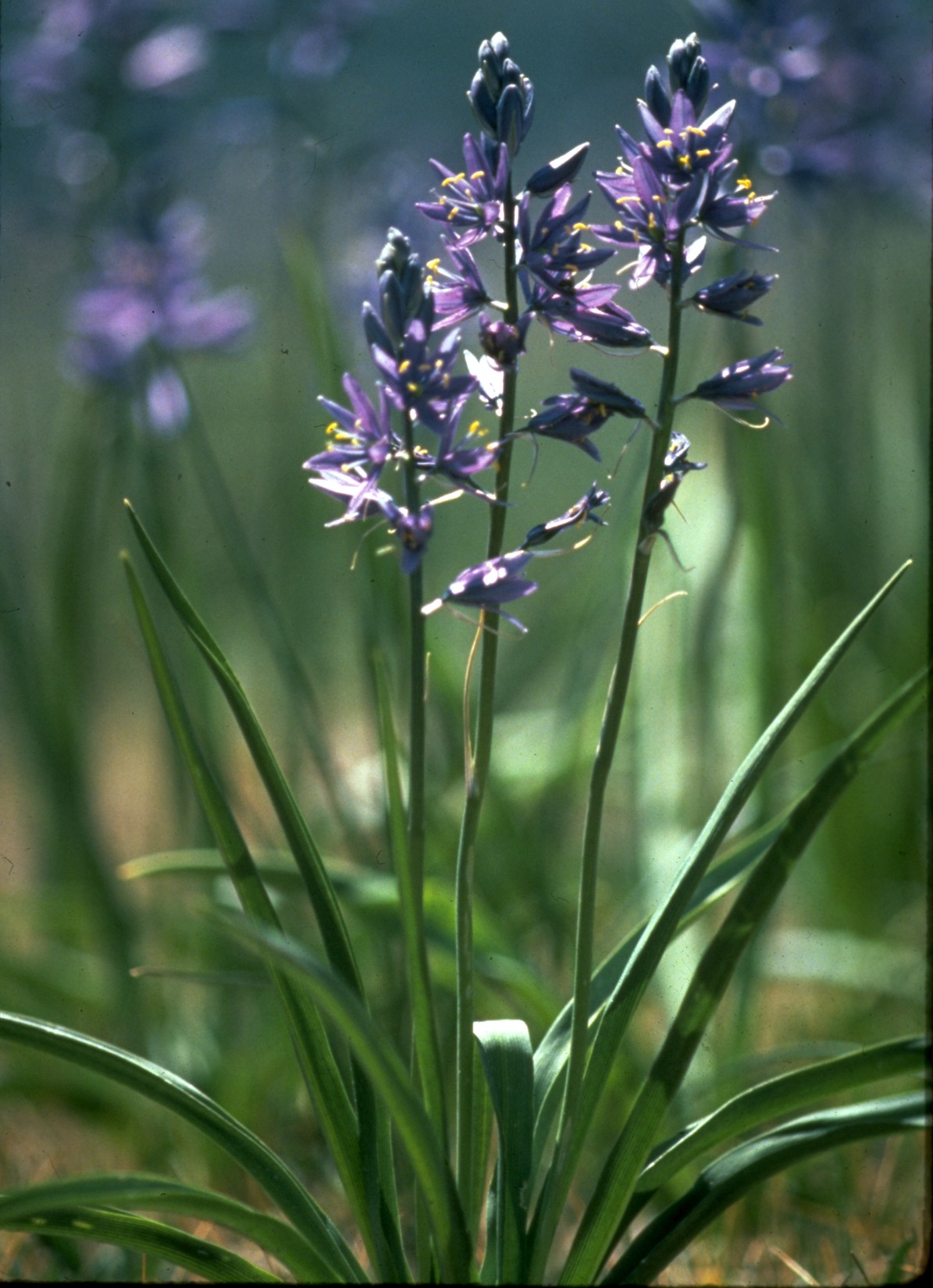
Camassia quamash, commonly known as camas, kwetlal, small camas, common camas, common camash or quamash, is a perennial herb native to western North America in large areas of southern Canada and the northwestern United States. It is a monocot with grasslike leaves that emerge from a persistent bulb, and its pale blue to deep blue flowers appear in late spring to early summer.
Quick Facts
- Genus
- Camassia
- Species
- quamash
Facts from the source article.
Lore & Background
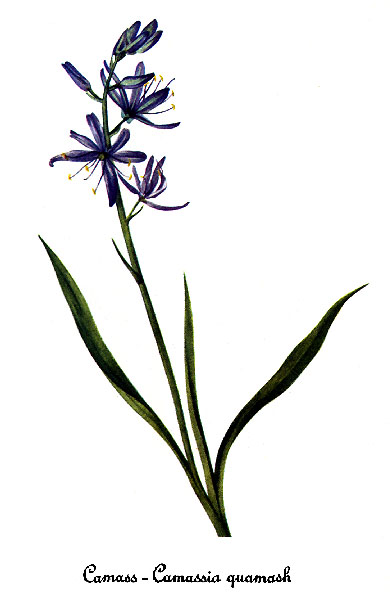
Camassia quamash is a perennial plant with a wide range of variation across its geographical range. Its bulbs are of moderate size, 1 to 5 centimeters in diameter, with a black surface and white interior layered like an onion. The leaves, rarely more than nine per plant, range from 10 to 60 centimeters in length and are narrow. The flowering stems can be up to 80 centimeters tall, bearing a raceme of radially symmetrical, star-shaped flowers with six tepals and six stamens. The leaves and bulbs resemble those of the toxic white-flowered meadow death-camas, which grows in the same areas but belongs to a different genus. The genus name derives from the Chinook Jargon word 'camas' or 'quamash,' itself borrowed from a Nootka (Nuu-chah-nulth) word.
Reader's Guide
Camassia quamash holds significance as a food source for many native peoples in the western United States and Canada, including the Nez Perce, Cree, Coast Salish, Lummi, and Blackfoot tribes. Its bulbs were pit-roasted or boiled, producing a syrup, and could be dried and pounded into flour. The bulbs contributed to the survival of the Lewis and Clark Expedition. The plant's genus name comes from the Nez Perce Indian name meaning 'sweet,' and the bulbs were an important food source for tribes in the Pacific Northwest. Historically, expanded settlement by whites and the turning of cattle and hogs onto camas prairies greatly diminished food available to native tribes, increasing tensions and contributing to conflicts such as the Bannock and Nez Perce Wars. Today, camas is grown as an ornamental plant and naturalizes well in gardens, and kwetlal has been promoted as a replacement for invasive species in environmental and cultural restoration.
Did You Know?
- The bulbs of Camassia quamash are edible and nutritious when roasted or boiled, but are easily confused with those of the toxic deathcamas.
- The genus name comes from the Chinook Jargon word 'camas' or 'quamash,' which was borrowed from a Nootka (Nuu-chah-nulth) word.
- Camas bulbs contributed to the survival of members of the Lewis and Clark Expedition (1804–1806).
- The Nez Perce War was primarily triggered by forced removal, and the Bannock War involved broader disputes over land and resources, not solely the plowing of camas prairies.
Botanical Form & Taxonomic Breadth
Camassia quamash is a perennial monocot whose entire above-ground structure emerges from a single persistent bulb roughly one to five centimeters across. The bulb's outer skin is black, while its interior reveals concentric white layers reminiscent of an onion. From this base, a small cluster of grasslike leaves—rarely exceeding nine in number—rises to heights of ten to sixty centimeters, each blade only four to twenty millimeters wide. Some varieties carry a faint waxy sheen on the upper leaf surface. The sturdy, leafless stem supports an unbranched raceme of radially symmetrical, star-shaped blooms, each bearing six tepals and six stamens. Flowering occurs in late spring through early summer, with hues ranging from pale to deep blue. The species encompasses eight recognized subspecies, from the common camas of subsp. quamash to the more restricted Utah and Walpole's small camas. The genus name itself derives from a Nez Perce term meaning "sweet." A critical caution: its foliage and bulb closely resemble those of the toxic white-flowered death-camas (Toxicoscordion), a look-alike that grows in the same western ranges.
Indigenous Foodways & the Cost of Dispossession
For countless generations, the bulb of Camassia quamash served as a cornerstone food for Indigenous peoples across the Pacific Northwest and the northern Rockies. Women of the Nez Perce, Cree, Blackfoot, Coast Salish, and Lummi nations harvested the bulbs each autumn after the flowers had faded, then pit-roasted or boiled them. The roasted bulb resembles a baked sweet potato in appearance but carries a distinctly sweeter flavor and a crystalline, fibrous texture. Boiling yielded a thick syrup, and dried bulbs could be ground into flour for baking or thickening. The Lewis and Clark Expedition of 1804–1806 relied on camas for survival during their overland journey. Yet the plant's cultural centrality made it a flashpoint in colonial conflict. In the Great Basin, settlers' plowing of camas prairies and the release of cattle and hogs onto those lands devastated the food supply of Native communities. The Bannock and Nez Perce Wars were, in part, ignited by the failure of the U.S. government to honor treaties and by the destruction of these vital gathering grounds.
Range, Habitat & the Shrinking Camas Prairie
Camassia quamash is indigenous to a broad swath of western North America, stretching from British Columbia and Alberta southward to California, and eastward from Washington through Montana and Wyoming. In the wild, the plant thrives in well-drained, humus-rich soils and can be found in lightly shaded woodland, on rocky outcrops, in open meadows and prairies, and alongside streams and rivers. It spreads by seed rather than by runners, and gardeners can divide established clumps in autumn once the foliage has died back. The species naturalizes readily in cultivated settings. However, the once-vast expanses of camas prairie have been dramatically reduced by agriculture, urban development, and livestock grazing. In the Great Basin region, the combined pressure of expanding settlement and the introduction of cattle and hogs onto traditional gathering lands severely curtailed the food available to Indigenous peoples. Today, while numerous camas prairies and marshes still persist, they represent only a fraction of the original coverage. In the Pacific Northwest, the Lekwungen and other peoples have cultivated kwetlal bulbs since before European contact, and the plant is now promoted as a culturally and ecologically restorative alternative to invasive species.
Culinary Character & Modern Recognition
The edible bulb of Camassia quamash occupies a unique niche in both traditional and contemporary food culture. When pit-cooked, it presents a visual and textural profile similar to a baked sweet potato, though the flavor is noticeably sweeter and the flesh contains crystalline fibers attributed to inulin, an oligosaccharide. This same compound is responsible for the well-known digestive consequences—copious flatulence—experienced by those who consume undercooked bulbs in excess. Beyond roasting, the bulbs can be boiled to produce a syrup, or dried and pounded into a versatile flour suitable for baking and as a thickening agent. Bannock prepared from camas flour remains a traditional preparation. The plant's culinary heritage is formally recognized in the Ark of Taste, a global registry of at-risk food traditions. As an ornamental, camas is valued for its ability to carpet entire meadows in shades of blue-violet during late spring and early summer. Yet foragers must exercise extreme care, as the bulbs are easily confused with those of the toxic white-flowered death-camas, a species in the unrelated genus Toxicoscordion that inhabits the same western habitats.
Gallery
Frequently Asked Questions
What is Camassia quamash?
It's a perennial herb native to western North America, best known for its edible underground bulb. You'll also hear it called camas, kwetlal, small camas, or quamash depending on the region and community.
Where does Camassia quamash grow in the wild?
Its natural range covers large stretches of southern Canada and the northwestern United States. It favors open meadows and grasslands where it can spread its grasslike leaves from a persistent bulb.
What does Camassia quamash look like and when does it bloom?
The plant sends up slender, grasslike foliage and then produces a cluster of flowers that range from pale blue to a rich deep blue. In its native habitat, that showy bloom typically appears between May and June.
Which part of Camassia quamash is edible and how is it prepared?
The bulb, which measures roughly 1 to 5 centimeters across, is the part people harvest and eat. It can be roasted, boiled, or dried into a flour for baking, making it a versatile carbohydrate source.
Why is Camassia quamash considered important to Canadian food history?
For thousands of years it served as a vital, reliable food source for Indigenous peoples across the Pacific Northwest. Its bulbs sustained communities each spring, and the plant remains a touchstone for discussions of traditional Canadian cuisine and land-based foodways.
More in Canadian cuisine 1-24
Spotted an error? Know more?
Reader corrections go straight into our review queue. Suggest an edit · How this site is sourced