
Bannock (British and Irish food)
A round flatbread common in Scotland, Britain, and Ireland.

Carl Steinbeißer · CC BY-SA 3.0
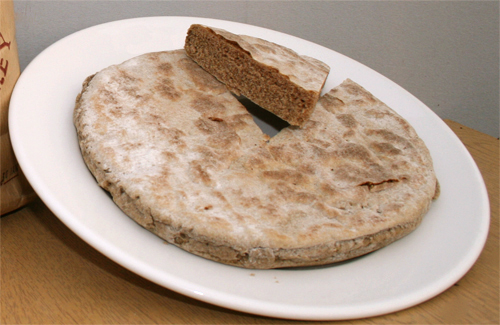
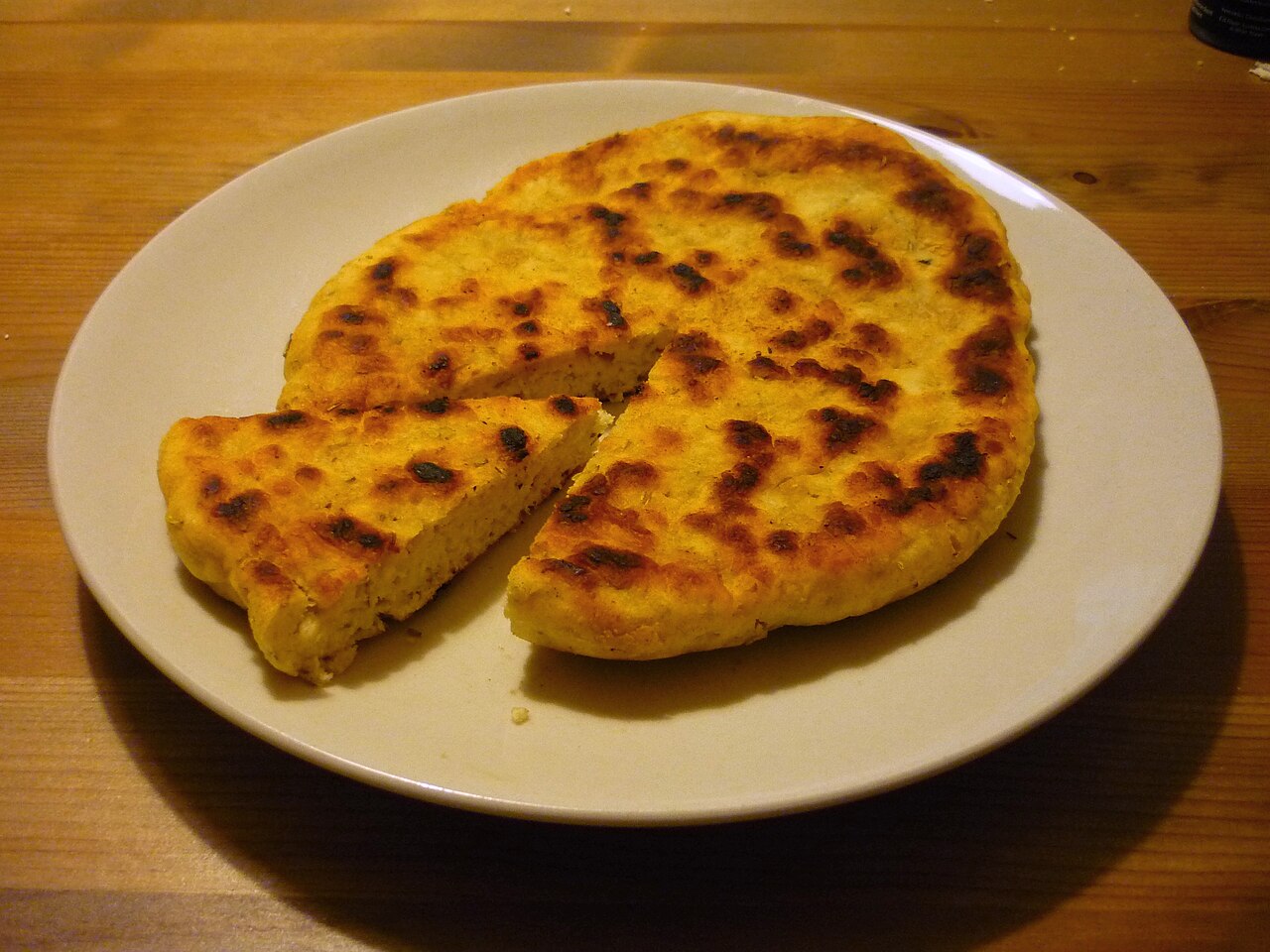
A bannock is a variety of flatbread, classed as quick bread in North America, cooked from flour and typically round. It is common in Scotland and other areas in Britain and Ireland, as well as among indigenous peoples in North America. Bannocks are usually cut into sections before serving.
Quick Facts
- Country
- British Isles
Facts from the source article.
Lore & Background
The word bannock comes from northern English and Scots dialects. The Oxford English Dictionary states the term stems from panicium, a Latin word for 'baked dough', or from panis, meaning bread. It was first referred to as 'bannuc' in early glosses to the 8th-century author Aldhelm, with its first cited definition dating to 1562. Its historic use was primarily in Ireland, Scotland and Northern England. The Scottish poet Robert Burns mentions a bannock in his Epistle to James Tennant of Glenconner, in reference to Alexander Tennant.
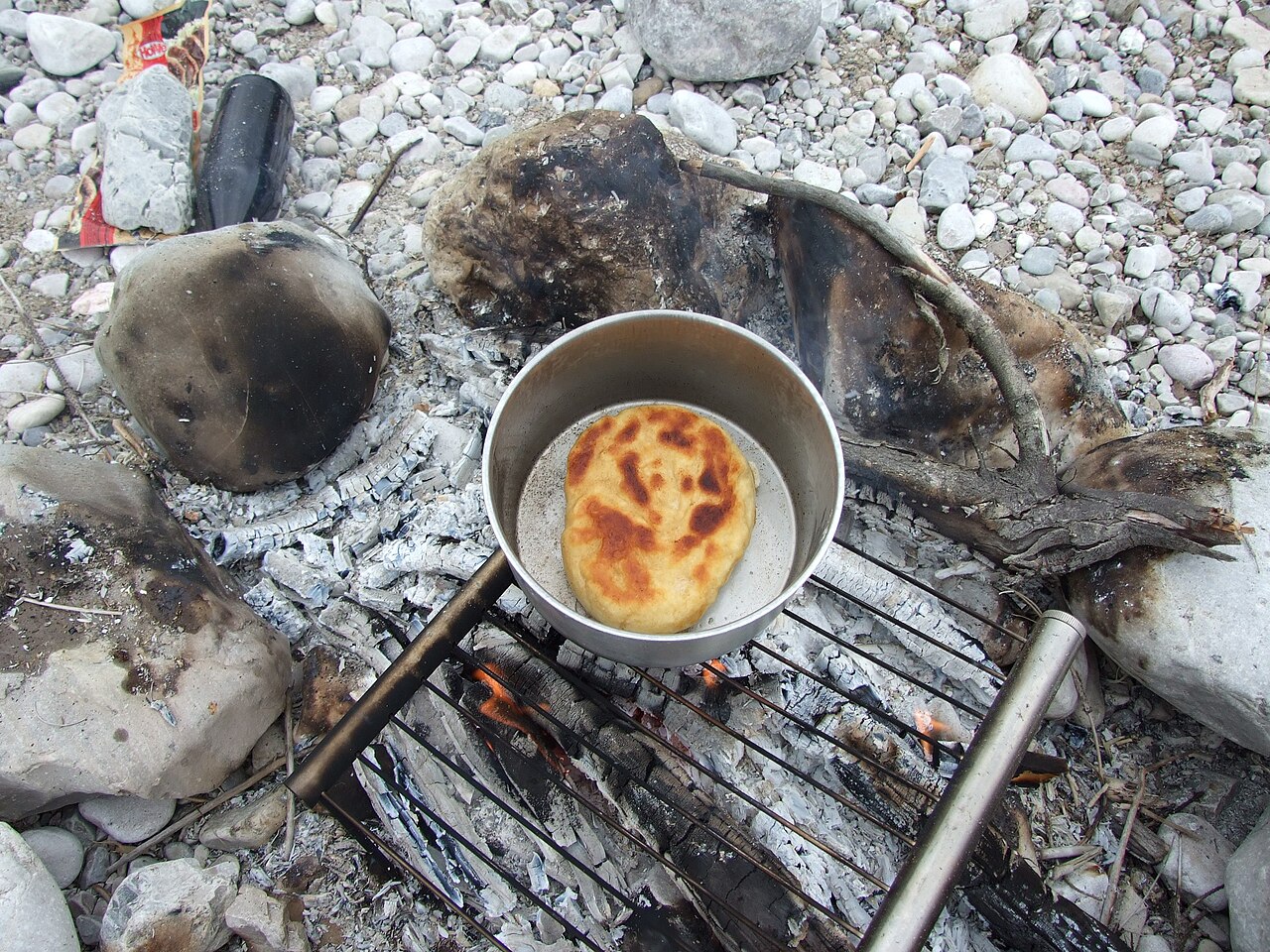
The original bannocks were heavy, flat cakes of unleavened barley or oatmeal dough formed into a round or oval shape, then cooked on a griddle (or girdle in Scots). In Scotland, before the 19th century, bannocks were cooked on a bannock stane, a large, flat, rounded piece of sandstone placed directly onto a fire. Most modern bannocks are made with baking powder or baking soda as a leavening agent, giving them a light and airy texture.
Bannock varieties can be named or differentiated according to various characteristics: the flour or meal from which they are made, whether they are leavened or not, whether they have certain special ingredients, how they are baked or cooked, and the names of rituals or festivals in which they are used. Historically, specially made bannocks were used in rituals marking the changing of the Gaelic seasons: St Bride's bannock for spring, Bealtaine bannock for summer, Lughnasadh or Lammas bannock for autumn harvests, and Samhain bannock for winter.
Reader's Guide
Bannocks hold significance as a traditional staple in Scotland, Britain, and Ireland, with a history stretching back to at least the 8th century. They are notable for their versatility, with many varieties named according to ingredients, leavening, cooking method, or ritual use. The bannock's role in Gaelic seasonal festivals—St Bride's, Bealtaine, Lughnasadh, and Samhain—demonstrates its cultural importance beyond mere sustenance. The Selkirk bannock, a spongy, buttery version with raisins, became famous after Queen Victoria reputedly took tea with a slice while visiting Sir Walter Scott's granddaughter at Abbotsford. The word's etymology, traced to Latin panicium or panis, and its first recorded use in glosses to Aldhelm, underscore its deep roots. Bannocks also appear in literature, such as in Robert Burns's poetry. Their legacy continues in modern quick breads and in the traditions of indigenous peoples in North America, as well as in related forms like the Manx bonnag and northern English pastry bannocks.
Did You Know?
- Historically, bannocks were used in Gaelic seasonal rituals: St Bride's bannock for spring, Bealtaine for summer, Lughnasadh for autumn, and Samhain for winter.
- The Selkirk bannock is a spongy, buttery version containing a very large quantity of raisins, first made by baker Robbie Douglas in Selkirk in 1859.
Linguistic Roots and Literary Echoes
The name bannock carries a long linguistic lineage that traces back through northern English and Scots dialects to Latin roots. According to the Oxford English Dictionary, the term likely derives from panicium, a Latin word describing baked dough, or alternatively from panis, simply meaning bread. The earliest known appearance of the word in a recognizable form is bannuc, found in early glosses attached to the work of Aldhelm, an eighth-century author who died in 709. The first cited definition of the term dates to 1562, anchoring it firmly in the written record of the sixteenth century. Historically, the word was used predominantly across Ireland, Scotland, and Northern England, marking it as a distinctly northern term rather than a pan-English one. The bannock also found its way into Scottish literary culture; the poet Robert Burns references one in his Epistle to James Tennant of Glenconner, a mention directed at Alexander Tennant. This literary appearance underscores how deeply the humble flatbread was woven into the everyday language and social fabric of Scottish life, surviving from medieval glosses into the verse of one of the nation's most celebrated poets.
From Sandstone to Baking Powder
In their earliest form, bannocks were dense, unleavened cakes made from barley or oatmeal dough, shaped into rounds or ovals and cooked on a griddle, known as a girdle in Scots. In Scotland, before the nineteenth century, the cooking surface was often a bannock stane: a large, flat, rounded piece of sandstone set directly into a fire to serve as a baking surface. This was a practical, ancient technique that produced a heavy, substantial flatbread. The transformation in texture came with the adoption of chemical leavening. Most modern bannocks now rely on baking powder or baking soda, which gives the finished product a noticeably lighter, airier quality compared to its unleavened ancestors. Despite this shift in technique, the fundamental shape and serving style have endured: bannocks remain typically round and are usually cut into sections before being served. In North America, the category is classed as a quick bread, and variants of the concept persist among indigenous peoples, showing how widely the basic idea of a simple flatbread has traveled across continents and cultures.
Bread of the Turning Year
Far beyond mere sustenance, the bannock held a sacred place in the ritual calendar of Gaelic-speaking communities. Specially prepared bannocks were baked to mark the turning of the four seasons: St Bride's bannock for spring on 1 February, Bealtaine bannock for summer on 1 May, Lughnasadh or Lammas bannock for the autumn harvest on 1 August, and Samhain bannock for winter at the end of October. Each seasonal bannock was distinct, tied to a specific time and purpose in the agricultural and spiritual year. The tradition extended well beyond these four markers. A remarkable roster of special bannocks exists, including Hogmanay bannock for the New Year, Michaelmas bannock, Yule bannock, teething bannock for infants, and others such as bride's bannock, cod liver bannock, and cryin' bannock. Varieties could be distinguished by the flour or meal used, whether the dough was leavened, the inclusion of special ingredients, the method of cooking, or the particular ritual or festival they accompanied. This breadth of naming and purpose reveals a tradition in which bread served as a medium for marking time, celebrating community, and honoring the rhythms of the natural world.
Regional Identity and Distinctive Variants
The bannock's character shifts noticeably as it crosses regional boundaries. In the Scottish Borders, the Selkirk bannock stands out as a spongy, buttery treat sometimes likened to fruitcake, made from wheat flour and loaded with a very large quantity of raisins. It takes its name from the town of Selkirk, where a baker named Robbie Douglas opened his shop in 1859 and is credited as the first known maker of this variety. The bannock's reach extended to the royal court: when Queen Victoria visited Sir Walter Scott's granddaughter at Abbotsford, she is reputed to have enjoyed her tea alongside a slice of Selkirk bannock. In the north of England, the preparation diverges further, with bannocks often made using pastry rather than a traditional bread dough. On the Isle of Man, the bonnag, likely sharing the same etymological root, uses similar ingredients. Even within Scotland, the Pitcaithly bannock offers a shortbread-like experience flavored with almonds and citrus peel. Meanwhile, variants among indigenous peoples in North America demonstrate that the flatbread concept transcends any single culture, adapting to local ingredients while retaining its essential form.
Gallery
Frequently Asked Questions
What is Bannock (British and Irish food)?
Bannock is a round, flat quick bread made primarily from flour, water, and a leavening agent. In North America it is classified as a quick bread, and it is traditionally sliced into wedge-shaped sections before being served.
Where does Bannock (British and Irish food) originate?
The bread has deep roots in Scotland, Northern England, and broader Britain and Ireland, where it was historically baked on a flat stone called a bannock stane. It also appears in the culinary traditions of Indigenous peoples across North America, giving it a cross-cultural presence.
How is Bannock (British and Irish food) typically prepared?
The dough is cooked on a griddle, historically known as a girdle, or on a heated stone surface. Older recipes relied on barley or oatmeal flour, while modern versions often use wheat flour plus a chemical leavening agent for a lighter rise.
Why is Bannock (British and Irish food) culturally significant?
Certain bannock varieties were tied to Gaelic seasonal rituals, making the bread more than just sustenance but a marker of community and calendar. The Selkirk bannock is one well-known regional example that still carries that heritage.
How does Bannock (British and Irish food) fit into Canadian cuisine?
Because Indigenous communities across Canada have long prepared their own versions of flatbreads, bannock occupies a place in the Canadian food landscape alongside its British and Irish relatives. It is often enjoyed as a simple, hearty accompaniment to soups, stews, or butter.
More in Canadian cuisine 1-24
Spotted an error? Know more?
Reader corrections go straight into our review queue. Suggest an edit · How this site is sourced