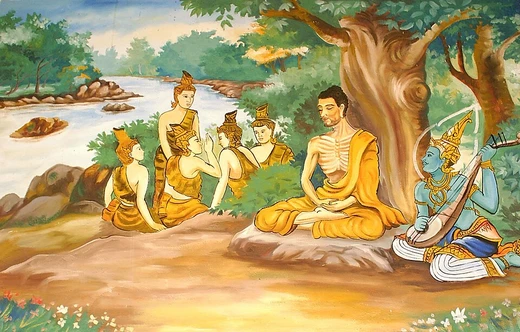
The sixteen dreams of King Pasenadi
King Pasenadi's dreams foretell future decline through Buddhist interpretation.

The sixteen frightening dreams of King Pasenadi are a notable topic in Buddhist literature, recorded in the Pali Mahāsupina Jātaka. King Pasenadi of Kosala dreamt these nightmares, and the Gautama Buddha interpreted them using his knowledge of the future, known in Pali as anāgataṃsa ñāṇa. The dreams are traditionally interpreted as foretelling future decline, though the Jātaka itself does not specify a precise timeline for their fulfillment.
- Subject
- King Pasenadi
- Field
- Buddhist literature
- Known for
- Dreaming sixteen frightening dreams interpreted by the Buddha
- Source text
- Mahāsupina Jātaka (Pali)
- Associated figure
- Gautama Buddha
Lore & Background
In Buddhist literature, King Pasenadi of Kosala experienced sixteen frightening dreams, which are described in the Pali Mahāsupina Jātaka. The Gautama Buddha used his knowledge of the future (anāgataṃsa ñāṇa) to interpret these nightmares and explained that they represent terrible things that will happen in the future. While later traditions sometimes associate the dreams with a timeline of 2500 years after the Buddha's passing, the Jātaka itself gives no specific date. Pictures depicting the sixteen nightmares are found in some pagodas in Myanmar.
Reader's Guide
The sixteen dreams of King Pasenadi hold significance as a prophetic narrative within Buddhist tradition, illustrating the Buddha's ability to foresee societal and moral decline. Each dream symbolizes specific future calamities, such as corruption, disrespect for elders, and economic hardship, as interpreted by the Buddha. The dreams are preserved in the Mahāsupina Jātaka and are visually represented in some Myanmar pagodas, serving as a moral warning about the consequences of unrighteous behavior. Their legacy lies in their use as a didactic tool to encourage ethical conduct and awareness of karmic outcomes.
Did You Know?
- The Buddha used anāgataṃsa ñāṇa (knowledge of the future) to interpret the nightmares.
- The Jātaka does not specify a precise date for the fulfillment of the dreams; later traditions vary on the timeline.
- The first dream involves four strong oxen being yoked to a plough but unable to pull it.
More in Buddhist mythology 1-24
Spotted an error? Know more?
Reader corrections go straight into our review queue. Suggest an edit · How this site is sourced