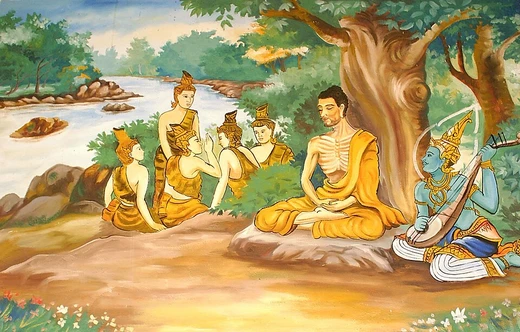
Mount Meru
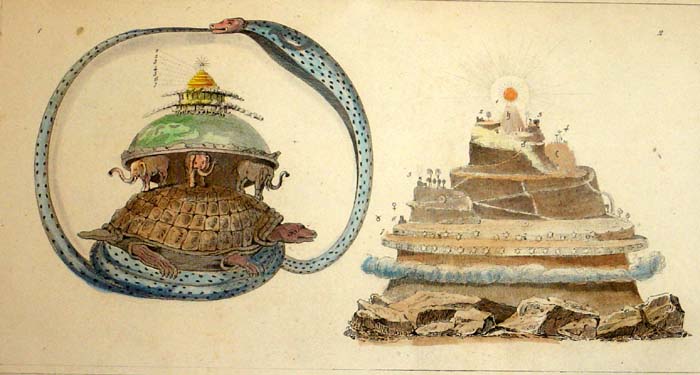
Sacred five-peaked mountain at the center of cosmic universes.

Anonymous Unknown author · Public domain
Mount Meru (Sanskrit/Pali: मेरु), also known as Sumeru, Sineru, or Mahāmeru, is a sacred, five-peaked mountain central to Hindu, Jain, and Buddhist cosmologies. It is revered as the center of all physical, metaphysical, and spiritual universes, though its geophysical location remains unidentified, with scholars suggesting it may be in the Himalayan Mountains or the Aravalli Range.
- Also known as
- Sumeru, Sineru, Mahāmeru
- Cosmological role
- Center of the universe in Hindu, Jain, and Buddhist traditions
- Height (hindu texts)
- 84,000 yojanas (approx. 1,082,000 km)
- Height (buddhist texts)
- 80,000 to 84,000 yojanas
- Width (buddhist texts)
- 80,000 yojanas
- Location (disputed)
- Himalayan Mountains, Aravalli Range, Pamirs, or Hindu Kush
- Associated religions
- Hinduism, Jainism, Buddhism, Taoism
Lore & Background
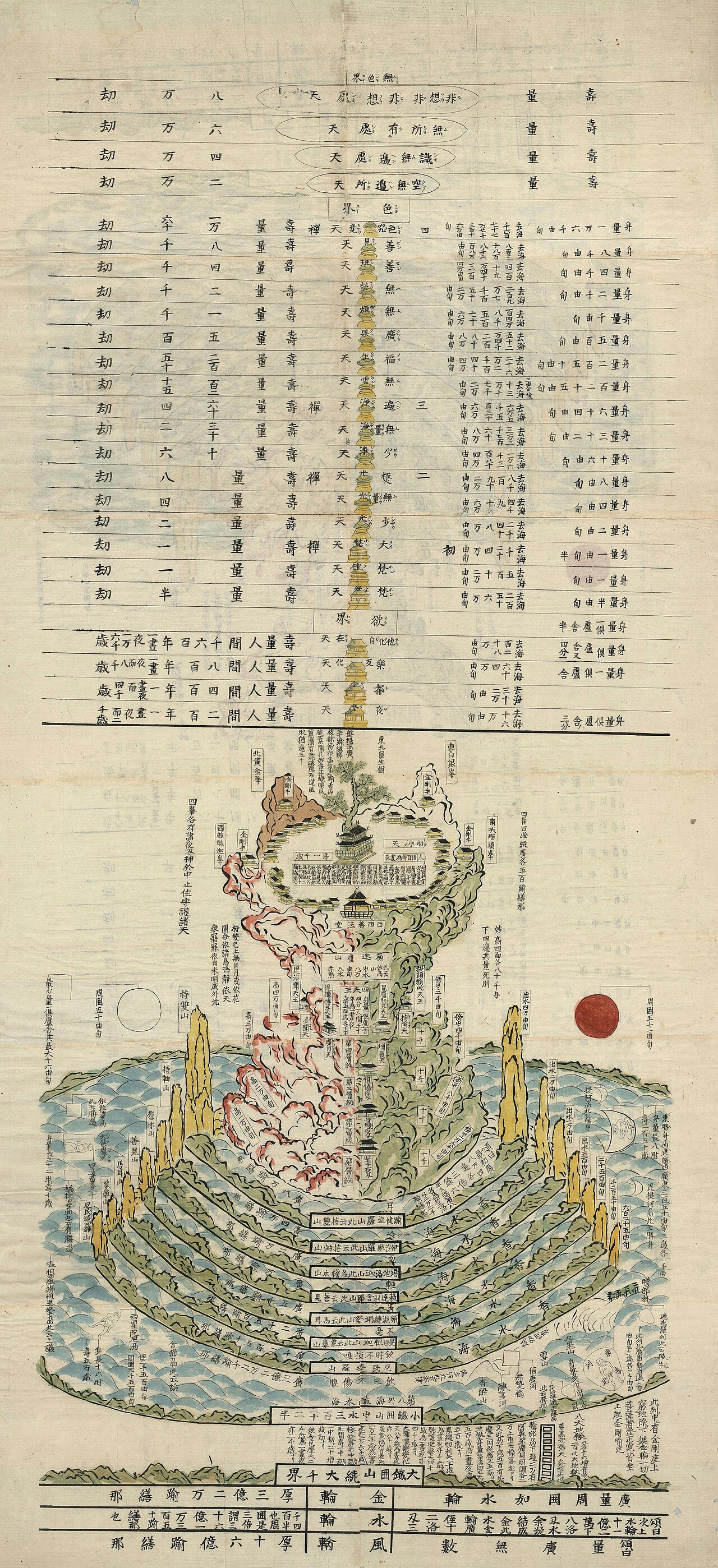
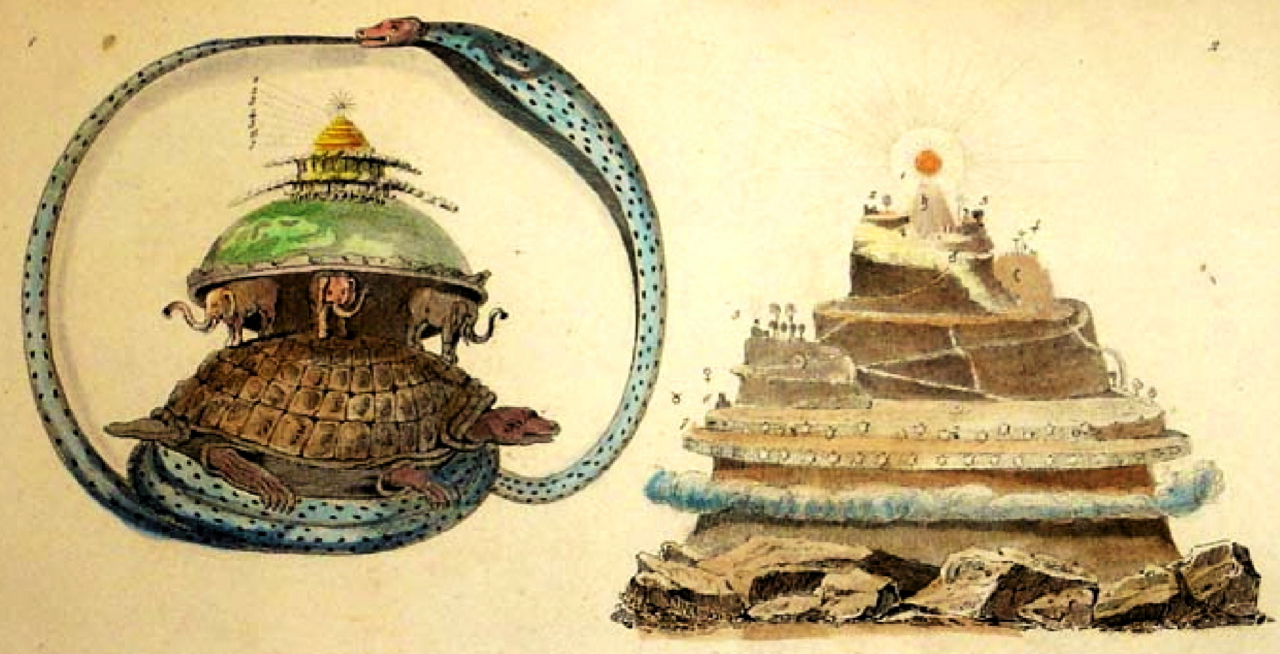
Mount Meru is described in Hindu, Jain, and Buddhist scriptures as the axis of the world, surrounded by four great cosmic continents: Pubbavideha Dīpa, Uttarakuru Dīpa, Aparagoyāna Dīpa, and Jambudīpa. In Buddhist cosmology, it is 80,000 yojanas wide and high, with four faces made of gold, crystal, lapis lazuli, and ruby; the Sun and Moon revolve around it. In Hinduism, it is a stairway to Svarga, the heaven of the devas, and is said to be 84,000 yojanas high, with Shiva residing on Mount Kailash, which is distinct from Mount Meru. The Mahabharata describes it as a golden mountain with lovely woods and lakes, and only sinless beings can scale it.
Reader's Guide
Mount Meru's significance extends beyond mythology into architecture and cultural symbolism. Many Hindu, Jain, and Buddhist temples are built as symbolic representations of the mountain, such as the Sumeru Throne style in Chinese pagodas and the pyatthat multi-tiered roofs in Burma. The concept influenced temple architecture in India, Bali, and Southeast Asia, with early examples like the Harshat Mata Temple and the Mahabodhi Temple. In Jain cosmology, Mount Meru is the center of Jambūdvīpa, and every Tirthankara is taken there by Indra after birth. The mountain also appears in Taoism, influenced by Buddhism's arrival in China, and in Javanese mythology, where part of Mount Meru was moved to create Mount Semeru. Despite its uncertain physical location, Mount Meru remains a unifying symbol of cosmic order across multiple religions and cultures.
Did You Know?
- Mount Meru is also known as Sumeru, Sineru, or Mahāmeru.
- The highest point on a Burmese pyatthat roof represents Mount Meru.
- In Jain cosmology, two sets of sun, moon, and stars revolve around Mount Meru.
- The Javanese manuscript Tantu Pagelaran describes moving part of Mount Meru to create Mount Semeru.
Cosmological Axis and the Mystery of Location
Mount Meru stands as the axis around which all physical, metaphysical, and spiritual universes are organized in Hindu, Jain, and Buddhist thought. Described as a five-peaked peak, it sits at the junction of four great cosmic continents—Pubbavideha Dīpa, Uttarakuru Dīpa, Amaragoyāna Dīpa, and Jambu Dīpa—anchoring the entire created order. Yet pinning down where it actually sits on a map has stymied scholars for centuries. The Suryasiddhanta places it at the very centre of the Earth within the land of Jambunad, while a ninth-century text, the Narapatijayacharyasvarodaya, offers a striking caveat: Sumeru is "heard to be at the centre of the Earth, but is not seen there." Some researchers link it to the Pamirs northwest of Kashmir; others, including Michael Witzel and Georg Morgenstierne, point to Terich Mir in the Hindu Kush. In popular imagination it is most often associated with the Himalayas or the Aravalli Range of western India. Cosmologically, it is flanked by four companion peaks—Mandrachala to the east, Suparshva to the west, Kumuda to the north, and Kailasha to the south—forming a sacred ring around the cosmic axis.
The Buddhist Mountain of Four Faces
In Buddhist cosmology, Mount Meru occupies the exact centre of the world, with the continent of Jambūdvīpa stretching south of its base. The Abhidharmakośabhāṣyam gives it a width and height of 80,000 yojanas, while the Long Āgama Sutra raises the height to 84,000. At its summit dwells Trāyastriṃśa, the celestial realm ruled by Śakra, and the Sun and Moon are said to circle the peak—nightfall arriving when the Sun slips behind its bulk. One of the most vivid details in the Buddhist description is the mountain's four faces, each fashioned from a distinct precious material: the northern face gleams with gold, the eastern face is carved from crystal, the southern face shines with lapis lazuli, and the western face glows in ruby. In Vajrayāna practice, maṇḍala offerings routinely incorporate Mount Meru as a symbolic stand-in for the entire cosmos, and the mountain is also regarded as the dwelling place of the Buddha Cakrasaṃvara. The name itself carries a layered etymology: "meru" simply means "high" in Sanskrit, while the prefix "su-" elevates it to "excellent" or "sublime Mount Meru." The word also names the central bead in a mālā, the prayer-bead string used across these traditions.
Hindu Epics and the Ascent to Heaven
For Hindus, Mount Meru functions as a stairway to Svarga, the heaven of the devas, and is described in the Matsya Purana and Bhagavata Purana as standing 84,000 yojanas high—roughly 1,082,000 kilometres, or about 85 times the Earth's diameter. Shiva is said to dwell atop the mountain at Kailasha, and the Sun, Moon, and all planets revolve around it as it links the underworld with heaven. The Mahabharata paints a lush picture: the mountain glows gold in sunlight, its slopes thick with fragrant woods, lakes, rivers lined with fruit trees, precious stones, and life-saving herbs. Only a being utterly free of sin can hope to scale it. In one celebrated episode, the Pandavas and Draupadi attempt the ascent; only Yudhishthira, accompanied by a loyal dog, reaches the summit. Kubera, the god of wealth, keeps his residence near a golden gate beside Lake Alaka, from which the Mandakini river flows. The Ramayana identifies the mountain as the kingdom of King Kesari, father of Hanuman, while the Vishnu Purana calls it the pillar of the world set at the heart of six mountain ranges shaped like a lotus.
From Sacred Peak to Sacred Architecture
The influence of Mount Meru extends far beyond scripture into the built environment and into traditions well outside India. Across South and Southeast Asia, countless Hindu, Jain, and Buddhist temples were deliberately designed as symbolic replicas of the mountain, translating its five-peaked, cosmic-centre form into stone and timber. In Chinese architecture, the Sumeru Throne—a raised, tiered pedestal known as xūmízuò—has become a standard element of pagoda construction, embedding the mountain's silhouette into the base of the structure. In Myanmar, the pyatthat, a multi-tiered roof form, crowns its highest point with a finial bud that explicitly represents Mount Meru. The mountain's reach into external religious traditions is equally notable: Taoist scriptures, shaped in part by the arrival of Buddhism in China, also reference Meru, demonstrating how the concept migrated and adapted across cultural boundaries. Even in devotional objects, the mountain leaves its mark—the central bead of a mālā prayer string is named after it, a tiny reminder that the axis of the cosmos can be held in the palm of a hand.
Gallery
Frequently Asked Questions
What is Mount Meru in Buddhist cosmology?
In Buddhist cosmology, Mount Meru (also called Sumeru, Sineru, or Mahāmeru) is the sacred five-peaked mountain that anchors the absolute center of every universe. It functions as the axis around which all physical, metaphysical, and spiritual realms are arranged.
Where is Mount Meru actually located in the real world?
No definitive earthly site has ever been confirmed for it. Various scholars have speculated it might correspond to the Himalayas, the Aravalli Range, the Pamirs, or the Hindu Kush, but the texts treat it as a metaphysical center rather than a mappable coordinate.
How big is Mount Meru according to Buddhist sources?
Buddhist texts describe its height at roughly 80,000 to 84,000 yojanas and its width at about 80,000 yojanas. Because a yojana is an ancient Indian unit of distance, these figures place the mountain far beyond any earthly scale.
What role does Mount Meru play in the Buddhist universe?
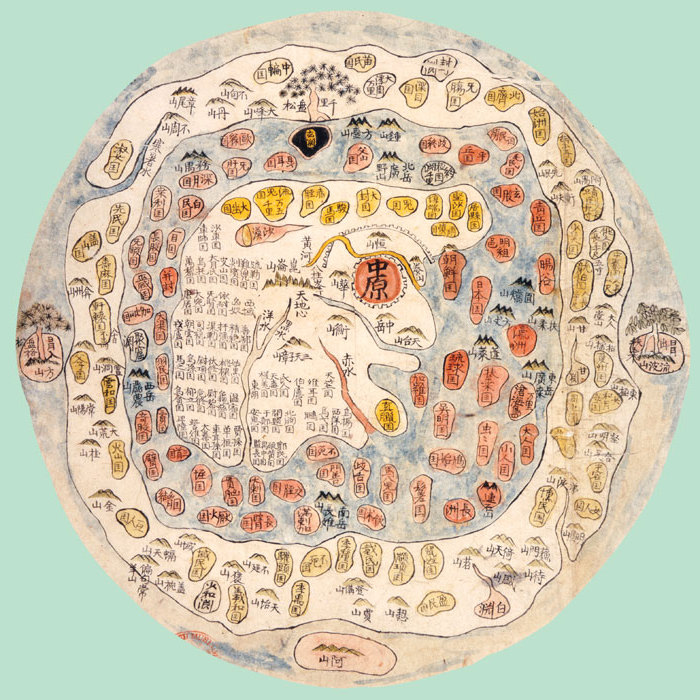
It acts as the central pillar of the cosmos, with devas and celestial beings dwelling on its slopes and in the concentric rings of mountains and oceans that encircle its base. Every other world, realm, and element of the cosmos is organized in relation to its position.
Why does Mount Meru have five peaks?
The five-peaked structure is a defining feature of the mountain in both Hindu and Buddhist cosmological descriptions. In Vajrayāna Buddhist traditions the five summits are sometimes symbolically linked to the five wisdoms or the five Tathāgatas, though earlier Pali texts simply present the number as part of the mountain's cosmic form.
More in Buddhist mythology 1-24
Spotted an error? Know more?
Reader corrections go straight into our review queue. Suggest an edit · How this site is sourced