
Longnü
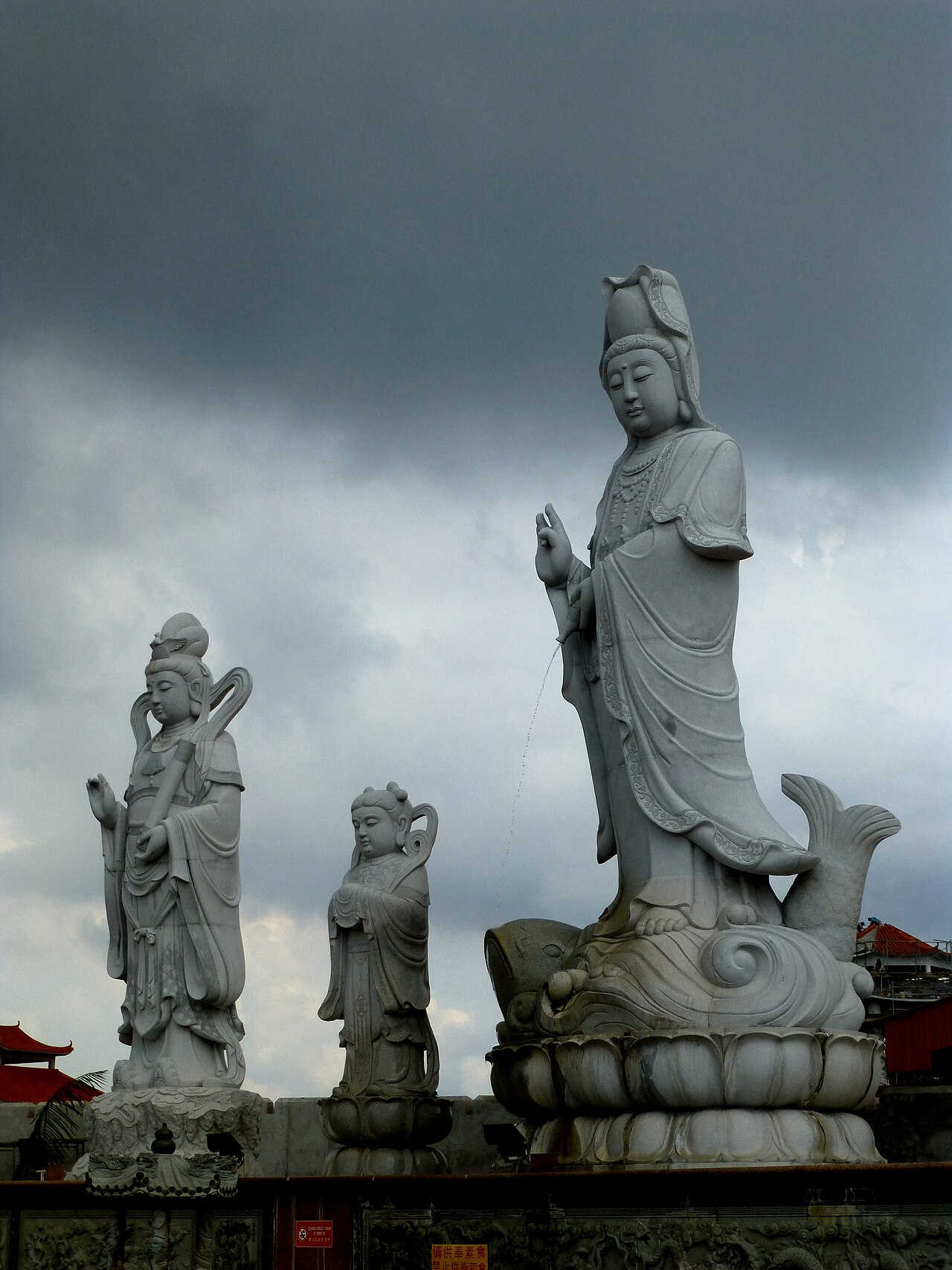
Dragon girl acolyte of Guanyin, symbol of sudden enlightenment.

Huangdan2060 · CC0
Longnü (Dragon Girl) is a figure in Chinese Buddhism, traditionally depicted as an acolyte of the bodhisattva Guanyin (Avalokiteśvara) alongside Sudhana. Her presence in Guanyin's iconography was influenced by tantric sutras celebrating the esoteric Amoghapāśa and Thousand-armed forms of Guanyin, which mention Longnü offering Guanyin a priceless pearl in gratitude for the latter visiting the Dragon King's palace at the bottom of the ocean. She is described as the eight-year-old daughter of the nāga king Sāgara.
- Known for
- Acolyte of Guanyin (Avalokiteśvara) in Chinese Buddhism
- Field
- Buddhist mythology, iconography
- Nationality
- Chinese (mythological)
- Associated texts
- Lotus Sūtra, Complete Tale of Avalokiteśvara and the Southern Seas, Precious Scroll of Sudhana and Longnü
- Notable event
- Offered a pearl to the Buddha and attained enlightenment in the Lotus Sūtra
Lore & Background
In the Lotus Sūtra, Longnü is depicted in the 12th Chapter as the eight-year-old daughter of the nāga king Sāgara, full of wisdom and achieving instant enlightenment. Mañjuśrī Bodhisattva speaks of her, saying she is wise, has sharp faculties, knows all the faculties and deeds of sentient beings, has attained the power of recollection, preserves the profound secret treasures of the Buddhas, enters deep in meditation, and instantly produced the thought of enlightenment. When the Buddha's disciple Śāriputra does not believe a woman can attain buddhahood, the nāga maiden offers a pearl to the Buddha, symbolizing her life and ego, and he accepts it. She then instantly transforms into a perfected male bodhisattva and attains complete enlightenment.
A sixteenth-century Ming dynasty novel, the Complete Tale of Avalokiteśvara and the Southern Seas, is the first text that connects Longnü and Sudhana together as acolytes of Avalokiteśvara. In that tale, the Eastern Sea Dragon King's third son was captured as a carp, and Avalokiteśvara sent Shancai to buy and free him. As a token of gratitude, the Dragon King asked to bring the 'Pearl of Light,' but his daughter volunteered to go in his father's place to thank Avalokiteśvara for saving her brother. After offering the pearl, she decided to stay and become her disciple.
The Precious Scroll of Sudhana and Longnü, an eighteenth-nineteenth century scroll of Taoist origin, tells a different story. A snake trapped in a bottle for eighteen years begs Sudhana to release her, then threatens to eat him. After three judges (the Golden Water Buffalo Star, Zhuangzi, and a young girl who reveals herself as Avalokiteśvara) hear the argument, the snake is trapped again. Avalokiteśvara tells the snake it must engage in religious exercises. After seven years of austerity, the snake cleanses itself of its poison, produces a pearl, transforms into Longnü, and becomes an acolyte of Avalokiteśvara.
Reader's Guide
Longnü's significance lies in her role as a symbol of sudden enlightenment and the potential for all beings, regardless of gender, to attain buddhahood. In the Lotus Sūtra, her instant transformation from a female nāga to a perfected male bodhisattva and then to full enlightenment directly challenges the notion that some bodies (male) are fit for the highest destinies and other bodies (female) are not, as noted by Schuster. This story was taken in Chan Buddhism as an example to emphasize the potential of sudden awakening.
Her pairing with Sudhana as acolytes of Guanyin, though not found in scriptural sources connecting both to Avalokiteśvara at the same time, may have been influenced by the iconography of Yunü (Jade Maiden) and Jintong (Golden Youth) of the Jade Emperor. The depiction also represents the two major Mahāyāna texts: the Lotus Sūtra (where Longnü appears) and the Avataṃsaka Sūtra (where Sudhana appears). The later folk tales, such as those in the Complete Tale of Avalokiteśvara and the Southern Seas and the Precious Scroll of Sudhana and Longnü, further developed her story, linking her to themes of gratitude, transformation, and discipleship. Her legacy endures as a key figure in Chinese Buddhist iconography and as a narrative of spiritual potential and gender equality.
Did You Know?
- In the Lotus Sūtra, she offers a pearl to the Buddha and instantly attains enlightenment after transforming into a male bodhisattva.
- The first text connecting Longnü and Sudhana as acolytes of Avalokiteśvara is a sixteenth-century Ming dynasty novel, the Complete Tale of Avalokiteśvara and the Southern Seas.
The Lotus Sūtra's Revolutionary Eight-Year-Old
Longnü's most theologically charged appearance comes in the twelfth chapter of the Lotus Sūtra, where she is introduced as the eight-year-old daughter of the nāga king Sāgara, sovereign of the East Sea. Mañjuśrī Bodhisattva speaks of her in extraordinary terms: she possesses sharp faculties, retains the profound secret treasures of the Buddhas, enters deep meditation, and has already generated the thought of enlightenment, reaching the stage of nonretrogression. Her eloquence is described as unhindered, and her compassion extends to all sentient beings as though they were her own children. The narrative's dramatic pivot arrives when Śāriputra, a senior disciple of the Buddha, flatly refuses to believe a woman could attain buddhahood. In response, the nāga maiden offers a pearl to the Buddha as a symbol of her life and ego; he accepts it, and she instantly transforms into a perfected male bodhisattva before attaining complete enlightenment. Scholars such as Schuster read this episode as a direct rebuttal of the idea that certain bodies are inherently unfit for the highest spiritual destinies. In Chan Buddhist tradition, the story became a go-to illustration of sudden awakening.
Acolyte of Guanyin and the Pearl of Gratitude
Longnü's enduring visual identity as one of Guanyin's two acolytes, paired with Sudhana, did not emerge from a single canonical source. No scriptural text places both figures alongside Avalokiteśvara simultaneously. Scholars have suggested the pairing reflects the two great Mahāyāna sūtras in which each character appears: the Lotus Sūtra for Longnü and the Avataṃsaka Sūtra for Sudhana. The iconographic tradition was further shaped by tantric sutras that celebrate the esoteric Amoghapāśa and Thousand-armed manifestations of Guanyin. In those texts, Longnü offers Guanyin a priceless pearl in gratitude for the bodhisattva's descent to the Dragon King's palace at the ocean floor, where she taught the inhabitants a salvific dharani. Some researchers also point to a parallel in Daoist iconography: the Jade Emperor is flanked by Yunü, the Jade Maiden, and Jintong, the Golden Youth, a pairing that may have influenced how Longnü and Sudhana were visually arranged around their master.
The Ming-Dynasty Rescue of the Carp
The first text to bind Longnü and Sudhana together as joint disciples of Avalokiteśvara is a single chapter within the sixteenth-century Ming novel Complete Tale of Avalokiteśvara and the Southern Seas. In that episode, the Dragon King's third son, swimming in carp form, is hauled from the sea by a fisherman and faces being butchered at a local market. Avalokiteśvara learns of the creature's plight and gives her attendant Shancai, also called Red Boy, all her money to purchase and release the fish. Shancai is outbid in a frenzied auction, bidders convinced the still-living carp would grant immortality, and is mocked when she pleads for its life. Avalokiteśvara then projects her voice from a distance, declaring that a life rightfully belongs to whoever strives to preserve it rather than to whoever seeks to claim it. The crowd disperses, and the carp is returned to the sea. As thanks, the Dragon King offers the Pearl of Light, but his daughter volunteers to deliver it herself. After presenting the pearl to Avalokiteśvara, Longnü chooses to remain and become the bodhisattva's disciple, dedicating herself to the study of Buddhist Dharma.
The Precious Scrolls and the Snake in the Bottle
A far more expansive treatment of Longnü and Sudhana appears in the Precious Scroll of Sudhana and Longnü, an eighteenth-to-nineteenth-century manuscript of twenty-nine folios that seems to carry Taoist roots. Set during the Qianfu period of the Tang dynasty, the scroll is entirely devoted to the two characters, in contrast to the brief mention in the Ming novel. The narrative opens with Sudhana walking a mountain path to visit his father when he hears a voice crying for help. He discovers a snake trapped in a bottle for eighteen years. After he frees her, she reveals her true monstrous form and threatens to devour him. When Sudhana objects, she contends that kindness (ēn) is routinely answered with enmity, and that this is the natural order of things. The dispute is submitted to three judges. The first, the human incarnation of the Golden Water Buffalo Star, sides with the snake, recounting how Kṣitigarbha pushed it out of heaven's gates to serve suffering humans; after years of labor it was butchered, and Kṣitigarbha's eyes fell out, becoming the snails buffaloes trample while plowing. The second judge, the Taoist priest Zhuangzi, also rules in the snake's favor, citing his own experience.
Gallery
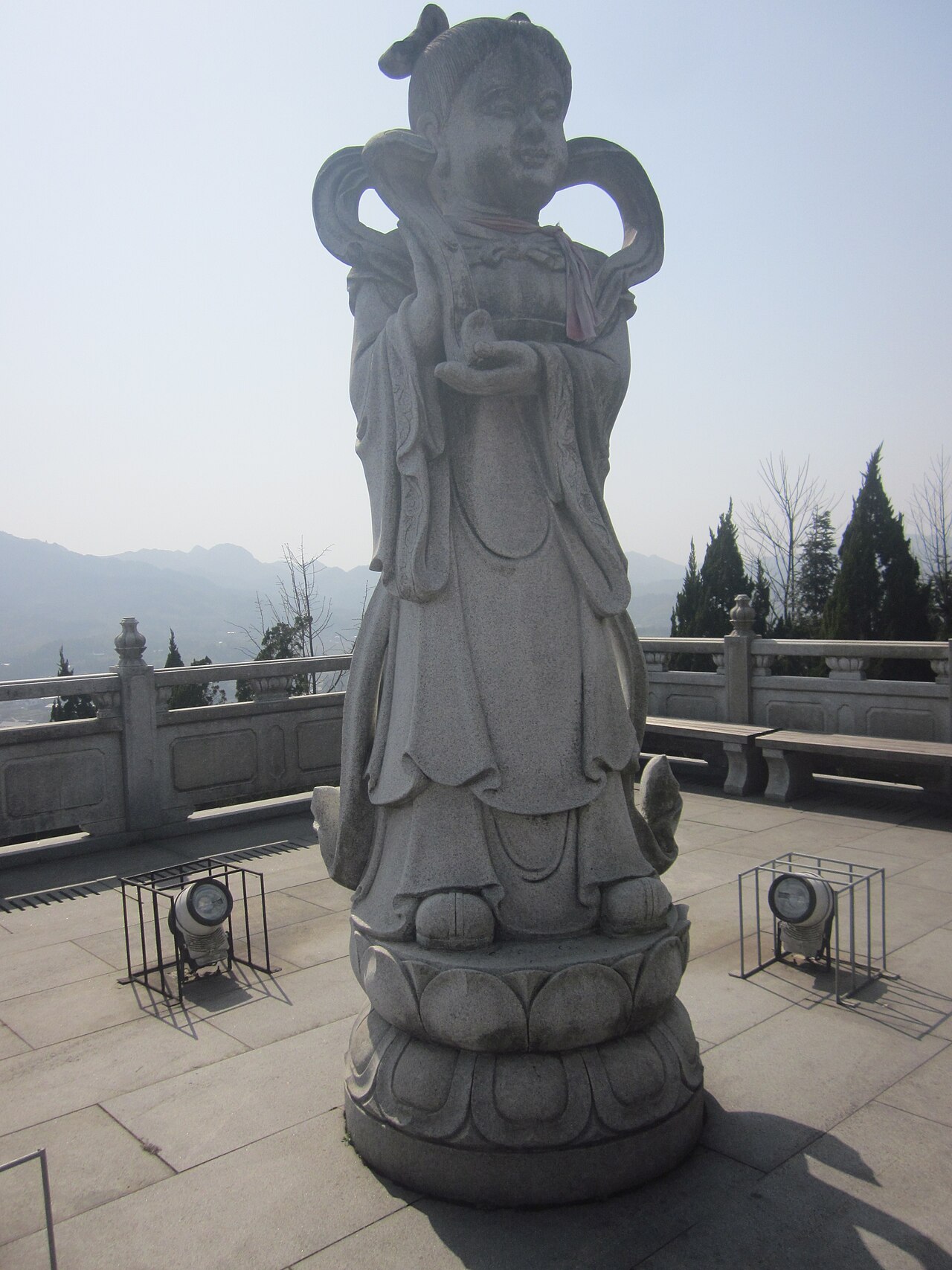
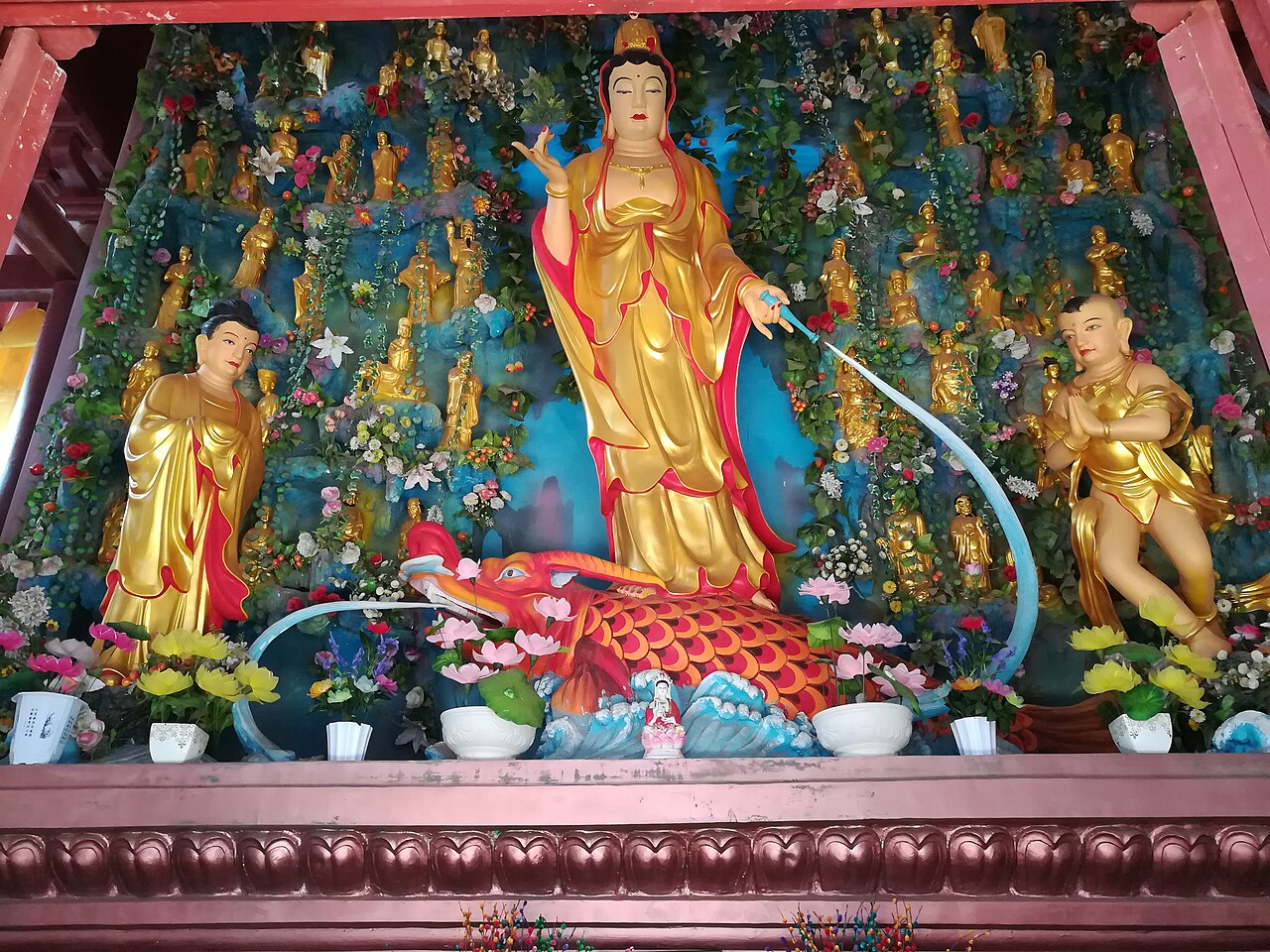
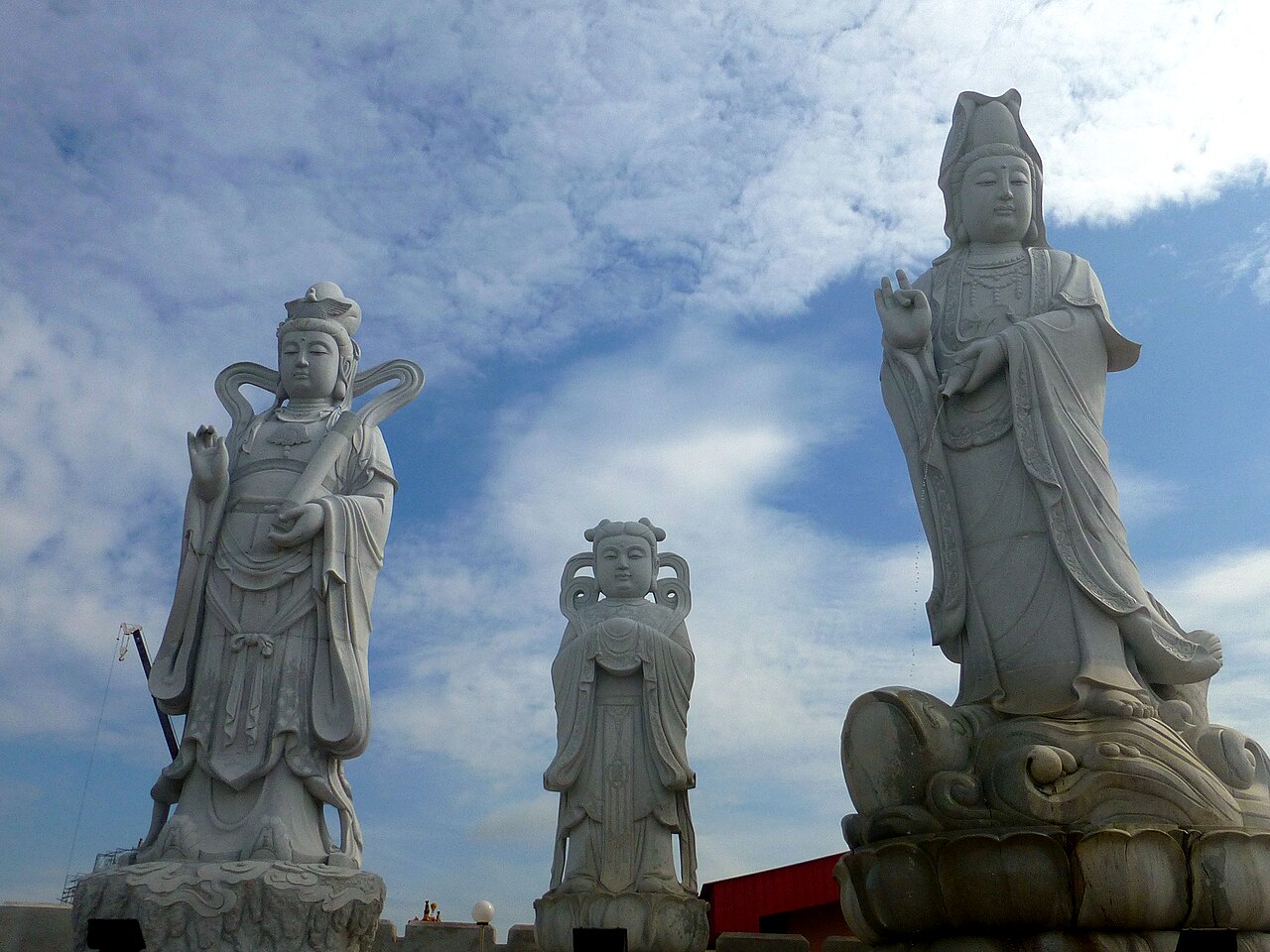
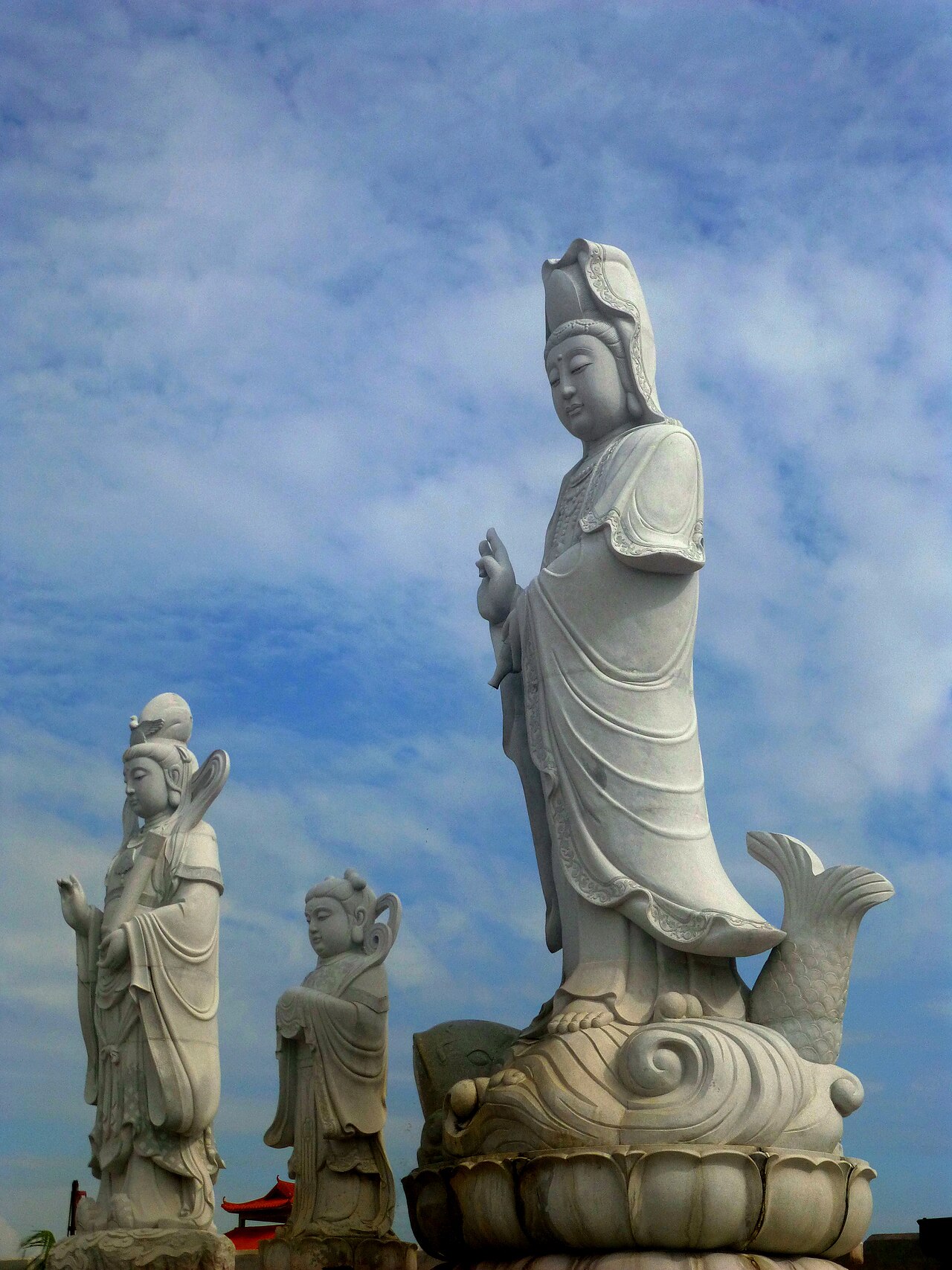
Frequently Asked Questions
Who is Longnü?
Longnü, meaning "Dragon Girl," is the eight-year-old daughter of the nāga king Sāgara in Chinese Buddhist tradition. She is most widely recognized as one of the two acolytes flanking the bodhisattva Guanyin (Avalokiteśvara) in devotional imagery.
What is Longnü's role in Guanyin's iconography?
In Chinese Buddhist art, Longnü stands beside Sudhana as a loyal attendant of Guanyin. This pairing traces back to esoteric tantric sutras that describe her presenting a precious pearl to Guanyin in gratitude for the bodhisattva's visit to the Dragon King's underwater palace.
What happens in the famous pearl episode in the Lotus Sūtra?
During a teaching at the ocean floor, the young nāga princess offers a priceless jewel to the Buddha as a token of devotion. She then instantly achieves full enlightenment, demonstrating that awakening is not limited by gender, species, or age.
Why is Longnü considered important in Buddhist thought?
Her sudden enlightenment as a child and a non-human being challenges the assumption that only a human male body can attain Buddhahood. She has become a powerful symbol of the universality and immediacy of awakening in East Asian Buddhism.
Which canonical or quasi-canonical texts feature Longnü?
She appears in the Lotus Sūtra, where her pearl-offering and enlightenment take place, as well as in the Complete Tale of Avalokiteśvara and the Southern Seas and the Precious Scroll of Sudhana and Longnü. These later narrative texts expand on her relationship with Guanyin and Sudhana.
More in Buddhist mythology 1-24
Spotted an error? Know more?
Reader corrections go straight into our review queue. Suggest an edit · How this site is sourced