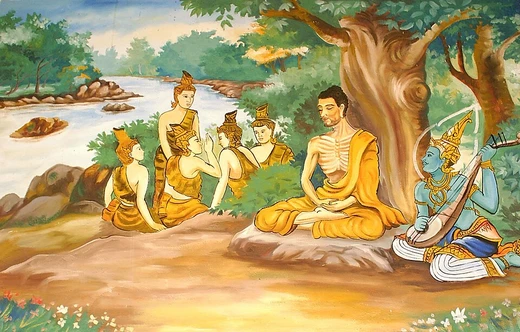
Great Renunciation
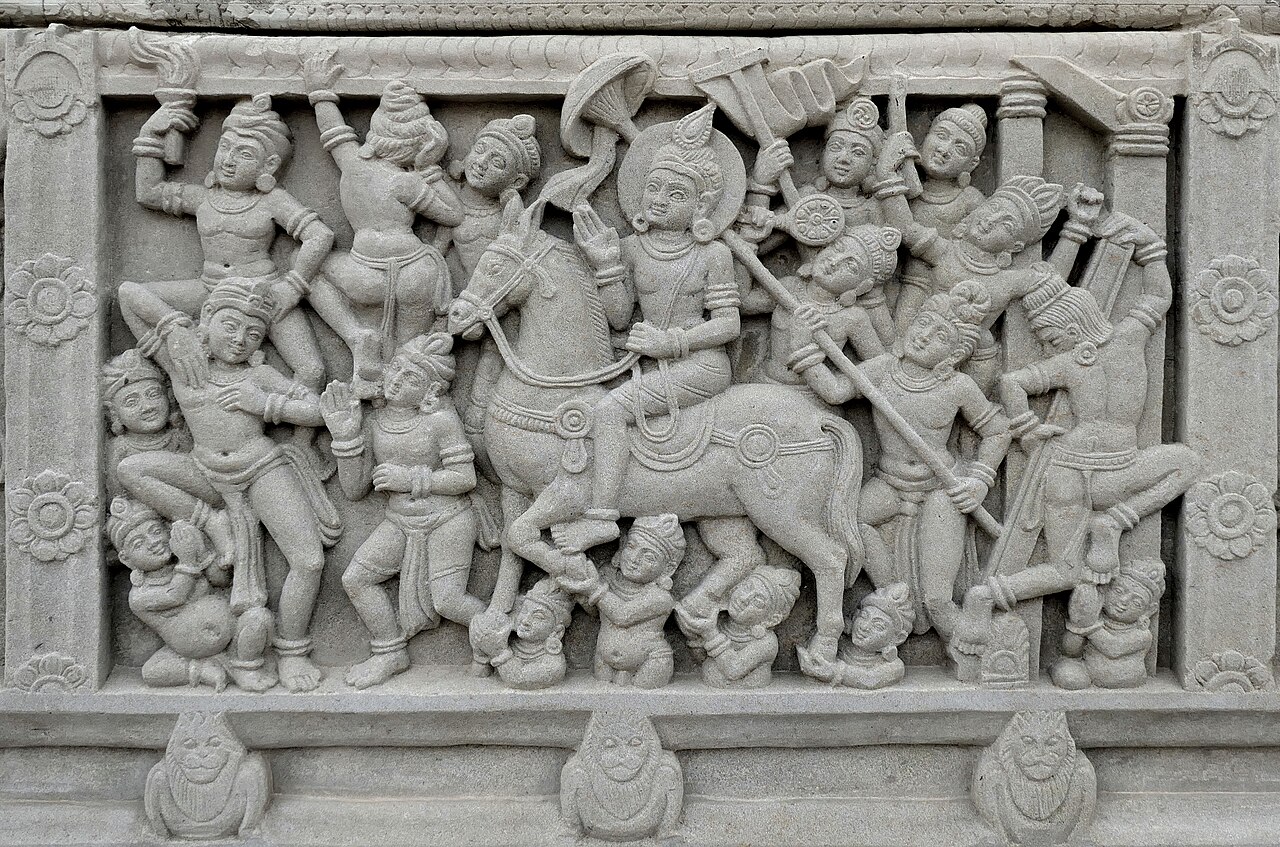
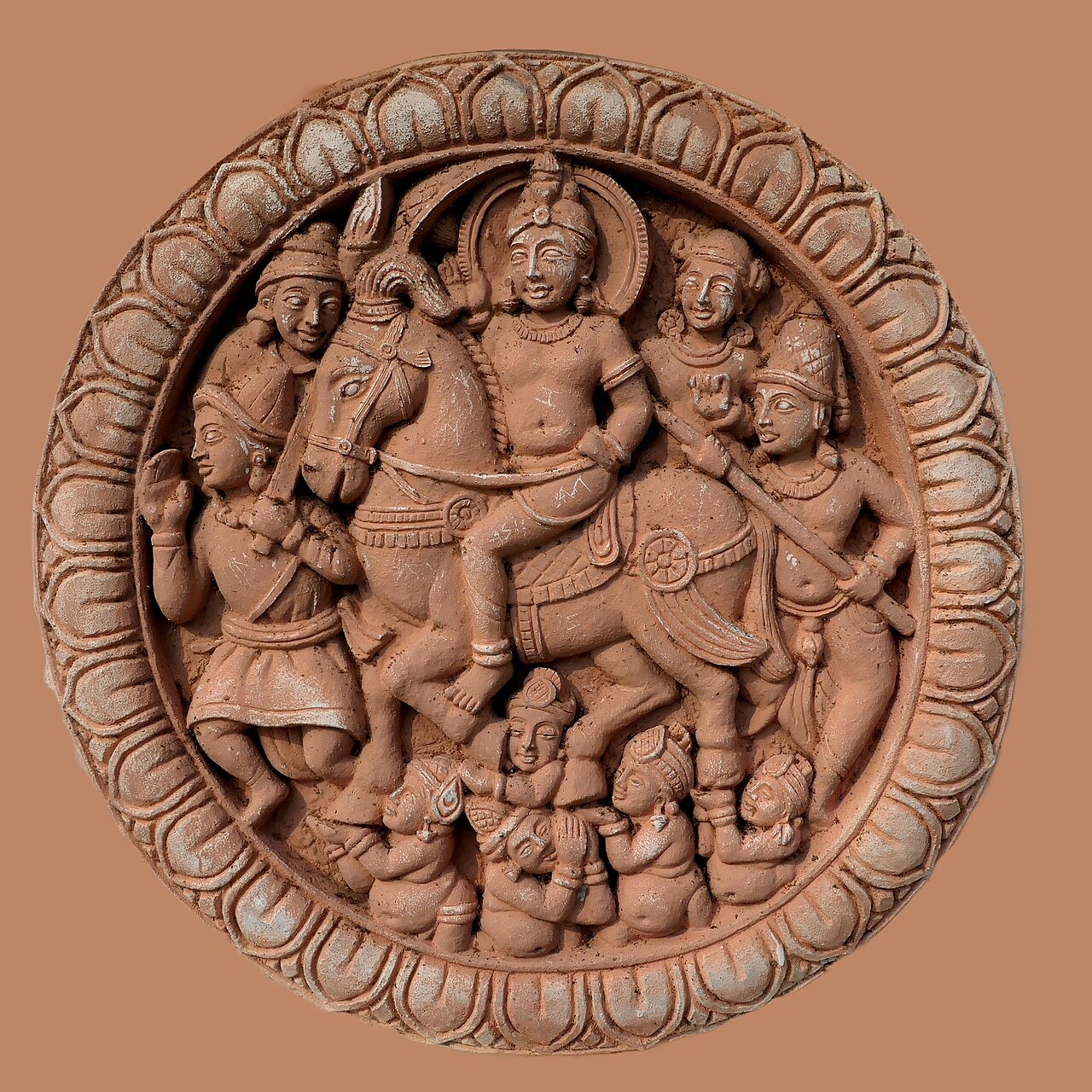
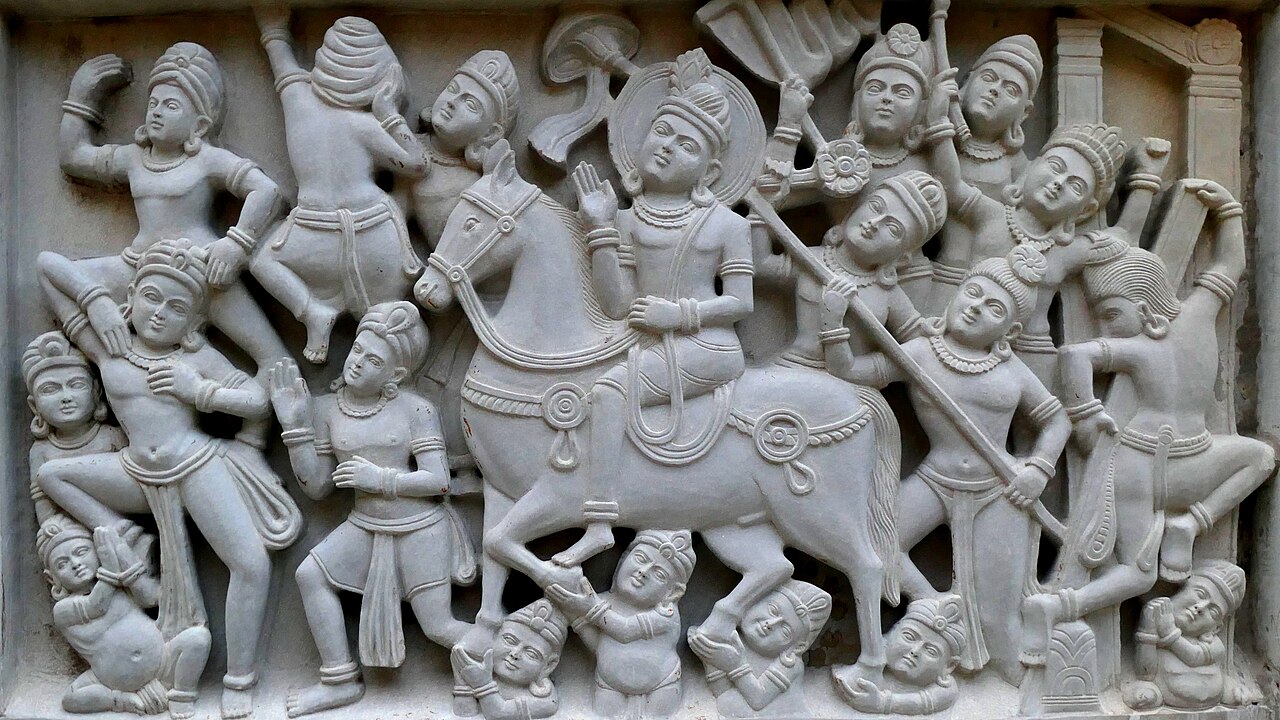
Departure of Gautama Buddha from palace to ascetic life.

Anandajoti · CC BY-SA 4.0
The Great Renunciation, also called the Great Departure, marks the moment Gautama Buddha left his home in Kapilavastu to become an ascetic. The event is considered a major sacrifice, which is why it is named as it is. The fullest versions of this story come from post-canonical Buddhist writings across different traditions, though these accounts are more mythological than the earlier texts.
According to these later sources, when Prince Siddhārtha was born, brahmin priests foretold he would become either a world teacher or a world ruler. His father, King Śuddhodana, wanted to keep him from a religious path, so he shielded the prince from any sight of death or suffering and surrounded him with luxury. Siddhārtha grew up enjoying a comfortable youth but continued to wrestle with religious questions. At age 29, he encountered the four sights for the first time: an old person, a sick person, a corpse, and an ascetic who inspired him. Soon after, he woke one night to see his female servants in unappealing postures, which deeply disturbed him. Driven by these experiences, he decided to leave the palace against his father’s wishes, abandoning his newborn son Rāhula and his wife Yaśodharā. He rode to the Anomiya River with his charioteer Chandaka and horse Kaṇṭhaka, cut off his hair, and then sent them back. He changed into monk’s robes and entered the forest. Later, King Bimbisāra offered to share his royal power, but the now-ascetic Gautama refused.
This story highlights the tension between family duties and a religious life, showing that even the most luxurious existence is filled with suffering. Siddhārtha felt a strong religious agitation about life’s impermanence, yet he believed a divine alternative could be found in this world by an honest seeker. Alongside this agitation, he was motivated by deep empathy for human suffering. Traditional accounts say little about the Buddha’s early life, and historical details remain uncertain. Historians think Siddhārtha was indeed born into a wealthy, aristocratic family with a father who was a rāja. However, his hometown was an oligarchy or republic, not a kingdom, and the prince’s wealth and blissful life were likely exaggerated in later texts.
Quick Facts
- Title
- Great Renunciation
- Pi
- Abhinikkhamaṇa
- Sa
- Abhiniṣkramaṇa, Mahābhiniṣkramaṇa
- Zh-Latn
- chūjiā
- Th-Latn
- Mahaphinetsakrom
Facts from the source article.
Lore & Background
According to post-canonical accounts, at the birth of Prince Siddhārtha Gautama, brahmin priests predicted he would become a world teacher or world ruler. His father Śuddhodana prevented him from seeing death or suffering and distracted him with luxury. At age 29, he saw for the first time the four sights: an old man, a sick person, a corpse, and an ascetic. Shortly after, he woke at night and saw his female servants in unattractive poses, which shocked him. Moved by these experiences, he decided to leave the palace against his father's will, leaving behind his just-born son Rāhula and wife Yaśodharā. He traveled to the river Anomiya with his charioteer Chandaka and horse Kaṇṭhaka, cut off his hair, and journeyed into the woods to change into monk's robes.
Reader's Guide
The story of the Great Renunciation illustrates the conflict between lay duties and religious life, showing that even the most pleasurable lives are filled with suffering. Prince Siddhārtha was moved by religious agitation about the transient nature of life and deep empathy with human suffering. Historians argue that while Siddhārtha was born into a wealthy aristocratic family with a father as a rāja, the hometown was an oligarchy or republic, and the prince's wealth has been embellished. The literal interpretation of the four sights is generally not accepted by historians, but seen as symbolical for a growing existential realization. The double prediction at his birth points at two natures: the struggling human and the divine descendant. The Great Renunciation has been depicted much in Buddhist art and has influenced ordination rituals. A modified version appears in the Christian legend of Barlaam and Josaphat. Modern authors such as Edwin Arnold and Jorge Luis Borges have been influenced by the story.
Did You Know?
- The Great Renunciation is called 'great' because it is regarded as a great sacrifice.
- The event is mentioned as one of twelve great acts of a Buddha in the Tibetan tradition.
- A modified version of the Great Renunciation appears in the Christian legend of Barlaam and Josaphat.
The Night of Departure and the Four Sights
At twenty-nine, Prince Siddhārtha Gautama experienced what Buddhist tradition calls the four sights: an elderly person, someone afflicted with illness, a dead body, and a wandering ascetic whose presence stirred something in him. These encounters, combined with a childhood meditative episode that first revealed to him the pervasive suffering (dukkha) woven into all existence, crystallized a decision. That night, he also witnessed his sleeping attendants in poses he found deeply unsettling, which sealed his resolve. Against the explicit wishes of his father Śuddhodana, rāja of the Śākya clan, Siddhārtha slipped out of the palace at Kapilavastu, leaving behind his newborn son Rāhula and his wife Yaśodharā. Accompanied by his charioteer Chandaka and mounted on the horse Kaṇṭhaka, he rode to the Anomiya river, where he cut his hair, shed his royal garments, and donned the simple robes of a śrāmaṇa. He then set out into the forests as a wandering ascetic. When he later encountered King Bimbisāra, who offered to share his throne, the former prince declined, having already surrendered all claims to worldly power.
Textual Sources and the Problem of Biography
The Great Renunciation is known to us through a layered corpus of Buddhist literature spanning multiple languages and centuries. The earliest references appear in fragments within texts like the Ariyapariyasenā Sutta, the Mahāsaccaka Sutta, and various Vinaya (monastic discipline) sections, particularly in Chinese translations from the Mahīśāsaka and Dharmaguptaka schools. These early sources offer glimpses rather than a continuous narrative. More complete biographies emerged later: the Buddhacarita by Aśvaghoṣa (c. 80–150 CE), the Mahāvastu and Lalitavistara (both 1st century CE), and the Saṅghabedavastu in Sanskrit. Chinese biographies, some dating to the 2nd–4th century BCE, frequently incorporate the term for Great Departure in their titles, with the Fobenxingji Jing (Abhiniṣkramaṇa Sūtra) being especially prominent. Pāli-language works include the Jātakanidāna (2nd–3rd century CE), the 12th-century Jinālaṅkāra, the 13th-century Jinacarita, and 18th-century compositions such as the Mālāṅkāra Vatthu and Jinamahānidāna. Scholars note that these later accounts, while more detailed, carry a distinctly mythological character compared to the terse early fragments.
Theological Tensions and the Double Prediction
The narrative of the Great Renunciation encodes a fundamental tension in Buddhist thought: the pull between worldly obligation and the pursuit of spiritual liberation. The brahmin priests' prediction at Siddhārtha's birth—that he would become either a world teacher or a universal monarch (cakravartin)—establishes two competing natures within the prince. His father Śuddhodana, determined to steer him toward kingship, shielded him from all contact with aging, sickness, and death, surrounding him with luxury. Yet Siddhārtha's inner religious agitation (saṃvega) about life's transience, coupled with a profound empathy (karuṇā) for human suffering, ultimately overrode these arrangements. Historians observe that the literal reading of the four sights—encountering old age, illness, and death for the very first time at twenty-nine—is generally treated as symbolic rather than factual, representing a gradual existential awakening that may have begun in childhood. The prince's wealth and his father's royal status have likely been embellished; the Śākya community was probably an oligarchy or republic rather than a kingdom. The association with the ideal cakravartin may reflect the influence of the Maurya empire's expansion roughly a century after Siddhārtha's lifetime.
Artistic, Ritual, and Cross-Cultural Legacy
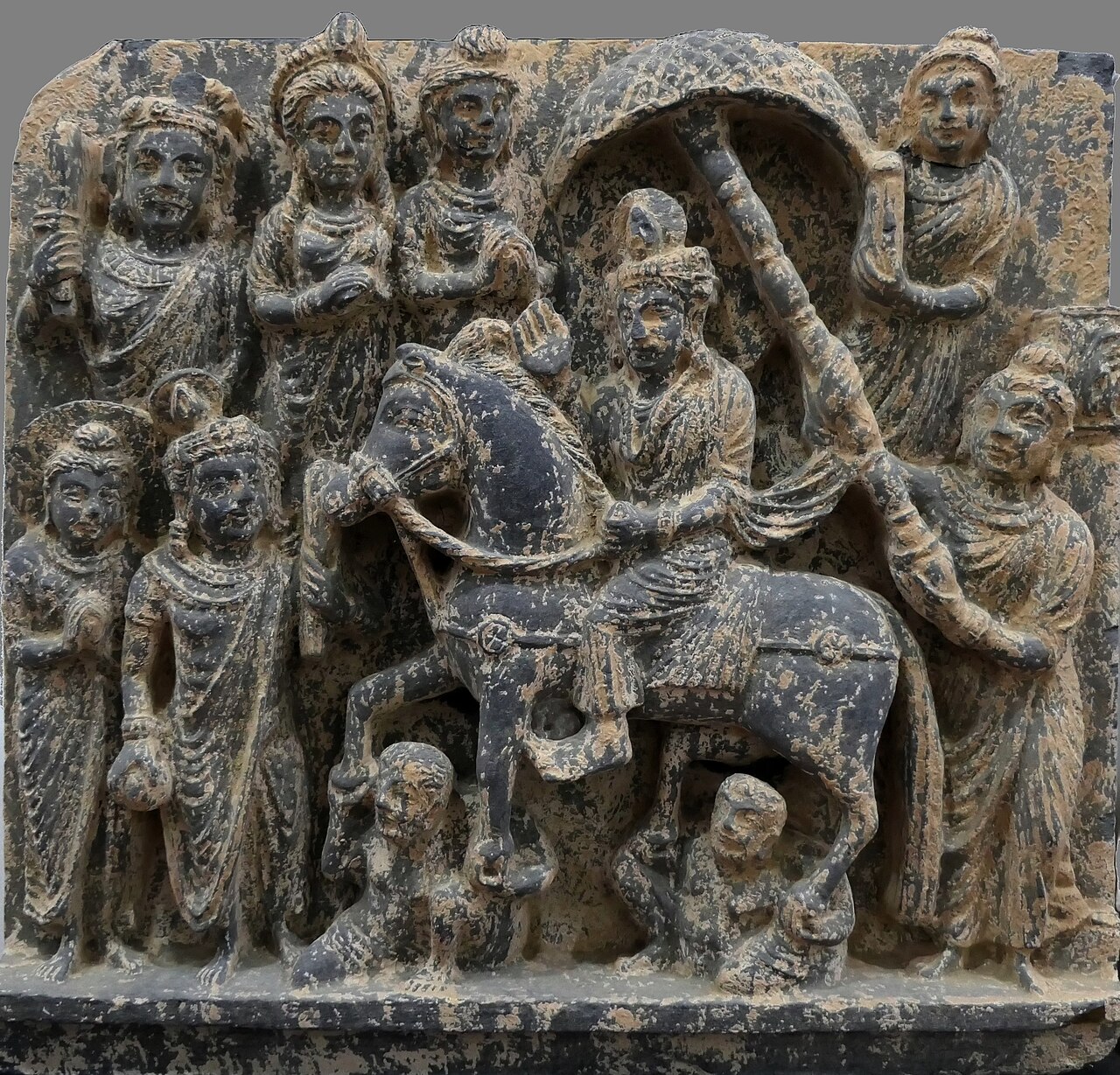
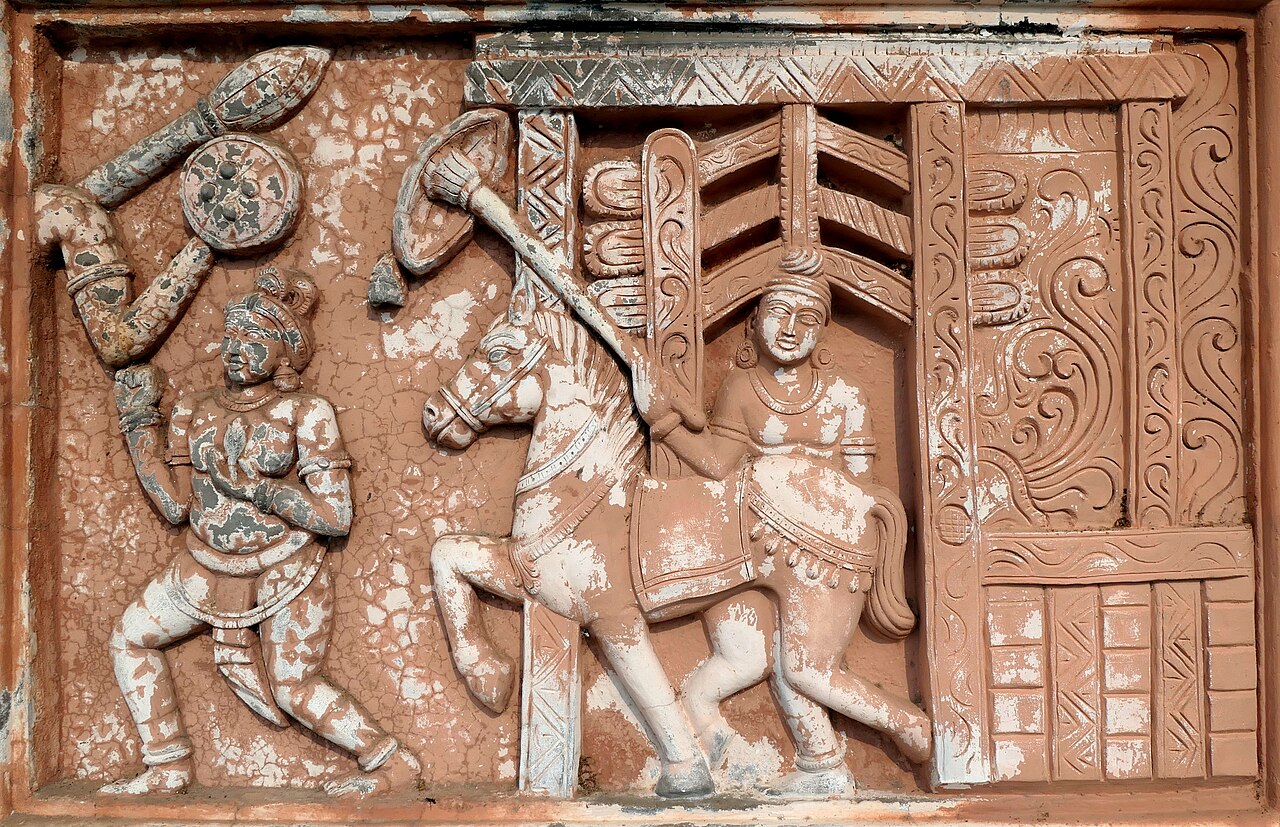
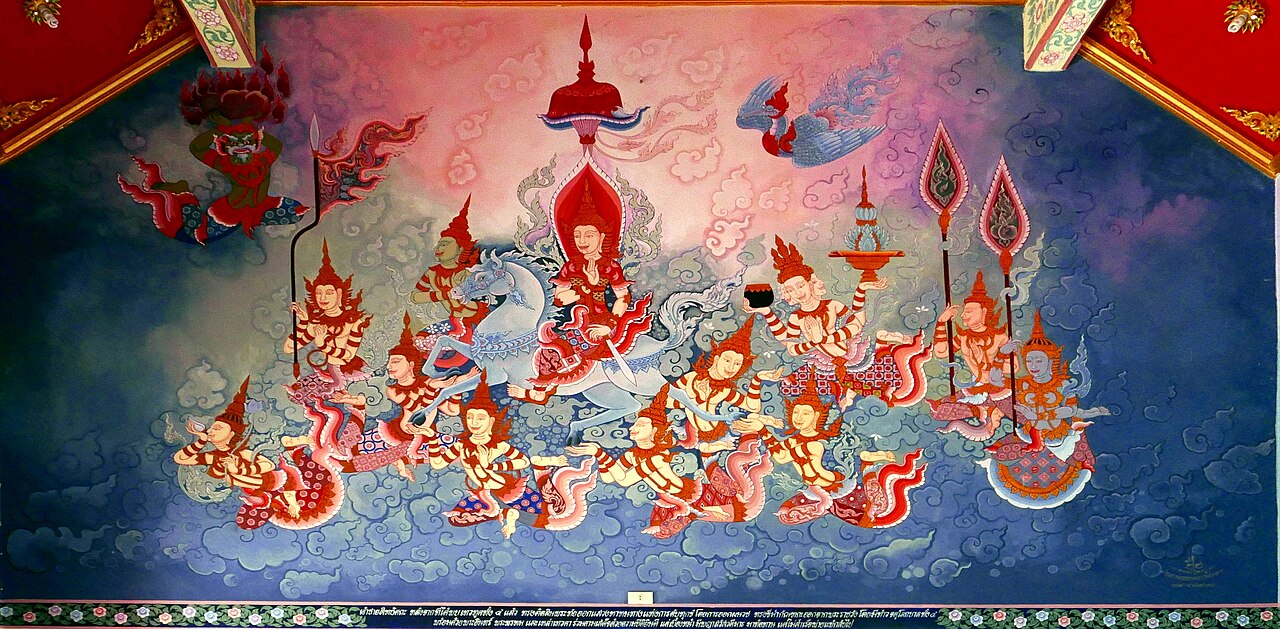
The Great Renunciation has left an enduring imprint far beyond the Buddhist canon. It has been a recurring subject in Buddhist visual art across centuries and regions, and it continues to shape ordination ceremonies in multiple Buddhist communities; in some cases, the rituals have fed back into the textual narratives themselves. The story's reach extended well beyond Asia: a modified version of the renunciation tale appears in the legend of the Christian saints Barlaam and Josaphat, one of the most widely circulated hagiographies of 11th-century Christendom, where Buddhist themes and doctrinal motifs are woven into a narrative of a victorious Christian king and ascetic. In the modern literary world, the story has inspired writers as diverse as Edwin Arnold (1832–1904) and Jorge Luis Borges (1899–1986), demonstrating its capacity to resonate across cultural and temporal boundaries. The Great Renunciation thus functions not merely as a historical or doctrinal episode but as a living narrative template that has been continually reinterpreted, reimagined, and transmitted across religious and artistic traditions for over two millennia.
Gallery
Frequently Asked Questions
What is the Great Renunciation in Buddhist mythology?
The Great Renunciation, also called the Great Departure, is the pivotal episode in which Prince Siddhārtha of the Śākya clan left his palace life in Kapilavastu to become a wandering ascetic. It is the decisive turning point that set him on the path to becoming the Buddha.
Why is it called the 'Great' Renunciation?
The adjective 'Great' underscores the sheer magnitude of what was surrendered—kingdom, family, wealth, and every comfort of royal life—in exchange for the austere path of renunciation.
What triggered the Great Departure?
In the fuller post-canonical retellings, brahmin priests prophesied at Siddhārtha's birth that he would become either a universal ruler or a universal teacher. His father, King Śuddhodana, tried to shield him from suffering so the ruler destiny would take hold, but Siddhārtha ultimately chose the teacher's path and walked out of the palace.
Where does the Great Renunciation story appear in Buddhist texts?
The most elaborate versions come from later, post-canonical writings across multiple Buddhist traditions, and these accounts tend to be more narrative and mythological in character than the earlier canonical suttas.
Why is the Great Renunciation important to Buddhist devotees?
It represents the single most consequential choice in the Buddha's biography—the moment he prioritized spiritual liberation over worldly power—and it is widely regarded as the supreme act of sacrifice in the entire tradition.
More in Buddhist mythology 1-24
Spotted an error? Know more?
Reader corrections go straight into our review queue. Suggest an edit · How this site is sourced