
Cintamani
The wish-fulfilling jewel of Hindu and Buddhist traditions.

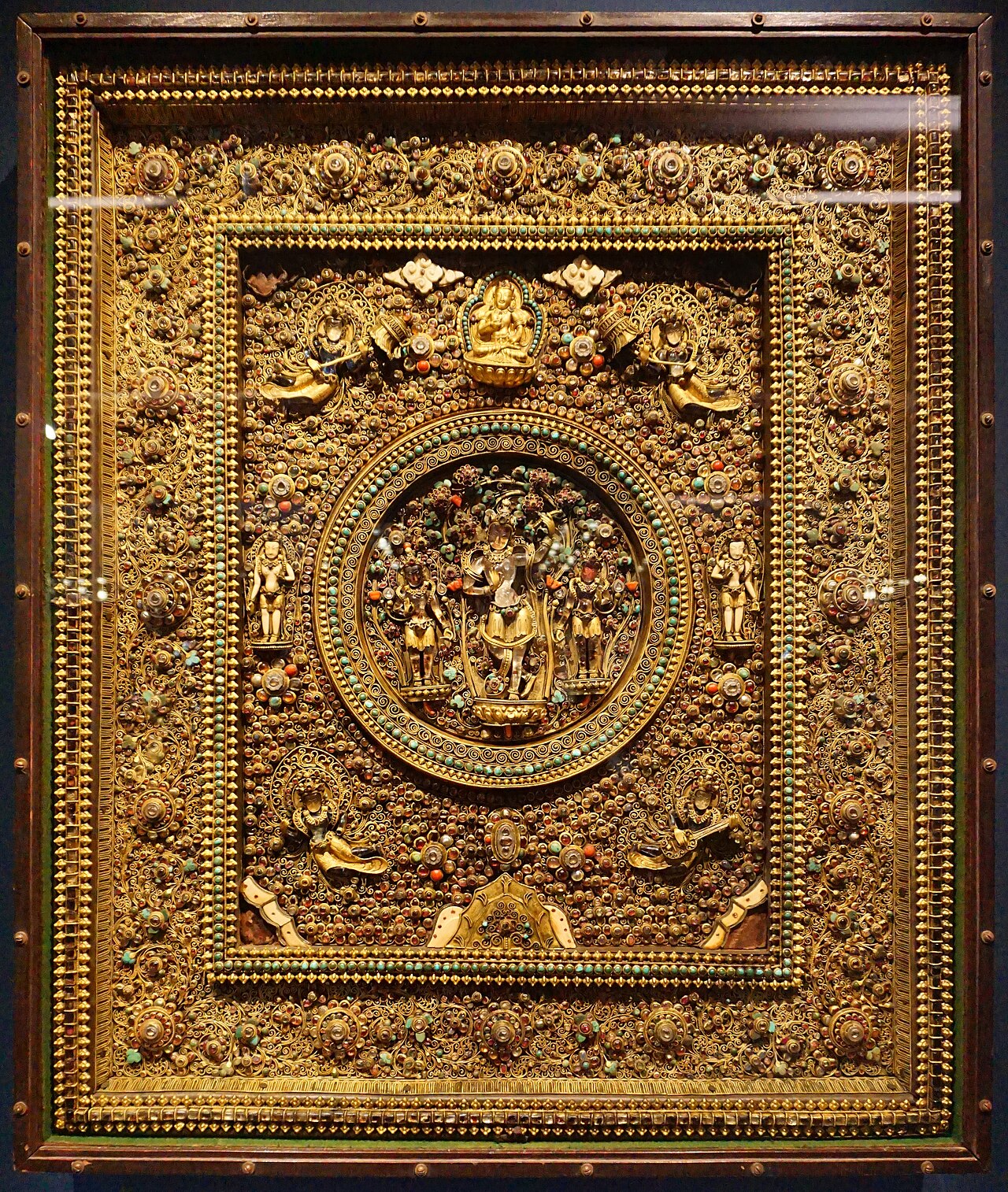
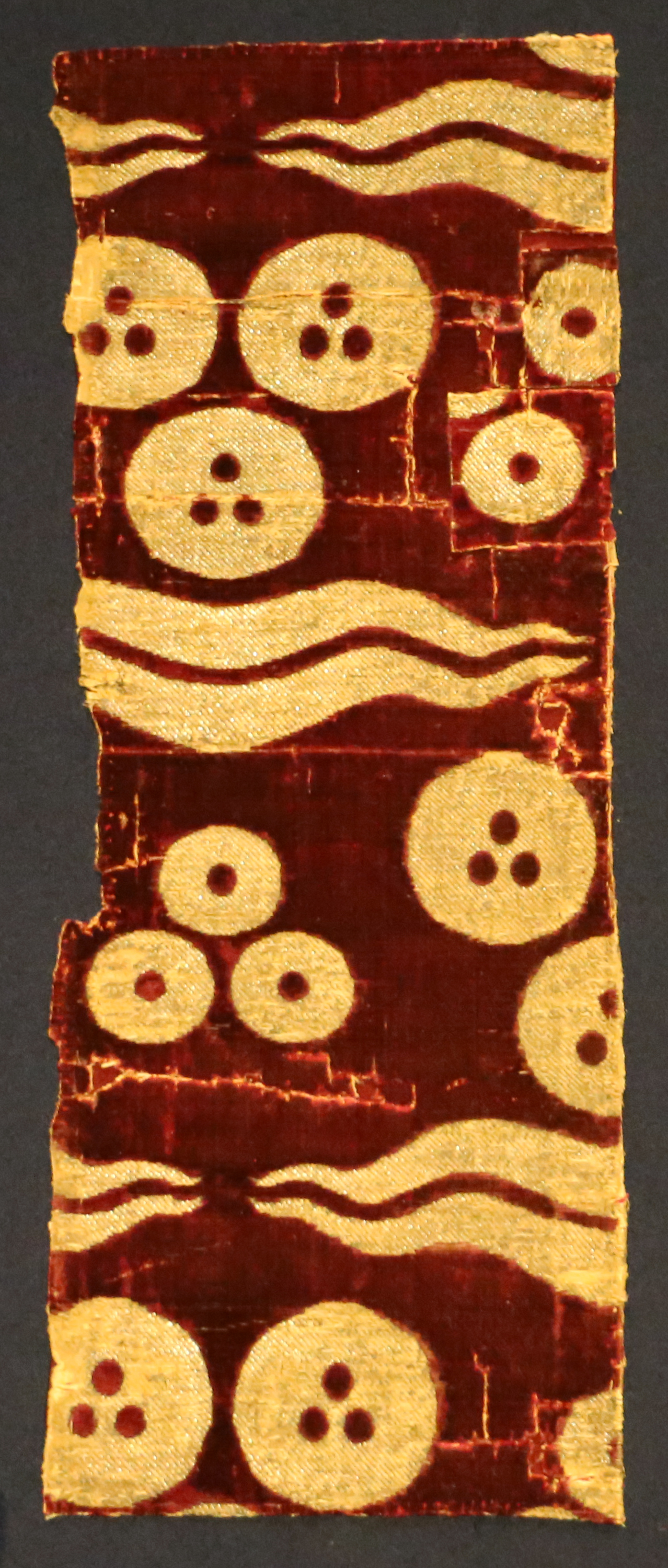
Sailko · CC BY-SA 4.0
Cintāmaṇi (Sanskrit: चिन्तामणि), also known as the Chintamani Stone, is a wish-fulfilling jewel that appears in Hindu and Mahayana Buddhist traditions. Resembling a pearl, it is one of several Mani Jewel images found in Buddhist scripture.
In Hinduism, the Cintāmaṇi is linked to the gods Vishnu and Ganesha. It is often depicted as a fabulous jewel in Vishnu’s possession—called the Kaustubha Mani—or as the Naga Mani on the forehead of the Naga king, or on the forehead of the Makara. The Yoga Vasistha, written in the 10th century CE, includes a story about the Cintāmaṇi. The Vishnu Purana, from the mid-first millennium CE, describes the Syamanta jewel, which bestows prosperity and encapsulates the Yadu clan system. The Brihad Bhagavatamrita compares this gem to devotion toward Vishnu, while the Bhagavata Purana notes that the Cintāmaṇi can grant worldly pleasures and affluence in Svarga, but spiritual advancement is needed to reach Vaikuntha, Vishnu’s realm, which is difficult even for yogins. The mountainous region of Kintamani in Bali is named after the Cintāmaṇi.
In Buddhism, the wish-fulfilling jewel is an important mythic symbol, representing a magical gem that manifests wishes—curing disease, purifying water, granting clothing, food, and treasure. It is a common symbol for the teachings and qualities of the Buddha. The Bodhisattvas Avalokiteśvara and Kṣitigarbha hold the Cintāmaṇi. One manifestation of Avalokiteśvara, called Cintāmaṇicakra, holds the jewel. It also appears on the back of the Lung Ta (wind horse) depicted on Tibetan prayer flags. Reciting the Cintāmaṇi dharani is said to grant the Wisdom of Buddha, enabling one to understand the Buddha’s truth and turn afflictions into Bodhi. It is believed to allow one to see the Holy Retinue of Amitabha and assembly on one’s deathbed. In Tibetan Buddhist tradition, the Chintamani is sometimes depicted as a luminous pearl and is possessed by several forms of the Buddha. According to Tibetan lore, the Cintāmaṇi was one of four relics that came in a chest falling from the sky during the reign of King Lha Thothori Nyantsen. The king kept the objects in reverence, and later two strangers explained the relics—including the Buddha’s bowl and a mani stone inscribed with the Om Mani Padme Hum mantra—which brought the Dharma to Tibet.
In Japan, the Hindu goddess Lakshmi, known as Kisshōten in Shinto, is commonly depicted with a Cintāmaṇi in her hand.
The term Cintāmaṇi (Sanskrit: चिन्तामणि) means “Wish-Fulfilling Gem.” The mani (jewel) is translated in Chinese as ruyi or ruyizhu (如意珠, “as-one-wishes jewel”) or ruyibaozhu (如意寶珠, “as-one-wishes precious jewel”). In Japanese, ruyibaozhu is pronounced nyoi-hōju or nyoi-hōshu (如意宝珠), and in Korean, ruyizhu is pronounced yeouiju (여의주).
René Guénon considered the Cintāmaṇi equivalent to the philosopher’s stone.
- Field
- Religious symbolism
- Known for
- Wish-fulfilling jewel in Hindu and Buddhist traditions
- Associated deities
- Vishnu, Ganesha, Avalokiteśvara, Kṣitigarbha, Kisshōten
- Also called
- Chintamani Stone, Nyoihōju, Yeouiboju, Ruyi baozhu
Lore & Background
Within Hinduism, it is connected with the gods Vishnu and Ganesha. In Hindu tradition, it is often depicted as a fabulous jewel in the possession of Vishnu as the Kaustubha Mani or as on the forehead of the Naga king called as Naga Mani, or on the forehead of the Makara. The Yoga Vasistha, originally written in the 10th century CE, contains a story about the cintamani. The Hindu Vishnu Purana speaks of the 'Syamanta jewel, bestowing prosperity upon its owner, encapsulates the Yadu clan system'. In Buddhism, it is held by the Bodhisattvas Avalokiteśvara and Kṣitigarbha. It is also seen carried upon the back of the Lung Ta (wind horse) which is depicted on Tibetan prayer flags. By reciting the dharani of Cintamani, Buddhist tradition maintains that one attains the Wisdom of Buddha, able to understand the truth of the Buddha, and turn afflictions into Bodhi. It is said to allow one to see the Holy Retinue of Amitabha and assembly upon one's deathbed. In Tibetan Buddhist tradition the Chintamani is sometimes depicted as a luminous pearl and is in the possession of several of different forms of the Buddha. In Japan, where the Hindu goddess Lakshmi is known as Kisshōten in Shinto, she is commonly depicted with a Cintāmaṇi in her hand.
Reader's Guide
The source article does not provide a guide for using the Cintamani in practice.
Did You Know?
- In Hinduism, the Cintāmaṇi is connected with the gods Vishnu and Ganesha.
- In Japan, the goddess Lakshmi (Kisshōten) is commonly depicted with a Cintāmaṇi in her hand.
A Jewel Across Languages and Cultures
The Cintāmaṇi—literally 'wish-fulfilling gem' in Sanskrit—carries a remarkable linguistic footprint across South and East Asia. In Chinese it becomes ruyi or ruyizhu, meaning 'as-one-wishes jewel,' a rendering that flows into Japanese as nyoi-hōju and into Korean as yeouiju. In Mongolian it is known as Chandmani, and in Tibetan as yid bzhin nor bu. This web of translations testifies to how widely the image of a luminous, pearl-like stone that grants desires traveled along trade and spiritual routes. The jewel appears in Hindu scripture, Mahayana Buddhist sutras, Tibetan iconography, and even Japanese Shinto art, where the goddess Kisshōten (the Japanese form of Lakshmi) is commonly shown holding one. Far from being a single culture's invention, the Cintāmaṇi functions as a shared visual and narrative motif, adapted locally yet retaining its core identity as a source of boundless, wish-answering power.
Theological Depth in Hindu Tradition
Within Hindu thought, the Cintāmaṇi is far more than a decorative motif; it is a theological instrument. The Vishnu Purana, composed in the mid-first millennium CE, describes the Syamanta jewel as a source of prosperity that encapsulates the entire Yadu clan system. The gem also appears as the Kaustubha Mani in Vishnu's possession, as the Naga Mani on the forehead of the Naga king, or adorning the Makara. The Yoga Vasistha, a 10th-century text, weaves a narrative around the jewel. The Brihad Bhagavatamrita draws a pointed analogy: just as anyone can pick up a shard of glass or even a fragment of gold, yet no one can simply acquire a Cintāmaṇi because it is exceedingly rare, so too are heavenly pleasures and liberation relatively attainable, while prema-bhakti—devotion infused with love—remains the most elusive treasure of all. The Bhagavata Purana adds that the jewel may grant worldly affluence in Svarga, but true spiritual advancement leads to Vaikuntha, Vishnu's realm, which is harder to reach even for accomplished yogins. The mountainous Kintamani region in Bali bears the jewel's name, embedding the symbol into the physical landscape.
Buddhist Symbolism and the Dharma's Arrival in Tibet
In Mahayana and Tibetan Buddhism, the Cintāmaṇi operates as a powerful mythic symbol representing the Buddha's teachings and qualities. It is described as a magical jewel capable of manifesting wishes—curing illness, purifying water, providing clothing, food, and treasure. The Bodhisattvas Avalokiteśvara and Kṣitigarbha are both depicted holding it; one manifestation of Avalokiteśvara is even named Cintāmaṇicakra. On Tibetan prayer flags, the jewel rides the back of the Lung Ta, the wind horse, linking it to the spread of spiritual energy. Reciting the dharani of Cintāmaṇi is said to grant the practitioner the Wisdom of Buddha, transforming afflictions into Bodhi and revealing the Holy Retinue of Amitabha at the moment of death. Perhaps the most storied connection is the Tibetan legend of King Lha Thothori Nyantsen, during whose reign a chest fell from the sky containing four relics, including the Buddha's bowl and a mani stone inscribed with the Om Mani Padme Hum mantra. Two mysterious strangers later appeared at the king's court to explain these objects, which are credited as the bringers of the Dharma to Tibet.
Echoes in Comparative Mythology and Perennial Thought
The Cintāmaṇi's resonance extends well beyond its native religious contexts. The French philosopher and perennialist René Guénon identified it as the direct equivalent of the Western philosopher's stone, a universal symbol of spiritual transmutation and perfection. This reading places the jewel alongside a constellation of cross-cultural sacred objects: the Holy Grail, the Ark of the Covenant, the Cornucopia, the Sampo of Finnish myth, and the Yasakani no Magatama. In Japanese Shinto, the goddess Kisshōten—recognized as the local form of the Hindu Lakshmi—is routinely portrayed clutching a Cintāmaṇi, and the Kagome crest, a layered six- and eight-pointed star, is also associated with her. The jewel's presence in so many disparate traditions suggests it taps into a deep, shared human intuition about a singular, all-giving source of grace. Whether understood as a devotional aid in Hindu bhakti, a symbol of compassionate power in Buddhism, or a metaphysical key in perennial philosophy, the Cintāmaṇi endures as one of humanity's most persistent and portable spiritual images.
Gallery

Frequently Asked Questions
What is Cintamani?
Cintamani is a legendary wish-fulfilling jewel that appears in both Mahayana Buddhist and Hindu scriptures. It is typically depicted as a pearl-like object capable of granting the desires of whoever possesses or invokes it.
Which Buddhist figures are connected to the Cintamani?
In Buddhist tradition the jewel is most closely linked to the Bodhisattvas Avalokiteśvara and Kṣitigarbha, as well as to Kisshōten, a Japanese form of the goddess Sarasvatī. It serves as a key element in their iconography rather than as a character with its own narrative.
How does Cintamani relate to Hindu mythology?
The same jewel appears in Hindu texts as a divine treasure of the gods Vishnu and Ganesha, where it functions to fulfill the wishes of devotees. The two traditions share the image but assign it to different divine figures, reflecting a broader exchange of symbolic motifs between Hindu and Buddhist cultures.
What are the other names for Cintamani?
The jewel is known by several names across cultures, including Chintamani Stone, Nyoihōju and Yeouiboju in Japanese, and Ruyi baozhu in Chinese. These variations track its spread through East Asian Buddhist and Hindu traditions.
What role does Cintamani play in Buddhist symbolism?
Cintamani functions as a symbol of the boundless compassion and generosity of the Bodhisattvas, representing the idea that an enlightened being can meet the needs of every sentient being without limit. It is not a deity or a character with a story arc but a sacred object that embodies that ideal.
More in Buddhist mythology 1-24
Spotted an error? Know more?
Reader corrections go straight into our review queue. Suggest an edit · How this site is sourced