Mohini
Hindu goddess of enchantment and Vishnu's only female avatar.

Artly2001 · CC BY 3.0
Mohini (Sanskrit: मोहिनी, Mohinī) is the Hindu goddess of enchantment and the only female avatar of the god Vishnu. She is portrayed as a femme fatale who maddens lovers and demons, often leading them to their doom. First referenced in the Ramayana (1.45.20-30), she appears after the Churning of the Ocean as a mesmerizing beauty who distributes the elixir of immortality to the gods while depriving demons, allowing the gods to triumph.
Quick Facts
- Sanskrit Transliteration
- Mohinī
- Affiliation
- Avatar of Vishnu
- Gender
- Female
- Children
- Shasta
- Weapons
- Mohini-Astra (Seduction), Sudarshana Chakra
- Deity Of
- Goddess of Beauty, Seduction, Eroticism and Illusion
Facts from the source article.
Lore & Background
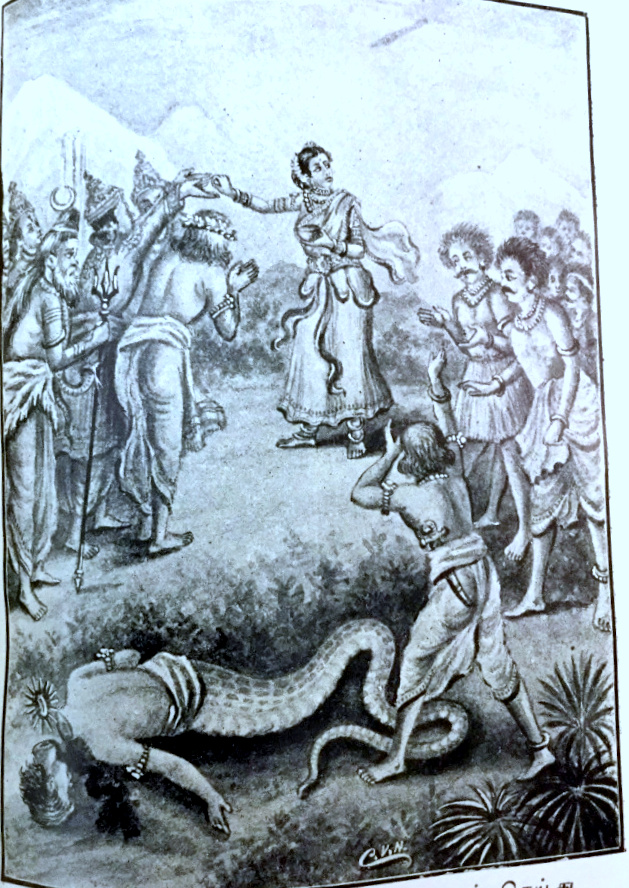
Mohini's earliest reference is in the Ramayana (1.45.20-30), dating to around the 4th century BCE to 4th century CE, where Vishnu assumes an enchanting female form to trick the asuras during the churning of the Ocean of Milk. She distributes the amrita to the devas, and when the asura Rahu disguises himself as a god, Vishnu decapitates him with his discus. The Mahabharata and later texts like the Bhagavata Purana expand the legend, with Mohini becoming a formal avatar.
Mohini also defeats demons. In the Shiva Purana and the Skanda Purana, she charms Bhasmasura, who had gained the power to turn anyone to ashes. She dances with him and tricks him into placing his hand on his own head, reducing him to ashes. Similar tales appear in Buddhist texts and the Ramakien, where she kills the demon Nontok. In the Matsya Purana, she steals a magical crown from the asura king Virochana, leading to his death.
Stories of Mohini and Shiva are popular in South Indian texts. In later regional texts like the Skanda Purana and Tamil tradition, Shiva sees Mohini, becomes overcome with desire, and chases her. Their union leads to the birth of the god Shasta, identified with Ayyappa and Aiyanar. In some versions, Shiva's seed falls on the ground, producing ores of silver and gold, or gives birth to Shasta.
Reader's Guide
Mohini represents the power of illusion (maya) and enchantment in Hindu mythology. As Vishnu's only female avatar, she embodies the concept that divine power can transcend gender, using allure as a strategic tool to restore cosmic order. Her legends, from the Mahabharata to regional Puranas, show her as both a trickster and a slayer of demons, often turning the demons' own powers against them. Her encounter with Shiva, resulting in the birth of Shasta, highlights themes of desire, asceticism, and the union of Vishnu and Shiva. Worshipped mainly in Western India, where temples are devoted to her as Mhalsa, Mohini's influence extends to transgender Hijra communities, who consider Krishna-Mohini a transsexual deity. Her name, meaning 'delusion personified,' underscores her role as an enchantress who maddens lovers and demons alike, leaving a lasting legacy in Hindu devotional and narrative traditions.
Did You Know?
- Mohini is the only female avatar of the Hindu god Vishnu.
- Her name comes from the verb root moha, meaning 'to delude, enchant, perplex, or illusion.'
- In the Baiga culture of Central India, the word mohini means 'erotic magic or spell.'
- Transgender Hijras consider Krishna-Mohini to be a transsexual deity.
The Elixir and the First Deception
The earliest trace of Mohini appears in the Samudra Manthana episode of the Mahabharata, composed around the fifth century BCE. When gods and demons jointly churn the Ocean of Milk and the nectar of immortality surfaces, the asuras scheme to hoard it. Vishnu, anticipating their treachery, takes on the guise of an enchanting young woman. She lulls the asuras into surrendering the elixir, then pours it only for the weakened devas, securing their victory. The asura Rahu slips in disguised as a god and begins drinking; Surya and Chandra alert Vishnu, who hurls the Sudarshana Chakra and severs Rahu's head, leaving that fragment immortal. The Ramayana, the Vishnu Purana, the Bhagavata Purana, and the Padma and Brahmanda Puranas all retell this episode with varying detail. In the oldest layer, the figure is simply a beautiful female manifestation of Vishnu; only later does the phrase mayam ashito mohinim crystallize into the proper name Mohini, and only in the tenth-century Bhagavata Purana does she become a formally enumerated avatar. The Brahmanda Purana adds a distinctive twist: Vishnu first meditates upon the Great Goddess Maheshvari before assuming her form.
The Beguiler of Demons
Across Hindu and Buddhist texts, Mohini's signature weapon is seduction wielded as a death sentence. In the Vishnu Purana, the ash-demon Bhasmasura earns from Shiva the power to reduce any being to cinders by touching their head. When he aims that power at Shiva, the god calls on Vishnu, who appears as Mohini. Bhasmasura, smitten, proposes marriage; she accepts only if he mirrors every step of her dance. As she lifts a hand to her own head, he copies the gesture and crumbles to dust. The Thai Ramakien tells of Nontok, a demon wielding a Shiva-granted weapon, enchanted by a four-armed Mohini-Vishnu before being struck down; dying, he accuses Vishnu of seducing then attacking him, and Vishnu decrees that in the next cycle Nontok will be reborn as Ravana and Vishnu as the mortal Rama. A South Indian tale links Krishna rather than Vishnu directly to Mohini: the chaste demon Araka, invincible because he has never seen a woman, is married by Krishna-Mohini, and after three days his invulnerability shatters and he falls in battle. Transgender Hijras revere this Krishna-Mohini figure as a transsexual deity.
The Entanglement with Shiva
The most emotionally charged of Mohini's legends involves the god Shiva, and these stories are especially popular in South Indian literary traditions. In the southern recension of the Bhagavata Purana, the moment arrives immediately after Vishnu has finished deceiving the asuras with his female form. Shiva catches sight of Mohini and is instantly undone: the text describes him as bereft of shame and stripped of good sense, chasing the enchanting figure in a frenzy while his wife Parvati looks on. Overcome by Kāma, the god of desire, Shiva's encounter with Mohini ultimately produces the birth of the deity Shasta, also known as Ayyappa. This narrative positions Mohini not merely as a trickster but as a force capable of toppling the most ascetic of gods into raw desire. The contrast is deliberate: Shiva, the very embodiment of renunciation, is rendered helpless before a single glance. The legend encodes a theological statement about the power of maya and feminine allure to dissolve even the highest spiritual discipline. In the broader cycle of Mohini tales, the Shiva episode stands apart because it is not a demon-slaying but a divine confrontation, and because it generates a new deity rather than destroying an old one.
Name, Worship, and Cultural Resonance
The name Mohini derives from the Sanskrit verb root moha, which carries meanings spanning delusion, enchantment, perplexity, and illusion; literally, the goddess is delusion personified. In the Baiga culture of Central India, the word mohini takes on a more specific register, meaning erotic magic or spell. Beyond its etymological roots, the name carries an implied connotation of the essence of female beauty and allurement, a quality that permeates every narrative in which she appears. As the sole female avatar of Vishnu, Mohini occupies a singular theological position: she is not a consort or a daughter but a deliberate, purposeful transformation of the preserver god himself. Her portrayal as a femme fatale who maddens lovers and demons, sometimes leading them to their doom, makes her one of the most complex feminine figures in the Hindu pantheon. Worship of Mohini is widespread across Indian culture, though it is most concentrated in Western India, where temples are dedicated to her in the form of Mhalsa. Among transgender Hijras, the Krishna-Mohini narrative holds particular significance, as they revere this figure as a transsexual deity, adding a layer of gender-fluid identity to an already multifaceted goddess.
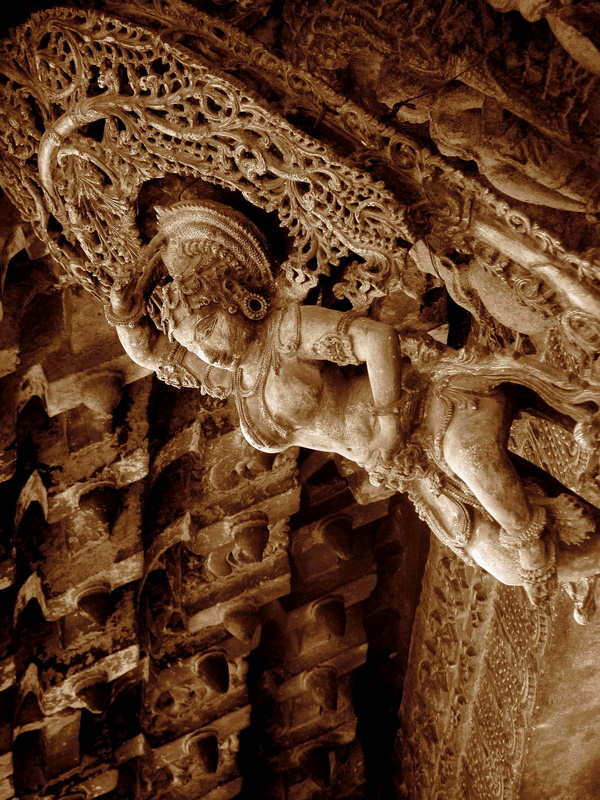
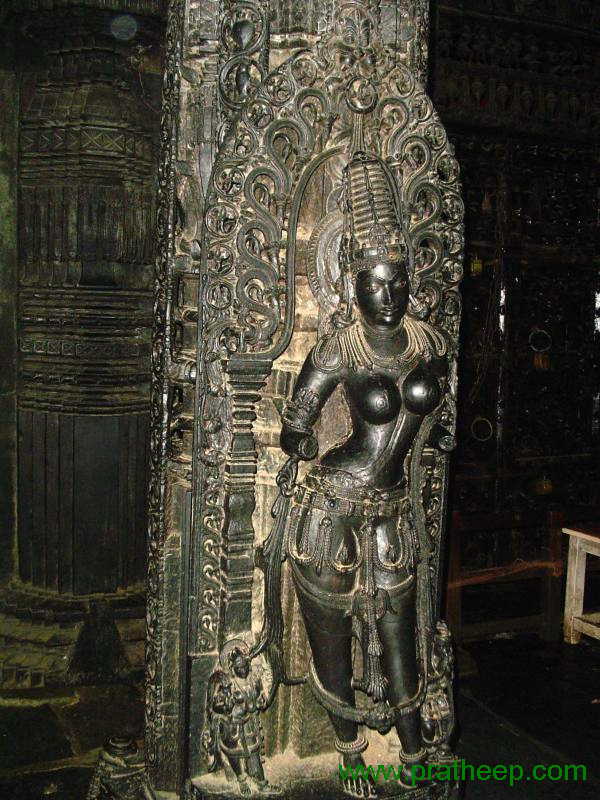
Gallery
Frequently Asked Questions
Who is Mohini?
Mohini is a figure in Hindu mythology who serves as the sole female incarnation of the god Vishnu. She embodies enchantment and is depicted as a seductress whose allure captivates and ultimately undoes her targets.
What is Mohini's role in the Churning of the Ocean?
After the gods and demons churn the cosmic ocean, Mohini appears as a stunningly beautiful woman to distribute the amrita, the elixir of immortality. She grants it only to the gods while withholding it from the demons, thereby securing divine victory.
Where does Mohini first appear in scripture?
Her earliest textual reference is found in the Ramayana, specifically in Book 1, verses 45.20 through 30. That passage describes her as a mesmerizing beauty who emerges in the aftermath of the ocean churning.
What powers or abilities are associated with Mohini?
Mohini's defining power is her capacity to bewitch and madden anyone who encounters her, driving lovers and demons alike into fatal infatuation. She functions as a classic femme fatale whose charm leads her targets toward their own destruction.
Why is Mohini considered significant in Hindu tradition?
She occupies a unique place as Vishnu's only female avatar, setting her apart from all of his other incarnations. Her role in the ocean-churning narrative also cements her importance as the agent who ensures the gods' ultimate triumph over the asuras.
More in Buddhist mythology 1-24
Spotted an error? Know more?
Reader corrections go straight into our review queue. Suggest an edit · How this site is sourced