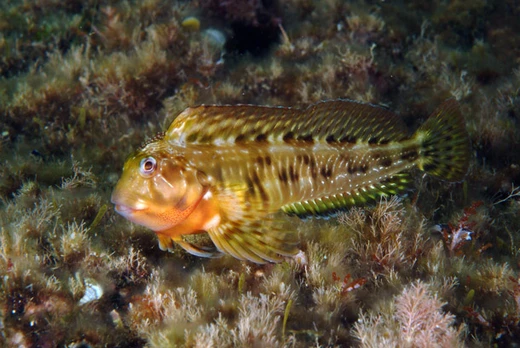
Lepadogaster
Clingfishes of the eastern Atlantic and Mediterranean.

eyekosaeder · CC BY 4.0
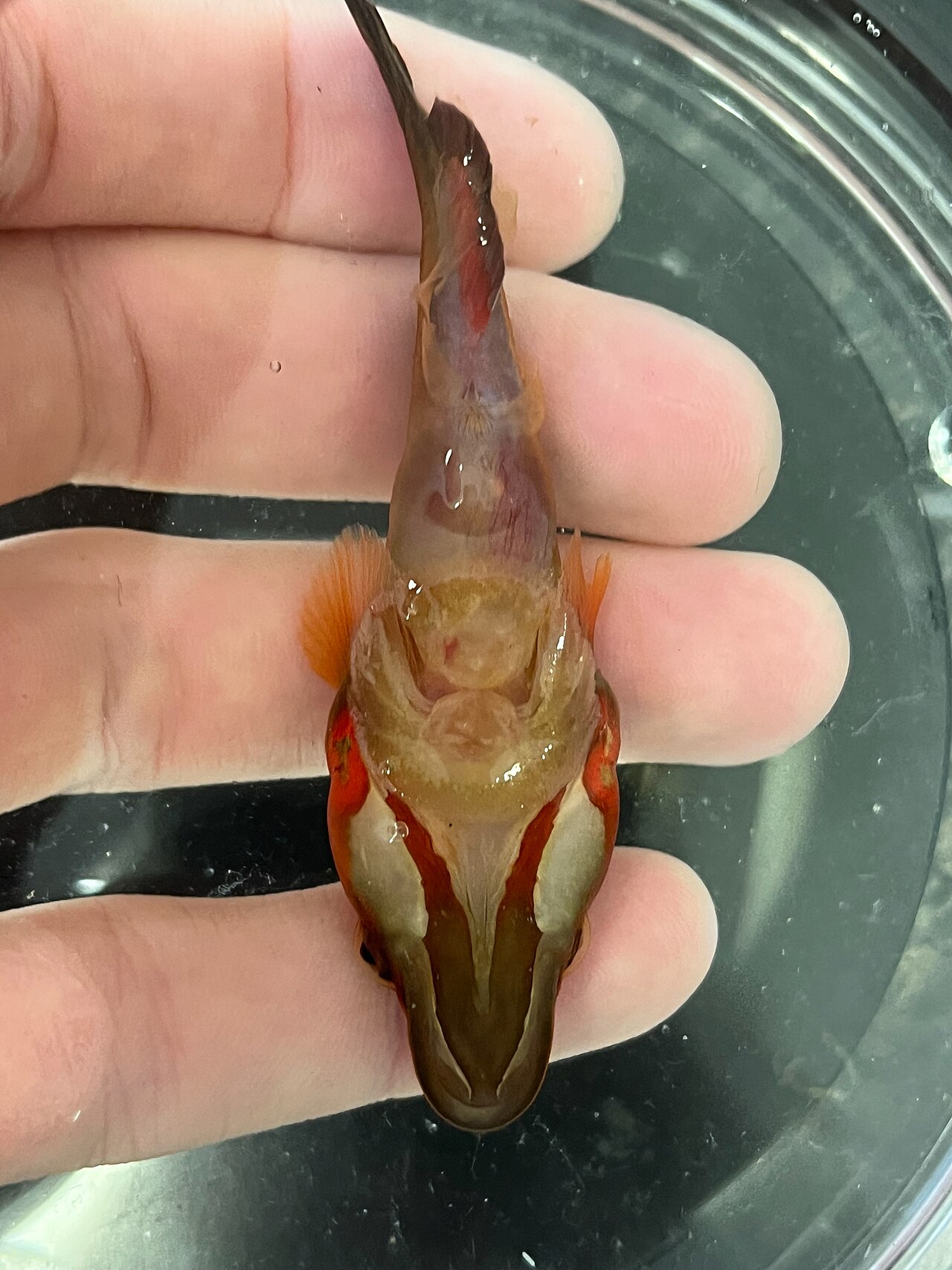
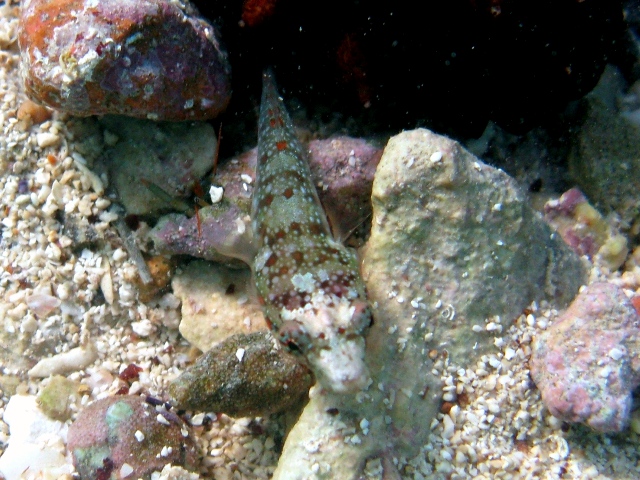
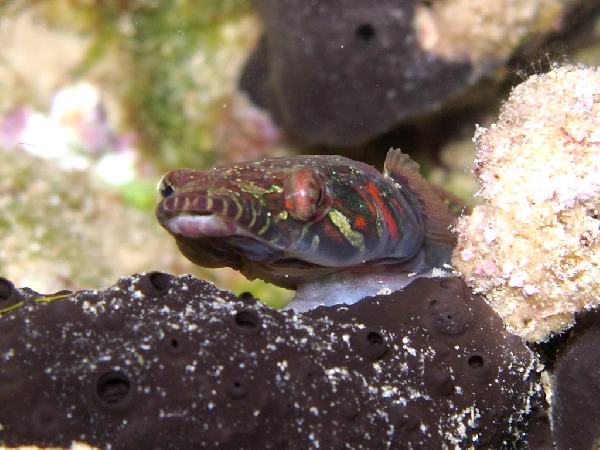
Lepadogaster is a genus of clingfishes native to the eastern Atlantic Ocean and extending into the Mediterranean Sea. It belongs to class Actinopterygii, meaning it shares characteristics with ray-finned fish, eels, and seahorses, notably having fin rays made of webbed skin attached to bones. The genus is notable for its distinct dorsal and anal fin structure, which lacks spines, branched fin-rays, and middle radials, instead having cartilage in those features.
Quick Facts
- Taxon
- Lepadogaster
- Type Species
- Lepadogaster gouanii
- Type Species Authority
- Risso, 1810
Facts from the source article.
Lore & Background
Lepadogaster species are mainly found near rocky coasts and inside intertidal zones, spending most of their time attached to rock surfaces. They exhibit frequent species interaction with other fish and among themselves. Behavioral differences are stark: L. purpurea is passive in feeding and social patterns, while L. candolii is active and significantly more aggressive. Spawning seasons also differ, with L. lepadogaster spawning in spring and L. purpurea in winter, which may relate to L. lepadogaster being a more active swimmer.
The life cycle includes larval, juvenile, and adult stages. Larvae spend their larval stage inside plankton as an intermediate host, then settle in the benthic layer to mature. During feeding, Lepadogaster uses a 'saltatory search' or 'pause-travel' pattern: it remains stationary, scans for food, and if none is found, swims a short distance and stops to scan again. Swim speed and direction during this pattern vary by size and species.
Reproductively, Lepadogaster species have semicystic spermatogenesis, a rare form where the cyst breaks apart before the spermatozoon stage, and their sperm has an elongated shape. Some workers have proposed placing L. candolli in the revived monotypic genus Mirbelia Canestrini, 1864, as it is not closely related to L. lepadogaster and L. purpurea, which are each other's closest relatives.
Reader's Guide
Lepadogaster is significant as a genus of clingfishes that illustrates the diversity within ray-finned fish, particularly through its unique fin structure lacking typical spines and radials, replaced by cartilage. Its behavioral contrasts among closely related species—such as the passive L. purpurea versus the aggressive L. candolii—highlight how microhabitat differences can drive distinct behaviors even within the same intertidal zone. The genus also contributes to understanding larval feeding strategies, employing a saltatory search pattern uncommon among shore fish. Its reproductive biology, featuring semicystic spermatogenesis and elongated sperm, is rare and adds to knowledge of fish reproductive diversity. Taxonomic uncertainty regarding L. candolli, with proposals to place it in the revived genus Mirbelia, underscores ongoing debates in fish systematics. Overall, Lepadogaster serves as a model for studying adaptation, life history, and evolutionary relationships in coastal marine environments.
Did You Know?
- Lepadogaster species have cartilage instead of spines, branched fin-rays, and middle radials in their dorsal and anal fins.
- L. candolii is significantly more aggressive than the passive L. purpurea.
- Lepadogaster larvae use a 'saltatory search' feeding pattern, remaining stationary and scanning before moving short distances.
- Some workers have proposed moving L. candolli to the revived monotypic genus Mirbelia due to its distant relation to other species.
Taxonomic Identity and Placement
Lepadogaster occupies a specific position within the broader architecture of Black Sea ichthyofauna. As a genus of gobiesocid fishes, it falls under the order Xenopterygii, a grouping that distinguishes it from the more familiar perch-like or bony-fish orders that dominate many marine lists. Its presence in the Black Sea is documented within a comprehensive inventory that catalogs both indigenous species and those that arrived through human-mediated introduction. The genus is not treated in isolation in the scientific literature; rather, it is situated alongside hundreds of other taxa in a structured catalog that assigns each entry a conservation tag drawn from IUCN criteria. This placement matters because it signals that Lepadogaster, like every other listed species, is subject to the same framework of origin classification—whether native to the basin, introduced by external means, invasive in its ecological behavior, or encountered only accidentally and thus difficult to pin down taxonomically. The genus therefore exists at the intersection of taxonomy, biogeography, and conservation policy within one of the world's most studied yet ecologically fragile enclosed seas.
A Century of Scholarly Attention
The genus Lepadogaster has attracted dedicated ichthyological attention for well over a century, though the most focused studies on its Black Sea representatives come from Romanian science. In 1940, A. A. Murgoci published a study specifically examining several species of Lepadogaster found in the Black Sea, reporting his findings in the proceedings of the Romanian Academy of Sciences in Bucharest. Two decades later, in 1964, Murgoci returned to the broader group of gobiesocids in the same basin, contributing a zoological paper to the Romanian Biology Review. These two works bookend a period of intense taxonomic work across the Black Sea region, which also saw landmark contributions from Kessler's 1860 voyage along the northern coast and Crimea, Slastenenko's multi-decade program spanning the 1930s through the 1950s, and Aleksandrov's 1927 monograph on anchovies of the Azov and Black Seas. Lepadogaster thus sits within a rich, multilingual scholarly tradition—French, Russian, Romanian, and Ukrainian publications all feeding into a shared understanding of the basin's fish diversity.
Conservation Status and the Question of Origin
Every species in the Black Sea fish inventory, including members of Lepadogaster, carries a conservation status tag assigned according to IUCN criteria. Beyond that single label, each entry is further categorized by its origin: native to the basin, introduced through human activity, invasive in its ecological impact, or encountered only accidentally in a way that makes it difficult to characterize as either native or truly invasive. This four-way classification is not merely academic; it shapes how conservation bodies and fisheries managers approach the species. A 2014 multi-author paper in Mediterranean Marine Science assessed the recent conservation status of marine fishes across the Black Sea, placing Lepadogaster within a broader picture of shifting populations. The urgency behind such assessments is underscored by reports, including a 2007 BBC News article, that fishing pressure is destabilizing the Black Sea ecosystem. For a genus like Lepadogaster, whose gobiesocid relatives occupy specific niche habitats, the interplay between origin classification, IUCN status, and ongoing anthropogenic stress defines the central conservation question.
Biogeographic Context and Regional Connections
Lepadogaster does not exist in a taxonomic vacuum; its Black Sea populations are part of a wider biogeographic network that links the basin to the Mediterranean Sea, the North Sea, and the waters of Ukraine. The Black Sea fish list explicitly cross-references inventories from these adjacent and related waters, acknowledging that species distributions do not respect political or even oceanographic boundaries. The Bosphorus, the narrow strait connecting the Black Sea to the Mediterranean, has been the subject of its own species-and-habitat inventory, making it a critical corridor where Lepadogaster populations may interact with those from the eastern Mediterranean. Mapping and graphical data for the Black Sea basin are maintained by international organizations such as GRID-Arendal, while fisheries data are tracked through platforms like Sea Around Us. Ukrainian-language publications, including a 2011 volume on the fishes of Ukraine and a 2007 monograph on Black Sea fishes, further anchor the genus within a regional scientific community that bridges Eastern European and Mediterranean ichthyology.
Gallery
Frequently Asked Questions
What is Lepadogaster?
Lepadogaster is a small genus of clingfish that inhabits the eastern Atlantic Ocean and the Mediterranean Sea. It sits within the ray-finned fish class (Actinopterygii), sharing a broad body plan with eels, seahorses, and other fin-rayed species.
What makes Lepadogaster's fins unique compared to other blennies?
Its dorsal and anal fins skip the usual spines, branched rays, and middle radials found in many fish. In their place, the structure relies on cartilage, giving the fins a distinctly softer and more flexible architecture.
Where do Lepadogaster clingfish live in the wild?
You'll find them clinging to rocky shorelines and foraging in intertidal zones. Their range spans the eastern Atlantic and extends into the Mediterranean, where they take advantage of the constant wave action and tidal shifts.
How many Lepadogaster species are recognized?
Three species make up the genus: Lepadogaster candolii, Lepadogaster lepadogaster, and Lepadogaster purpurea. All three share the same general eastern-Atlantic-to-Mediterranean habitat and the cartilage-based fin structure that defines the genus.
Why is Lepadogaster important to blennie fans and researchers?
It offers a clear example of how ray-finned fish can diverge in fin anatomy while staying within the Actinopterygii class. The replacement of bony spines and radials with cartilage makes it a useful reference point when studying evolutionary variation among clingfishes.
More in Blennies, Part 2 1-24
Spotted an error? Know more?
Reader corrections go straight into our review queue. Suggest an edit · How this site is sourced