Derilissus
A genus of small clingfish with attached gill membranes.

Derilissus is a genus of small clingfishes within the family Gobiesocinae, native to the western Atlantic Ocean. Like other clingfishes, they are equipped with a sucking disc on their underside, formed from modified pelvic fins and covered in papillae, which lets them adhere to hard surfaces such as coral and rocky reef walls. What sets Derilissus apart from related genera is that their gill membranes are attached to the body, which narrows the gill openings.
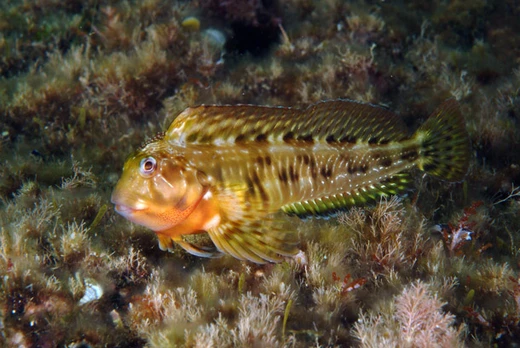
These fish typically measure between one and three centimeters in length. Their bodies are slender, with a slightly flattened, narrow head and a short snout. Most species have large eyes and lack a swim bladder. Instead of scales, they are protected by a thick layer of mucus. Coloration is usually pale brown and black or a vivid scarlet orange. Both jaws contain a single row of crowded, sharp teeth, and they have a dorsal fin.
All five recognized species of Derilissus are found in the Caribbean region, including the Bahamas. They inhabit rocky reef walls and corals, with different species occupying depths ranging from 30 meters to as deep as 265 meters.
The diet varies by species but generally consists of small benthic crustaceans and gastropods, such as copepods, isopods, and sea snails.
Reproductive behavior in Derilissus is not well documented, but in clingfishes generally, the male initiates courtship by nudging the female. The pair then shakes together in parallel, after which the female lays demersal eggs one by one onto a substrate, a process that can take from several minutes to hours. The male fertilizes the eggs as they are laid. The eggs hatch on the substrate, and the larvae are pelagic, becoming benthic only as adults.
**Species** - *Derilissus altifrons* Smith-Vaniz, 1971 - *Derilissus kremnobates* T. H. Fraser, 1970 (Whiskereye clingfish) - *Derilissus lombardii* Sparks & Gruber, 2012 - *Derilissus nanus* Briggs, 1969 - *Derilissus vittiger* T. H.
Quick Facts
- Taxon
- Derilissus
- Type Species
- Derilissus nanus
- Type Species Authority
- Briggs, 1969
Facts from the source article.
Lore & Background
Derilissus are typically small fish ranging from 1–3 cm in length, with slender bodies and a slightly depressed, narrow head bearing a short snout. Most species have large eyes and lack a swim bladder. They have no scales, instead being protected by a thick layer of mucus. Their most distinctive feature is the attached gill membranes, which restrict the gill openings—a trait unique among clingfish genera. They possess a single row of crowded sharp teeth on both jaws and a dorsal fin.
As clingfishes, Derilissus have a sucking disc on the underside of the chest, formed primarily by modified pelvic fins. This disc is covered in papillae over most of its surface, enabling them to cling to hard substrates such as coral and rocky reef walls. They inhabit rocky reef walls and coral in the western Atlantic, with different species preferring depths from 30 meters to as deep as 265 meters.
There are five recognized species in the genus: Derilissus altifrons, Derilissus kremnobates (whiskereye clingfish), Derilissus lombardii, Derilissus nanus, and Derilissus vittiger. Their diet varies by species but typically includes benthic small crustaceans and gastropods such as copepods, isopods, and sea snails.
Reader's Guide
Derilissus represents a specialized group of clingfishes within the family Gobiesocinae, distinguished by their attached gill membranes. This anatomical feature sets them apart from other clingfish genera and is a key identifier for the genus. Their small size, lack of scales, and reliance on a mucus layer for protection reflect adaptations to their benthic lifestyle on coral and rocky reef walls. The sucking disc, covered in papillae, is a critical adaptation for adhering to hard substrates in often turbulent reef environments.
The genus is limited to the western Atlantic, with all five species documented in the Caribbean and Bahamas. Their depth range—from 30 to 265 meters—indicates a broad vertical distribution across reef habitats. While reproduction is not well recorded for Derilissus specifically, typical clingfish reproduction involves male-initiated courtship, parallel shaking, and the laying of demersal eggs one by one onto a substrate, with fertilization by the male. Larvae are pelagic after hatching, becoming benthic as adults. The genus's significance lies in its unique morphological traits and its role as a small, cryptic component of Caribbean reef ecosystems.
Did You Know?
- Derilissus is unique among clingfish genera due to its attached gill membranes, which restrict the gill openings.
- They lack scales and are instead protected by a thick layer of mucus.
- Their sucking disc is covered in papillae, allowing them to cling to coral and rocky reef walls.
Frequently Asked Questions
What is Derilissus?
Derilissus is a small genus of clingfishes belonging to the family Gobiesocinae, found in the western Atlantic. It comprises five species of tiny, slender fish that cling to hard reef surfaces using a specialized sucking disc formed from modified pelvic fins.
What is the distinctive feature that sets Derilissus apart from related clingfishes?
In Derilissus, the gill membranes are fused to the body wall, which closes off the gap between the gill openings and the isthmus. This attachment narrows the gill openings compared to most other clingfish genera, where the membranes remain free.
How large are Derilissus species and what do they look like?
Adults range from roughly one to three centimeters in length, with a slender, slightly laterally compressed body and a narrow head. Coloration typically falls into one of two patterns: pale brown with black markings, or a vivid scarlet orange.
Where and at what depths can you find Derilissus?
These fish inhabit the western Atlantic, including the Caribbean Sea and the Bahamas, at depths spanning about 30 to 265 meters. They attach themselves to coral heads, rocky outcrops, and other hard substrates on reef walls.
How does Derilissus cling to surfaces?
Like other members of Gobiesocinae, Derilissus possesses a ventral suction disc made from its fused pelvic fins, whose surface is densely covered with tiny papillae. This structure creates a strong seal against coral, rock, or other rigid surfaces, allowing the fish to hold its position even in moderate currents.
More in Blennies, Part 2 1-24
Spotted an error? Know more?
Reader corrections go straight into our review queue. Suggest an edit · How this site is sourced