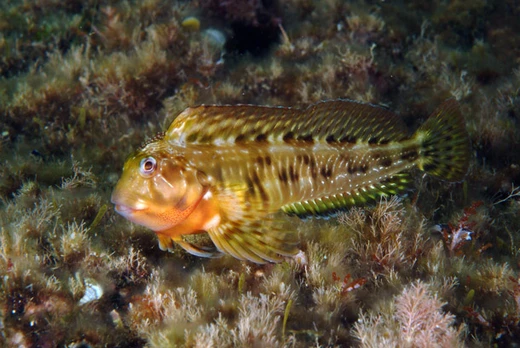
Gobiesox
Clingfish genus with marine, brackish, and unique freshwater species.

Gobiesox is a genus of clingfish native to the Americas and nearby offshore islands. Most species live in coastal marine or brackish environments, but one deep-water species, G. lanceolatus, occurs at about 300 meters depth. Seven species—G. cephalus, G. fluviatilis, G. fulvus, G. juniperoserrai, G. juradoensis, G. mexicanus, and G. potamius—live in fast-flowing rivers and streams, making them the only known freshwater clingfishes.
The genus includes both widespread, common species and others that are very poorly known. Three freshwater species endemic to Mexico—G. fluviatilis, G. juniperoserrai, and G. mexicanus—are listed as threatened by Mexican authorities. Three species restricted to small offshore islands—G. aethus and G. canidens from the Revillagigedo Islands, and G. woodsi from Cocos Island—are considered vulnerable by the IUCN.
Gobiesox are small fish, mostly under 7 cm (2.8 in) long, but the largest reach 15 cm (5.9 in) in standard length, placing them among the biggest clingfish.
Currently, 30 species are recognized in the genus, though genetic studies suggest that Pherallodiscus should be merged into Gobiesox, which would add two more species.
Quick Facts
- Taxon
- Gobiesox
- Type Species
- Gobiesox cephalus
- Type Species Authority
- Lacépède, 1800
Facts from the source article.
Lore & Background
Gobiesox species are small fish, mostly less than 7 cm (2.8 in), but the largest reach up to 15 cm (5.9 in) in standard length, making them among the largest clingfish. The genus includes both widespread and common species, as well as more restricted species that are virtually unknown. Seven species are from fast-flowing rivers and streams, and these are the only known freshwater clingfish. Three freshwater species endemic to Mexico (G. fluviatilis, G. juniperoserrai, and G. mexicanus) are considered threatened by Mexican authorities, and three species endemic to small offshore islands (G. aethus and G. canidens of the Revillagigedo Islands, and G. woodsi of Cocos Island) are considered vulnerable by the IUCN. Genetic studies have shown that Pherallodiscus should be merged into Gobiesox, adding two species to the genus.
Reader's Guide
Gobiesox is notable as a genus of clingfishes that spans a wide range of habitats, from coastal marine and brackish waters to deep waters and fast-flowing freshwater streams. Its seven freshwater species are the only known freshwater clingfishes, making the genus ecologically unique. The genus includes both widespread and common species as well as restricted, virtually unknown ones, highlighting a mix of conservation statuses: three Mexican freshwater endemics are threatened, and three island endemics are vulnerable. The largest species, reaching 15 cm, are among the largest clingfish. Genetic studies indicate that Pherallodiscus should be merged into Gobiesox, which would increase the recognized species count. This genus thus represents a key group for understanding clingfish diversity, habitat adaptation, and conservation needs in the Americas.
Did You Know?
- G. lanceolatus is a deep-water species found at around 300 m (980 ft).
- Three freshwater species endemic to Mexico are considered threatened by Mexican authorities.
Frequently Asked Questions
What is Gobiesox?
Gobiesox is a genus of clingfish native to the Americas and nearby offshore islands. Most species occupy coastal marine or brackish habitats, though one deep-water species, G. lanceolatus, has been recorded at roughly 300 meters depth.
How many species are in the genus Gobiesox?
There are 30 recognized species, with the count potentially rising to 32 if the closely related group Pherallodiscus is merged in. The genus spans a wide range of familiarity, from very common, widespread species to ones that remain only sparsely documented.
How big do Gobiesox get?
The vast majority of species stay under 7 cm (about 2.8 in) in length, but the largest individuals can reach around 15 cm (5.9 in) in standard length.
Are any Gobiesox species at risk?
Three freshwater species endemic to Mexico are listed as threatened by Mexican authorities, and three island-endemic species also face conservation concerns, making habitat protection a key issue for the genus.
More in Blennies, Part 2 1-24
Spotted an error? Know more?
Reader corrections go straight into our review queue. Suggest an edit · How this site is sourced