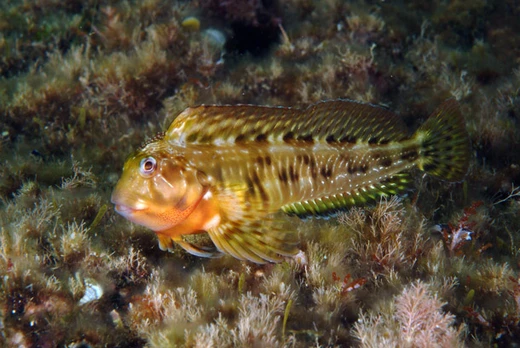
Labrisomidae
Small benthic blennioids with cirri, found in tropical Atlantic and Pacific.

Scaly blennies, the common name for the family Labrisomidae, are small marine fish found mainly in tropical parts of the Atlantic and Pacific. The group includes roughly 110 species spread across 15 genera. While they are a bit chunkier than most blennies, their bodies are still elongated. A key feature is that their dorsal fin has more spines than soft rays—sometimes soft rays are missing entirely—and their pelvic fins are long and thin. Like many blennies, they have whisker-like cirri on the head and nape. Their scales can be cycloid or absent, and many species are brightly colored. The largest, *Labrisomus philippii*, reaches 35 cm, but most are much smaller.
These fish live in shallow coastal waters, usually no deeper than about 10 meters, and are benthic, spending most of their time on or near the bottom. They inhabit both sandy and rocky areas, sometimes around reefs or in seagrass beds. Shy by nature, they dart into crevices when threatened. Their diet consists mainly of crustaceans, gastropods, brittle stars, and sea urchins.
Two genera, *Xenomedea* and *Starksia*, are notable for being ovoviviparous—they keep eggs inside the oviduct, where they develop safely. Only *Starksia* species, however, have gonopodia, modified anal fins used for copulation. Some researchers consider the family Labrisomidae to be paraphyletic.
The genera currently placed in this family are: *Alloclinus*, *Auchenionchus*, *Brockius*, *Calliclinus*, *Cottoclinus*, *Cryptotrema*, *Dialommus*, *Exerpes*, *Gobioclinus*, *Haptoclinus*, *Labrisomus*, *Malacoctenus*, *Nemaclinus*, *Paraclinus*, *Starksia*, and *Xenomedea*.
Quick Facts
- Taxon
- Labrisomidae
Facts from the source article.
Lore & Background
Labrisomids are benthic fish that spend most of their time on or near the bottom, staying within shallow coastal regions to depths around 10 m. They frequent both sandy and rocky substrates, sometimes at reefs or amongst beds of seagrass. These shy fish will retreat into crevices if threatened. Their diet consists largely of crustaceans, gastropods, brittle stars, and sea urchins.
Like many other blennies, labrisomids have whisker-like structures called cirri on their heads and napes. Scales may be cycloid or absent, and many species are brightly coloured. Two genera, Xenomedea and Starksia, are noted for ovoviviparity, retaining eggs within their oviducts for development. However, only Starksia species possess gonopodia, modified anal fins used as a copulatory organ.
Some workers have found that the Labrisomidae is paraphyletic, indicating uncertainty in the family's classification.
Reader's Guide
The Labrisomidae family represents a diverse group of small blennioids primarily inhabiting tropical Atlantic and Pacific waters. With about 110 species across 15 genera, they are characterized by their stocky yet elongated bodies, dorsal fin spines that outnumber soft rays, and long slender pelvic fins. Their benthic lifestyle keeps them close to the bottom in shallow coastal areas, where they occupy sandy and rocky substrates, reefs, and seagrass beds. The presence of cirri on the head and nape is a shared trait with many other blennies. Notably, the family includes ovoviviparous genera Xenomedea and Starksia, with Starksia uniquely possessing gonopodia for copulation. The largest species, Labrisomus philippii, reaches 35 cm, but most are much smaller. The family's paraphyletic status, as noted by some workers, suggests ongoing taxonomic debate. Their shy nature and retreat into crevices when threatened, combined with a diet of crustaceans, gastropods, brittle stars, and sea urchins, define their ecological role.
Did You Know?
- Labrisomids are also called scaly blennies.
- The largest species is Labrisomus philippii at 35 cm.
- Two genera, Xenomedea and Starksia, exhibit ovoviviparity.
- Only Starksia species have gonopodia, modified anal fins for copulation.
Frequently Asked Questions
What are scaly blennies (Labrisomidae)?
Scaly blennies are a family of small, somewhat chunky marine fish native to tropical waters of the Atlantic and Pacific Oceans. The group encompasses roughly 110 species divided among 15 genera, making it one of the more diverse blennioid lineages.
What physical traits set Labrisomidae apart from other blennies?
Their dorsal fin carries more spines than soft rays—and in some species the soft rays are absent entirely—while their pelvic fins are notably long and slender. They also sport whisker-like cirri on the head and nape, and many species display vivid coloration with either cycloid scales or no scales at all.
How large can a scaly blenny get?
The biggest member of the family is Labrisomus philippii, which can reach about 35 cm in total length. Most other species in the group remain considerably smaller, keeping them firmly in the small benthic-fish category.
Where do Labrisomidae live?
These benthic fish are restricted to tropical regions of the Atlantic and Pacific Oceans. They typically hang out near the bottom, consistent with their small, elongated body plan and their role as reef-associated dwellers.
Why do ichthyologists treat Labrisomidae as its own family?
The combination of a spine-heavy dorsal fin, elongated thin pelvic fins, and specific head-cirri patterns sets them apart enough from other blennioid families to warrant separate classification. With about 110 species across 15 genera, they also form a distinct and well-defined clade within the broader blennioid group.
More in Blennies, Part 2 1-24
Spotted an error? Know more?
Reader corrections go straight into our review queue. Suggest an edit · How this site is sourced