HD 81799
Suspected astrometric binary in Hydra, visible to the naked eye.

HD 81799, also designated G Hydrae, is a suspected astrometric binary star system located in the equatorial constellation Hydra. With an apparent visual magnitude of 4.69, it is visible without optical aid. Parallax measurements place the system about 164 light-years from Earth, and it is moving away at a heliocentric radial velocity of 29 km/s. The system exhibits a relatively high proper motion, crossing the celestial sphere at a position angle of 136°.
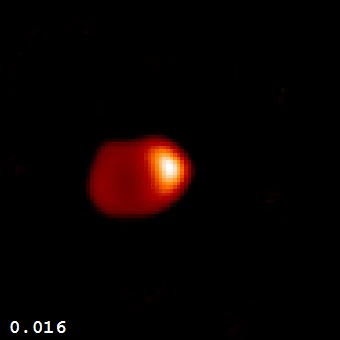
The visible component is classified as K2+ IIIb, indicating an evolved K-type giant star. It is a red clump star, meaning it resides on the horizontal branch and generates energy through helium fusion in its core. Interferometric measurements, corrected for limb darkening, yield an angular diameter that corresponds to a physical radius roughly 10.6 times that of the Sun. From its enlarged photosphere, it radiates 42 times the Sun's luminosity at an effective temperature of 4,490 K.
There is a 99.4% probability that the system is the source of the X-ray emission detected at these coordinates.
- Apparent visual magnitude
- 4.69
- Distance
- 164 light years
- Heliocentric radial velocity
- 29 km/s (moving further away)
- Proper motion position angle
- 136°
- Stellar classification (visible componen
- K2+ IIIb
- Physical radius (primary)
- 10.6 solar radii
- Luminosity
- 42 solar luminosities
Lore & Background
HD 81799 is a suspected astrometric binary star system, meaning the presence of a companion is inferred from gravitational perturbations rather than direct imaging. The visible component is an evolved K-type giant star with a stellar classification of K2+ IIIb. It is a red clump star, indicating it resides on the horizontal branch and generates energy through helium fusion in its core. The system has a relatively high rate of proper motion, traversing the celestial sphere at a position angle of 136°.
The primary star's angular diameter has been measured via interferometry and corrected for limb darkening. At the system's estimated distance of 164 light years, this angular diameter equates to a physical radius of about 10.6 times that of the Sun. The star radiates 42 times the Sun's luminosity from its enlarged photosphere at an effective temperature of 4,490 K. The system is moving further away from Earth with a heliocentric radial velocity of 29 km/s.
The system is a likely source of X-ray emission from its coordinates, with a 99.4% probability. This X-ray activity is consistent with the evolved nature of the primary star, though the suspected companion may also contribute.
Reader's Guide
HD 81799 holds significance as a suspected astrometric binary, a class of systems where the presence of an unseen companion is deduced from the primary star's motion. Its classification as a red clump star places it in an important evolutionary stage—the horizontal branch—where helium fusion occurs in the core. This makes it a valuable object for studying post-main-sequence stellar evolution and the properties of K-type giants. The system's relatively high proper motion and measured radial velocity contribute to kinematic studies of the Milky Way's stellar populations. The likely X-ray emission, with a 99.4% probability, adds an astrophysical dimension, as X-ray activity in evolved stars can reveal magnetic activity or interactions with a companion. The interferometric measurement of the primary's angular diameter, yielding a radius of 10.6 solar radii, provides a direct constraint on stellar models. As a naked-eye star (magnitude 4.69) in Hydra, it is accessible for amateur observation, yet its binary nature remains unconfirmed, inviting further astrometric monitoring. The system's legacy lies in its potential to refine our understanding of binary formation and evolution among intermediate-mass stars.
Did You Know?
- The visible component is a red clump star, generating energy through helium fusion in its core.
- The system has a 99.4% chance of being the source of X-ray emission from its coordinates.
More in Binary and Multiple Stars, Part 4 1-24
Spotted an error? Know more?
Reader corrections go straight into our review queue. Suggest an edit · How this site is sourced